Keyword – World news
Trefwoorden – Czechia, Public service broadcasting, Television industry, Radio industry, Media, Europe, World news
Title – Thousands of staff at Czech public broadcasters strike over funding plans | Czechia | The Guardian
Author – https://www.theguardian.com/profile/anna-koslerova
Link – Thousands of staff at Czech public broadcasters strike over funding plans | Czechia | The Guardian
Publish date – 2026-06-22T04:00:50.000Z
Category – News
URL – https://www.theguardian.com/world/2026/jun/22/czech-television-radio-public-broadcasters-strike-industrial-action-funding-plans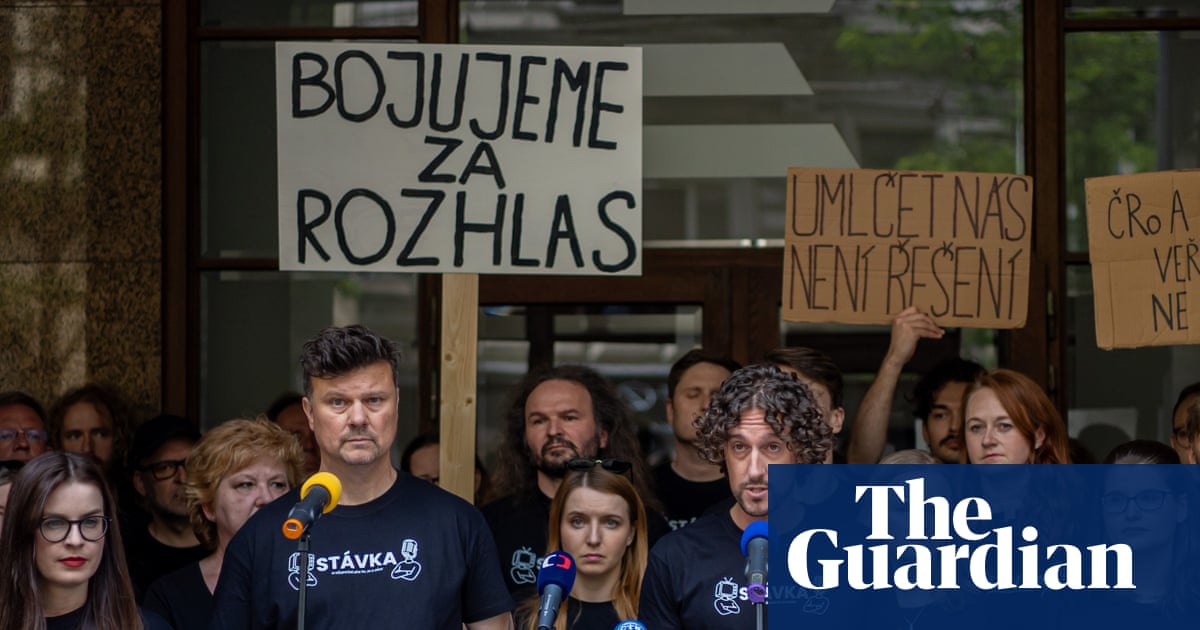
Thousands of public service media employees in Czechia are holding a 24-hour strike after the government of the billionaire prime minister, Andrej Babiš, pushed ahead with controversial plans to change the way the country’s public broadcasters are funded.
Monday’s industrial action by staff at Czech Television and Czech Radio marks the biggest escalation yet in a months-long confrontation between the broadcasters and Babiš’s populist administration .
“The reforms have been prepared without consultation and without guarantees for the independence of public service media,” said Pavla Kubálková, a member of Czech Television’s strike committee. “A large part of society remembers what the news looked like when politicians chose the content before 1989. We don’t want to go back there.”
The legislation, approved by the cabinet last week, would scrap the licence fee system and finance Czech Television and Czech Radio through an annual state-budget allocation.
According to the broadcasters, the changes would in effect return funding to 2008 levels, cutting about £14.3m from Czech Radio’s annual budget and £35.8m from Czech Television’s, despite the nearly two decades of inflation since then. Executives say the reductions would force hundreds of job losses and substantial cuts to programming.
But the dispute is not just about money. Kubálková said it had evolved into a broader fight over the future independence of public service media amid concerns that direct funding from the state would expose broadcasters to political pressure. “What matters most to us is preserving independence and the direct relationship between Czech Television and its viewers,” she said.
“The employees of both broadcasters are ready to defend their service to citizens, and we are determined to continue with even more vigorous protests,” she added. “We will do everything we can to defend public service media in their current form.”
Her concerns were reinforced last week when Josef Nerušil, an MP for the far-right Freedom and Direct Democracy (SPD) party, which is part of the governing coalition, appeared to suggest that changes to funding should eventually lead to greater scrutiny of what public broadcasters air.
“The point is to change the funding,” Nerušil told Czech Radio. “But if we’re talking about what public service media should broadcast, then of course, in a further step, we want to get to a broader discussion.”
He added that the aim was “to control not only the financial side but also the content side”. The MP then accused the broadcasters of political bias.
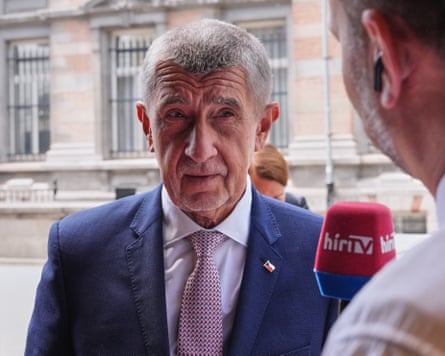
Presenting the legislation last week, the culture minister, Oto Klempíř, said the broadcasters should prove they could operate more efficiently with less money. In written comments to the Guardian, he rejected claims that the funding proposal threatened the independence of public service media.
“Moving funding into the state budget changes nothing about the independence of Czech Television or Czech Radio,” Klempíř said. “Their legal status, the way their governing councils are appointed, their powers and the guarantees of editorial freedom remain unchanged.”
He argued that the changes only affected the method of financing and noted that “an increasing number of European countries already fund public service media from public budgets. This is not a Czech experiment but a broader trend.”
Babiš has also rejected suggestions that the changes threaten editorial independence. “We want you to save money, and you’re not,” the prime minister told a public broadcaster journalist at a press conference.
Both broadcasters have reacted with alarm to the changes. Hynek Chudárek, the head of Czech Television, said the legislation would “effectively liquidate” parts of the broadcaster, while Czech Radio’s director general, René Zavoral, said cuts would hit regional reporting, children’s programming and foreign correspondents.
The strike will be felt across both broadcasters. Czech Television said all channels except its children’s service would be affected, along with its websites, streaming platform and social media output. Czech Radio plans to merge some stations and alter programming schedules, with presenters explaining the changes on air.
“The strike is a way of showing audiences what they stand to lose,” said Jan Herget, a member of Czech Radio’s strike committee.
Media scholars say the dispute is unprecedented in recent Czech history. “A strike in Czech public service media is a highly unusual event,” said Marína Urbániková, an associate professor of media studies at Charles University and Masaryk University.
She noted that Czech Television had not experienced a comparable strike since 2001, when journalists protested against political interference in the appointment of the broadcaster’s director general.
František Talíř of the Christian Democrats, who chairs the parliamentary media committee, said on Czech Television: “We’re going to the barricades because this is a direct attack on Czech Television and Czech Radio.” The opposition would use every means to block the bill, he said, warning that the country was “copying Slovakia’s path”, referring to Czechia’s neighbour, where the government last year dissolved the public broadcaster RTVS.
Zdeněk Hřib, the leader of the opposition Pirate party and a former mayor of Prague, said the funding plans would take the country “back not one year but at least 36 years, to when we had state media”.
His party has referred the changes to the European Commission and the Council of Europe’s Venice commission, arguing that they may breach European standards designed to safeguard the independence of public service media.
Those concerns have also drawn the attention of international media freedom groups. In a joint statement, a coalition led by the International Press Institute said the bill risked “financially weakening the broadcasters, eroding safeguards for their financial independence and violating the European Media Freedom Act”, and called on the European Commission to scrutinise the plans.