Tennis players plan ‘work-to-rule’ French Open media protest over prize money

French Open
Tennis players plan ‘work-to-rule’ French Open media protest over prize money
Matt Hughes
Wed 20 May 2026 14.40 CESTLast modified on Thu 21 May 2026 06.10 CEST
News
https://www.theguardian.com/sport/2026/may/20/french-open-tennis-prize-money-work-to-rule

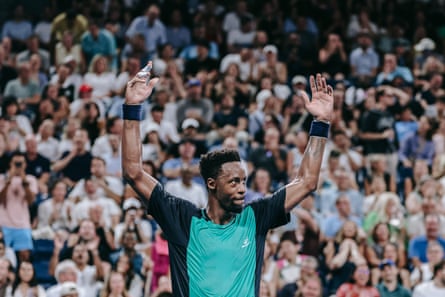
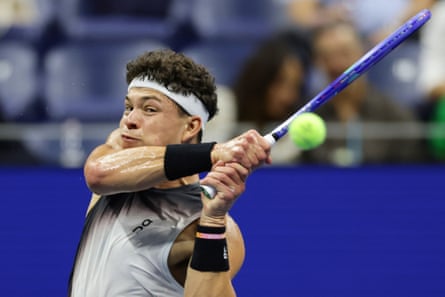
The world’s top tennis players are planning to protest over prize money by reducing their media appearances at the French Open as their public battle with the grand slams intensifies.

Players selected to take part in Friday’s opening press conference at Roland Garros will walk out after 15 minutes, symbolising the fact that the slams allocate an average of 15% of their revenues to prize money. The rest of the draw will refuse to conduct additional interviews with the tournament’s main media rights partners, TNT Sports and Eurosport.

A source close to the players said that, after the French Open confirmed this month this year’s prize pot will be €61.7m (£52.6m), locker room talks have led them to respond with what they described as a “work-to-rule strategy” in Paris, with their off-court activities to be kept to a bare minimum.

The players are understood to have studied the tournament rulebook and concluded they will not be fined as long as they fulfil their contractual obligations to conduct a short flash interview with rights holders after each match.

The leading 20 male and female players , including Novak Djokovic, Jannik Sinner, Aryna Sabalenka and Coco Gauff, have been in dispute with all four grand slams for more than a year. They feel they are given an insufficient share of each tournament’s increasing revenues, while they have also demanded enhanced welfare and pension provisions and a greater say in determining tournament schedules.

After the French Open’s prize money announcement, Sabalenka and Gauff raised the prospect of players boycotting the grand slams during interviews conducted at the Italian Open in Rome, although Iga Swiatek and Emma Raducanu distanced themselves from talk of a strike.

The French Open prize fund has risen by 9.5% this year, with the men’s and women’s winners to receive €2.8m, but the players are unhappy the increase is far more modest as a percentage of tournament revenues. While Roland Garros’s income increased by 14% to €395m last year, prize money rose by 5.4%, reducing players’ share of revenue to 14.3%.

Since the dispute first became public last year the players have been calling on the slams to match the 22% share of revenue paid by the ATP and WTA tours.

The players are being advised by the former ATP tour player and ex-WTA chief executive Larry Scott, who is due to hold talks on Friday with the French tennis federation president, Gilles Moretton, and the Roland Garros tournament director, Amélie Mauresmo.

Meetings with representatives of Wimbledon and the US Open are expected to take place later in the tournament. Wimbledon will soon become the players’ focus with the All England Club due to announce its prize money in the second week of June. While the prize fund will increase from last year’s £53.5m the announcement is unlikely to satisfy the players, who feel they are being cut out of the huge growth in revenues in SW19.

The All England Club’s income from Wimbledon has increased from about £165m in 2015 to more than £420m last year, while the prize money on offer has doubled from £26.5m to £53.5m over the same period, a 20% drop in the players’ share of tournament revenues.

The players are understood to be particularly agitated about Wimbledon, as the All England Club is planning to increase capacity by an extra 10,000 spectators each day if its proposed expansion takes place, and protests could take place during this summer’s Championships.

‘Peace in Europe no longer default situation’, warns Czech president Petr Pavel – Europe live

Ukraine
‘Peace in Europe no longer default situation’, warns Czech president Petr Pavel – Europe live
Jakub Krupa
Thu 21 May 2026 11.29 CESTFirst published on Thu 21 May 2026 09.15 CEST
News
https://www.theguardian.com/world/live/2026/may/21/czech-republic-petr-pavel-ukraine-baltics-drones-russia-nato-security-latest-news-updates

‘Peace in Europe no longer default,’ Czechia’s Pavel says

In a stark warning, Pavel – a retired Nato general – warns that “peace in Europe can no longer be treated as the default state of affairs.”

“ It must once again be actively protected, defended and maintained. The lesson of this moment is not that Europe is alone it is that Europe needs to be strong enough to stand on its own when needed.”

He warns that Europe needs to pull all the levers to get itself into the best position, as “history will simply not wait for Europe to become ready.”

“We must act swiftly,” he says.

Russia doubles down on repeatedly denied claims alleging Baltics were looking to enable Ukrainian drone attacks

Meanwhile, Russia has doubled down on its (repeatedly denied) suggestions that Latvia and other Baltic states could soon be used by Ukraine as a “launchpad” for attacks on Russia, raising fears about a potential escalation in the region.

In a lengthy statement on its Telegram channel, the Russian ministry of foreign affairs said – quoting its foreign intelligence serving, but without offering any evidence – its claims that the Ukrainian military is preparing to carry out strikes on Russia from the territories of Estonia, Latvia and Lithuania.

It criticised Latvia’s “naive” leaders for allegedly “consenting” to the operation – again, a claim repeatedly denied by Latvia’s top leadership , including both the president and the prime minister, and Ukraine ( Europe Live, Tuesday ).

As part of the message, the Russian MFA even named the five Latvian military bases it alleged were hosting the Ukrainian drones.

“Nato membership will not shield accomplices of terrorists from just retribution,” it said, repeating the threats first made in the UN security council meeting earlier this week, which prompted clear condemnation from the US and the EU.

Nato’s secretary general Mark Rutte said yesterday that Russia’s claims were “totally ridiculous, and Russia knows it” ( Europe Live, Wednesday ).

Worth remembering that the (now repeated) drone incursions into Latvian airspace have caused some real political damage in the country, prompting a government crisis leading to the collapse of Evika Siliņa’s administration last week.

Lithuania continues search for drone that prompted air alert yesterday

Meanwhile, Lithuania is still looking for a military drone that prompted a national air threat alert yesterday, with the country’s leaders led to bunkers and the general public told to take shelter.

The drone disappeared from the Lithuanian radars near Vilnius, with a major search operation now under way trying to figure out what happened to it.

The operation had to be paused last night because of darkness, but has resumed this morning, with the authorities now looking closer to the Lithuanian border with Belarus.

“Until the object is found, no one can say for sure, but all parameters recorded by radars […] point to a drone,” Vilmantas Vitkauskas , head of the National Crisis Management Centre, said, quoted by LRT.

Latvia confirms drone incursion in its airspace

Oh-oh.

Further to the earlier air alert, Latvia has just confirmed “there is at least one unmanned aerial vehicle in Latvia’s airspace.”

There is still no detail on what sort of drone or whose drone it is.

We will surely hear more about it during the day.

Ukraine is ‘military power with huge production capabilities’ that must not be allowed to fall in Russian hands, former Estonian president says

Back in Prague, former Estonian president Kersti Kaljulaid offered a clear take on the question facing the EU as it is moving to consider whether Ukraine should be admitted as a member of the bloc.

“ I just wanted to say [it] should be about simplification. It’s very difficult to discuss [if] Ukraine [should] join European Union, and then we discuss how will its agriculture fit the common agricultural policy.

[But] this is not the question. Question is: Ukraine is a military power with huge military production capability. Whose hands must it be in? In Russian hands, [or] western hands? End of story. This is our question. This is our objective.

Have Ukrainians with us, because imagine they started, like in Soviet Union times, to build all these things for Russia, not for us.

And that gives you your answer. It’s very simple.”

Ukraine ramping up security measures in regions bordering Belarus

Following Zelenskyy’s warnings yesterday, Ukraine is ramping up security measures in its regions bordering Belarus, AFP reported, after weeks of warning of a possible fresh attack from Russia’s chief regional ally.

Kyiv has sounded the alarm that Russia may use Belarus – a springboard for its 2022 invasion of Ukraine – to stage a new offensive from the north, including towards the capital.

AFP noted that Ukraine’s Security Service (SBU) said its units and the army were “carrying out a comprehensive set of enhanced security measures in the northern regions of our country”.

The measures – including stepped up checks and controls of individuals and properties – “will serve as an effective deterrent to any aggressive actions or operations by the enemy and its ally”, the SBU said in a statement.

Just a reminder that Russia and Belarus are also staging joint nuclear drills this week , involving thousands of troops, planes and strategic missile forces.

Ukraine must be precise when using drones to avoid helping Russian provocations, Poland’s defence minister says

For what it’s worth, Poland’s defence minister Władysław Kosiniak-Kamysz said this morning Ukraine must be very precise when using drones to avoid Russia interfering with their flight path.

“ Ukraine must be more precise here, of course, to avoid giving rise to Russian provocations ,” Kosiniak-Kamysz told a news conference in the Estonian capital Tallinn, Reuters reported.

“Our territories … should not be violated, they should not be threatened.”

Earlier this week, Ukraine apologised for individual cases when its drones attacking targets in Russia strayed into the Baltic airspace, blaming Moscow’s “electronic warfare.”

But Nato’s secretary general Mark Rutte laid the blame squarely on Russia, saying bluntly yesterday ( Europe Live, Wednesday ):

“ If drones come from Ukraine, they are not there because Ukraine wanted to send a drone to Latvia, Lithuania, or Estonia. They are there because of the reckless, illegal, full-scale attack of Russia, starting in 2022 after, of course, what they did in Crimea in 2014 against Ukraine.”

Latvia declares possible drone alert for southeastern part of country

And just like that, Latvia’s army has just issued a possible drone alert over southeastern part of the country – for the third day in a row.

I will keep an eye on that as there are more questions than answers at this early stage, including the crucial one on where does the it come from and, well , whose is it as we have seen reports of stray Ukrainian drones crossing into the Baltic countries as a result of Russian jamming.

Russia claims Ukraine is seeking escalation after Zelenskyy warns of possible expansion of war by Russia

Just as Pavel was speaking in Prague, Russian foreign ministry spokesperson Maria Zakharova told reporters that Ukrainian president Volodymyr Zelenskyy was pursuing escalation of the conflict between the two countries.

It’s quite a claim given (checks notes) Russia’s continued and relentless invasion of Ukraine for years.

But it fits a pattern of Russia’s increasingly assertive or outright aggressive language towards others in the region – first the Baltics, and Latvia in particular, and now Ukraine.

In fact, Zelenskyy specifically warned last night about the prospect of Russia expanding its aggression , particularly from the direction of Belarus.

“ Ukraine will certainly defend itself, and right now our task is to strengthen our state so that none of Russia’s five scenarios for expanding the war through northern Ukraine succeeds,” he said.

Europe needs to learn from Ukraine, move ‘much faster’ to respond to challenges, Pavel says

Pavel also warns against Europe losing out through “bureaucratic obstacles.”

He points to Ukraine’s ability to innovate and live test new solutions, such as drones, within days, going through procurement and production to an accelerated timeline.

“ Ukraine has demonstrated not only determination and heroism, but also unbelievable capacity to adjust, to innovate, to change.

It is something that we in Europe have lost through many regulatory measures that are necessary in peacetime, but of course in conflict you have to be … flexible and achieve the results in shortest possible time. …

I visited Ukraine a number of times, and also companies producing drones. They are producing them in a vast variety of versions, sending them straight to the frontline, testing in days, and having feedback in companies again in days. So the pace goes well beyond what we can achieve in peacetime. …

If we want to succeed in any potential future conflict, we have to have the procedures that will be much faster than that we have today, because otherwise we will be losing the conflict on bureaucratic obstacles.”

He compares it to Europe “having all the ingredients for a great meal, but we still don’t have a recipe.”

And that ends his session.

In a short Q&A, Pavel gets asked about the role of AI and technology more broadly.

He says it is “beyond any doubt that technology will be the weapon of the future,” as he points out to Russia’s Putin and China’s Xi focusing on this issue during their talks in China this week.

“I think we have to take it seriously, because mainly China is our is doing tremendous progress in this, and experience from both Ukraine and the Middle East shows that technological superiority can be a true game changer.”

‘Peace in Europe no longer default,’ Czechia’s Pavel says

In a stark warning, Pavel – a retired Nato general – warns that “peace in Europe can no longer be treated as the default state of affairs.”

“ It must once again be actively protected, defended and maintained. The lesson of this moment is not that Europe is alone it is that Europe needs to be strong enough to stand on its own when needed.”

He warns that Europe needs to pull all the levers to get itself into the best position, as “history will simply not wait for Europe to become ready.”

“We must act swiftly,” he says.

‘If Ukraine is forced into bad peace, we will all live with consequences for decades,’ Pavel warns

Pavel turns to Ukraine , stressing that “supporting Ukraine is not a charity,” but “a direct investment in Europe’s own security.”

“ If Ukraine is forced into a bad peace, we all will live with the consequences for decades ,” he warns.

EU and Nato should align priorities to help Europe step up its defence, Pavel says

Pavel also stresses the need to bring the EU and Nato closer, as Brussels “has instruments that Nato does not have: funding, infrastructure, and industrial policies” that can work as policy tools to help with defence preparations.

“I am convinced that these two sets of instruments should be connected. Nato and European Union are not competitors in European security. They should function as complementary pillars.”

He gives a specific example of Nato working with the EU to modernise “routes, ports, bridges and airfields” that are critical for moving forces across Europe .

“ The task is to make sure that the two plans overlap; that Nato’s military requirements guide EU investments, and the EU investments strengthen Nato deterrence.”

He pointedly says that such plans should include Canada, Norway, and the UK, as “indispensable European security actors.”

‘No time to lose’ as capabilities, not spending, are key for Europe’s ability to defend itself, Pavel says

Pavel says that Europe “has already made significant progress in defence spending,” but warns that “credible defence is not built on spending levels alone.”

“We need to work hard to strengthen our strategic enablers and close critical gaps in areas such as strategic airlift, air and missile defence, intelligence, logistics, or military mobility. There is no time to lose. ”

‘Many assumptions for old security architecture are no longer valid,’ Czech president warns

Pavel begins by saying that his repeated warnings that Europe needs to focus on its political will, industrial capacity and technological capacity “remain fully valid; if anything, it has become even more urgent today.”

He says it is clear that Europe “must assume greater responsibility for our own defence, not because we are told so by Washington, but because it is in our own strategic and vital interest.”

He says that as “debates about the future scale of America’s conventional military presence in Europe are becoming more pronounced, Europe must be prepared for this reality.”

“This doesn’t mean that Europe should turn away from the United States – just the opposite. Nato remains the foundation of our collective defence, and the transatlantic bond remains essential for our own security – but we must be honest [that] many assumptions supporting the old security architecture are no longer valid. ”

The Globsec Forum in Prague is now under way.

Czechia’s Pavel is on stage for his opening address.

I will bring you the key lines.

Morning opening: Dobré ráno from Prague

in Prague

Dobré ráno , or good morning from Prague .

Over 2,000 state officials, foreign policy and security experts from Europe and beyond are meeting in the Czech capital for the GLOBSEC Forum 2026. And there is no shortage of issues to cover.

From the latest drone incidents in the Baltics to broader security situation in Ukraine and Europe – and this part of Europe in particular – to broader global questions on energy, geopolitics, AI, and the state of the transatlantic alliance, there will be plenty of things to cover.

We will hear from the Czech president, Petr Pavel , the European Commission’s vice-president, Henna Virkunen , and the former Nato secretary general, Anders Fogh Rasmussen , among others just as Nato’s foreign ministers gather in Sweden for their ministerial meeting today and tomorrow.

Last night, Pavel warned that Russia will continue to be Europe’s main security threat for decades , as the continent wakes up from being overreliant on US protection and needs to radically bolster its own defence as a new global order of competing superpowers takes shape.

I will bring you all the key lines here.

Elsewhere, I will bring you the latest on Ukraine, the said drone incidents in the Baltics, and all other relevant news from across the continent.

It’s Thursday, 21 May 2026 , it’s Jakub Krupa here, and this is Europe Live .

Good morning.

US doctor who contracted Ebola in DRC flown to Germany for treatment

Ebola
US doctor who contracted Ebola in DRC flown to Germany for treatment
Edward Helmore
Wed 20 May 2026 14.28 CESTLast modified on Wed 20 May 2026 16.39 CEST
News
https://www.theguardian.com/world/2026/may/20/ebola-outbreak-us-doctor-germany

An American doctor who contracted Ebola in the Democratic Republic of the Congo has been flown to Germany for treatment, along with his wife and four children, as the World Health Organization warned of the “scale and speed” of the outbreak.

Authorities have reported at least 134 suspected deaths and more than 500 cases of the hemorrhagic Bundibugyo virus, which has no approved treatments or vaccines. The outbreak, which has spread into urban areas, has been declared a public health emergency requiring international response.

Dr Peter Stafford, a surgeon and leader of the Christian missionary group Serge, has said he unknowingly operated on a patient with Ebola before the outbreak was detected. His wife, Rebekah Stafford, also a doctor, and their children, are being monitored for symptoms of the disease.

The infected surgeon was barely able to stand on his own when he departed for Germany , according to two leaders of the Christian missionary group where he worked.

Dr Scott Myhre, area director for Serge told NBC News that Stafford “looked really tired and really sick” as he left. “There were people in full – we call it PPE – the personal protective equipment, and they’re completely covered, and he’s hanging on them barely strong enough to walk.”

Stafford worked at Nyankunde hospital in the DRC’s Ituri province, where the Africa Centers for Disease Control first confirmed the Ebola outbreak. He had operated on a 33-year-old patient with severe abdominal pain.

Doctors at first believed the patient had a gallbladder infection but, according to Myhre, Stafford “did an abdominal procedure and found that the gallbladder was normal and closed him up, but this patient subsequently died the next day”.

The patient was buried before he could be tested for Ebola, but Stafford developed symptoms and tested positive on Sunday, according to the US Centers for Disease Control and Prevention.

Myhre described Stafford as “a very meticulous professional, and for every surgical case he does, he would be completely gowned in sterile garb and gloves and hats and glasses. But that’s not quite enough to prevent an Ebola exposure.”

In an updated advisory on Wednesday, the WHO said there were now more than 600 suspected cases and 139 suspected deaths from the virus, mostly in the DRC.

But with two cases and one suspected death in neighboring Uganda , the organization said the risk of a global pandemic was very low, but the threat for countries in the region was severe.

“We expect those numbers to keep increasing,” Tedros Adhanom Ghebreyesus, WHO’s director-general, said. “We know that the scale of the epidemic in DRC is much larger”.

The director-general also responded to criticism from the US secretary of state, Marco Rubio, of the organization’s Ebola response. Rubio said on Tuesday that the World Health Organization’s response was “a little late”.

“The lead is obviously going to be Centers for Disease Control and the World Health Organization, which was a little late to identify this thing unfortunately,” Rubio said.

But the WHO chief hit back, saying in Geneva that “maybe what the secretary said … could be from lack of understanding of how IHR [International Health Regulations] work, and the responsibilities of WHO and other entities.”

Eek-cute: the rebirth of the frothy romcom sociopath

Film
Eek-cute: the rebirth of the frothy romcom sociopath

Wed 20 May 2026 08.00 CESTLast modified on Wed 20 May 2026 17.07 CEST
News
https://www.theguardian.com/film/2026/may/20/romcom-sociopath-finding-emily-you-me-and-tuscany

I t’s a long-running romcom trope that the couples we’re supposed to root for are often hiding lies that threaten the chances of any happy relationship blossoming. From classics such as The Shop Around the Corner to modern blockbusters such as How to Lose a Guy in 10 Days, the genre thrives whenever it presents the audience with the most alarming red flags it conceals from its characters, raising the stakes by seeing if sparks can still fly when an ulterior motive behind each meet-cute is hidden in plain sight.

In the romantic comedies we’ve seen so far this year, this trope has not only been revived but pushed far beyond its breaking point, cementing a new romcom archetype: the unlucky-in-love sociopath. This week’s new release Finding Emily is the starkest example to date, introducing psychology student Emily (Angourie Rice), whose desperation to find a good case study for her dissertation essay on the self-destructive nature of love leads to her concocting a machiavellian scheme to paint university student Owen (Spike Fearn) as an obsessive stalker.

Owen is a kind-hearted employee of her university’s student union bar, only meeting Emily after his search to find a different Emily he danced with the previous night leads him in the wrong direction. After she sees him plant posters around the campus, Rice’s Emily decides to help him as fuel for coursework she should have handed in already, faking his signature on consent forms, secretly recording their every conversation, and insisting he make grand public gestures that paint him in a bad light. With this being a romantic comedy, certain tropes must be adhered to and feelings gradually form between the two, but the initial lie has cast such a destructive shadow over Owen’s life that it doesn’t feel triumphant for the audience when he realises it was more than just a friend who betrayed him.

Last month, audiences were treated to another romcom sociopath in Halle Bailey’s Anna Montgomery, the heroine of the frothy You, Me & Tuscany. A house-sitter who lives vicariously through her clients and imagines their lives as her own, we’re introduced to her getting fired after getting caught wearing clothes that don’t belong to her – which yes, does include underwear. After a one-night stand with a handsome Italian man, she saves photos of his glamorous Tuscan villa and flies to Europe to squat there, justifying her presence to his family by pretending she is his new fiancee. It’s red flag after red flag in a haphazard scheme to maintain a life of luxury on someone else’s dime, and the fact she successfully wins over another new interest during this ruse is less shocking than the Italian family forgiving her because they found her that charming.

This trope of a relationship built on a lie was very deliberately weaponised in Kristoffer Borgli’s hit black comedy The Drama , which juxtaposes one mundane white lie – Charlie (Robert Pattinson) pretending to have read a book he sees Emma (Zendaya) reading so he could talk to her – with her choice to conceal from him the worst thing she’s ever done. The genius of The Drama isn’t just that Emma is far less of a sociopath than many of those judging her for her teenage planning ofa crime she didn’t go through with, but that it exposes why modern romantic comedies are making their love interests far more extreme. These are characters who likely would have swiped left on each other if they didn’t meet in the real world due to lack of immediate shared interests, with Charlie’s planned wedding speech notably lacking any specificity about his wife-to-be. Our lives are more online than ever, but the genre can’t reflect that if it wants to maintain any dramatic tension, meaning film-makers are taking more extreme approaches in concealing red flags from each character that reinforce younger audiences’ attitudes towards dating.

The concept of a real-life meet-cute is growing increasingly alien in a world where more relationships are beginning online, and many reports point towards gen Z opting out of the dating market altogether. The revival of romcoms aimed at millennial and gen-Z audiences coincides with a need to reflect this sea change in how young people approach relationships, which is why we’re starting to see an influx of stories that feel more like cautionary tales than traditional examples of the genre. We’re still a world away from a horror movie subversion of the meet-cute such as the thriller Fresh, where Daisy Edgar-Jones unwittingly locked eyes with cannibal Sebastian Stan in a grocery store, but film-makers in both genres seem keenly aware that the digital world provides barriers to dating nightmares like these. Neither can function as well if you get to know somebody first and block them before any carnage can ensue.

There are, of course, plenty of horror stories about online dating to be told; there’s a cottage industry of true crime documentaries such as The Tinder Swindler which revel in the horrors that could be inflicted upon you if you swipe right. The modern romcom remains stubbornly offline in comparison, largely because the love interests it presents wouldn’t be reflected well in a dating app bio. In a world where the most viral social posts about dating are from young people outlining their specific “icks” in potential partners, most of this new crop of romcom couples wouldn’t sustain a Bumble conversation if they had a better handle on each other’s personalities. With younger people remaining cynical about love and romcoms struggling to justify classic tropes in an online-driven dating world, these won’t be the last films in a wave that feels more harrowing than idealistic.

Tielemans starts party as Aston Villa outclass Freiburg to claim Europa League glory

Europa League
Tielemans starts party as Aston Villa outclass Freiburg to claim Europa League glory
Ben Fisher
Wed 20 May 2026 23.01 CESTLast modified on Thu 21 May 2026 10.42 CEST
News
https://www.theguardian.com/football/2026/may/20/freiburg-aston-villa-europa-league-final-match-report

Where would you like your statue, Mr Emery? Even before this emphatic Europa League triumph, Aston Villa supporters could hardly have held their manager in greater esteem. But now Emery, in winning the competition for a record fifth time, has delivered the thing he always wanted, a trophy to show for his transformative body of work.

Those who were not around for Rotterdam in 1982 will always cherish Istanbul in 2026. Thomas Tuchel had it right a few years ago when he suggested Uefa might as well rename the Europa League the Unai Emery trophy.

Was there a better image on an unforgettable night than the sight of Emiliano Martínez giving his manager a piggyback as Villa got the celebrations under way? Villa’s squad formed a guard of honour for Freiburg , game but ultimately overpowered opponents, and then set about giving Emery the bumps as he walked on to the podium erected on the pitch. John McGinn, Villa’s superb captain, was the last to collect his medal from Uefa’s president, Aleksander Ceferin, before lifting the handleless trophy. Before long McGinn was darting towards the sea of delirious Villa fans crooning to We Are the Champions, showcasing the prize in all its glory, the engraving still raw.

Villa’s players took it in turns to hoist the trophy overhead. So, too, did Villa’s co-owners, Nassef Sawiris, wearing a claret and blue scarf, and Wes Edens. Up in the VIP seats the Prince of Wales, an avid Villa supporter who admits to perusing Villa forums under a pseudonym, wanted to capture the moment just like everybody else, filming the trophy lift on his iPhone. “Huge congratulations to all the players, team, staff and everyone connected to the club,” William posted on social media.

Just like 1982, it was Villa in white against German opponents in red; this time Youri Tielemans, Emiliano Buendía and Morgan Rogers the scorers. All three goals were sparkling, Tielemans and Buendía scoring beauties to put Villa in the box seat within seven minutes of each other at the end of the first half, before Rogers got in on the act approaching the hour. It felt like a procession once Buendía curled a left-foot peach into the top corner with the final kick of the first half and, as a contest, it was a non-event from the moment Rogers’s smart movement at the front post was rewarded. Mind you, try telling that to the Villa faithful who came in their numbers.

Villa’s official allocation was 10,758 but about double that figure travelled. There was a Brummie takeover on Taksim Square, the supporters determined to savour a first continental final for 44 years. For Freiburg, this comfortably represented the biggest occasion in their 121-year history and they were always planning to celebrate a groundbreaking season on their return to south-west Germany.

While a generation of Villa supporters arrived in Turkey desperate to see their team lift their first silverware since the League Cup in 1996, Freiburg arrived without a single trophy in their cabinet. Villa, guaranteed a place in the Champions League next season, entered as heavy favourites and soon assumed control.

Supporters proudly sang of 1982 and nine of that team were present. One of those, Nigel Spink, came on after nine minutes when Jimmy Rimmer was forced off through injury and there was a whiff of deja vu here. Martínez required treatment in the warm-up, with the goalkeeper coach, Javi García, taping his hand..

Martínez later revealed that he had broken his finger, but concerns he would be unable to play were short-lived. The keeper charged out before kick-off, fist pumping with his right hand towards the Villa fans behind the goal. Any wider nerves had evaporated by the interval.

Tielemans gave Villa a leg up on 41 minutes with a pure volley from Rogers’s expertly weighted cross from a short-corner routine. The ball seemed to drop in slow motion but Tielemans read it all the way, smashing it home with his laces.

Then Buendía controlled McGinn’s pass on the edge of the box with his right foot and, with his next touch, sent a stunning left-foot shot into the top corner. It was the final kick of the half and it felt like the goal that killed their opponents.

Until the first goal, Villa had been the better team but there were a couple of anxious moments, none more so than Matty Cash’s high challenge on Vincenzo Grifo. The defender got away with a booking but the replays showed that after taking the ball he followed through on the midfielder’s shin with his studs. Johan Manzambi was lively and Nicolas Höfler had the game’s first real chance, dragging wide after Pau Torres headed clear a free-kick.

Villa extended their lead approaching the hour. Lucas Digne released Buendía down the left and the midfielder faced up Lukas Kübler then sent a teasing cross towards the front post. Rogers expertly traded places with Ollie Watkins to squeeze the ball in.

Amadou Onana, introduced midway through the second half, headed against a post and Buendía rattled the side netting when his second and a Villa fourth felt inevitable. Emery, the author of this story, bounced on the touchline. For the fans here, in Birmingham and beyond, the wait is over, the party just getting started.

Toxic chemicals in pet flea treatments harming wildlife, UK study warns

Pets
Toxic chemicals in pet flea treatments harming wildlife, UK study warns
Matthew Taylor
Thu 21 May 2026 07.00 CESTLast modified on Thu 21 May 2026 10.34 CEST
News
https://www.theguardian.com/lifeandstyle/2026/may/21/toxic-chemicals-in-pet-flea-treatments-harming-wildlife-uk-study-warns

Toxic chemicals found in pet flea treatment are devastating wildlife in rivers, parks and special conservation areas and the government should take urgent action to limit their use, according to a study.

Chemicals that are banned for use as pesticides but still used in liquid flea treatments are causing potentially irreversible harm to aquatic life as well as decimating birds and pollinators, according to the study published on Thursday.

It found that flea treatment chemicals fipronil and imidacloprid have also been implicated in lower cognitive and adaptive scores in children with autism and was ranked by the Environment Agency as being the chemical with the highest risk to human health in English waters.

The assessment by ecologist Matt Shardlow, who carried out one of the first studies into the impact of flea treatments nine years ago, says urgent action is needed to prevent these chemicals doing more damage.

“The more you look at this, the worse it gets,” said Shardlow from the Wildlife and Countryside Link. “The level of new alarming information showing the scale of damage that is being done by these chemicals is stark.”

Last month the Guardian reported on calls for restrictions on pet flea treatments after research found songbird feathers were widely contaminated with chemicals that can damage their brains and kill unborn chicks. A previous study found chicks were being killed by high levels of pesticides in the pet fur used by their parents to line their nests.

The analysis found irreparable damage may already have occurred to rivers, sites of special scientific interest and National Parks. It highlighted the Broads in Norfolk, where all the main rivers entering the park are heavily contaminated with flea treatment toxins, and where Natural England is concerned about a 90% decline in dragonfly numbers.

It found that average levels of fipronil and imidacloprid were high enough in English rivers to “reduce aquatic life”. In a fifth of cases levels were found to be sufficient to cause a 30% reduction in “associated bird populations”.

“We are seeing not just impacts in rivers but in public parks where dandelions were so heavily polluted that it is likely to harm caterpillars and pollinators,” said Shardlow.

Topical flea and tick treatments, which are commonly applied to the skin of dogs and cats, are the main route through which chemicals such as fipronil and imidacloprid enter the environment, the review said.

The substances can enter through the sewage system from when treated animals or contaminated clothing or bedding are washed. They can also get into the environment when dogs go swimming, when pets rub against vegetation, or shed fur outside.

The government announced an eight-week consultation on banning UK pet owners from buying the treatments for cats and dogs over the counter, but Shardlow said that did not go far enough.

He said even if that went ahead these products would still be widely available in pharmacies, supermarkets and vets, as well as online.

In his report Shardlow calls on the government to undertake an urgent environmental risk assessment to understand the scale of the problem, adding the “only sensible option” would be for the government’s Veterinary Medicines Directorate to review, suspend and ban the flea treatments containing fipronil and imidacloprid.

“The government has simply not done what a proper environment regulator should do and look into the new evidence,” he said.

A spokesperson for the Department for Environment, Food and Rural Affairs said the government was “committed to restoring nature and cleaning up our rivers whilst upholding the highest animal welfare standards”.

“This consultation is another important step towards reducing forever chemicals in our waterways and protecting the nation’s wildlife. We encourage Wildlife and Countryside Link to respond to the consultation.”

A spokesperson from the Veterinary Medicine Directorate said: “We recognise the benefits of fipronil and imidacloprid and the role they play in protecting pets and people from parasites and the diseases they carry. However, these substances are entering our watercourses and could be contributing to wider environmental impacts.

“We want to hear as many perspectives as possible in this consultation to help us maintain appropriate market availability while also protecting our animals and the environment.”

Trump news at a glance: US indicts Raúl Castro, ratcheting up Cuba tensions

Donald Trump
Trump news at a glance: US indicts Raúl Castro, ratcheting up Cuba tensions

Thu 21 May 2026 03.00 CEST
News
https://www.theguardian.com/us-news/2026/may/20/trump-news-at-a-glance-latest-updates-today

The United States issued a federal criminal indictment against Raúl Castro , Cuba ’s former president, and five others on Wednesday in a significant escalation of the Trump administration’s campaign to oust the country’s six-decades-old communist regime.

The 94-year-old political figurehead was charged in Miami, Florida , with conspiracy to kill US nationals, four counts of murder and two counts of destruction of aircraft.

Other defendants are a fighter pilot who was initially charged in connection with a 1996 incident in which four men were killed by the Cuban military when their aircraft were shot down during a humanitarian mission in the Florida Straits. Castro, Cuba’s defense minister at the time, is alleged to have given the order to open fire.

Speaking to reporters after the indictment was handed down, Trump said there “won’t be an escalation” with Cuba.

“I don’t think there needs to be,” he said. “Look, the place is falling apart. They’ve really lost control of Cuba.”

But the president hinted at US military control of Cuba – among other sovereign nations and territories – during his commencement speech at the US Coast Guard Academy.

“From the Gulf of America to the frozen waters of the Arctic, from the shores of Havana to the banks of the Panama canal, we will drive out the forces of lawlessness and crime and foreign encroachment, just like we’ve been doing,” Trump said.

US indicts former Cuban president Raúl Castro as it seeks to oust regime

The indictment , in US district court for the southern district of Florida, comes at a time of heightened tension between the US and Cuba. Donald Trump has threatened military action against the Cuban government, and an energy crisis created by a tight US oil embargo has caused rolling blackouts and prompted protests in the capital.

Read the full story

‘We will not go back to Jim Crow’: thousand of Mississippians rally for voting rights

Thousands of Mississippians, along with allies from other southern states, gathered at the state’s War Memorial Building auditorium on Wednesday in support of voting rights . It was the latest in a series of actions protesting the supreme court’s recent decision gutting the provision of the Voting Rights Act preventing racial discrimination, and held on a site integral to the state’s history of Black disenfranchisement.

Read the full story

Trump envoy says it’s time for US to ‘put its footprint back on Greenland’

The US special envoy to Greenland has said it’s time for Washington “to put its footprint back” on the Arctic island, as he wound up his first visit to the island since his appointment in December.

Donald Trump has repeatedly argued that the US needs to control Greenland – a Danish autonomous territory – because of national security concerns, claiming that if it does not, the island risks falling into the hands of China or Russia.

Read the full story

ICE-watch group decries ‘intimidation tactics’ as federal agents raid activists’ homes

Federal agents have raided the homes of three southern California immigration activists in what the activists allege is the latest escalation in a Trump administration campaign to harass a volunteer-led advocacy group that organizes neighborhood ICE-watch patrols.

Read the full story

George Soros group pledges $300m to US economic security and civil liberties

On Tuesday the Open Society Foundations , the organisation founded by the billionaire philanthropist George Soros and headquartered in New York, announced a $300m spend aimed at boosting economic security and defending civil liberties in the US.

Read the full story

What else happened today:

US employers spend more than $1.5bn a year on labor union opposition efforts , according to a report published on Wednesday by the Economic Policy Institute (EPI).

Britain’s second most senior diplomat in Washington , who stood in as interim ambassador after the sacking of Peter Mandelson, has abruptly left his post.

Tennessee officials will pay $835,000 to settle a lawsuit filed by a man who was jailed for more than a month over a Facebook post he made about the assassination of conservative activist Charlie Kirk .

An American doctor who contracted Ebola in the Democratic Republic of the Congo has been flown to Germany for treatment , along with his wife and four children, as the World Health Organization warned of the “scale and speed” of the outbreak.

James Murdoch, second son of publishing giant Rupert Murdoch, has agreed to acquire some of Vox Media’s assets , including New York Magazine, in a deal believed to be worth about $300m.

Barney Frank, the former US representative who made history as one of the first out gay members of Congress, died on Tuesday night . He was 86.

Catching up? Here’s what happened Tuesday 19 May .

I See Buildings Fall Like Lightning review – sweet, sad portrait of gen Z discontent and disillusion

Cannes film festival
I See Buildings Fall Like Lightning review – sweet, sad portrait of gen Z discontent and disillusion
Peter Bradshaw
Wed 20 May 2026 10.34 CESTLast modified on Thu 21 May 2026 06.10 CEST
News
https://www.theguardian.com/film/2026/may/20/i-see-buildings-fall-like-lightning-review-gen-z-clio-barnard-cannes-film-festival

W ith warmth and heartfelt passion, and a quintet of outstanding performances from young actors shot in looming closeup for so much of the time, Clio Barnard has created an absorbing and moving social-realist picture. It’s a film whose mix of poignancy, defiance and contaminated euphoria stayed with me hours after the closing credits.

It is about five young people from Birmingham who grew up together, reaching the end of their 20s, sensing a looming crisis and on the verge of a tragedy that is mysteriously growing from within their own increasing disparity. It is adapted by screenwriter Enda Walsh from the novel of the same name by Kieran Goddard, the statically rendered pentaptych of five consciousnesses in Goddard’s book being transformed into a fraught and dynamic home town drama with a sense memory of Fellini’s I Vitelloni.

We are introduced to our five musketeers at a boozy and weed-and-coke fuelled birthday party where the good times are laced with a suspicion that the party is actually now over. First among equals is Rian, played by Joe Cole, the one from their friend-group who has made something of himself. Using an inheritance from his late father, Rian hit the jackpot dealing in stock warrants online and while his mates are living modestly or in squalor, he has now bought a chilly and soulless designer flat in London where he dates a beautiful young woman that his friends nickname “Kate Middleton”. He isn’t really happy there and is only too glad to get back to the home turf.

Rian’s success has sent eddies of unease and self-examination through everyone else. Conor (Daryl McCormack) is the son of a builder who took pride in his work, and has been inspired by Rian’s triumph to set up a building firm in which he has persuaded Rian to be the chief investor; he is a hardworking guy and an expectant father but clearly careworn by the responsibility. Shiv (Lola Petticrew) is a smart and caring mother to two little girls, perfectly happy with her stay-at-home existence and married to Patrick (Anthony Boyle), who is deeply depressed at still being a food delivery cyclist at the end of his 20s. But easily the biggest loser – apparently – among them is Oli (Jay Lycurgo), a goofy, smiley slacker who deals heroin but is evidently inspired to change his ways by adopting a stray dog in the street; Conor sentimentally hires Oli as a site-worker.

Patrick talks about the time when he was away from them all at uni, something that makes his current lowly Deliveroo-type job even more mortifying, and he rants at the way that capitalism and the asset-owning classes are exploiting working people like him. As it happens, though, Patrick isn’t the only one with an education. Conor has named his new building firm “Dedalus” after the architect of Greek myth; this is a tribute to his dad, although Barnard may intend audiences to remember that Dedalus’s son was Icarus, who flew too close to the sun. The action is interspersed with time-lapse security footage of the Dedalus apartment block rising from the wasteground.

The film suggests that building and housing are a mythic centre to their five lives. It’s the centre also of a revived debate: is housing a social right or a maturing capital asset and loan security for the well-off? The demolition of Birmingham’s brutalist tower blocks when they were kids was a spectacular, formative event. Oli dreamily says that Satan’s face was discernible in the giant dust cloud; it was awe-inspiring, exciting, unsettling. Was it a new beginning? For Rian and Conor, the answer would appear to be yes, but Patrick is furious that their glitzy, gentrified construction venture is another money-making scheme for the newly rich. But what drives Rian anyway? Does Shiv know something about his secret Rosebud of unhappiness? What would have happened if Rian hadn’t got rich? If he hadn’t, Conor wouldn’t have been in a position to start his construction firm, and Rian wouldn’t have inadvertently encouraged him to believe it was as easily profitable as the online trading casino.

The divisions between Rian and Patrick and Patrick and Shiv might not have opened up the way they did, but then Oli’s life would not have turned around either. This is such a sad, sweet film, finally laced with sobriety and hope.

I See Buildings Fall Like Lightning screened at the Cannes film festival .

The Guardian view on Britain and Europe: international upheaval demands new terms of debate

Brexit
The Guardian view on Britain and Europe: international upheaval demands new terms of debate
Editorial
Wed 20 May 2026 19.52 CESTLast modified on Thu 21 May 2026 06.22 CEST
News
https://www.theguardian.com/commentisfree/2026/may/20/the-guardian-view-on-britain-and-europe-international-upheaval-demands-new-terms-of-debate

T he spectacle of a prime minister clinging to power while his party grows increasingly desperate for a replacement is painfully familiar from the end of the last Tory government. British politics feels trapped in a loop. This condition is not wholly a result of Brexit, but the failure of that project is a significant part of it. None of the benefits promised in the referendum by the leave campaign have materialised. It is all downside, but political discussion of any significant rewriting of the terms of departure is taboo. Sir Keir Starmer’s “reset” of European relations is mostly tinkering at the margins.

Meanwhile, the strategic calculus has changed entirely since 2016. Russia’s full-scale invasion of Ukraine exposed European complacency about continental defence and energy security. Donald Trump’s aggressive contempt for old allies makes it clear that they cannot depend on the US for protection.

Discussions in Brussels around “strategic autonomy” have become increasingly urgent. A club of 27 member states is still unwieldy in decision-making, but in a world of geopolitical upheaval and increased international lawlessness, the logic of collective continental action is irresistible.

It is significant, in this context, that EU foreign ministers are discussing potential candidates for a future negotiation with Moscow over the war in Ukraine. The former German chancellor Angela Merkel has been mooted, as has the former European Central Bank president Mario Draghi. This may seem premature when there is no negotiation yet, but that is the point. To the extent that there has been any kind of peace process so far, its tempo and tone have largely been set by the White House. Europeans were not invited.

Mr Trump’s sympathy with Vladimir Putin has made that a hazardous model for Kyiv and the rest of Europe. And that was before his limited capacity for attention on complex foreign matters was consumed by an ill-judged war in Iran. To influence the endgame in a war on Europe’s threshold, the EU rightly understands that it needs more agency in negotiations.

As a non-EU member, Britain is not part of that conversation. It is still a nuclear-armed Nato member and, by European standards, a significant military power. It has strong bilateral relations with fellow European democracies and a defence and security deal with Brussels in the works. Those credentials matter, but they do not compensate for the loss of a seat at the EU top table. Sir Keir, for all his ambitious talk of a reset in relations, either fails to recognise that shortfall in influence or lacks the political will to close the gap.

The prospect of a Labour leadership contest is forcing these questions up the agenda . Wes Streeting, the former health secretary, has said that he would like Britain to rejoin the EU. Andy Burnham, the mayor of Greater Manchester and a candidate in a byelection that might serve as the platform for a challenge to Sir Keir, rejected that idea on the grounds that voters do not want to endure a relitigation of old arguments. That view is oriented towards the leave-supporting constituency that Mr Burnham hopes to win next month.

Any successor to Sir Keir will find that Brexit arguments cannot be avoided, but they do not have to be old ones. The world has changed since the referendum. Britain needs a whole new conversation about Europe to reflect the present reality.

Do you have an opinion on the issues raised in this article? If you would like to submit a response of up to 300 words by email to be considered for publication in our letters section, please click here