Homes for sale in England with great gardens for parties – in pictures
Anna White
Fri 22 May 2026 08.00 CEST
News
https://www.theguardian.com/money/gallery/2026/may/22/homes-for-sale-in-england-with-great-gardens-for-parties-in-pictures
Here’s a potential witness for the police officers investigating Andrew: the police | Marina Hyde
Andrew Mountbatten-Windsor
Here’s a potential witness for the police officers investigating Andrew: the police
Marina Hyde
Fri 22 May 2026 14.01 CESTLast modified on Fri 22 May 2026 14.58 CEST
News
https://www.theguardian.com/commentisfree/2026/may/22/prince-andrew-mountbatten-windsor-police-jeffrey-epstein
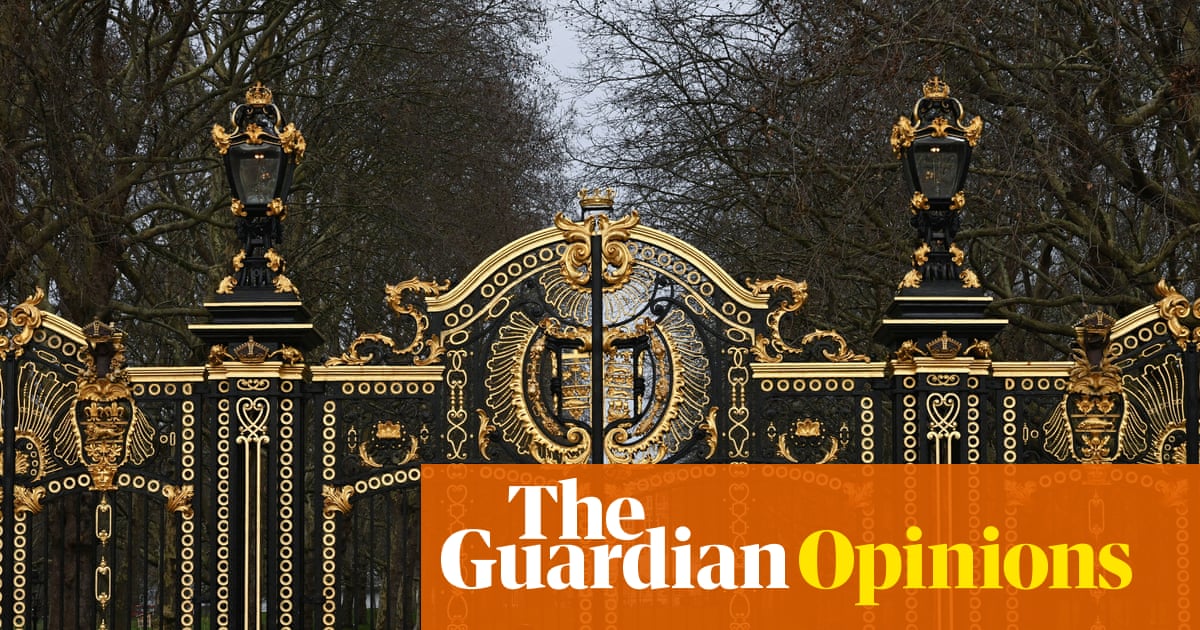
H ow noble that Thames Valley police has let it be known that its misconduct-in-public-office investigation into Andrew Mountbatten-Windsor is also considering potential offences including corruption and sexual misconduct. On Friday, it made a public appeal for potential victims and witnesses to come forward.
Obviously, the best time for the police to have started quietly asking questions was shortly after Metropolitan police officers – Andrew’s close protection detail – ferried him back from a London nightclub to a house with some other friends in their 40s, and one young-looking 17-year-old girl. Then waited outside till he decided it was time to come home. But as the saying goes: the second-best time is now. No wait, the second-best time was probably when Andrew paid a reported £12m to settle out of court with Virginia Giuffre, despite maintaining he had no recollection of meeting her. (He denies any wrongdoing.) Ach no, the second-best time was when leaked emails suggest the former prince passed his Met close protection officer Giuffre’s birthdate and US social security number and asked him to carry out checks on her . Sorry, wrong again, the second-best time was a full 12 years ago, when Giuffre alleged that she was sex trafficked to and assaulted by Andrew on that night mentioned above, as well as on two other occasions.
What are we supposed to say now? Well done, officers? Better late than never? Do me a favour. Virginia Giuffre took her own life just over a year ago at a remote Australian farmhouse, unable to outrun her demons. She was 41. But she spent a really, really, really long time – almost a third of her life – trying to get people to act on what she was saying about a man who was literally protected by serving law enforcement officers. The Met never opened a full investigation into her claims.
You hear a lot about pressure on policing numbers and the inevitable downstream effects on service delivery. But imagine if you had a minimum of two police officers literally on the scene, often inside the house, in a whole variety of “odd” situations all over the world, with nothing to do but watch and wait for hours on end, and who might very well have passed the time wondering what His Nibs might be up to, or – to pluck an example – why they were being asked to provide private security for a dinner party at the New York mansion of a man who had recently been released from prison after serving time for soliciting prostitution from a minor. Did anything about what these serving officers were required to do ever strike them as weird and perhaps even potentially legally undesirable? Of course it must have. Did they or their superiors do anything meaningful about it? Of course they didn’t. Andrew’s various homes were only finally searched in the year 2026, and evidence of interest was reportedly recovered during those probes.
The sole reason certain individuals and institutions in the British establishment have become relaxed about treating this case as they should properly have done all along is that not doing so would now be more damaging to them. But they spent the best part of 15 years not doing so. Nothing about this has ever been about doing “the right thing” – it has always and only been about protecting their vested interests, and that goes for the monarchy as much as the police. And it also goes for the politicians who seem to have spent for ever accepting guidance or winks and nods about how things just have to be, and not demanding that actually, this was bullshit and things shouldn’t be like that at all.
As far as the police go, it remains a grimly fascinating possibility that they waited for Andrew’s mother to die before properly grasping this nettle. According to various solicitous statements on Friday, they believe there might be other witnesses or people with helpful information out there. Gosh, after all this time, I don’t know where you’d start. Met police employment records?
It was the late queen, we now know, who pushed so hard for Andrew to get the trade envoy role , presumably to keep him out of trouble. Great job! etc. Looking back to one column I wrote in 2015 (long time covering this subject), I mentioned that I’d always assumed that job “was merely some sinecure designed to get the queen’s second son between golf courses without any boring little people making a fuss about who was paying for the helicopters”. And yet, according to the Andrew papers released this week, his people seem to have actively tried to prevent him playing golf on his overseas jaunts. As one brief states: “Captain Blair [Andrew’s then personal private secretary] particularly asked that the Duke of York should not be offered golfing functions abroad.” Oh dear. There’s a reason why football managers and trophy wives – and, apparently, concerned royal mothers – prefer it when their headstrong charges are playing golf. And that is because when they are doing that, they are not doing any of the other “things”. What were you thinking, Captain Blair?! Andrew should ALWAYS have been golfing, because if he wasn’t doing that, there seems to have been a strong chance that he might have been cocking up Britain’s interests, laying the ground for impenetrable private business deals or indulging in various other activities that are even less mentionable.
No doubt we shall be hearing much more from the police about what is continually referred to as an “unprecedented investigation”. But you know what’s better than an unprecedented investigation? A precedented one. This one should absolutely have been precedented, and doing it now – for the public service equivalent of clout – is precisely nothing to boast about.
Marina Hyde’s new book, What a Time to be Alive!, is out in September (Guardian Faber Publishing, £20). To support the Guardian, order your signed copy at guardianbookshop.com . Delivery charges may apply.
Marina Hyde is a Guardian columnist
Do you have an opinion on the issues raised in this article? If you would like to submit a response of up to 300 words by email to be considered for publication in our letters section, please click here .
US concerned Russian campaign against Baltics could ‘spark into something bigger’, says Rubio – as it happened
World news
Trump’s ‘disappointment’ with Nato lays groundwork for ‘one of the most important’ summits ever, Rubio says – Europe live
Jakub Krupa
Fri 22 May 2026 14.51 CESTFirst published on Fri 22 May 2026 09.42 CEST
News
https://www.theguardian.com/world/live/2026/may/22/nato-mark-rutte-us-donald-trump-troops-poland-summit-russia-baltics-drones-tensions-ukraine-latest-news-updates
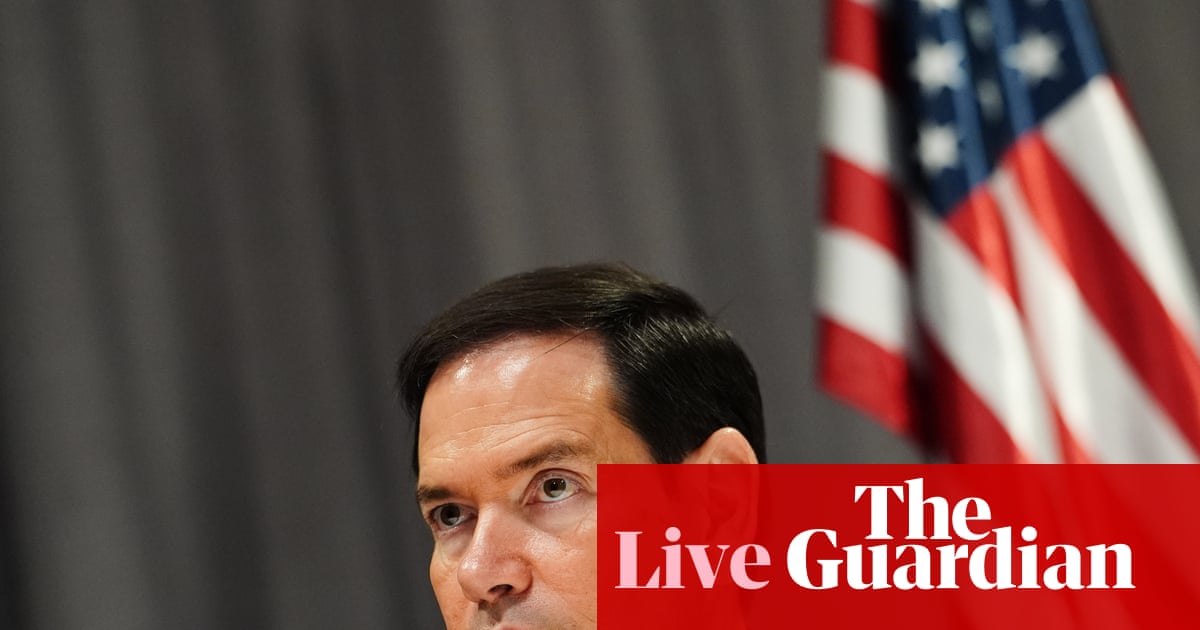
Trump’s ‘disappointment’ with Nato will be discussed at ‘one of the most important summits in history of Nato’ in Ankara, Rubio says
Rubio begins with thanks to Sweden for hosting the ministerial meeting.
But that’s where the niceties end as says the upcoming Ankara summit will be “one of the more important leaders’ summit in the history of Nato ,” as the leaders will have to respond to Trump’s “disappointment” with the alliance’s “response to our operations in the Middle East.”
“That will have to be addressed, that won’t be solved or addressed today. That’s something for the leaders level to discuss. ”
He notes the US announcement on Poland, but adds “ the United States continues to have global commitments that it needs to meet in terms of our force deployment , and that constantly requires us to reexamine where we put troops.”
“This is not a punitive thing, it’s just something that’s ongoing, and it was pre-existing,” he says.
He says there’s plenty of scope to work with Nato on defence industrial base.
Asked about potential further US troops reductions in Europe – with the journalist using the example of Italy – Rutte says it’s important that the US is “pivoting” “over time, … in a structured way,” and generally he can’t even really tell us too much as it’s a US decision.
“The overall deterrence and defence in Europe has to stay the same, because we are facing the Russian threat, we all acknowledge this,” he stresses.
The rest of his answer is essentially waffling very general.
And that wraps up the press conference.
Asked about Russian shadow fleet ships , he again says it’s all confidential and he can’t say too much about it, but insists the renewed push to counter the fleet makes “the Russians take note of this, and that it is big, big irritant to them.”
Rutte gets also asked if Rubio leaves Sweden less disappointed about the allied behaviour over the last few months when it comes to Nato’s response to the Iran war.
Again, he launches into a very lengthy and complex answer, outlining the US frustrations with Nato, but insists most of them have been addressed, and the Europeans “heard” the US points.
Rutte gets asked if he has any update on the planned – or potential – US changes to its readiness to respond to a potential crisis, after suggestions the US could lower its contribution to Nato’s readiness forces, the Nato Force Model.
He gives a really complicated answer, but effectively it boils down to: something is changing behind the scenes, but I can’t tell you what it is.
“What is playing out now, at the moment, at the level of policy directors, is US contribution to the Nato Force Model, so that is a process now ongoing, but hey, we are prepared for this,” he says.
He says it’s obvious the US needs to make sure it has “all the capabilities and all the key enablers are everywhere where we need them” and that leaves more space for European and Canadian allies.
But overall, he says, “this is highly classified, because we don’t want to make anyone any wiser.”
“This is nothing new. Everybody knew this was happening, and it has nothing to do with the fact that the US wants to equalise the burden. It has to do with the fact that they cannot be everywhere at the same time.”
He then gets pushed on this answer and whether he can confirm that there is something changing. He deflects the question, and says it’s all “highly classified.”
Zelenskyy invited to join Nato summit in Ankara, Rutte confirms
Asked about Ukraine , Rutte praises their fight against Russia , and notes that “there are even reports that Ukraine is in net terms regaining territory, not massively, but at least it’s stabilising, and potentially even moving now in the right direction.”
“ I would not be too happy if I was Putin today – I would never be happy if I was Putin – but particularly not the last couple of weeks, because things are not going in the right direction.”
He confirms that Ukraine’s Volodymyr Zelenskyy will be invited to join the summit in Ankara.
“I invited him already … He will be there, like in The Hague.”
Rutte gets asked about the meeting today and how it turned out after some pretty fierce disagreements between the members in recent months.
Ever an optimist, he insists it was “a very good meeting,” while cheekily adding that as “this is a democratic alliance, we will always have debates.”
But he stresses “the difference is huge” if you compare to where Nato was two years ago.
He adds that the alliance still needs to keep changing, and “we have to make sure that the summit in Ankara really delivers.”
Asked if Europe should prepare to defend itself without the US, he rejects the premise of the question.
“We are not preparing for that last part of your question,” he says, but also repeats his lines on making Nato stronger through stronger European element.
“What you will see over the coming years is a more equal, as a shift, a credible shift, where the Europeans take this bigger responsibility with the United States firmly anchored in the transatlantic relationship,” he says.
On Ukraine , Rutte just repeats his key lines from yesterday, stressing the need to keep supporting and funding Ukraine and its purchases through the Prioritised Ukraine Requirements List.
On Iran, he criticises its actions in regard to the strait of Hormuz, echoing Rubio’s earlier call for all countries to oppose their attempts to restrict freedom of navigation.
And we’re going to Q&A.
Nato’s commitment to Article 5 ‘ironclad’ with ‘absolute’ resolve to defend ‘every ally,’ Nato’s Rutte says
Rutte begins by repeating his usual lines on investing in defence, “producing the capabilities we need,” and continuing support for Ukraine.
He makes a point by saying that increased defence spending is one thing as member states gradually build towards the 5% GDP target agreed last year in The Hague, but “it isn’t an end in itself.”
He stresses the need to build industrial defence capacity so “we become more capable, so that we can further strengthen our armed forces and ensure they have the equipment they need to deter any adversary and defend every ally.”
He then turns to the issue of making Nato “not only stronger, but also fairer,” which is a diplomatic phrase for Europe taking more responsibility for its defence.
But among growing provocations from Russia , h e very pointedly repeats his warning to adversaries:
“I know some have been questioning that [transatlatic] bond, and perhaps even questioning the resolve of this alliance to remain united in the face of an adversary, so let me be crystal clear.
Allies’ commitment to Article Five is ironclad. Our resolve and ability to defend every ally is absolute. Were anyone to be foolish as to attack us, the response would be devastating. ”
Rutte briefing media after Nato talks in Sweden
Here we go – Rutte is here to brief us on today’s Nato talks.
As always, you can watch along, but I will bring you all the key lines here.
‘Full-on summer heat’: western Europe braces for unusually high temperatures
Jon Henley Europe correspondent and Sam Jones in Madrid
In other news, a large swathe of western Europe is bracing for the first significant heat event of the summer, with temperatures forecast to rise to more than 10C above the norm and new monthly records for May expected to be set in possibly hundreds of places.
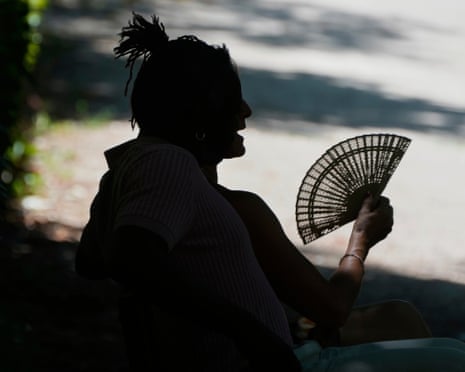
Temperatures across Portugal, Spain, France and the UK were expected to exceed 30C (86F) on Friday and into next week, reaching 32C in Paris and London and 35C in south-west France, with highs of up to 38C in the Guadiana and Guadalquivir regions of Spain.
“Both maximum and minimum temperatures are likely to reach unprecedented levels for the season in multiple regions, particularly the south-west, during a premature heat event that will be intense and last several days,” said Météo-France .
The French national weather forecaster said records were almost certain to be set for the highest May temperature recorded in France (30.5C in 2025), and the highest average temperature across the country on a day in May (22.8C in 2017).
It said the exceptional temperatures, likely to exceed previous records by three or four degrees in some cities such as Nantes and Brest, were caused by a heat dome, with hot air from Morocco trapped under the high pressure of a powerful anticyclone.
Météo-France said the temperatures expected in Brittany in particular were “quite remarkable so early in the pre-summer season”, and likely to exceed existing records by as many as three or more degrees.
It said climate breakdown meant that Europe, the world’s fastest-warming continent, could expect such exceptional heat events “more and more often and more and more prematurely, and to be more and more intense”.
We are expecting to hear from Nato’s secretary general Mark Rutte and Sweden’s foreign minister Maria Malmer Stenergard in the next half hour as the Nato ministerial meeting in Helsingborg is expected to wrap up shortly.
I will bring you all of that when they show up.
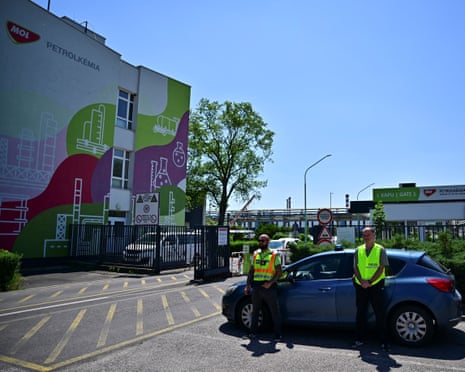
One dead, nine injured in explosion at MOL petrochemical plant in Hungary
Meanwhile, Hungary’s health minister Zsolt Hegedűs confirmed that nine people were injured, including two seriously, in an explosion at a MOL plant in Tiszaújváros ( 9:50 ).
One person also died at the scene.
Hegedűs said that no toxic substances were released to the environment and there is no broader threat to the public.
Protests at new US consulate after Trump envoy says time for US ‘to put its footprint back’ on Greenland
Nordic correspondent
In other news, hundreds of people protested against the opening of a new US consulate in Nuuk in Greenland yesterday after comments by the US special envoy that it was time for Washington “to put its footprint back” on the Arctic territory.
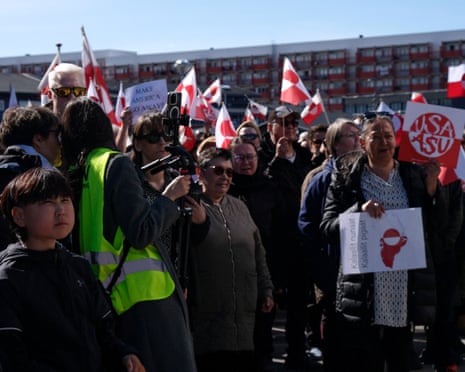
Many Greenlandic politicians, including the prime minister, said they would not attend the official opening on Thursday.
Protesters carried Greenlandic flags and signs that read “USA Asu” (Stop USA) and shouted “Greenland belongs to Greenlanders” outside the Greenlandic parliament before shouting “go home” outside the US consulate.
The US special envoy, Jeff Landry , arrived in Nuuk uninvited with a delegation including a doctor, who caused fury by saying he was there to “assess the medical needs of Greenland”. Landry briefly attended a business conference with the US ambassador to Denmark, Kenneth Lowery, and left Nuuk on Wednesday night.
During his visit, Landry told Agence France-Presse he thought it was “time for the US to put its footprint back on Greenland”.
He said:
“Greenland needs the US. I think that you’re seeing the president talk about increasing national security operations and repopulating certain bases in Greenland.”
Meanwhile, negotiations between the US, Greenland and Denmark are continuing, despite the fact Copenhagen is without a fully functioning government amid record-long coalition talks.
While Greenland’s prime minister, Jens-Frederik Nielsen, reiterated this week that the largely autonomous territory – a former Danish colony that remains part of the Danish kingdom – was not for sale, he also said Greenland was “obliged to find a solution” with the US.
Nato shooting down drone over Estonia sends message to Russia, Romanian minister says
Meanwhile, Romanian deputy defence minister Sorin Moldovan said at the Globsec Forum in Prague that the shooting down of a drone in Estonian airspace earlier this week sends a clear message to Russia that incursions into Nato airspace will not be tolerated.
Speaking before the summit kicked off, German foreign minister Johann Wadephul said Berlin will spend more than 4% of the country’s GDP on defence this year and is on its way to the new target of 5%, Reuters reported.
Germany will suggest intensifying defence cooperation with Ukraine with the goal to speed up production, Wadephul said.
Rubio’s tone on Trump’s ‘disappointment’ suggests fireworks in Ankara – snap analysis
Going by Rubio’s tone on Trump’s disappointment with Nato and how this is something that will have to be discussed by the leaders in Ankara, it’s clear we will be hearing a lot about it in the coming weeks.
Calling it “one of the most important summits in the history of Nato” is Trumpesque in its style, and sounds almost like a warning.
‘Some slight progress’ in talks with Iran, Rubio says
Rubio then goes into Iran in a bit more detail, saying there has been “some slight progress” in talks with Teheran.
“I don’t want to exaggerate it, but there’s been a little bit of movement, and that’s good. The fundamentals remain the same. Iran can never have a nuclear weapon, it just cannot.”
He says the US needs to “address the issue of the highly enriched uranium,” and restore the freedom of navigation in the strait of Hormuz.
“Iran is trying to create a tolling system. They’re trying to convince Oman, by the way, to join them in this tolling system in an international waterway. There is not a country in the world that should accept that.”
He says the the US has a draft UN resolution it’s working on with Bahrain, with “the highest number of co-sponsors of any resolution ever before the Security Council.”
“ Unfortunately, a couple of countries on the Security Council are thinking about vetoing it. That would be lamentable. We are you doing everything we can, though, to achieve the sort of global consensus that’s necessary to prevent this from happening, and we’re trying to use the United Nations. Let’s see if the United Nations still works. ”
He says that “almost every country” represented at Nato has signed as a co-sponsor, and he hopes the remaining few “soon will.”
He then ends on a slightly upbeat note, saying he is hoping for “a good meeting today” to “set the groundwork for the leaders to meet in about six weeks.”
And that ends his briefing.
US arms sales to Taiwan on ‘pause’ due to Iran war, says acting navy chief
Taiwan
US arms sales to Taiwan on ‘pause’ due to Iran war, says acting navy chief
Alastair McCready
Fri 22 May 2026 11.08 CESTLast modified on Fri 22 May 2026 12.23 CEST
News
https://www.theguardian.com/world/2026/may/22/us-arms-sales-taiwan-pause-iran-war-says-acting-navy-chief
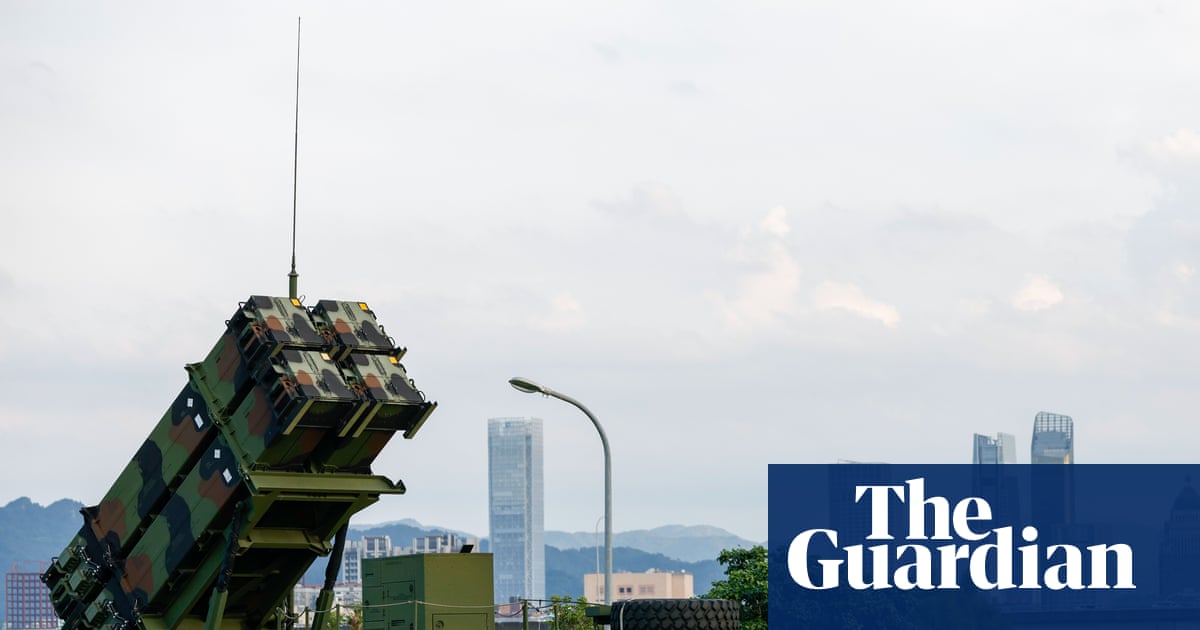
US arms sales to Taiwan have been “paused” to ensure the US military has enough munitions for its Iran operations, according to Washington’s acting navy secretary, in the latest blow to Taipei after a series of comments by Donald Trump .
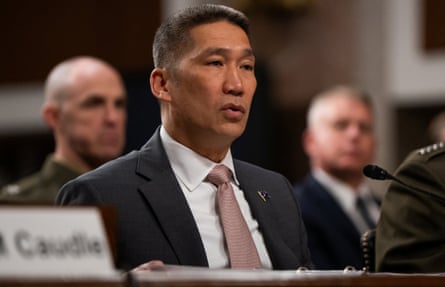
When asked at a congressional hearing on Thursday about a $14bn (£10.4bn) weapons package awaiting Trump’s signoff for months, Hung Cao said: “Right now we’re doing a pause in order to make sure we have the munitions we need for Epic Fury [the Iran war] – which we have plenty.”
Cao added: “We’re just making sure we have everything, then the foreign military sales will continue when the administration deems necessary.”
When the US senator Mitch McConnell asked whether he expected the arms sales to Taiwan to be approved eventually, Cao said the secretary of state, Marco Rubio, and Pete Hegseth, the Pentagon chief, would make that decision. “Yeah, that’s what’s really distressing,” McConnell said.
Concerns are growing over reports that the US has significantly depleted its missile stockpiles since launching its increasingly intractable war against Iran on 28 February, which has since settled into a fragile ceasefire.
Responding to Cao’s remarks, Taiwan’s presidential office spokesperson, Karen Kuo, said on Friday that Taipei had received “no information indicating that the US intends to make any adjustments to this arms sale”.
But the announcement will be unwelcome news for Taipei, coming a week after Trump met his Chinese counterpart, Xi Jinping, in Beijing for a summit in which Washington’s multibillion-dollar weapons packages to Taiwan were high on the agenda.
Beijing has repeatedly said it “resolutely opposes” Washington’s arms sales to the island democracy, which it regards as a breakaway province, despite never having ruled it, and has not renounced the use of force to take.
During Trump’s visit, Xi issued a stark statement asserting that the US and China “will collide or even conflict” if the Taiwan issue “is not handled well”.
Washington maintains an ambiguous stance on whether it would defend Taiwan in an invasion scenario. But under the decades-old Taiwan Relations Act, it is required to provide Taipei with sufficient military equipment to defend itself.
While Trump said he made no commitments about Taiwan during his meeting with Xi, he has made several statements in the week since that have cast doubt over the future of Washington’s enduring support for Taipei.
In an interview with Fox News while still in Beijing, the US leader described the weapons packages as a “very good negotiating chip”, suggesting he was prepared to break with Washington’s policy that it would not consult China on the matter.
Trump also told reporters onboard Air Force One when returning from the Chinese capital that he discussed Taiwan in “great detail” with Xi and would soon “make a determination” on pending weapons packages.
The US leader, however, has also said he plans to speak with Taiwan’s president, Lai Ching-te – a bold move that Taipei has said it is open to, but which would surely provoke a robust response from Beijing.
No sitting US president has spoken to Taiwan’s leader since 1979, when Washington shifted diplomatic recognition from Taipei to Beijing. Trump did, however, speak to the then Taiwan president, Tsai Ing-wen, when he was US president-elect in late 2016 .
Additional reporting by Yu-chen Li
‘A beacon of hope’: FC Chernihiv set for Ukrainian Cup final against all odds
European club football
‘A beacon of hope’: FC Chernihiv set for Ukrainian Cup final against all odds
Nick Ames
Wed 20 May 2026 09.00 CESTLast modified on Wed 20 May 2026 16.14 CEST
News
https://www.theguardian.com/football/2026/may/20/fc-chernihiv-ukranian-cup-final
A minivan with darkened windows pulls up at a gym in central Chernihiv and, once the doors have slid open, a stream of youths emerge into the daylight. Inside, Artem Rakitin sits everyone down on the rubber mat for one last pep talk. He has known most of the young men for several years, working with them here twice a week and in effect acting as a mentor. It is a kind of physical and mental training, he explains: self-discipline; resisting vices; preparing oneself, if the moment comes, to defend his country. “One of the main targets is for them not to become alcoholics, drug addicts or anything like that,” he says. “It’s to put their energy in the right places, and to support the right team.”
The team they follow is FC Chernihiv and, on Wednesday evening, the second-tier side will face Dynamo Kyiv in a Ukrainian cup final no one could have predicted. FC Chernihiv are battling relegation but, to delirious scenes, won their semi-final against Metalist 1925 Kharkiv on penalties despite being reduced to 10 men in the fifth minute. They are one more upset from an improbable Europa League spot; it is a remarkable moment for a city, tucked in Ukraine’s north towards the Russian and Belarusian borders, that has suffered devastating losses since February 2022.
Rakitin knows the significance as well as anyone. During Russia’s siege of Chernihiv, which lasted for more than a month in the early stages of the full-scale invasion, he led the evacuation of about 25,000 women and children from the city. “I trained here, I studied here, everything is here,” he says. “I love my city very much.”
It earned him national renown and, as a special forces officer with the call sign “Rocket”, he later played vital roles in the high-profile liberations of Snake Island and the Boyko Towers gas platforms from Russian control. “A while afterwards I came to the realisation that these were very important events, not only for Ukraine but for the whole world,” he says. “They were the first operations of this kind.” He continued to serve near the frontlines until shrapnel from tank shelling cost him his right eye.
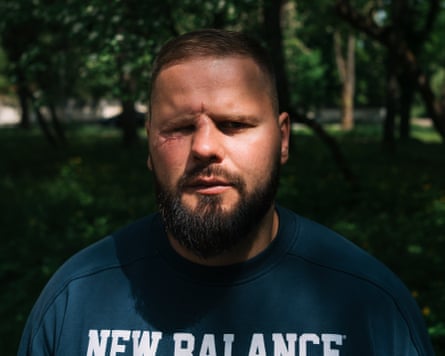
“It’s a crucial moment for us in these circumstances,” he says of the final, which will be played in Lviv. “Drones, ballistic missiles, rockets and sirens have affected sports all over the Chernihiv region. Having a club representing our city and area on this stage makes it the greatest moment in the history of Chernihiv football.”
Earlier this season Rakitin decided to fashion a new ultras group, culled largely from the teenagers he trains at the gym. FC Chernihiv had lacked that kind of active support during their rise from regional football to the first league, which they joined upon the domestic sport’s resumption in August 2022. “At every away game our support is very vocal, very loud,” he says. “We know all of the team’s players personally.”
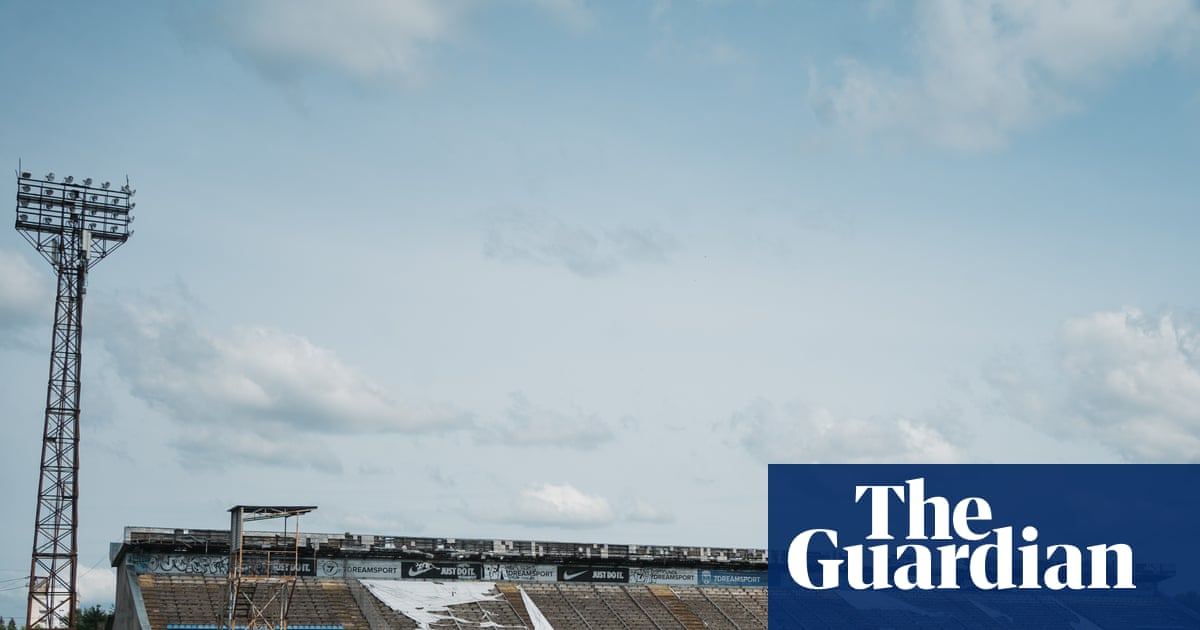
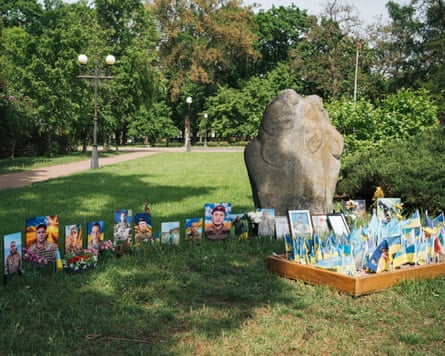
One of the group, Bohdan, remembers watching the city’s famed FC Desna club with his father. In 2017 they looked on at Chernihiv’s central stadium as Desna beat Zirka Kropivnytskyi 4-0 and secured promotion to the Ukrainian Premier League. “It was my first time, a crazy match,” he says. Bogdan was hooked but in March 2022 the venue was reduced to ruins by Russian shelling. Desna would not compete at senior level again. Images of the destroyed arena circulated worldwide: it chillingly encapsulated the ruin of sporting infrastructure in large areas of Ukraine. A walk around its pitch brings home the level of violence inflicted back then.
FC Chernihiv’s ascent, forged by a team and staff composed largely of locals, is a compelling response. Football in this attractive, historic city, which housed nearly 300,000 people at the start of 2022, has bounced back in full view. Yet again Ukraine has built something new on top of the rubble. Wednesday’s cup finalists have had to contend with damage to their own facilities. Their small, smart stadium and training ground in the city’s north were situated directly between the Ukrainian and Russian forces during the siege. The main pitch was bombed by the latter and, by happy coincidence, its renovation is due to be completed this week. Debris is still visible around its periphery. On Saturday, when Inhulets visit for a crucial league game, the team will play on it for the first time in more than four years.
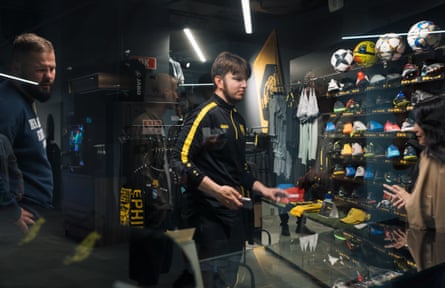
Bounding around one of the side pitches, Ihor Bobovych is hard at work. It is Monday and the first team, along with the manager, Valeriy Chornyi, and most of his coaching staff, set out on the nine-hour drive to Lviv at 7am. But FC Chernihiv’s academy plays an essential role in offering hope to youngsters from a ravaged region where, otherwise, it may not exist. About 500 children train regularly in their youth system, a number of whom have lost parents during wartime. A greater figure still must grow up while their fathers or mothers serve in the army. Bobovych, once a prolific Desna striker and now a youth coach, is giving an individual session to one of their prospects.
“How can it not be important?” he says of football’s responsibility to local youngsters. “It gives them the opportunity to train, and not to sit in basements and bomb shelters. We do our job as coaches: we can’t replace their parents but we can distract them a little from all of this. It’s better this than they sit and think about whether a Shahed drone just flew over them. An academy can be a beacon of hope.”
Chernihiv remains under attack and the fact is reinforced when, on the 10-minute drive between the club’s base and the city centre, what appears to be a Russian drone explodes overhead. It has been downed by the local air defence in broad daylight; fortunately no one will discover whether its intended destination was nearby or, perhaps, 90 miles away in Kyiv. FC Chernihiv’s owners, Yurii and Mykola Synytsia, have driven the club’s rapid development despite the surrounding turmoil but their vision of an expanded 4,000-capacity stadium may not be realised until less dangerous times.
The dream of cup glory, though, could not be more immediate. FC Chernihiv’s annual budget of £560,000 is the lowest in their division but they have earned their shot at Dynamo’s giants. About 900 of their fans, clad in yellow and black, will be present inside Arena Lviv; three busloads will depart the stadium at daybreak on Wednesday.
Then, of course, there is Rakitin and his proteges. Back at the gym he runs the rapt group through their plan for the final: departure times and locations along with the visual display, which will represent their city’s heritage, that they have planned to unfurl in the stands. “We have prepared, and we will surprise you,” he says, the hint of a smile breaking out. A city’s story of sporting resilience and renewal may yet find more ways to stir the soul.
‘We’re the good ones. I really believe that’: meet the German billionaire behind the Enhanced Games
Enhanced Games
‘We’re the good ones. I really believe that’: meet the German billionaire behind the Enhanced Games
Sean Ingle
Thu 21 May 2026 21.28 CESTLast modified on Fri 22 May 2026 11.33 CEST
News
https://www.theguardian.com/sport/2026/may/21/were-the-good-ones-i-really-believe-that-meet-the-german-billionaire-behind-the-enhanced-games
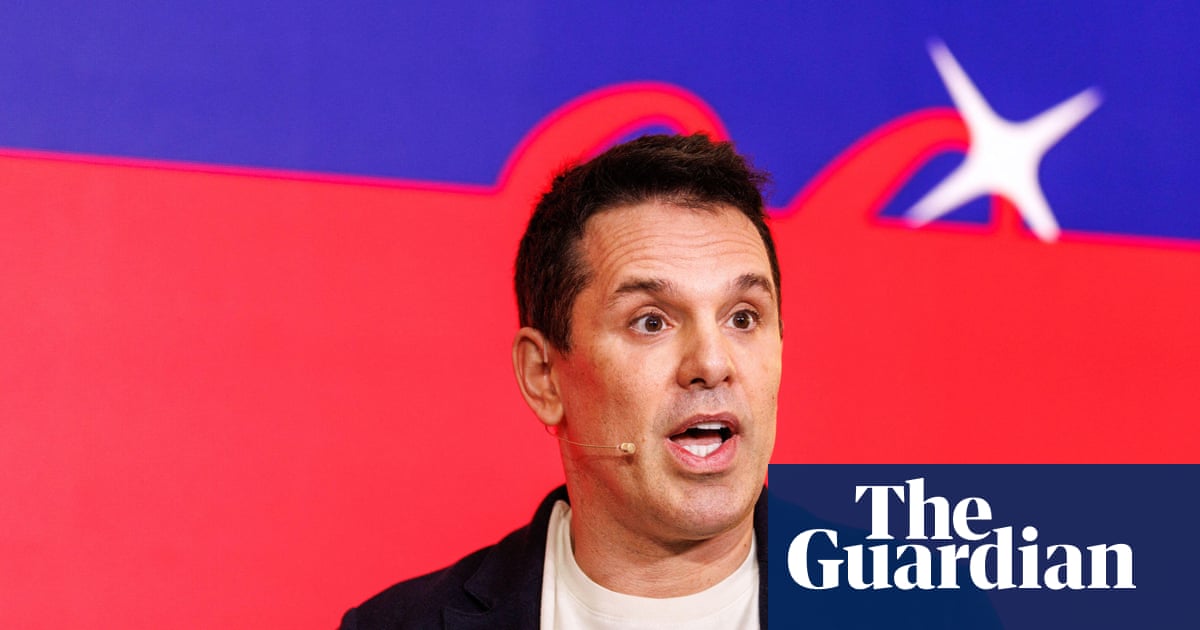
B efore we get to doping and psychedelics, arguably the most controversial man in sport is discussing how he came to own the largest triceratops skull ever discovered. And how he plans to install it in his London apartment.
So how much did you pay for it, I ask Christian Angermayer, the German billionaire who has made fortunes from biotech, bitcoin and psychedelics and now intends to do the same again using – and many believe abusing – sport. “Not a lot, because I find them.”
What personally? “I have bounty hunters who do that,” he replies. “I really don’t want to say what my costs are. But I also have a T-rex. And I don’t know where to put it, so I am going to sell it for around $40m.”
And the triceratops head? “It’s in London. I’m actually getting it put in my apartment. You need to come by. It’s a complete nightmare to insure it, and it needs a crane to get in, but it’s so spectacular.”
Incredibly, this is not even Angermayer’s most audacious plan. Because the dinosaur hunter believes he has unearthed fresh treasure in the dirt with his next project: the Enhanced Games . Critics have dubbed it the Steroid Olympics.
According to an Enhanced Games study, based on 36 of the 42 athletes who will compete this weekend, all but two will have taken performance-enhancing drugs banned by anti-doping authorities. Enhanced says that 91% are using testosterone, 79% human growth hormone, 41% EPO and 29% anabolic steroids.
It’s a concept that continues to shock and appal the sporting world. Angermayer, though, is convinced it represents the future.
His bet is that Sunday’s inaugural event, which features the 100m sprint, various swimming races and weightlifting events will be watched by millions of people, young and old, male and female, Republican and Democrat.
And he believes that many will, for the first time, start to think about spending $209 on testosterone cream to make them feel younger. Or $119 on GHK-Cu Copper, the peptide behind collagen, elasticity and real skin quality. Or one of the many other performance-enhancing drugs that are currently banned in elite sport but are available on the Enhanced website.
“I don’t understand why people limit medicine only for treating an illness,” Angermayer says. “Should we, as a society, think about how not to get sick in the first place? Why not use medically approved drugs, with a doctor, to help you to achieve your goal?”
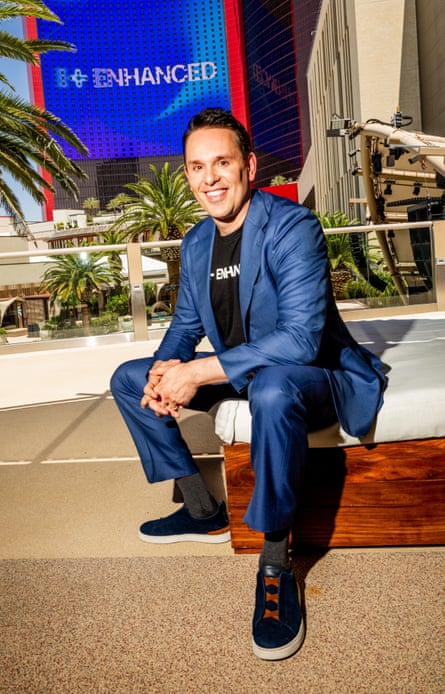
Some of this is perfectly reasonable. As Angermayer points out, GLP-1s, which are synthetic peptides, have been a gamechanger when it comes to treating obesity. He also knows when it comes to health and anti-ageing treatments, what was once lurking in the shadows is about to become mainstream. But time and again he downplays or disputes what anti-doping authorities say are the dangers and potential consequences.
Most interviews start with a few niceties, a couple of looseners to warm things up. Not this one. Angermayer knows I’ve written a column expressing my scepticism with the Enhanced Games. Originally the Guardian’s application for accreditation to the event was rejected, although organisers later changed their minds. And so we get straight into it.
“I know I’m right,” Angermayer tells me. “I was looking forward to this. Only people who have not understood what we’re doing, or are profiting from the gravy train of the IOC don’t. We’re the good ones. I really believe that. I have a very strong conviction.”
But the World Anti-Doping Agency calls the Enhanced Games “a dangerous and irresponsible concept”, I reply, while Travis Tygart, the CEO of US Anti-Doping, says it is a “clown show”.
Angermayer’s eyes light up. “I want that quote everywhere,” he says. “I’m sending a heartfelt thank you because they saved us billions in marketing. LIV Golf invested $5bn and couldn’t get this popularity. We had a survey in November where we asked more than a thousand Americans have you heard about Enhanced Games? And 61% had already, while only 42% had heard about LIV after they spent $5bn.”
Angermayer is clearly bright. And the evidence of the past 25 years suggests he usually gets it right. But given he has various biotech businesses, and speaks to scientists and leading doctors, he must be aware of the risks involved in taking performance-enhancing drugs?
“These are medically good things, if done properly,” he insists. “You can abuse everything. You abuse people, you can abuse substances. But if it’s done properly with a doctor, it is good for people.”
“If these substances had anywhere near the risk all these goons are saying, we would see athletes drop dead.”
But a lot of young cyclists died in the 1990s and early noughties and many suspect EPO abuse was to blame, I point out. Angermayer pushes back, saying he isn’t sure that was the primary cause.
OK, so what about the East German athletes in the cold war, some of whom ended up suing a pharmaceutical company in 2005? “East Germany gave it to children, without their consent, without the knowledge, and it was not FDA-approved drugs,” he replies. “You can’t compare that.”
Angermayer’s argument essentially boils down to this: that any substance approved for human use by the US Food and Drug Administration should be allowed to be used in elite sport, with close medical supervision.
However Wada warns that FDA approved drugs, which include steroids and EPO, are often meant to be used in a medical setting. And when taken outside it there is the potential to cause serious harm, whether it is immediately or months or years later.
Yet in fairness to Angermayer, he does make several other points that hit home. When I suggest, for instance, that he is cynically using athletes as a Trojan horse to sell performance-enhancing drugs – he shrugs and says isn’t that what sport has always done?
“What about the IOC, who is selling burgers, sugar drinks and alcohol?” he adds. “That is the business model of sports. I didn’t invent it, I’d be proud if I did. But the business model of sports is using athletes to sell products. Some sell shitty scarves, some sell very dangerous drugs.”
By that, Angermayer is not referring to testosterone, HGH or EPO, or any of the drugs athletes will be taking in the Enhanced Games.
“Alcohol is, by the way, by far the number one riskiest drug. It’s worse than heroin. It’s worse than crack cocaine, it’s surely worse than any enhancement. And we allow it as a society.”
He doesn’t drink. “It’s the devil,” he says. “I think a lot of people believe alcohol is good because it’s socially accepted and freely sold.”
Angermayer also points out, not unreasonably, that far more athletes cheat than the 1% who are caught. Where we disagree is on the numbers.
He cites the 2011 Wada study that suggested that close to half of elite track and field athletes had used banned drugs in the preceding 12 months. I point out that Wada says there were a “number of flaws and limitations in the methodology” and it has “little or no value when assessing today’s prevalence numbers”. But then he stops me.
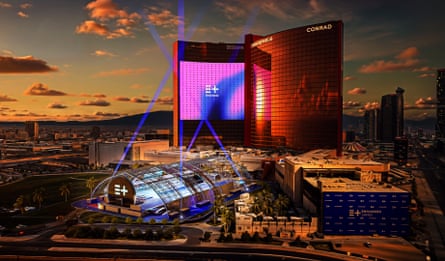
“Only from the UK, there were seven athletes in the Summer Games in Paris, who cheated to the gills,” Angermayer claims, without offering any supporting evidence. “Maybe it’s 30%. Maybe it’s 20%. But it’s not 1%.”
When it comes to enhancement, Angermayer certainly practises what he preaches. He says he has been taking testosterone replacement therapy since he was 30, and now takes 250mg per week. Enhanced Games athletes, he says, are taking more like 80-200mg because they are younger and don’t need as much.
More recently Angemayer has also started taking tesamorelin, a peptide which stimulates the pituitary gland to produce and release natural growth hormone – but is only approved by the FDA for treating HIV-associated lipodystrophy.
“We have decade-long studies,” he says of testosterone. “I am the biggest hypochondriac of all. It would be crazy if I injected myself with stuff which had a risk.”
“There is an urban legend that an increased amount of human growth hormones could cause cancer. But the great thing is I have maybe one of the best scientific departments at my disposal and I couldn’t find anything. There’s not a single study in the world. It’s in fact the opposite. A moderate increase in human growth hormones in people older than 30, is actually very healthy because your immune system goes up.”
This, to put it mildly, is not Wada’s view. It says that human growth hormone can trigger diabetes, heart problems, and abnormal growth in organs and bones.
Part of Angermayer’s conviction that he is right comes from his longtime advocacy for using psychedelics to help mental health and depression. That used to be a fringe position. Now it is mainstream. Our time is nearly up. Before I go I tell him that some people reading this will think he is a super villain, while others will think that he’s a pioneer. So how does he see himself?
“You need to make a judgment,” Angermayer replies. “But I can tell you one thing, I’m definitely not a super villain, for one reason: I brought back psychedelics after they were banned and marginalised. Their whole message is it’s all about love and being not a dick. So I don’t think I’m a super villain.”
Angermayer also wants to make another thing clear: the Enhanced Games is here to stay. The next edition, he suggests, might even involve beloved sports stars in their 40s and 50s competing to see if they could come close to their old personal bests while enhanced.
It sounds preposterous to me. And, sensing my scepticism, we end with a sporting bet. I say the Enhanced Games won’t last five years. He insists it will be thriving.
History suggests the man who pays bounty hunters to find dinosaurs will collect. Either way, try picking the bones out of that.
Escape of big cat belonging to Germany’s ‘Tiger Queen’ shatters peace of small town
Germany
Escape of big cat belonging to Germany’s ‘Tiger Queen’ shatters peace of small town
Deborah Cole
Fri 22 May 2026 08.00 CESTLast modified on Fri 22 May 2026 12.27 CEST
News
https://www.theguardian.com/world/2026/may/22/tiger-escape-germany-tiger-queen-keeper-injured

A tiger on the loose among garden allotments. Panicked residents summoning armed police ill-equipped to deal with a dangerous predator. And, behind it all, Germany’s self-proclaimed “Tiger Queen” and her private menagerie.
In startling scenes over the weekend in the eastern town of Schkeuditz, near Leipzig airport, the mix proved fatal for a big cat named Sandokan and left a keeper seriously injured.
On Sunday afternoon, a warm spring day when many hobby gardeners were tending to their flower beds, the tiger attacked a 72-year-old man at an enclosure kept by the former tamer Carmen Zander and escaped.

Officers alerted to the scene by panicked neighbours tracked the animal down to a nearby allotment complex and killed it about 30 minutes after it had escaped “to prevent danger to those present”, police said.
Witnesses said officers climbed on to the roof of a car and fired three shots at the tiger, which had been lying just a few metres from a small fence bordering the gardens.
“Our paradise was shattered,” Silvia Kaempf, 68, who has a shed in the neighbouring allotment association, told local media.
The keeper, who police said had been in the tiger enclosure “with permission”, is reported to still be in hospital with severe scratches and bites and is unable to answer investigators’ questions.
A spokesperson said the police did not have a veterinarian or a stun gun at their disposal at the time of the escape, leaving only lethal means to restore public order. Prosecutors said no inquiry was planned against the officers who killed the animal.
But the regional public prosecutor’s office said it had opened an investigation into suspected negligent bodily harm against Zander, 52, over possible breaches of safety protocols.
The mayor of the Dölzig district where Zander lives with the tigers, Thomas Druskat, called for the immediate removal of the enclosure. “It’s unthinkable what might have happened if other people had been injured,” he told the newspaper Leipziger Volkszeitung.
Zander, who was not present at the time of the attack, reportedly worked for 15 years as a circus tiger tamer but stopped touring about three years ago. She expressed her shock over the week’s events, and avowed her love for her tigers.
“It’s actually every animal trainer’s worst nightmare,” she told the public broadcaster MDR in reference to the attack and its consequences, saying she was also worried about her injured colleague.
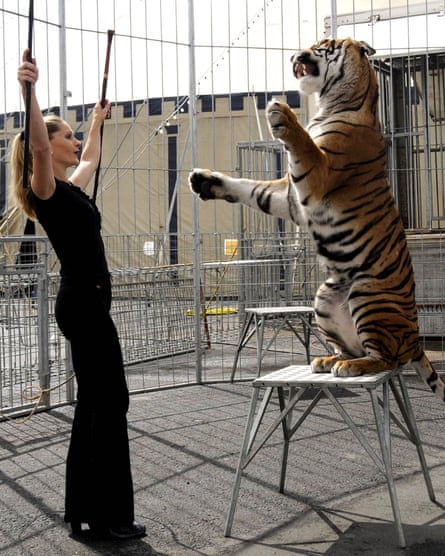
Zander’s website , which was still up this week advertising “wonderful” and “unforgettable” tiger-petting events for the public, features short biographies of each of her animals. Three tigers apart from Sandokan were listed as having died in recent years.
Sandokan was a nine-year-old, 280kg “majestic” Bengal-Siberian mix but was “a scaredy-cat” that could “quickly become overwhelmed and insecure” and “be triggered more quickly and unexpectedly” than the other animals.
“That’s why I need to be extremely sensitive and empathetic when training him, so that he feels secure with me,” Zander wrote, saying with the right treatment Sandokan reverted to being “a lovely, cuddly chap again”.
The website said that Zander had won multiple prizes at the Monte Carlo circus festival and featured a picture of her with Princess Stéphanie of Monaco.
However, she has previously faced scrutiny for the animals’ living conditions at the enclosure in an industrial zone of Schkeuditz, where she has kept tigers since 2016. The district administration office said there were eight tigers living at the facility.
A spokesperson for the office told Spiegel magazine that it had been “working for some time to improve the conditions in which the tigers are kept”.
Recently, Zander had been asked to “comply with the regulations in such a way that all animals have access to the required indoor and outdoor space, or to reduce the number of animals to fit the space currently available”.
The spokesperson said it was not yet clear what would happen with the animals as “no findings have yet been released regarding the investigation into the cause of the incident”.
The German Animal Protection Association called for stronger legal protections governing keeping wild animals, including a ban in some cases.
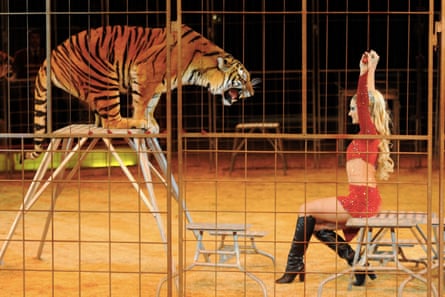
The animal rights group Peta, which has long criticised Zander , said veterinary authorities “share responsibility for this tragic incident” by having failed to act against the facility sooner and demanded that the remaining animals there be confiscated.
Yvonne Würz, a Peta adviser on zoos and circuses, criticised how Zander kept the big cats, telling local media: “The tigers are confined to a tiny space in their enclosure, in bare metal cages, and deprived of everything that would constitute a species-appropriate life for a tiger.”
Zander insisted her enclosure offered more hospitable conditions to those usually experienced by tigers in captivity. “The difference compared to a zoo environment is that my animals are always together and I don’t keep them in solitary confinement,” she said.
Zander relies on donations to care for the tigers, as well as the help of friends.
She said she dreamed of having her own tiger park, partly to raise awareness about the endangered species, and wondered why animal rights activists were not interested in finding a suitable solution for the tigers with her as their keeper.
If the animals were taken away from her, she said, they would be emotionally devastated. “They would become apathetic and refuse to eat. They would call out for me for days on end, withdraw into themselves and die.”
Zander did not respond to a Guardian request for comment.
Meta and Snapchat blocking Saudi dissidents’ accounts
Social media
Instagram, X and others blocking Saudi dissidents’ accounts
Stephanie Kirchgaessner
Fri 22 May 2026 14.12 CESTLast modified on Fri 22 May 2026 14.14 CEST
News
https://www.theguardian.com/media/2026/may/22/instagram-x-social-media-platforms-blocking-saudi-dissidents-accounts

Major US social media companies including Meta’s Facebook and Instagram platforms have blocked the accounts of Saudi Arabian dissidents so they are no longer visible inside the kingdom, following orders by Saudi authorities.
Those affected include Abdullah Alaoudh, a US-based activist and vocal critic of Saudi human rights violations, and Omar Abdulaziz, a Canada and UK-based activist who worked closely with Jamal Khashoggi before the journalist’s murder by Saudi agents in 2018.
At least seven accounts had been blocked by Meta at the end of April, including those of two American citizens and two individuals based in Europe, according to the advocacy group American Committee for Middle East Rights (ACMER).
Alaoudh, who serves as ACMER’s senior policy advisor, said: “Meta is effectively doing Saudi Arabia’s dirty work against Americans living in the United States. When a company geo-blocks accounts on behalf of a government with a documented record of silencing dissent, it becomes an instrument of repression. Meta should push back.”
Meta did not respond to the “dirty work” claim, but provided a statetment to the Guardian saying that when “something happens” on one of its platforms that is reported as violating local law but not the companies’ own community standards, the company may restrict the content’s availability in the country where it is alleged to be unlawful.
It added that “in a majority of cases” it informs affected users which state authorities sent the requests.
Meta operates a public “transparency center” , where it acknowledges that Saudi authorities contacted the company and sought restrictions on a total of 144 Instagram accounts, Facebook pages, and Facebook profiles during April. The site also shows that Meta restricted access to 108 “items”.
Interviews with some of the dissidents targeted suggest the companies approached by Saudi authorities did not all respond in the same way.
While Meta did alert users that their content was being blocked due to a “local legal requirement, or a request from a government”, Snapchat appears to have slowed or removed accounts in Saudi Arabia – including one used by Abdulaziz – without alerting the account owners of the change.
It is not clear how many Snapchat accounts were affected, and its owner, Snap Inc, declined to comment.

At least two users of X , which is owned by Elon Musk, received letters informing them that the platform had received a request from the Saudi communications, space and technology commission claiming their accounts violated Saudi laws.
A Saudi decree attached to the letters and seen by the Guardian said the accounts transmitted material that “infringes on public order, religious values, public morals, or the sanctity of private life”.
X told users including Abdulaziz that it had not taken any action on the reported content yet, writing that the company “strongly believes in defending and respecting the voice of our users”. It then urged addressees to seek legal advice if they wished, or to delete the relevant content voluntarily.
X did not respond to a request for comment.
Abdulaziz told the Guardian: “I think this is just the introduction to a massive crackdown by the Saudi government to mute opposition. It could go as far as committing atrocities, just like they did with the murder of Jamal Khashoggi .”
The Saudi government did not respond to a request for comment, sent through the Saudi embassy in Washington.
Other accounts targeted include those of individuals linked to the London-based human rights organisation ALQST, including its founder, Yahya Assiri. It said the requests from Saudi Arabia did not represent a neutral legal process, but instead exposed how authoritarian censorship can be dressed up as procedure.
“These [account holders] are not dangerous actors; they are people documenting abuses, challenging state propaganda and giving voice to Saudis inside the country who cannot speak freely,” said Dr Maryam Aldossari, an ALQST board member.
“Blocking these accounts would not protect public safety, it would project authoritarian power from scrutiny. X cannot hide behind vague references to ‘local legal requirements’ when those laws are routinely used to criminalise peaceful dissent.
“This is how authoritarian censorship travels: through legal notices, platform pressure and the attempted outsourcing of repression to global technology companies.”
Carlo Petrini, Slow Food movement founder, dies aged 76
Italy
Carlo Petrini, Slow Food movement founder, dies aged 76
Angela Giuffrida
Fri 22 May 2026 13.14 CESTLast modified on Fri 22 May 2026 13.40 CEST
News
https://www.theguardian.com/world/2026/may/22/carlo-petrini-slow-food-movement-founder-dies-aged-76
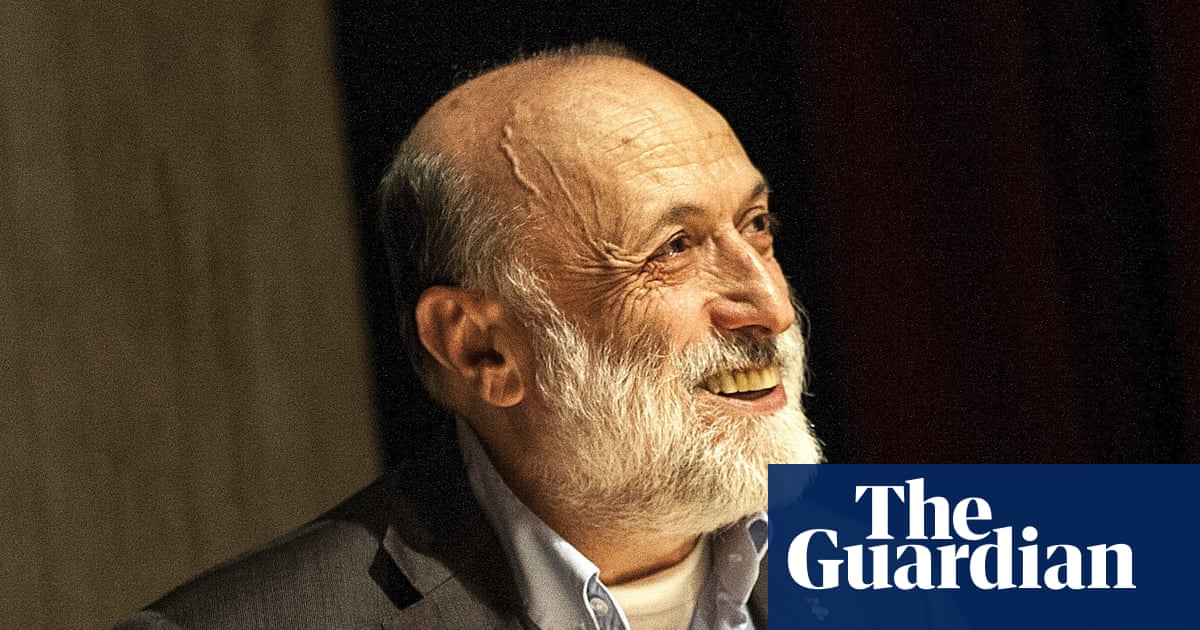
Carlo Petrini, the journalist who founded the Slow Food movement in protest against the arrival of the first McDonald’s in Italy , has died aged 76.
Petrini, who had been diagnosed with prostate cancer in recent years, died in his home town of Bra in northern Italy’s Piedmont region. He had led Slow Food , which since 1986 has campaigned against fast-food culture by promoting sustainability and local cuisine, as president until 2022.
A statement from the Slow Food press office said Petrini, who also set up the University of Gastronomic Sciences in Pollenzo, near Bra, was “a visionary leader and public intellectual with a profound commitment to the common good, human relationships and the natural world”.
Through his initiatives, Petrini had “brought to life a global movement rooted in the values of good, clean and fair food for all, connecting communities, farmers, food artisans, cooks, activists, and young people across the world”, the statement added.
Italy’s president, Sergio Mattarella, led the tributes on Friday.
“The death of Carlo Petrini leaves a great void, not only in the world of food and wine science, but also in society as a whole, not just in Italy,” said Mattarella. “His insights and constant advocacy for sustainability, the need to preserve traditions, the enhancement of local cultures and respect for the environment have generated a new awareness of food culture and its production.”
Francesco Lollobrigida, the Italian agriculture minister, said “not every person leaves a trace of their passage, but Carlo Petrini did”, while the deputy prime minister Antonio Tajani said Italy had lost “a great ambassador” of its traditions.
Petrini and a group of friends established Slow Food in 1986 after widespread protests against the opening of Italy’s first McDonald’s close to the Spanish Steps in central Rome. Petrini and his fellow activists handed out plates of pasta to passersby while shouting: “We don’t want fast food. We want slow food.”
The restaurant opened despite the protests, and McDonald’s outlets in Italy now number approximately 800. Still, Slow Food went on to have a huge international impact, and is now active in more than 160 countries.
The movement has also had a significant influence in Britain, and Petrini was a friend of King Charles, himself a longstanding champion of organic farming. In February last year, Charles and Queen Camilla hosted an evening celebrating Italian slow food at Highgrove, with the Italian-American actor and foodie Stanley Tucci among the guests. Charles and Camilla also sampled produce from farmers associated with the movement during their state visit to Italy last year.
In 2004, Petrini was named a “European hero” by Time magazine, and in January 2008 he was the only Italian included in the Guardian’s list of 50 people who could save the world.
The Guardian view on Grenfell prosecutions: court dates cannot come soon enough | Editorial
Grenfell Tower fire
The Guardian view on Grenfell prosecutions: court dates cannot come soon enough
Editorial
Thu 21 May 2026 19.28 CESTLast modified on Thu 21 May 2026 19.38 CEST
News
https://www.theguardian.com/commentisfree/2026/may/21/the-guardian-view-on-grenfell-prosecutions-court-dates-cannot-come-soon-enough
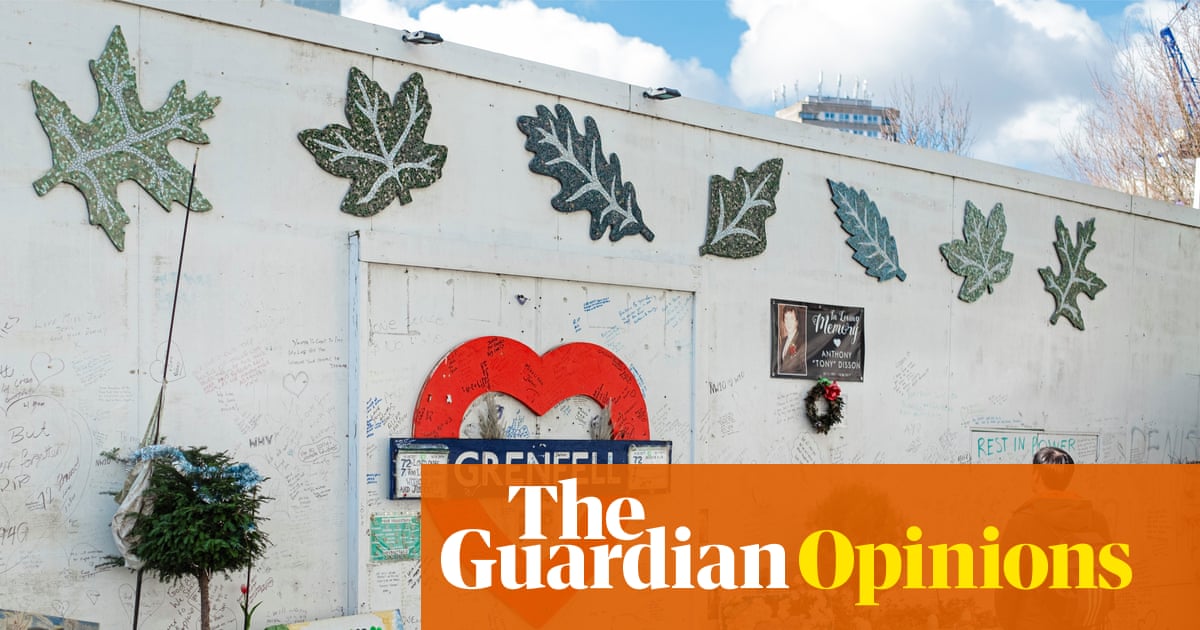
R elief at this week’s news that police are sending files to the Crown Prosecution Service, recommending charges against 77 individuals and organisations for their roles in the Grenfell Tower fire, is mixed with grief and anger. On 14 June the disaster’s survivors and their supporters will gather for the ninth annual silent walk around the west London neighbourhood in which the ruined tower stands. Next year marks a decade since the fire.
The public inquiry into the disaster pointed the finger at multiple public and private bodies , decisions and individuals. Three construction firms, Arconic, Kingspan and Celotex, were found to have been deliberately dishonest about their products. Poor regulation of building safety was the fault of central government. Kensington and Chelsea council, and its tenant management organisation, were strongly criticised for poor fire safety and other lapses. So were the architects and contractors commissioned to oversee the block’s refurbishment. The London fire brigade was culpable for its dangerous “stay put” policy, which should have been changed following previous cladding fires, including the one that killed six people in Lakanal House , south London, in 2009.
These conclusions, and the inquiry’s 58 recommendations, were delivered in September 2024. Yet even now, the prospect of criminal trials remains painfully remote. With prosecutors expected to decide on which charges to bring by next June, cases are unlikely to come to court until 2028 at the earliest. One survivors’ group, Grenfell Next of Kin , responded to Tuesday’s announcement with a statement that its confidence in the system has been “shattered”. Another group, Grenfell United, said that survivors “cannot be expected to endure years more of delay”.
Rightly, campaigners point out that the criminal law does not usually take this long. The Met’s defence is that this is the most complex investigation it has ever carried out. The inquiry pulled a massive amount of evidence together, and this material is certain to feature prominently in any court case. But whether blame is placed on the police, on the decision taken by Theresa May’s government to prioritise a public inquiry, or on the uncooperative approach to the inquiry taken by some witnesses, the consequence of such a protracted process has been to increase suffering and bitterness.
Criminal convictions have never been the only outcome sought. Campaigners welcomed the public inquiry’s findings and recommendations. Multimillion pound settlements of civil suits have been agreed. Earlier this year the government pledged dedicated funding for a long-planned memorial. Building regulation is in the process of being overhauled. A programme of cladding removal continues.
But there is frustration about the pace of change, and concern that the laws on corporate manslaughter and negligence are too weak. Last year the Common Wealth thinktank warned of the “very high threshold for liability” and called for tougher penalties to ensure “meaningful deterrence”. Some of the firms who bear responsibility for the Grenfell fire continue to win public contracts – causing further distress.
In spite of the outpouring of sympathy that followed the fire, and the tenacity of survivors who have campaigned for building safety as well as justice, the accountability and resolution that they have been seeking since 2017 remains a long way off. Prosecutors must now take the baton from the police, and move as quickly as they can.
Do you have an opinion on the issues raised in this article? If you would like to submit a response of up to 300 words by email to be considered for publication in our letters section, please click here .