UN’s climate crisis vote shows political momentum is growing, say experts

Climate crisis
UN’s climate crisis vote shows political momentum is growing, say experts
Isabella Kaminski
Fri 22 May 2026 12.27 CESTLast modified on Fri 22 May 2026 12.48 CEST
News
https://www.theguardian.com/environment/2026/may/22/un-climate-crisis-vote-shows-political-momentum-growing-experts

When the UN general assembly voted overwhelmingly in favour of a landmark climate crisis ruling on Wednesday, the Pacific island of Vanuatu’s prime minister hailed the result as the start of “a new chapter” in climate action.

“The task before all of us now is to translate legal clarity into meaningful action, stronger cooperation, and greater protection for present and future generations,” said Jotham Napat.

The recognition by states that they have a legal responsibility to address climate breakdown by cutting their greenhouse gas emissions, including tackling fossil fuels, could prove a boost for climate diplomacy and litigation, according to experts.

While the international court of justice’s (ICJ) 2025 advisory opinion was at the time hailed as a “historic win” for small island states particularly vulnerable to the effects of the climate crisis, it has so far proved weak as a diplomatic lever .

To try to help it make a difference on the ground, Vanuatu led negotiations on a new UN resolution, a lengthy process that required numerous compromises .

The final version , co-sponsored by 90 countries, urges states to transition away from fossil fuels in a “just, orderly and equitable manner” to reach net zero by 2050, and to phase out “inefficient fossil fuel subsidies that do not address energy poverty or just transitions as soon as possible”.

But the resolution explicitly does not attribute responsibility to any particular state.

Although the final resolution did not achieve the unanimity Vanuatu had sought, 141 countries voted in favour, with 28 abstentions. Eight states voted against it, including some of the world’s biggest producers of oil and gas: the US, Saudi Arabia, Russia, Belarus, Iran, Israel, Yemen and Liberia.

The advisory opinion has so far had more impact domestically than diplomatically. Harj Narulla, a barrister at Doughty Street Chambers in London who was counsel for Solomon Islands during the ICJ proceedings, said it had already proved transformative for domestic litigation . “This resolution won’t change that, but it does add great political weight behind the opinion which judges take notice of, even if they won’t say it publicly.”

It may also support domestic lawmakers trying to introduce new legislation and setting climate goals.

Joie Chowdhury, the climate justice and accountability manager at the Center for International Environmental Law, said: “One of the important spaces where we have already seen uptake of the ICJ’s legal conclusions is in nationally determined contributions . The resolution can further encourage national climate plans to integrate the advisory opinion’s findings.”

But Narulla said the new resolution was likely to have the greatest influence on climate diplomacy. “The international community is showing that Cop is not the only forum that matters and, if progress stalls there , then climate action will be pursued through the general assembly and in other multilateral spaces.”

Rebecca Newsom, the global political lead at Greenpeace International, said the timing of the vote, after the inaugural fossil fuel phaseout conference in Santa Marta , Colombia, last month and the impact of the energy crisis on the fossil fuel industry, showed “political momentum is clearly growing”.

“Governments must now translate this resolution into tangible roadmaps to equitably phase out fossil fuel exploitation, production and consumption,” said Newsom.

Tuvalu is due to host a meeting of world leaders in October, before the Cop31 global climate talks in Turkey the following month. It has also agreed to co-host the second fossil fuel phaseout conference early next year.

Meanwhile the world’s biggest oil and gas producers remain opposed to any suggestion that they have legal obligations to mitigate their greenhouse gas emissions. The US, for example, reportedly lobbied to drop the UN resolution altogether . Before the vote, the US ambassador Tammy Bruce criticised the text for singling out “certain groups for preferential treatment” and making “alarmist political statements, such as the idea that climate change is an unprecedented challenge of civilisational proportions”.

Narulla said these votes against did not meaningfully weaken the resolution. “At this point, we expect large fossil fuel producers like the US and Saudi Arabia to oppose any meaningful diplomatic progress on climate change. What’s impressive is that beyond this small group, such an overwhelming majority was secured – including many states wholly dependent on fossil fuels.”

It is worth noting that few states have yet announced specific policies as a result of the advisory opinion, and even some of those voting in favour of the resolution sought to qualify their approval. Australia’s ambassador to the UN, James Larsen, said “states continue to hold differing views on the scope and content of some of those obligations”.

Some aspects of the resolution were less controversial, including a recognition that nations should maintain their statehood and maritime boundaries even if their land disappears underwater.

First there were coalmines, then came the windfarms. Why Colombia’s Wayúu people fear Colombia’s green energy boom

Colombia
First there were coalmines, then came the windfarms. Why Colombia’s Wayúu people fear Colombia’s green energy boom
Harriet Barber
Fri 22 May 2026 13.00 CESTLast modified on Fri 22 May 2026 13.33 CEST
News
https://www.theguardian.com/global-development/2026/may/22/mining-windfarm-renewable-colombia-wayuu-people-green-energy-boom

I n the heart of the dry tropical forest, Maria Elena Aguilar Uriana walks past towering cacti, her ancestors’ graves, and patterned clothes blowing in the wind. Her brow is furrowed, her hands fixed on her hips. She points to a former watering hole, now nothing but dust.

“Our children are malnourished and dying,” she says. “It’s all because of the mining. It has destroyed our landscape, our homes, our lives.”

Now Uriana fears history is repeating itself. In Colombia ’s far north-eastern corner, ambitious energy projects are colliding with decades of extractive conflict.

The Wayúu, the country’s largest Indigenous group, say their territory in the arid La Guajira has long been shaped by outside interests – first by coal mining and now through renewable energy development. Leaders say the energy transition is repeating an old pattern: advancing national and corporate priorities while sidelining consent and control over land and water.

“We were rich in animals and land, but the government’s energy projects and mining have put us on the verge of extinction,” says José Silva Duarte, president of Nación Wayúu, a human rights movement representing the group. “Development in the interests of the country has brought nothing but misery for the ethnic peoples of La Guajira, Cesar and Magdalena.”

Towering over Wayúu territory is Cerrejón, one of the world’s largest open-pit coalmines. Operating for decades, the mine has transformed vast stretches of land. Campaigners have long raised concerns about its environmental and social impacts , including water pollution and the displacement of communities.


Coal dust from the mine, Duarte says, settles over the land and on to the Wayúu’s herds. “When our people slaughter an animal, they find coal dust in its lungs,” he says, blaming a train line that hauls coal to the Caribbean coast. “Now imagine if they were to unclog our lungs, what would they find?”

Coal mining requires vast amounts of water, which local people say has intensified the region’s already chronic water scarcity. The climate crisis – and prolonged droughts – has compounded the turmoil. Many families now rely on water deliveries provided by the state or the mining company, walk great distances to wells , or say they are left to drink from contaminated sources.

The worsening conditions have forced many people to migrate to urban centres or across borders in search of work and food . Leaders say displacement is eroding cultural practices and social structures built over centuries.

“Our people have already had to move once before, when the mining started in the 80s. I fear that soon we will have to move again,” says Luz Mila Uriana, 26. “What will happen to us?”

Cerrejón, owned and operated by the UK-listed mining company Glencore, says it is committed to safeguarding the wellbeing of neighbouring communities, operates an air-quality monitoring system, and takes measures to minimise dust generation.

The company also rejects claims that it negatively affects water. Regarding the displacement of Wayúu communities, it says it has conducted land purchases in accordance with Colombian legislation.

In the neighbouring Cesar department – Colombia’s biggest coal-producing region – the Yukpa Indigenous people tell a similar story, saying decades of large-scale mining have devastated their environment. They say their territory has been fenced off and rivers diverted , cutting their access to the resources their survival depends on.

“They have had to stop fishing in most areas because coal-mining companies diverted huge stretches of their rivers,” says Edward Álvarez, a lawyer for the Yukpa. “The fauna and flora have been contaminated or cordoned off, so they no longer have much to eat.”

Near the border with Venezuela, people in one village say fish have disappeared from their rivers, and crops now struggle to grow. “When I was a child, our river used to be full of fish, but now there are none,” says Luz Eneida Quiroz Rodríguez, 32.

Community leaders say the environmental destruction has triggered a severe malnutrition crisis . Dozens of Yukpa children have died since 2023, according to Indigenous authorities.

Quiroz Rodríguez lost her three-year-old son, Carlos Daniel, to malnutrition in 2022. “All of our children get sick now, and the elderly too,” she says. “We do not have enough food. Before we could fish and grow beans, but now our land is sick.”

Colombia’s national mining agency says it is committed to ensuring that any mining development respects human rights and Indigenous territories. Yet for many affected communities, these commitments ring hollow. They say the damage left by decades of coal extraction has irrevocably altered their lands.

Now, they fear that new energy projects risk deepening existing wounds.

Colombia is implementing its “ just energy transition policy ”, which aims to gradually expand renewable energy while existing oil and coal production continues, at the same time promising to support vulnerable groups.

The strategy is a centrepiece of leftist President Gustavo Petro’s climate agenda and has been promoted internationally as a model for energy-exporting countries seeking to decarbonise without triggering economic collapse.

La Guajira has become central to these plans. Swept by some of the strongest winds in the Caribbean, the region has attracted dozens of proposed windfarm projects, many backed by government incentives, multinational energy companies and international investors.

Colombia’s Mining and Energy Planning Unit has said the region could generate about 15 gigawatts of wind energy – enough to power an estimated 37.5m homes each year.

The Wayúu’s concerns come as Colombia hosted the first international conference on the phaseout of fossil fuels in April, a flagship event aimed at helping oil-dependent developing countries transition.

Indigenous leaders fear that the cumulative impact – decades of mining followed by large-scale wind developments – will place further strain on land and water resources. “We, as Indigenous peoples , do not oppose projects within our territory. We have always said that projects are welcome,” says Duarte. “But it must be just, fair and equitable. We cannot allow communities to be deceived with bags of food and water.”

Joanna Barney, director of environment, energy and communities at development organisation Indepaz , says that the “incursion of multinational companies” attempting to operate in the territories is “inherently problematic”.

“It is not just the issue of regulation, but also the way these companies enter Indigenous territories, disregarding their cultures and their ways of life in those lands,” she says. “This generates conflict not only between the community and the company, but also among the communities themselves.”

The national mining agency said mining must operate in accordance with the law, under state oversight and with respect for communities and the environment. It noted that previous energy projects were granted decades ago under older regulations, before environmental and social standards were strengthened, and said that some related issues are subject to administrative and judicial proceedings.

The mining and energy ministry highlighted that La Guajira has the greatest wind energy potential in Colombia, with more than 30 wind power projects in planning, licensing or structuring stages. It adds that this expansion is supported by established regulatory frameworks, including environmental licensing and national energy planning, while also emphasising a just energy transition through consultation, community investment and local economic participation.

Community leaders say speaking out against energy projects comes at a high personal cost, including death threats. Three said they had survived assassination attempts. Despite the risks, they say silence is not an option.

“They began to desecrate our sacred sites,” says Duarte. “We have endured great catastrophes. And yet here we continue to resist, surviving, almost on the verge of extinction.”

Why is Elon Musk so threatened by the casting of The Odyssey? | Arwa Mahdawi

Elon Musk
Why is Elon Musk so threatened by the casting of The Odyssey?
Arwa Mahdawi
Fri 22 May 2026 14.00 CESTLast modified on Fri 22 May 2026 14.01 CEST
News
https://www.theguardian.com/commentisfree/2026/may/22/elon-musk-the-odyssey-casting

I t was the casting choice that launched a thousand meltdowns. The Oscar-winning actor Lupita Nyong’o was confirmed as Helen of Troy in Christopher Nolan’s film adaptation of Homer’s The Odyssey, and the usual suspects immediately started squealing that the fall of western civilization was nigh.

Elon Musk, a man in possession of the world’s thinnest skin and fattest bank account, is obviously among the aggrieved. Musk started moaning about The Odyssey in January, when it was rumoured that Nyong’o had the role. Since a 12 May interview with Nolan in Time magazine made this casting official, Musk hasn’t stopped whining; he’s spent roughly a week attacking Nyong’o on X and amplifying other angry bigots. His main arguments appear to be that this is a historically inaccurate rendering of a mythological poem; Nyong’o, who was named People magazine’s “Most Beautiful Woman” in 2014, is not sufficiently beautiful; and the casting of a Black woman in a movie nobody is forcing him to watch is inextricably intertwined with a leftwing plot to undermine western society.

I will not massacre your brain cells by subjecting you to a blow-by-blow account of the world’s richest man’s most inane opinions on The Odyssey. But to give you a little flavour, Musk replied “ true ” to a post on X by conservative commentator Matt Walsh calling Nolan a “coward” for not giving “the most beautiful woman” role to a white woman. “Not one person on the planet actually thinks that Lupita Nyong’o is ‘the most beautiful woman in the world,’” Walsh said.

Musk also replied “true” to a post by a conservative X account called C3 with 323,000 followers, which proclaimed : “The destruction of the Odyssey by Nolan and the Left isn’t just about a movie.” Rather, this anonymous account said: “It’s about western Civilization. The Greeks were its foundation. From Democracy to Art to Philosophy to Culture. The Left wants to destroy western Civilization and everything that helped create it.”

Thanks for the hot take, C3, but kindly get a grip. This is actually just a movie about an imaginary woman featured in a poem written by a dead man. As Jimmy Kimmel joked : “If you really want to get into it, Helen of Troy was half bird. Helen was the daughter of Zeus, who disguised himself as a swan so he could mate with a human woman who then laid an egg and out hatched Helen of Troy … This is made up … So it makes no difference to anyone but crazy angry people what color she was.”

What with all the lawsuits , state trips to China , managing multiple companies and siring scores of kids, you’d think Musk wouldn’t have the time or energy for this nonsense. But, increasingly, it’s all he has time for. The Tesla CEO is obsessed with race; convinced that white people are, to use his own words , “a rapidly dying minority”. And he spends an extraordinary amount of time posting about his fixation on X. A Guardian analysis found that he “posted about how the white race was under threat, made allusions to race science or promoted anti-immigrant conspiracy content on 26 out of 31 days in January”.

“If you stripped Elon Musk’s name off of these [posts] and showed them to me, I would think that this was a white supremacist,” Heidi Beirich, co-founder of the Global Project Against Hate and Extremism, told the Guardian after reviewing a selection of Musk’s utterances.

For reasons that include not wanting to spend hours negotiating with the legal department, I am not going to explicitly call Musk a white supremacist. But I will call him a very sad and bitter man who cannot seem to achieve contentment. Over the years, he appears to have bought himself a new head of hair and reinvented his wardrobe, but his makeover hasn’t fulfilled him. In 2021, Musk wormed his way on to Saturday Night Live, where he made Wario jokes in an attempt to get people to like him. That didn’t appear to bring him peace. Then in 2022, desperate to be loved, he bought Twitter for $44bn and reportedly assembled a team of 80 engineers to tweak the algorithm so more people would see his tweets.

Even that wasn’t enough. After buying an audience, Musk bought an election: he spent more than $290m getting Trump and other Republicans elected in 2024. Since then, he’s had an excellent return on his investment. In October 2024, Musk was worth around $270bn ; less than two years later, he is worth about $800bn and will probably become the world’s first trillionaire. Will that make him happy? I doubt it.

Want to know what Musk is doing on X when he isn’t being deeply weird about Nyong’o? According to a new analysis by the Washington Post, he’s spent more time in 2026 interacting with an anonymous account called “XFreeze” than with any other user. It’s unclear who is behind XFreeze, though it appears to have ties to India, but the account spends a lot of time heaping praise on Musk, which the tech mogul adores .

“Musk loves to be glazed, and this person is the doughnut factory,” Joan Donovan, assistant professor of journalism and emerging media studies at Boston University, told the Post .

God, it’s tragic isn’t it? Musk has all those children he could be hanging out with, and here he is posting about celebrities not being white enough for him, and engaging in an online bromance with an obsequious anonymous account. He may love to be glazed, but clearly nothing is going to fill that gaping hole in his soul.

Arwa Mahdawi is a Guardian columnist

Why an immense marine heatwave off the US west coast has alarmed scientists

West Coast
Why an immense marine heatwave off the US west coast has alarmed scientists
Eric Holthaus
Fri 22 May 2026 15.00 CESTLast modified on Fri 22 May 2026 15.02 CEST
News
https://www.theguardian.com/us-news/2026/may/22/marine-heatwave-west-coast

An enormous marine heatwave off the US west coast is ringing alarm bells among ocean and atmospheric scientists as new data shows its ecological and environmental effects are intensifying.

The unusual area of warm water has persisted since peaking in size during September 2025 and still stretches thousands of miles from the California coastline – more than halfway across the Pacific – affecting a vast triangle-shaped region of oceanic habitats from Hawaii to British Columbia and southward to Mexico.

As recently as early April, marine scientists had hoped that the heatwave might diminish and the worst of its effects may be avoided. However, new projections released last week by the National Oceanic and Atmospheric Administration (Noaa) show it is now expected to expand and strengthen in the months to come.

Scientists say the effects may already be far reaching. A surge in the marine heatwave would accompany the formation of El Niño in the tropical Pacific – resulting in an atmospheric and oceanic mélange that could influence everything from record-breaking temperatures on land to disrupted marine food chains.

Additional data acquired in recent weeks has left climate scientists gobsmacked and re-examining their assumptions of how the complex interplay between the ocean and the atmosphere could accelerate the effects of human-caused climate crisis.

“I’m out of superlatives,” Kim Wood, a University of Arizona atmospheric scientist, wrote on social media last month. Wood was reacting to data showing ocean temperatures in the eastern Pacific had recently surged to a level warmer than typically seen during peak hurricane season .

Risks in a hot summer

Climate scientists said the persistent marine heatwave has contributed to shockingly extreme temperatures downstream across most of the United States. Abnormally warm Pacific waters tend to retain atmospheric heat from the warmer summer months and re-release it during relatively cooler winter months – significantly altering weather patterns.

In March, a remarkable land-based heat wave – what one meteorologist called “one of the most astounding global weather events of the century thus far” – sent late winter temperatures soaring more than 30F above seasonal norms to 88F or warmer in relatively temperate places such as Minnesota, Colorado and Idaho.

In a series of posts on social media , Robert Rohde, lead scientist for the climate data non-profit Berkeley Earth wrote that the March heatwave “would have been impossible without a boost from climate change”.

Rohde said more than one-third of US weather stations – including hundreds of cities from San Francisco to New York City – set new all-time temperature records for March. A few places, such as Phoenix, even recorded temperatures higher than any previous April temperatures – a feat with little precedent in modern record-keeping.

“The only other time such a large fraction of stations simultaneously set new monthly records was during the Dust Bowl,” wrote Rohde, referencing a time when comprehensive weather monitoring was still in its infancy and all-time records were easier to set.

That event capped off the warmest winter on record across the west. As of mid-May, Noaa data shows that what little snow fell had completely melted even at higher elevations across much of Oregon, California and Colorado.

“This year’s peak snowpack will be the new benchmark low for Wyoming, Utah, Colorado, and New Mexico,” according to the latest federal drought status report . “There are no comparable years.”

The low snowpack is worrying water managers across the west as warm and dry conditions have sparked a rapid intensification of drought in recent weeks.

Larry O’Neill, an Oregon State University climatologist, described the marine heatwave as “incredibly long lasting” and said he’s worried that the increased ocean temperatures could bring higher humidity onshore, kicking off dry thunderstorms across California and the Pacific north-west. Given the worsening drought, those thunderstorms may act to spark wildfires rather than bring beneficial rain.

“There’s real concern right now that even if this marine heatwave didn’t persist, we’re heading into a bad wildfire season with poor water supply conditions,” said O’Neill. “Our summer is going to be much warmer than normal.”

Concerns for marine life and ecosystems

Beyond summer heat and drought, scientists also expressed alarm about the heatwave’s effects on vast networks of marine life such as whales, seabirds and seals and the food webs they depend on.

In 2015, a similarly strong and long-lived marine heatwave known as “the Blob” kicked off a surge of environmental and ecological effects up and down the Pacific coast, including in Oregon.

“Back in 2015, we had drought that year and poor ocean conditions,” O’Neill said. “Whatever salmon went out to the ocean and then came back to spawn, they were returning to rivers that were running really low and really warm. We had really big increased pre-spawn mortality and a lot fewer salmon coming back over the following years.”

This time, O’Neill is especially concerned with a similarly devastating impact of the marine heat wave on salmon.

“This is going to be a big hit on our fisheries for a couple of years.”

Elizabeth Phillips, a research scientist with Noaa Fisheries, is preparing for the annual coast-wide offshore ecosystem assessment that will take place between June and September.

“The last six months have been really concerning,” said Phillips. “As a scientist, I’m really curious to know what the ecosystem impacts are going to be.”

Already, concern is growing that species are shifting their behaviors in profound ways. A few weeks ago, scientists tracked the first-ever evidence of a great white shark in British Columbia waters. Subtropical species – from plankton to pelicans to great whites – are shifting their range further north and closer to shore in search of cooler water and more food.

Starving sea birds washing ashore are among the first signs that something’s going wrong with the ocean. During the 2015 Blob event, scientists estimate more than a million seabirds died .

“We often monitor seabird populations to better understand what’s going on in the ocean,” said Don Lyons, a conservation biologist and director of the National Audubon Society’s Seabird Institute.

California brown pelicans are themselves an early warning species of sea birds, and Lyons said this year many of them left their nesting grounds in Mexico more than two months early. The birds feed on sardines, anchovies and other small fish that may be temporarily moving farther north to find cooler waters – and early evidence is that many abandoned their nests due to lack of food.

“We’ve seen this kind of poor success at other times. When we have an El Niño, that’s often associated with nesting failures of many species of seabirds on the west coast, including brown pelicans,” said Lyons. “This year, it was a little bit different in that the early start [to migration] was striking.”

As the summer progresses, scientists such as O’Neill and Phillips are ready with increased understanding of how intense marine heatwaves might progress and have improved monitoring methods to track them as they develop. The RV Reuben Lasker , the Noaa survey vessel Phillips will embark on, uses advanced sonar to map out the abundance of integral parts of the marine ecosystem, including organisms as small as krill and plankton.

“We saw a significant change in the amount of krill that were out on the west coast during the Blob years, 2014 to 2016,” said Phillips, which had a major effect on animals such as seabirds, mammals and salmon that depend on krill. “If there is another drop in krill this year, then I would anticipate there’s probably going to be a lot of those same impacts to the rest of the food web.”

Phillips said that, unlike other parts of N oaa which have experienced sharp budget cuts, her research activities have not been adversely affected by the Trump administration’s reprioritizations of resources among federal science staff. The consistent funding stream has helped her team prepare for the potential lingering effects of the marine heatwave.

The interplay with El Niño

Meanwhile, as the effects of the current marine heatwave play out, there’s now a greater than two in three chance of either a ‘strong’ or ‘extreme’ El Niño later this year. El Niño is the warm phase of the El Niño-Southern Oscillation, a periodic natural warming of the tropical Pacific Ocean that also shifts weather patterns for half the planet.

Emerging research has revealed that the rapid-fire combination of both marine heatwaves and El Niño are a symptom of human-caused climate crisis . In 2015, the Blob also merged with a strong El Niño with catastrophic effects for millions of people.

“One big problem is that these events are happening seemingly more frequently and more intensely,” said Hilary Hayford, a marine ecologist with the Puget Sound Restoration Fund.

“We’re trying to plan for these conservation or restoration actions, and we don’t have the tools to overcome these problems,” said Hayford. “A hope is to have time in between these events for systems to recover. We’re only just now starting to see recovery of sea stars and bull kelp and other species that really suffered cascading effects of the last one.”

Electoral reform and reversing Brexit: they’re more connected than you might think | Tom Baldwin

Brexit
Electoral reform and reversing Brexit: they’re more connected than you might think
Tom Baldwin
Fri 22 May 2026 12.33 CESTLast modified on Fri 22 May 2026 12.36 CEST
News
https://www.theguardian.com/commentisfree/2026/may/22/electoral-reform-reverse-brexit-labour-leadership-eu-debate

N owhere is an anniversary more relished than in newspapers. As we approach the 10-year mark since Britain voted for Brexit, countless column inches would no doubt have been reserved for this purpose anyway. Yet the prospect of a Labour leadership contest, at a time when polls are showing four-fifths of the party’s voters at the last election and an even higher proportion of its members want to reverse that June 2016 referendum decision, is transforming what might have merely been melancholic reflection into a more active debate.

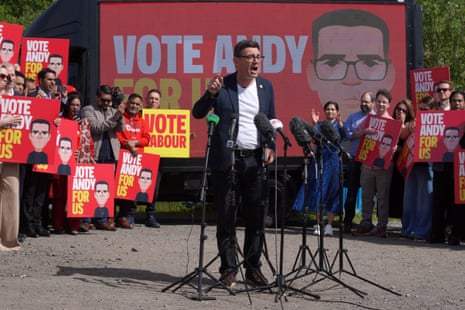
Keir Starmer last week made a belated nod to one of his party’s deepest desires by saying that he, too, wants to put the UK back at “ the heart of Europe ”, even if it was still unclear exactly what he meant. Then Wes Streeting sought to revive faltering ambitions to be the next prime minister with a call for full re-entry into the EU, although he was similarly vague about when that might happen. Meanwhile, Andy Burnham was busy rowing back from a previously expressed hope of rejoining at some undisclosed point in his lifetime, perhaps because he won’t get a shot at Downing Street unless he first wins next month’s byelection in Makerfield , where a majority supported Brexit a decade ago.

Any hesitancy about plunging back into the fires of 2016 is, of course, understandable when the smouldering consequences of Brexit have burnt through five prime ministers – and now a much-anticipated sixth – over the decade since. Yet if Labour’s leaders, both current and wannabe, are serious about addressing the damage done by leaving the EU, they cannot repeat the error made by the Conservatives after the referendum. Too often, they seemed to believe the terms of any deal were primarily a matter for Britain to choose, when in practice the EU turned out to be significantly more effective in getting what it wanted. And it is true that support for rejoining begins to fall in polls when those surveyed are told that would likely mean the UK being forced to replace the pound with the euro or accept unrestricted freedom of movement across borders.

Even so, it may be wrong to assume the intransigent stance taken by EU negotiators, particularly the French, will continue indefinitely or that they will now simply shrug off talk of Britain rejoining. Some suggest that a UK government setting a clear direction for getting back in, possibly by showing a semblance of Ukraine’s enthusiasm for the idea of Europe that has led it to be tentatively offered “ associate membership ”, would deserve a more sympathetic hearing. Roberta Metsola, the president of the European parliament, told the EU-UK Forum last month that Britain is not just another pleading supplicant but a former member that “needs to be treated as such”. Paul Adamson, who chaired that event, told me: “A negotiation to rejoin would have its difficulties but none of us knows what’s possible because no one has really tried.”

The real obstacle to the EU offering much in the way of concessions is not innate hostility towards Britain so much as the absence of any sign we can find lasting consensus and stability on this issue – or anything else. Not only is Downing Street’s front door revolving between elections, Brussels knows there is a genuine risk that Nigel Farage, one of the architects of Brexit , will walk through it after the next one and then rip up any painstakingly negotiated deal.

This is a story not only about the volatility of public opinion but also a structural flaw in our democracy. What was always a narrow majority for leaving the EU in 2016 disappeared years ago through a combination of older people dying, younger pro-European ones reaching voting age, and still more changing their minds. According to a December 2025 estimate , if the referendum were held again then, leave would have been defeated by a margin of 8m votes. The pollster Luke Tryl, from More in Common, says his modelling suggests (and Burnham should perhaps take note) that even northern working-class seats such as Makerfield would now back remain.

Instead the bigger difficulty is about how Britain determines who has power at Westminster. Although first-past-the-post elections have long since been regarded as a bit unfair, it used to be argued they at least provided for strong government and kept extremists out of parliament. The splintering of the old Labour-Tory duopoly into five or even six different parties bunched quite close in overall support, however, means this same system is now a force for instability that could allow Farage to become prime minister with barely a quarter-share of the national vote.

The spread of votes in Britain now resembles that of European multiparty democracies, but in contrast to the proportional representation used by just about every EU member state, we maintain an eccentric and antediluvian system that is no longer fit for any sort of purpose except bad ones.

This probably explains why changing it is now viewed less favourably by Reform party supporters while remaining popular among the public as a whole, as well as Labour’s voters and the party’s membership . Electoral reform has been consistently backed by Burnham, too, even though he knows this would probably mean Labour would never again secure the kind of victory Starmer’s party won just two years ago.

Maybe the “ less point-scoring, more problem-solving ” politics that Greater Manchester’s mayor hopes to nurture would help him avoid the kind of mistakes made in the run-up to the referendum nearly a decade ago. That was when David Cameron allowed policy on the EU to be driven by the internal dynamics of the Tory party and his desire to secure a parliamentary majority at any cost. Indeed, electoral reform might yet enable the creation of a viable pro-business party on the centre-right that would not be addicted to national economic self-harm, as the Conservatives have been ever since Brexit. And, in turn, that might persuade the EU that Britain can find a stable consensus to reverse it.

There are a lot of “maybes” or “mights” to this debate. But if Britain wants to get back into Europe before another 10 years have passed, it is not only our leaders who must become more European in their approach; the way we choose them will need to be more European, too.

Tom Baldwin is the author of Keir Starmer, The Biography

English Heritage unveils recreation of 4,500-year-old Neolithic hall near Stonehenge

Stonehenge
English Heritage unveils recreation of 4,500-year-old Neolithic hall near Stonehenge
Jamie Grierson
Fri 22 May 2026 09.00 CESTLast modified on Fri 22 May 2026 11.58 CEST
News
https://www.theguardian.com/uk-news/2026/may/22/english-heritage-neolithic-kusuma-hall-stonehenge

It may have been a place for ceremony or a barn for pack animals. It could have been a place for weary labourers to rest their heads. Or perhaps there was no building at all.

English Heritage has unveiled a 7-metre-high reconstruction of what a 4,500-year-old Neolithic hall may have looked like at Stonehenge, offering visitors a glimpse into the lives of the prehistoric builders who raised the world’s most famous stone circle.

The £1m project is in its final stages of construction near the Stonehenge visitor centre on Salisbury Plain. Built entirely by hand over nine months by a team of more than 100 volunteers, the Kusuma Neolithic Hall will open to the public this summer before transforming into an immersive, historical learning space for schools.

The structure is based on the archaeological footprint of an anomaly known as Durrington 68, a unique “square in the circle” building discovered two miles away near Woodhenge, another Neolithic site. First excavated in 1928 by Maud Cunnington, and re-examined in 2007 by the Stonehenge Riverside Project, the original site features a horseshoe-shaped ring of post holes surrounding four massive internal roof support pillars.

Because centuries of plowing destroyed the original floor and hearths, its true purpose remains a mystery. However, discoveries of animal bones and grooved ware pottery nearby point towards winter feasting, ritual gatherings or even communal storage.

Luke Winter, an experimental archaeologist, who analysed European Neolithic carpentry and prehistoric pollen data to design the hall, explained the construction’s rigorous scientific backing.

“Everything in that building was growing in this landscape 5,000 years ago,” he said. “We’ve been using replica stone tools to create every aspect of this building … we’ve counted literally every blow every axe has made.”

Winter said while he was initially sceptical about whether the archaeological footprint represented an actual roofed building, the construction process changed his mind. “I was 50/50 it might have been a structure. As we’re nearing completion … I’m now 75% sure it was a structure with a roof.”

Like the nearby stone circle, the building perfectly aligns with the winter solstice. “When we got the frame in on the solstice morning, I was here, and I stood there, my shadow cast on the middle post at the back,” Winter said.

The project forms the first phase of an educational expansion by English Heritage. Alongside the hall, a new learning centre housing the Clore Discovery Lab and Weston Learning Studio is scheduled to open by the end of 2026.

Iona Keen, English Heritage’s head of learning and interpretation, said the organisation’s goal was to double its educational capacity to nearly 100,000 students annually over the next five years. Keen said the site and its new resources would be completely free to any educational or youth group.

“The Neolithic period is firmly on the national curriculum,” Keen said, adding that the interactive hall would allow children to “step back in time” by gathering around an open fire to make prehistoric cheese and pinch pots. “You learn by doing, and you understand by having a go and trying to work it out yourself.”

The project aims to understand the wider Stonehenge landscape. Stonehenge’s curator, Win Scutt, said Stonehenge and the barrows and dwellings surrounding the Neolithic monument were driven by a “society that wanted connection”.

Scutt said: “This whole thing is about social society, not science,” with the camaraderie and “feeling of belonging” generating the motivation to build. Rather than being “obsessed with individualism” like modern society, these groups used massive cooperative projects as a medium for collective representation, he said.

He said the monuments and other structures would have been a “pure expression of the society”, revealing the instincts of the Neolithic peoples: “Now we’re all together, let’s create something that represents us.”

For Sarah Davis and James Humphrey, two volunteers, the project was a transformative experience. Reflecting on the monumental human effort required by the original builders, Davis said: “It’s just amazing to think of the people who actually built the original structure.”

Humphrey said: “It really brings history to life when you’re actually doing it yourself.”

Chinese authorities destroy villager’s ramshackle 10-storey Studio Ghibli-esque home

China
Chinese authorities destroy villager’s ramshackle 10-storey Studio Ghibli-esque home
Alastair McCready
Fri 22 May 2026 05.23 CESTLast modified on Fri 22 May 2026 10.19 CEST
News
https://www.theguardian.com/world/2026/may/22/china-officials-destroy-ramshackle-10-storey-studio-ghibli-esque-home

A ramshackle 10-storey home that had become an offbeat tourist attraction in south-western China has been torn down, ending a years-long battle between the structure’s owner and local authorities.

Chen Tianming said local authorities took just hours to return the stone bungalow – which had been transformed into a pyramid-shaped structure of plywood rooms stacked upon one another – back down to its original single storey.

“I don’t feel regret, because regret is useless,” Chen told the AFP news agency. “I also don’t blame myself for failing to protect it – it’s just that the force driving its destruction was simply too powerful.”

The 43-year-old had spent about 200,000 yuan ($29,000) over eight years to convert his family home into an unlikely tourist attraction in the village of Xingyi in Guizhou province.

Visiting tourists drew comparisons between Chen’s home and the intricately detailed, whimsical worlds created by Japanese animator and Studio Ghibli co-founder Hayao Miyazaki.

Authorities in Guizhou province have long threatened to remove the multi-storey structure that was held together by bamboo scaffolding, saying it lacked the necessary building permits and was a safety hazard.

Chen’s home village of Xingyi was mostly demolished in 2018, as authorities planned to build a tourist resort in the region known for its otherworldly mountain landscapes. Chen’s family refused to leave, and as the resort’s construction faltered he began building his home higher and higher in defiance of demolition threats by authorities.

In August 2024, authorities labelled Chen’s home an illegal construction and he was ordered to destroy everything except the original bungalow. On 18 May, Xingyi officials issued a final notice ordering Chen’s family to leave by 9am on Wednesday.

After the deadline local law enforcement and public security bureau officials escorted Chen and his parents away from his home and confiscated his phone, holding him in custody as his home was demolished.

Chen, who filmed the aftermath showing piles of building materials scattered around where the towering structure once stood, told AFP that he is now seeking legal help to have the forced demolition designated illegal.

“Then I will have a chance to restore it,” he said.

Additional reporting by Yu-chen Li

Benjamina Ebuehi’s recipe for hazelnut banoffee cake | The sweet spot

Food
Benjamina Ebuehi’s recipe for hazelnut banoffee cake
Benjamina Ebuehi
Fri 22 May 2026 07.00 CEST
News
https://www.theguardian.com/food/2026/may/22/hazelnut-banoffee-cake-recipe-benjamina-ebuehi

I f I’m baking for a crowd over the bank holiday weekend, choosing something fun and a bit over the top seems the only way to go. Enter the hazelnut banoffee cake. It’s everything you love in the classic dessert: banana, toffee sauce, fluffy whipped cream and shaved chocolate, but with added nuttiness and overall less sickly sweet.

Hazelnut banoffee cake

Prep 10 min Cook 1 hr Serves 12-16

For the cake 100g whole blanched hazelnuts 180g dark brown sugar 3 large eggs 200g very ripe bananas (about 2 medium bananas), peeled and mashed 150g unsalted butter , melted 145g plain flour 1 tsp baking powder ½ tsp bicarbonate of soda ¼ tsp salt

For the toffee sauce 75g dark brown sugar 30g unsalted butter 100ml double cream 1 big pinch flaky sea salt

For the topping 300ml double cream 100g soured cream 1 tbsp icing sugar ½ tsp vanilla bean paste 1 ripe banana , peeled and sliced 25g dark chocolate , shaved

Heat the oven to 180C (160C fan)/350F/gas 4. Put the hazelnuts in a small baking tray and roast for 10-12 minutes, until fragrant and lightly browned. Remove, leave to cool, then chop 15g nuts and set aside for the topping. Put the remaining hazelnuts in a food processor and pulse until very fine.

Grease and line a 23cm x 33cm tin, leaving enough overhang to help you pull out the cake later. Put the sugar and eggs in a bowl and whip on medium-high for one to two minutes, until the mix looks lighter and fluffier (we’re not taking it to ribbon stage). Fold in the mashed banana followed by the melted butter, then gently stir in the ground hazelnuts, flour, baking powder, bicarb and salt to combine.

Pour the batter into the prepared tin and bake for 30-35 minutes, or until a skewer inserted into the centre comes out clean.

Meanwhile, make the toffee sauce. Put all the ingredients in a saucepan, heat gently until everything has melted, then bring to a boil and cook for one minute only. Spoon half the sauce on top of the warm cake, spread it out carefully, then leave to cool completely.

Once cooled, put the cream, soured cream, icing sugar and vanilla in a bowl and whip to soft peaks. Spoon the cream on top of the cooled cake, then drizzle the remaining toffee sauce all over the top. Decorate with the sliced banana, the reserved chopped hazelnuts and the chocolate shavings, then slice and serve.

Police appeal for information about alleged sexual misconduct in Andrew investigation

UK news
Police appeal for information about alleged sexual misconduct in Andrew investigation
Vikram Dodd
Fri 22 May 2026 07.00 CESTLast modified on Fri 22 May 2026 09.20 CEST
News
https://www.theguardian.com/uk-news/2026/may/22/police-appeal-witnesses-andrew-mountbatten-windsor-investigation

Police investigating Andrew Mountbatten-Windsor want witnesses to contact them if they believe they have information about alleged sexual misconduct, corruption, fraud or the sharing of confidential information involving the king’s brother.

In a sign of the potential expansion of their “unprecedented investigation”, Thames Valley police vowed to rigorously investigate claims against the former Prince Andrew.

Mountbatten-Windsor, 66, was arrested and questioned under criminal caution in February on suspicion of misconduct in public office, related to his role as a British trade envoy.

He is alleged to have passed information to the disgraced financier Jeffrey Epstein, according to claims arising from the documents released by the US Department of Justice. The former prince denies all wrongdoing.

Assistant chief constable Oliver Wright said Thames Valley police (TVP) were already working through a “significant amount” of information from a range of witnesses.

But the force is concerned that people who may have information about criminal offences wrongly think detectives are interested in only one narrow aspect, namely the alleged passing of confidential information.

Stoking their concerns about other potential allegations are a series of claims about the former prince’s conduct already made publicly, such as in the media. Police have not yet been contacted by witnesses they believe may be out there.

Police stress that misconduct in public office (MIPO) covers a range of offences, including sexual misconduct, wilful neglect of duty, perverting the course of justice, and dishonest or fraudulent conduct, among many others.

Wright said: “Misconduct in public office is a crime that can take different forms, making this a complex investigation.

“Our team of very experienced detectives are working meticulously through a significant amount of information that has come in from the public and other sources. We are committed to conducting a thorough investigation into all reasonable lines of inquiry, wherever they may lead.

“We encourage anyone with information to get in touch with us through the normal non-urgent contact channels, such as the Thames Valley police online portal .”

It is understood information has already or will be obtained from the royal household and government departments, such as those involved in the former prince’s appointment as a trade envoy. Detectives are expected to seek documents and witnesses about what was expected from the trade envoy role in terms of behaviour and ethics.

TVP are also expected to seek information from the Metropolitan police, which assessed claims against the king’s brother twice and declined to investigate. The Met provided his armed bodyguards while he was officially a working royal, a status he lost amid the outrage over his friendship with Epstein.

The TVP investigation includes detectives with expertise in sexual offences. The force is still assessing a claim from a woman that she was taken to an address in Windsor in 2010 for sexual purposes. It is not a full criminal investigation yet. The woman lives in the US and detectives have contacted her through her lawyer.

Wright said: “We have engaged with the woman’s legal representative to confirm that, should she wish to report this to police, it will be taken seriously and handled with care, sensitivity and respect for her privacy and her right for anonymity.

“We recognise how difficult it can be to speak about experiences of this nature, and any contact with police will be led by her wishes, when and if she feels ready and able to do so.”

Wright said police would listen and investigate “when she feels ready and able … to come forward and talk to us”.

The investigation is expected to be long, with no criminal trial until 2027 if it were to produce evidence to support criminal charges.

Three British forces are conducting full criminal investigations triggered by other revelations in the Epstein files, with several others assessing claims about flights linked to the disgraced financier entering the UK.

Police investigating the former Prince Andrew believe obtaining the original Epstein documents is “hugely important”. Currently they and other UK forces have only printouts from the DoJ website. US authorities have declined to hand the original documents over and told British police to submit a formal international legal request for assistance, which could take months, if it is agreed to at all.

As well as the TVP investigation into Mounbatten-Windsor, the Met is investigating Peter Mandelson for misconduct in public office, and Surrey police this week announced they were investigating claims of historic child sexual abuse arising from the Epstein files.

After Mountbatten-Windsor’s arrests, police conducted a short search of his Norfolk home and a week-long search on the Windsor estate where he lived for decades. Materials seized are still being examined.

One key aspect for police is obtaining evidence proving that the former prince’s role as a trade envoy is covered by MIPO rules.

Police have held early discussions with lawyers from the Crown Prosecution Service, which authorises criminal charges in England and Wales.

TVP have not officially named Mountbatten-Windsor as the man they arrested in February.