W hen my sister and her family renovated their home, a kind absent neighbour a hundred metres or so away offered an empty place to stay through the worst of the refit. Left behind, though, was my sister’s noble cat, with a plan in place to return daily, topping up bowls and delivering encouraging pats as they navigated the steady stream of tradies together.
But then a funny thing happened. The cat, having got wind of its family relocation, promptly upped its own four little leg-sticks and wandered down the street, crossing the road, moving into this temporary abode with them.
The cat’s home, as it turned out, wasn’t anchored by location, but by the company of the oddball bunch of humans who slung jellymeat and jowl rubs in its general direction.
I’ve been thinking about that cat a lot over these last three years while living out of not much more than a suitcase between Auckland, Boston, Spain, London and now Sydney with our small family unit of three.
What is it exactly that makes a place a home?
What ties you to an area where all the sensory touchstones of familiarity seep just a little deeper under your skin, triggering that strong emotional response? A feeling you get from the moment the plane wheels touch down or the suburb is reached. Perhaps ignited when nostrils are filled with that unique localised blend of pollens and pollution that sends an instant brain signal that this is where track pants and slippers are a suitable outfit of choice.
Driving through Sydney’s urban streets this last week, past row after row of houses that felt so much more familiar than we’d seen in Massachusetts, the seven-year-old in the backseat piped up to ask, “Dad, how many people in the world are there?” I stabbed at an answer of 6bn (Google corrects me to 8.3bn) followed by, “OK, well how many houses in the world are there?’’
It turns out that in Australia there is a house for every 2.5 people, a drop from 4.5 in 1911. A number sitting in stark contrast to my first university flat where seven of us lived (with just one toilet, and that toilet was outside). My mum cried when she first saw that place, but I thought it was paradise. A home to us, Skid Row to my mum. The drop in numbers per house has been attributed to people increasingly living alone – and perhaps a better supply of toilets?
Before leaving New Zealand, I filmed several series of a TV show following plucky Kiwi couples rescuing and removing exhausted houses on the verge of demolition. Television is a wonderful vehicle to be nosy under the auspices of work, and this one was a doozy. With giant cranes they hoisted the homes, sometimes whole, sometimes in chainsawed chunks, on to the back of Mad-Max-esque truck-trailers before setting off into the countryside, barrelling towards a bare section armed with ambitious renovation plans and a soon-to-be blown budget.
Being able to revisit these couples over a year of progress and experiencing their transformation was a privilege. I watched in awe as they put down new roots quite literally with the first foundations.
It was surprising to learn that this activity of old house recycling is very particular to this Australasian corner of the world. New Zealand’s isolated nature and historically limited resources has hard-wired a Presbyterian-like refusal to let anything go to waste deep into our DNA. Especially whole houses.
One story that really stuck with me though was a lovely older couple looking to escape the city by moving closer to family in quieter rural surrounds. So attached had they become to their home – after raising a family and having lived such a huge part of their lives among its irreplaceable 100-year-old character villa features, with its bay windows and vertical panelling – they made the curious decision to simply pick up and take their home with them . It was fascinating and revealing. They were so connected to the memories and familiarity, the security and comfort the house gave them, that they hoisted the home out in the dead of night, delivering it to a brand new location next to their daughter, her husband and grandkids. It was the ultimate compliment to an organised structure of wood, glass and corrugated iron that clearly had become part of them.
A home is so much more than a place where you sleep. Countries that have enhanced renters’ rights , which keep people secure in place longer, create a greater stability with that important broader sense of community – something which evolves over years as good neighbours become friends and even family.
Attempting to encapsulate this broader feeling of home using English language feels a bit clumsy when New Zealand’s Indigenous Māori language does it so well in just one word: Tūrangawaewae . It translates as “a place to stand” but is used to describe so much more than that; “a home base or area where one has the sense of belonging through kinship and connection, which empowers identity foundation and security”.
While New Zealand will always be home-home, I am looking forward to experiencing a bit of this here now in Australia.
Clarke Gayford is a New Zealand TV host now living in Australia. He is nominated for two Emmy awards for the film Prime Minister
Last week, at 4am, 19-year-old Sammy Amz was scrolling through X when something caught his eye: a popular Twitch streamer was competing in a 1v1 “mog-off” with a stranger, and losing.
The next day he opened the Omoggle gaming website and began to play. Quickly he matched with another user – green dots appeared on their faces onscreen, as the website began to compare their measurements: canthal tilt, palpebral fissure ratio, nose-to-face width ratio and so on.
Omoggle enables one stranger to “dominate” another in a contest of looks, which in online slang, is called mogging. It uses facial recognition to analyse and score the faces of competitors between one and 10. Omoggle’s ecosystem is based on Omegle, a now defunct site that randomly matched strangers for video-based online chats.
“It’s not [scored] by looks, but it’s like, how your head is shaped, how your face is shaped,” said Amz.
A week later, Amz had already competed in hundreds of mog-offs, along with some of the biggest UK streamers , emulating a trend that began in the US . On Tuesday, the Amazon-owned live-streaming platform Twitch got onboard, changing their rules to allow for “participation in current trends”, such as Omoggle. Previously, its community guidelines had prohibited the use of websites that connect a streamer to a stranger’s video feed, because of the risks of accidentally exposing its users to harmful content .
To decide on a mog-off winner, Omoggle uses something called the PSL scale. The letters stand for “Perceived Sexual Market Value,” but originally, they represented three incel sites : PUAhate.com, Sluthate.com and Lookism.net. These online forums encouraged young men to develop an obsession with their physical appearance. For some it was nihilistic, and seemed to promote resentment against women who were perceived to only value physical attractiveness in men. For others, the goal was to maximise their potential attractiveness, known as “looksmaxxing”.
On Omoggle, which has thousands of concurrent players at any given moment, you get points for winning or losing each match. You are then assigned a status level on the mogging scale in a chess-style Elo ranking system. This scale is an adaptation of the usual manosphere rankings that have “subhumans” at the bottom, different tiers of “normie” in the middle, and “chads” on top. Omoggle is mostly similar, except subhuman has become “sub3”, and a new category of “molecule” has been added beneath that.
Dr Paul Marsden, a chartered psychologist with the British Psychology Society, specialises in how emerging technologies affect people’s wellbeing, young people in particular. He is quick to point out that the PSL system is “nonsense”, and thinks it is part of a wider shift in society towards quantification.
“The world is changing, so what do I stand for?” is the question on people’s minds, said Marsden. “Some people move to numbers, some people move to religion.”
He said older generations should avoid a moral panic and try to be aware of the ironic approach young people can take towards things that might seem outlandish to others. “Gen Z meme-ify everything. I think it’s fabulous that they’re treating contemporary life with humour,” he said.
Earlier this week, as Omoggle went viral, Twitch began warning streamers that their guidelines prohibited “randomised video chat services”. Their issue wasn’t with mogging per se, but the difficulty in moderating content on streams when they are used as a platform for a less strictly moderated app.
In their announcement on Tuesday, Twitch encouraged caution around the use of such sites, but said they would continue to be allowed on the platform, “to give you more choice around the content you stream and allow for participation in current trends”.
Addressing the potential for explicit content to appear as random users of the third party app are matched, Twitch recommended that its users “quickly remove” themselves if that situation arises by “switching scenes and not engaging further”.
A Twitch spokesperson said its aim was to empower creators while protecting them from harm. “We’ll continue to enforce against content from randomised video chat sites if the content itself violates our guidelines by featuring sensitive or otherwise prohibited content.”
Amz, who gloats about being on a “200-win streak”, said he didn’t think Omoggle was harmful. “I don’t think anyone takes it seriously.”
While mog-offs are mostly done for entertainment online, many take the underlying philosophy of looksmaxxing seriously .
“I would say the culture is honestly a good thing,” said Nicholas Graff, a 16-year-old from Iowa whose Omoggle video went viral. “Like maximising your looks. It might be degrading to some people but overall, I don’t mind it.”
Some influencers have spoken out against the trend as it develops in the UK. “Every generation has their own version of looksmaxxing,” said a TikToker called Thoka in a recent video . “But this is too far.
“I don’t tell men how to be men, but this ain’t it. How can people get so jobless that their version of entertainment is going on websites to do mog-offs,” he continued. “Go touch grass.”
Data from Acled and the Global Terrorism Index shows that after a few years of improvement, insecurity in Nigeria has worsened. With general elections less than a year away, the crisis has come under increasing scrutiny – both abroad and at home.
Experts say the primary long-term driver of insecurity is a governance vacuum across much of the country. On paper Nigeria is a federation comprising 36 states and 774 local government council areas, but in practice power is heavily centralised at the federal level. Resources trickle down to states in limited quantities and are distributed in far smaller amounts to local government councils, largely at the discretion of governors.
As such, vast swathes of Nigeria consist of what academics and civil society groups call ungoverned and under-governed spaces, where non-state actors motivated either by extremist ideology or economic, political or ethnic marginalisation – or a combination of all the above – can move relatively freely, recruit, and plot attacks.
The situation is exacerbated by the thinly stretched nature of Nigeria’s security apparatus. The military, at about 230,000 personnel, is one of Africa’s largest, but it is fighting insurgencies on multiple fronts in the north and a secessionist movement in the south-east. The police force of around 370,000 officers translates to one officer per every 600 citizens, which is far below the UN-recommended ratio of one per 450. Indeed, in many communities outside the big cities and towns, the only government presence is an abandoned police post, dilapidated primary healthcare centre or barely functioning primary school.
On Saturday, the US and Nigeria said a joint operation had killed Abu-Bilal al-Minuki, the second in command of Islamic State globally, in Nigeria’s north-east. The US also targeted extremist militants in the north-western state of Sokoto late last year , and in February about 100 US soldiers arrived in the country to help advise its military on the fight against insecurity. Those strikes and deployments did little to stem the rising tide of violence.
Data sources and methodology
Data defining the Sahel geographic boundaries is provided by AtlaSahel . Political violence maps are based on a Guardian analysis of Acled conflict data . Charts data is taken from the Global Terrorism Index 2026 report .
D omestic workers are used to hard graft for minimal reward. But in Indonesia, more than two decades of activism has finally paid off. Last month, the country’s parliament passed legislation classifying them as workers, ensuring that they are entitled to health insurance, days off and pensions. It also outlaws hiring under-18s for such jobs. For more than four million people, this is a significant step forward.
The challenges go far beyond Indonesia. There are around 75 million people in the sector worldwide, experiencing “lower wages, fewer benefits and fewer legal or social protections than other workers”, says the International Domestic Workers Federation. Three-quarters of them are women. Because they work in people’s homes they are isolated, and many get little or no time off. That makes them particularly vulnerable to abuse by employers and particularly hard to organise. Accommodation is often grim and food inadequate.
As many countries face increasing care needs due to ageing populations, a growing number of these workers are migrants, including around 3 million Indonesians, mostly in Asia or the Gulf. Those working abroad are especially vulnerable . Exorbitant fees from job agencies put them in debt bondage, they are far from friends and family, and language barriers make it harder to seek help. Employers often hold their identity documents, and their visas may be tied to a particular household. One expert described the kafala sponsorship system in many Gulf states as giving a “veneer of legality to slaveholding”.
While only a few dozen countries have ratified the 15-year-old International Labour Organization convention setting out minimum standards for domestic workers, it catalysed organising , and has helped to ensure more people are covered by legislation, however imperfect. Social media is also helping to raise awareness and coordinate action among physically isolated workers.
Campaigners have one advantage: they are not challenging big corporates in the same way as other trade unions. Indonesia’s new law allowed the government to say that it was advancing workers’ rights without facing down powerful vested interests. But politicians themselves are far more likely to have staff than to have worked in other people’s homes. Activists say Indonesia’s example shows that persistent lobbying of individual legislators is critical. So is helping workers to share their stories.
Recognising domestic workers as employees, outlawing excessive agency fees and guaranteeing rest days are essential steps. Destination countries need to provide shelters and clear channels to seek help as well as improving rights. Those that export labour can do more to protect and support their nationals before and after migration. And while the interests of migrant and local workers are often seen as in competition, their advocacy can be complementary. Activists say pressure from South Korean employees concerned about having their pay and conditions undercut has helped to improve policies for migrant workers, with a path to residency rights.
Even where laws are difficult to enforce, their existence can help to change attitudes. Indonesia’s new legislation should not have taken so long, and compromises had to be made on the way. It is, nonetheless, an important reminder that domestic workers not only need protection, but will fight for it despite the obstacles.
Do you have an opinion on the issues raised in this article? If you would like to submit a response of up to 300 words by email to be considered for publication in our letters section, please click here .
A Romanian F-16 Nato jet shot down a drone over Estonia on Tuesday in what appears to be the latest case of Russian electronic jamming diverting long-range Ukrainian drones into the alliance’s territory.
A local resident told the Estonian public broadcaster, ERR, that he had seen two fighter jets – part of a Nato force policing the skies over the Baltic states – flying in the area before a loud bang that brought the drone down. He said the drone had crashed about 30 metres from the nearest residential building.
After analysing its trajectory, “we decided that we need to take it down,” Estonia’s defence minister, Hanno Pevkur, said.
The spokesperson for Ukraine’s foreign ministry, Heorhii Tykhyi, said: “We apologise to Estonia and all of our Baltic friends for such unintended incidents.
“We have been and remain in close cooperation between our specialised institutions to get to the heart of the matter in each case and seek ways to prevent them.”
He blamed Moscow for the incident, saying that Kyiv had been aiming at legitimate targets inRussia and that it had never attempted to use Baltic airspace for its drones.
It was the latest in a series of incidents in which Ukrainian drones have apparently been pushed off course by Russian electronic jamming. The Latvian government collapsed last week over a crisis that stemmed from its response to a similar incident in which two drones exploded at an oil storage facility.
Russia’s SVR foreign intelligence service said on Tuesday that Ukraine planned to launch drone attacks against Russia from Latvia, Lithuania and Estonia, and warned of “just retribution”.
Officials from the three Baltic countries deny plans for their airspace to be used for the launch or overflight of drones.
“Russia is lying about Latvia allowing any country to use Latvian airspace and territory to launch attacks against Russia or any other country,” the Latvian president, Edgars Rinkēvičs, wrote on X.
Estonia’s foreign minister, Margus Tsahkna, said the only reason Ukrainians drones were appearing over Estonian territory was as a result of Russian electronic warfare pushing them off course.
“Estonia has not permitted its airspace to be used for attacks against Russia. Incidents such as this are linked to Russian jamming activities,” he said.
In an interview with the Guardian in Tallinn over the weekend, Tsahkna struck a similar tone: “These are the consequences of the Russian war of aggression against Ukraine. This is a desperate move to divide the west and also put us on pressure that we should tell Ukrainians to stop it, because Ukraine is hitting their lifelines,” he said.
Estonia supported Ukraine’s right to attack targets in Russia, he said, adding that the two capitals were in constant contact and Tallinn had asked Kyiv to be more careful with its drone routes given the Russian jamming.
Pevkur reiterated after the shooting down on Tuesday that Ukraine had to be careful with its drones.
“We’ve said to the Ukrainians all the time that if you’re attacking Russian positions or Russian targets, then these trajectories have to be as far from the Nato territory as possible,” he told Associated Press.
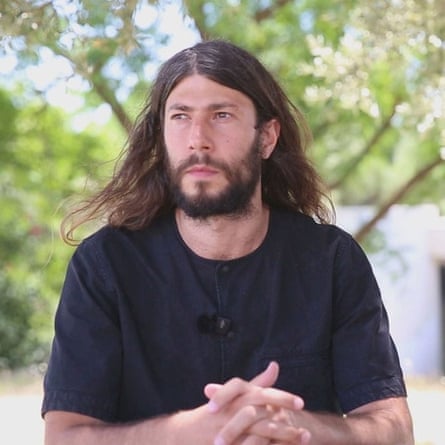
Intermezzo, the most recent book by Irish novelist Sally Rooney, will be published in Hebrew this month by the Israeli publisher November Books, in collaboration with +972 Magazine and Local Call. The announcement comes more than four years after Rooney, citing the global boycott movement against Israel, turned down a translation offer by a different Israeli publisher for an earlier book.
Below, Rooney talks to Irish Palestinian activist Samir Eskanda about her decision to work with November Books, which has been deemed to be in compliance with the Boycott, Divestment and Sanctions (BDS) movement. They discuss what first brought her to the boycott, the movement’s aims and targets and the role of the artist in bringing about radical change.
The discussion, which took place over email, has been condensed and edited for clarity.
Samir Eskanda: Before getting to the specifics of this new release, I thought we could start with the wider context. Palestinians have called since 2004 for the boycott of complicit Israeli cultural institutions. Since then, many thousands of artists, writers, cultural workers and arts institutions have publicly endorsed this call.
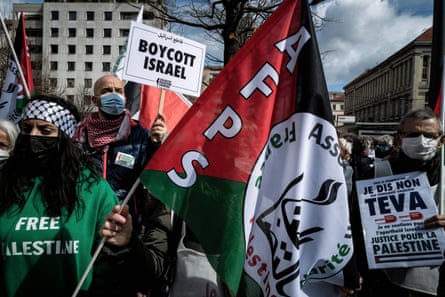
The Palestinian Campaign for the Academic and Cultural Boycott of Israel (PACBI) leads and guides this work. It’s a founding member of the nonviolent BDS movement, which launched in 2005 and is led by the broadest Palestinian civil society coalition. The boycott targets institutions rather than individuals, and complicity, not identity. Israeli cultural organisations, companies and institutions are overwhelmingly complicit in whitewashing and justifying Israel’s ongoing genocide against Palestinians in Gaza, its wider regional wars of aggression and expansionism, and its decades-old regime of military occupation and settler-colonial apartheid, which must be isolated and entirely dismantled.
Sally, when did you first become aware of the Palestinian call for the cultural boycott of Israel? Was supporting it a difficult decision to make?
Sally Rooney: In Dublin in 2014, I was involved in the protest movement against Israel’s illegal military campaign in Gaza. For readers who aren’t aware, I should say that Israeli forces killed more than 2,000 people in Gaza that year, including hundreds of children. That moment of horror and outrage was a formative experience for me, as a person and as a writer. My second novel, Normal People, includes a scene set at those same protests. I couldn’t write about life in Dublin at that time without acknowledging the centrality of that political moment.
I was certainly aware of the boycott, divestment and sanctions movement then, and I tried to comply with the boycott in my role as a consumer. And yet I sold the translation rights to both my first two novels to an Israeli publisher, which I later discovered had links to the Israeli military. How could my actions be so inconsistent with my beliefs?
I remember trying at the time to find BDS guidance on the publishing industry. Of course, the information available online was targeted at consumers, not at literary novelists, who do not make up a big constituency of the general public (!). It seems so obvious now that I should have reached out and contacted PACBI. In truth I think I felt too awkward, or I felt as if it would be attention-seeking. I had never published a book before and no one had ever heard of me. From what I could see online, most of the authors I admired seemed to have translation deals in Israel. I wrongly assumed that the complicit institutions targeted by BDS did not include literary publishers.
By the time it came to selling the rights for my third book in 2021, things had changed in a few ways. An increasing number of international human rights organisations were confirming what Palestinians had long said: that the Israeli system of racial domination met the legal definition of apartheid. I had come to a better understanding of the complicity of the Israeli culture sector in that apartheid system. And meanwhile, I had also become something of a public figure, and I felt a greater sense of responsibility in making decisions around my work.
But I still didn’t reach out to anyone for advice. With what I knew, I decided that I couldn’t in good conscience sell translation rights to a mainstream Israeli publisher and still comply with the boycott – but I didn’t even really tell anyone what I was doing. I just turned down the specific deal that I was offered. Looking back, I obviously should have contacted PACBI from the very start and asked for guidance.
Samir, you’ve long been involved in the cultural boycott of Israel. Can you tell us a little bit about the roots of that call, how it relates to the broader BDS movement and how you came to be involved?
SE: I grew up in Britain, where I came to understand the state’s hypocrisy and complicity in enabling, while obscuring, Israel’s colonial oppression against Indigenous Palestinians. But it was the emergence of the BDS movement that provided a principled and strategic way to actually do something about international complicity, and spurred me on to take sustained action. I’ve been involved for a decade, but I joined a movement that was already thriving.
Since the onset of Israel’s genocide and the unspeakable crimes committed by Israeli forces against Palestinians in Gaza, tens of thousands of artists have demanded justice and liberation for Palestinians, accountability for the perpetrators, and refused to allow their work to “artwash” these atrocities.
At heart, the authoritative Palestinian call on artists and all others is about ending complicity. As Martin Luther King Jr said of the Montgomery bus boycott, we are “withdrawing our cooperation from an evil system”. In the colonial west, this ethical obligation is especially profound, given its centuries of domination and oppression. In the context of genocide – and given the rulings by the international court of justice (ICJ) that Israel must “prevent” any and all genocidal acts, that it is guilty of apartheid, and its occupation is illegal and must end – this is also a legal responsibility for states, corporations and institutions.
You said in 2021 that you would be happy to work with an Israeli publisher that is not complicit in Israel’s regime of oppression, and that recognises the comprehensive rights of the Palestinian people under international law, including the right of return of Palestinian refugees. This is now happening almost five years later. What was the process that led to this release?
SR: In a way, it wasn’t so different from any other process around the sale of translation rights. The publisher November Books approached my agent with a proposal to translate one of my novels into Hebrew. Because the team at November is based in Israel, they were careful to explain how the publication would meet the requirements of the cultural boycott. For instance, November Books does not operate in illegal Israeli settlements, receives no state funding and explicitly recognises the international legal rights of the Palestinian people, including the right of return. I also kept in touch with PACBI along the way to try to ensure that I was upholding both the letter and the spirit of the institutional boycott.
For me, the act of translation is in itself a beautiful ideal. Though my refusal to work with complicit Israeli publishing houses made the contractual side of things more complex, I was, of course, never boycotting the Hebrew language or any language. I’m very pleased that Intermezzo will soon be available in Hebrew with November Books. I am a devoted admirer of literary translators and the work they do. It means a great deal to me that my books are available in languages other than my own and I’m very grateful. I’m also delighted that the novel is published in Arabic with the Palestinian publishing house Tibaq.
What do you think is the role of radical – or if you like, dissident – Israeli institutions such as November Books in the academic and cultural boycott?
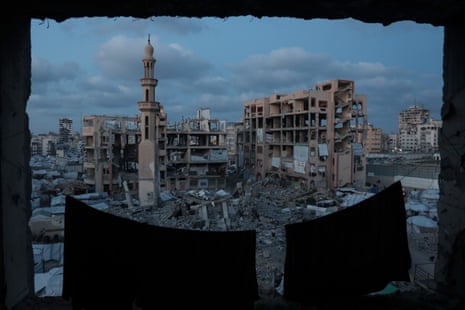
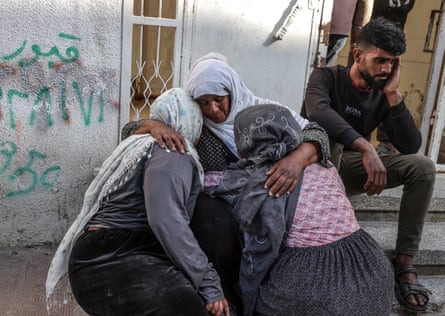
SE: According to an Israeli poll published in November 2023, when Israeli forces had already murdered at least 10,000 Palestinians in Gaza, 94% of Jewish Israelis supported Israel’s genocide. Most agreed that Israel should use even more deadly force. Clearly, many Israelis have also participated in the genocide, which has killed at least 80,000 Palestinians and likely far more, with the toll still rising since Israel has systematically annihilated the necessary conditions for sustaining life. Israel has also destroyed every university in Gaza and obliterated its educational and cultural infrastructure. It has targeted and murdered at least 242 journalists. It has filled mass graves, including outside hospitals . It has killed tens of thousands of Palestinian children, including premature babies . It has targeted IVF facilities and destroyed thousands of embryos. It has executed well over 1,000 starving Palestinians at “aid distribution points”. All this depravity has been done with the support of the overwhelming majority of the Israeli public, which includes cultural workers, academics, athletes and others.
So it is perhaps unsurprising that very few Israeli cultural institutions have met the conditions that the BDS movement has set for exemption from the boycott: end diverse forms of complicity, and publicly endorse the full, UN-stipulated rights of the Palestinian people. Working with complicit Israeli publishers that have failed to take these basic steps can only harm the Palestinian struggle, as you and at least 7,000 other writers, including winners of the Nobel prize, Booker prize, Pulitzer prize, and National Book Award have publicly recognised .
Ta-Nehisi Coates is also publishing a translation with November Books, since it is the only Israeli publisher that has met these conditions, which are grounded in international law – or what remains of it. Beyond publishing, the tiny minority of Jewish Israelis who sincerely support Palestinian liberation can and do play a part in the movement, as the historic 2005 BDS call affirms .
SR: What do you say to artists who approach you for guidance in complying with the boycott?
SE: I think that artists can sometimes struggle to see themselves as a potentially important part of a much larger collective. I’ve seen talks you gave recently in which you encouraged other cultural workers to basically drop the ego and participate in the movement. That’s rare. It’s also essential, if we’re going to effectively resist this time of rising fascism. Seeing ourselves as a small yet significant part of a wider struggle frees us from the trap of toxic hyperindividualism, and this means we can fully participate in the cultural boycott, which is fundamentally a strategic, power-building tactic. Rather than seeing it as an individual purity test or an exercise in sloganeering, it positions our collective efforts as ever-evolving and highly attuned to specific contexts.
What does that actually look like in practice? I think it means asking, as you did: is that publisher, festival, label or platform implicated in grave violations of international law? Does it benefit from and thereby perpetuate Israel’s regime of apartheid and ethnic cleansing against Palestinians? Has it taken any meaningful stance to end its complicity? Do I have influence over this institution to compel it to do so, and to enshrine this in policy? What steps can I reasonably take to prevent my work from reaching it, if not? Have others taken such steps and what can I learn from them? Do these steps represent a strategic benefit to the movement? Does not taking them represent a harm?
Our task as a movement is to channel anger at Israel’s genocide in Gaza into the most meaningful initiatives. Raising awareness is an important first step. Making individual ethical choices to resist complicity can be the next. But joining with hundreds, thousands or millions of others and demanding accountability and pledging to uphold the demands of Palestinian civil society have to follow. Virtually everyone has influence, leverage or connection to some organisation or company. Use your relative freedoms and privilege. If you can’t do it loudly – perhaps because you are in a precarious or professionally vulnerable situation – then do it quietly at first. Seek your community, and work together.
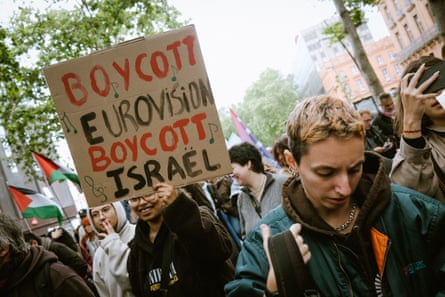
Thousands of the world’s leading musicians , writers and film workers , including hundreds of Hollywood celebrities, have conditioned the supply of their work on ethical grounds. Dozens of states have introduced policies of military , energy or trade embargos against Israel, though more pressure is needed to enforce them. At least 2,000 arts organisations have joined the cultural boycott of Israel, including major film festivals, theatres and museums. Five European broadcasters boycotted Eurovision, the world’s biggest live music event, rather than share a stage with apartheid Israel. Millions of people are boycotting the products of complicit Israeli and international companies. This is a dynamic, growing movement, rooted in universal, ethically consistent, intersectional and antiracist principles. Ultimately, we will measure the success of the movement not by the numbers in our ranks but by the freedom of our people. But to get there we need to keep building grassroots and civil society power that can sever the links of complicity sustaining Israel’s entire regime of oppression.
In the current era of might-makes-right, relentlessly pursuing accountability for the perpetrators of genocide and all those complicit in it is an essential priority for humanity, in my view. If Israel gets away with genocide, no one will be safe in future. I think we’re already seeing that now with the expansion of unmasked US-Israeli aggression across the region. So don’t just speak out, urgently act to end complicity. We in the west cannot afford to lapse into hopelessness or despair, despite how utterly bleak things may appear. Even Trump admitted that Israel can’t fight the world, because the world will win. That world is us.
To go back to your experience – your commitment to boycott complicit Israeli publishers made headlines around the world in 2021, and Israel’s two main bookstore chains responded by pulling your books from their shelves. These chains actually have branches in illegal settlements . A number of writers came out in support of your decision. What was your reaction at that time?
SR: At first, I was a little rattled by the degree of public condemnation. Had I accidentally done something to undermine rather than support the Palestinian cause? But I quickly started getting messages of encouragement from people within the movement, and after that, I felt confident that I had done the right thing.
Of course, it’s important not to get complacent about that feeling of righteousness. I always have to check in with myself – and with others – to make sure I really am being consistent about my principles, or as consistent as I can be in practice. But when I do feel that I’m right, I’m not much bothered by criticism. Who has ever stood up against injustice without being criticised? If that’s all I have to endure, then it’s very little.
I do remember people saying at the time that by joining the boycott, I had in effect ended my career. And it wasn’t just critics and adversaries making that point: even people who sympathised with the cause were murmuring that I had no idea what I was up against. Of course I did face some backlash, as I knew I would. But I think we have to be careful not to exaggerate in a way that drives people away from the movement and induces self-censorship and fear. In reality, I have gone on writing and publishing happily since 2021. I have not had to sacrifice my role in public life. I think I can say I have not even lost the respect of anyone whose respect I cared to keep. Joining the boycott would have been worthwhile no matter the consequences, but for me the consequences have really been very positive and life-affirming.
SE: Do you think it’s possible to truly subvert power through the written word, or can almost anything you write be coopted? If the latter, what choices are we left with?
SR: I remember thinking very early in my publishing career: if anything I had to say was truly radical, I wouldn’t be allowed to say it. The very fact that my novels were widely reviewed – and that institutions like the BBC and the New York Times wanted to work with me – showed me that my political commitments were perceived as manageable and non-threatening. And, as I’ve said, perhaps to my discredit, I wasn’t part of any broader movement or coalition from which I could draw support. I was on my own, trying to make the right decisions according to my own principles, and I often made mistakes.
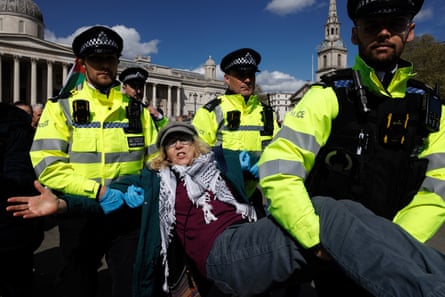
But in this last year, some of my intuitions about radicalism and public life have, I think, been proven right. Since the UK government unlawfully proscribed the protest group Palestine Action as a “terrorist” organisation last summer, it has been against the law for me even to express my political beliefs in Britain. And because I have expressed those beliefs anyway, I have in effect lost the right to travel to the UK, and my contracts with British companies have in practice been suspended. Needless to say, that is nothing compared with the prolonged state persecution of Palestine Action activists themselves.
The proscription of Palestine Action has already been challenged successfully in the high court and I hope and expect it will ultimately be struck down for good. But whatever happens, I know I will never regret standing by my beliefs. And whereas once I worried that the mainstream popularity of my work was in itself politically limiting, now I can feel purely proud and happy that my books continue to be popular among a mass readership. That same popularity heightens the stakes for the UK government in trying to criminalise the publication of my work.
In all, I think my entanglement with the literary and cultural establishment means I have been able, in some respects, to be more politically useful.
Sally Rooney is an Irish novelist. She is the author of Conversations with Friends, Normal People, Beautiful World, Where Are You and Intermezzo
Samir Eskanda is a Palestinian Irish artist, organiser and human rights activist. He has provided strategic guidance and played a key role in many high-profile solidarity campaigns that have contributed to the cultural boycott of Israel
E arly this month, a single pen stroke effectively ended representative Steve Cohen’s career in Congress. The man who has represented Memphis for 19 years will turn 77 later this month, but he wasn’t planning on retiring. He hadn’t lost any primary. The reason was that his district had been erased around him.
A new electoral map , passed by the Republican-led state legislature and signed by Bill Lee, the governor, divides the ninth district three ways. “Last week Tennessee Republicans silenced the Black vote here in Memphis to make Republican victories likely,” Cohen said in his statement. That’s succinct and accurate.
The new map folds a significant portion of Cohen’s Black constituents into Williamson county, which sits south of Nashville and was, until recently, the subject of a different fight.
To this day, the Williamson county seal depicts a Confederate battle flag draped over a cannon. It was adopted in 1968, at the height of the civil rights movement. A Tennessee court ruled in 2024 that the county could remove it. The state legislature responded the following year by passing a new law specifically designed to keep the flag on the seal. The vote was 70-24 in the House and 27-6 in the Senate, with no Democrats voting in favor. Lee, who is from Williamson county, signed it.
The same statehouse that just folded Memphis Black voters into Williamson county is the one that legislated to preserve the Confederate flag of the county absorbing them. The cartography doesn’t require translation. Tennessee is being precise, and they aren’t alone.
This is the aftermath of the supreme court’s disastrous 6-3 ruling in Louisiana v Callais , decided less than a month ago, which gravely weakened the Voting Rights Act’s protections for Black representation. Ever since, Republicans have resembled eager children on Christmas morning, tearing our electoral maps to shreds. Louisiana is set to eliminate one of its two Black-majority districts. The court let Alabama erase one of its two Black-majority districts before this fall’s primaries.
In Mississippi, the Republican state senator who chairs the Medicaid committee said this week that it was time to “ erase Bennie Thompson’s district ”.
Thompson is 78 years old. He is the only Black member of Mississippi’s congressional delegation in Washington, from a state where 38% of the population is Black . He is also the man who chaired the House investigation into January 6. Yet Tate Reeves, the governor, who proclaims April Confederate Heritage Month every year, recently vowed that Thompson’s “ reign of terror ” will be over soon.
Who, precisely, is terrified here? And of what, or whom?
Yvette Clarke, the chair of the Congressional Black caucus, told NBC News recently that 19 of the caucus’s 62 members were at risk through the 2028 cycle . The US has gone from 13 Black members of Congress in 1971 to 62 today; almost a third of them are in jeopardy. As Hakeem Jeffries is poised to become the first Black speaker of the House, the ground is collapsing beneath Black officeholders across the south.
Representation without architecture is brittle. The presence of a Black speaker matters; but it cannot, by itself, prevent the unbuilding of the conditions that made the speakership reachable. What the Voting Rights Act produced – not just officeholders but the constituency-mapping that allowed Black political coalitions to cohere – is precisely what Republicans are now undoing.
They have a roadmap. In 1913, Woodrow Wilson’s administration resegregated the federal civil service that Reconstruction had pried open. They did it by executive action and administrative memo. Department by department, lunchroom by lunchroom. Wilson never issued a proclamation that named the project. The most consequential racial reordering of the early 20th century happened via paperwork .
Between 1900 and 1903, Black voting in Alabama fell from 180,000 to fewer than 3,000 . The 1901 state constitution gave county registrars administrative discretion. White men could vote without anyone vouching for them. Black men required the recommendation of a white voter. After George Henry White left office in 1901, no Black American was elected to Congress until 1928 .
That collapse was a procedure. The architects did not call it apartheid. They called it “states’ rights”. They called it reform.
Plessy v Ferguson, which upheld segregation, outlasted, by 58 years, the presidents who appointed the justices who decided it. The Jim Crow settlement, built between 1877 and 1896, held for nearly nine decades. These are lifetimes. The architects of that settlement were not building for a midterm. Theirs was a generational project, and they succeeded.
The price of disobedience is rising. Last week, the speaker of the Tennessee house of representatives, Cameron Sexton, sent a letter to the Democratic leader, Karen Camper, stripping members of the house Democratic caucus of their committee assignments . The alleged offenses, in his own listing : interlocking arms in the well of the House. Blocking aisles. Distributing earplugs to a colleague. A speaker of a state legislature stripped legislators of their committee assignments, in part, for the distribution of earplugs. Other red states will surely recognize the template; some will use it themselves.
Yet while Tennessee was carving up Memphis, Democratic party stalwarts – including Pete Buttigieg, Elissa Slotkin and Barack Obama – were in Toronto at the Global Progress Action Summit, gathering to learn affordability messaging from Mark Carney. How do we fight the authoritarian right? The president of the Center for American Progress asked from the stage. The answer offered was to message better on groceries, move slightly to the right on immigration, build housing faster.
There is nothing wrong with affordability politics – but it will not save us, or our electoral maps, from a Republican party that would rather decimate representation than persuade voters. There is more at stake here than our grocery bills. America has its own version of the structure other countries call apartheid. Ours is older. Ours is Jim Crow. Republicans are adapting it for a new age. By the time the next census is conducted, it will be conducted under these rules. By the time a Democratic president takes office, the federal courts adjudicating that president’s executive orders will have been shaped by a decade of Republican appointments.
It is tempting to believe that November can return the country to a sort of racial status quo that existed before Trump’s political ascendancy. Frankly, even that America was never what it claimed to be. But rather than bringing the nation closer to becoming a free republic worthy of the name, Republicans are dragging it backward, again.
Saying so is not despair. It is where the fight begins. You cannot resist what you refuse to name, and you cannot outlast what you have decided is temporary.
T owards the end of a miserable summer last year, Arthur Fils received a message from a friend imploring him to listen to a song. Fils was soon confronted with the sound of his own name. “My friend sent me the song saying: ‘Look, they are talking about you.’ I listened and I was like ‘Oh yeah’,” he says, theatrically mimicking his excitement. “ That’s cool.”
There was a depressing irony to the lyric. The popular French rapper La Rvfleuze repeatedly referenced Fils in the chorus of Serrure #5 , likening the noise Fils generates through his performances on the court to the rapper’s impact in his own arena: “Arthur Fils, j’fais du grah sur le court,” he rapped. In reality, Fils’s career was worryingly soundtracked by complete silence.
At 21 years old, Fils is one of the most talented players of his generation. Armed with a forehand off the charts with its heaviness, he complements his supreme athleticism with a well-rounded game. He is one of the few around with even vaguely realistic ambitions of one day consistently challenging Jannik Sinner and Carlos Alcaraz, but for eight months, between his withdrawal at the French Open last May and his return in February, he was sidelined with a stress fracture in his back.
The mere mention of Fils to anyone involved with French tennis at times last year elicited several deep, sorrowful sighs and there were legitimate doubts whether he would return at full strength. The only person who was not particularly concerned about Fils’s future was the man himself. He could feel the stress radiating from his coaches, though. “Now they are very chill as well because they see I can play some good tennis and I’m still here,” he says.
It takes just a short amount of time around Fils to understand he is about as extroverted as is humanly possible. On the court, his charisma is eternal. It manifests in the immense self-confidence and his passionate, theatrical fist-pumps and celebrations. He is just as exuberant outside his workplace. Fils has been nothing but extremely kind, curious and familiar in our many meetings, whether eagerly answering questions or chatting casually about discovering his favourite barber in Brixton, south London where some of his family live.
While Fils’s competitiveness is the driving force behind his success, it can also be his great undoing. When he was younger, his temper was out of control: “Every match I was losing my mind,” he says. “I was going crazy; breaking the racket, screaming, hitting the ball out. Everything. But just because I was losing. I hate losing and so I was getting very mad.”
Maturity has provided Fils with greater self-control, but he also leans on the people around him to help him keep his head. During his tight opening match last month in Madrid, Fils’s constant ranting prompted his fitness trainer, Lapo Becherini, to tell him to “shut the fuck up”. When Fils argued back, Becherini repeated the command. Fils won the match.
His excited retelling of this interaction numerous times post-match was hilarious, but in a sport where players often surround themselves with yes men, it also reflects well on his relationship with his team. “When something is going wrong on the court, they talk to me straight and that helps me,” he says.
“It’s not like something is wrong, but they’re going to tell me; ‘No, no, no, everything is good, keep going like this, the same way.’ That’s not going to help me. If I have people that I can trust, they’re going tell me sometimes bad things, they’re going to be tough on me. But if I’m mature enough to take it, then it helps me.”
In his short time on the tour, it has been fascinating to witness so many opponents attempting to test his patience and temper: “Older people are always going to try to teach you some lessons,” he says. “Some of them are pretty good. Some of them are just because of ego. And when it’s because of ego, then they just say that because you are younger and that’s it. Some guys tried to get under my skin because I was young.”
As many of his contentious moments with opponents are relayed to him, including Dan Evans, Alexander Zverev and Thiago Seyboth Wild needling Fils during matches, his mouth slowly forms a mischievous smile. The assertion that he is tough and never backs down instantly provokes a fiery response: “No, no. Hell, no . I never back down from a fight,” he says. “It’s how my dad raised me. My mom as well.
“When guys are talking to me, we’re on the same level. I’m not the kid and they’re not the adult.”
Fils’s relationship with his father, Jean-Philippe, is at the core of everything he has accomplished. It was Jean-Philippe, a former basketball player, who first envisioned his eldest child’s success and has guided his son every step of the way. He has described his son’s career as a project, throwing his time, resources and sporting expertise into ensuring its completion. The pair are incredibly close and Fils’s father accompanies him to nearly every tournament.
Jean-Philippe hails from Haiti, emigrating to France when he was 10 years old. Fils unsurprisingly cites his Haitian roots as the source of his fighting spirit and the tough love from his father that has been key in his success: “It’s a different mentality. It’s not a French mentality,” he says. “It’s tough. It’s really tough. He has been through a lot of things so he tried to make me understand life a bit more.”
There is one particularly obvious example of his father’s lessons. During his youth in Essonne, a small district south of Paris, Jean-Philippe deliberately made his son train on a horrendous, decrepit court despite having the means to play elsewhere. Fils believes that court helped to build his character, instilling in him greater perspective and grit. He is blunt about the state of it: “It was a disgrace,” he says, laughing.
Not even Fils could have anticipated the progress he has made so early into his comeback. He sits at No 5 in the ATP Race after a series of remarkable, consistent results yielded his first two Masters 1000 semi-finals, in Miami and Madrid, and an ATP 500 title in Barcelona.
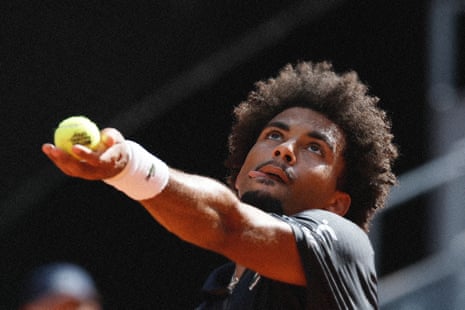
These are a reflection of his ambition and hard work. Fils and his team, which now includes Goran Ivanisevic alongside his primary coach, Ivan Cinkus, used Fils’s extended time on the sidelines to make a startling amount of changes to his game. He has lengthened his service motion and shortened his forehand swing, learned how to properly slide in open stance to his backhand corner on all surfaces and chose to significantly drop weight from his muscular frame, primarily to lessen the stress on his back. He is, by far, a better player now.
Few countries are as cynical and critical of their athletes as France. Even this magnificent comeback has been accompanied by some negativity before the French Open starts this weekend. The general subject of proving doubters wrong prompts Fils to directly call out a particularly harsh pundit by his name. “In Barcelona, I saw one guy talking very bad about me: Simon Dutin,” he says, shaking his head.
“So I was very happy to win the title to show him that he was completely wrong. I try to not react to these things. I try to not see them. But when it’s coming to me, then I have to see them and I have to think about it.
“I was very surprised about what he said and not happy with the way he said the things. But when I won the title, it was the best answer.”
There will be plenty more criticism and potential distractions to come and despite how he endeavours to avoid reading about himself on social media, there is no way for the 21-year-old to avoid the frenzy that accompanies being France’s latest candidate to follow Yannick Noah’s 1983 triumph at Roland Garros, the last time a Frenchman or black man won a grand slam singles title.
The most effective thing Fils can do to protect himself is to ensure that the noise he continues to generate on the court drowns out everything else.