UK sets out AI infrastructure push at London Tech Week – how does it stack up? | AI (artificial intelligence) | The Guardian

Keyword – Technology
Trefwoorden – AI (artificial intelligence), Technology sector, Technology, Business, Computing, UK news, US news, World news, Social media, Media, Defence policy, Politics, Digital media, Infrastructure, Productivity
Title – UK sets out AI infrastructure push at London Tech Week – how does it stack up? | AI (artificial intelligence) | The Guardian
Author – https://www.theguardian.com/profile/aisha-down,https://www.theguardian.com/profile/danmilmo
Link – UK sets out AI infrastructure push at London Tech Week – how does it stack up? | AI (artificial intelligence) | The Guardian
Publish date – 2026-06-13T11:01:12.000Z
Category – News
URL – https://www.theguardian.com/technology/2026/jun/13/uk-ai-hardware-london-tech-week-investment-chips

Ownership of the commanding heights of the AI economy is a political talking point around the world, as countries seek to assert some control of a technology dominated by the US and China.

London Tech Week, the showcase event for the UK tech industry, focused heavily on that theme this week. A government keen to show it has a growth story, and an assertive narrative on AI, made a number of announcements related to companies, skills and infrastructure. Some represented new commitments and ideas; others appeared to be putting a polish on already announced measures.

The most significant commitment was to the UK’s AI infrastructure, reflecting the fact that the central nervous system of AI products – computer chips and the datacentres that house them – is a big factor in the sovereignty debate.

Here is a breakdown of the week’s biggest talking points and the reality behind the promises.

1. The big hardware push

The government announced a £1.1bn investment into AI hardware – the cutting-edge semiconductor chips on which AI models such as ChatCPT and Claude run. The ambition of this spend is significant: “Build globally competitive AI hardware companies in the UK.”

The reality will be more complex. Right now, almost all advanced AI chips are made by one producer: Taiwan Semiconductor Manufacturing Corporation (TSMC). US companies such as Nvidia or Google do not produce AI chips themselves – they send hi-tech chip designs to TSMC, which carves these into silicon wafers using, among other things, deep ultraviolet lasers. It costs TSMC tens of billions to build a single chip foundry, and £1.1bn will not suffice to construct one on UK shores.

What the money could do is bolster domestic chip designers. Arm Holdings, based in Cambridge but listed in New York, is one of these – the government vaguely says it will have a “strategic industry partnership” with the company. The strongest component of the spending package appears to be a £400m procurement opportunity for UK chip makers – an encouraging sum, but industry experts say that a large part of this money was already announced in previous years. The announcement is carefully worded; the money will create opportunity, “including” for UK firms.

“It’s genuinely encouraging to see government treating AI compute as national infrastructure and putting real procurement weight behind it,” said Mark Boost, the chief executive of Civo, a UK-based cloud computing platform.

“My concern is that beneath the sovereignty language, the default flow of this money is likely to go to the usual suspects. Unless the contracts are structured deliberately, we’ll have spent a billion pounds building British-branded infrastructure on somebody else’s silicon, integrated by the established overseas vendors and rented from hyperscalers.”

2. AI skills and company adoption

The government made announcements on up-skilling – helping people learn how to use AI in their jobs – and getting companies to integrate AI systems into how they operate. This included committing £20m to an effort to map how AI is changing entry-level work, and developing practical advice for businesses to redesign roles.

A “bridge AI” scheme will give British companies funds to buy Uk-developed AI products, while there will also be an expansion of the UK’s “tech town” programme which has been pioneered by Barnsley. The government published bespoke plans for important sectors such as advanced manufacturing and the creative industries to adopt AI.

Bouke Klein Teeselink, an academic at King’s College London, says: “Very few people I know are using these tools to their full potential. So there is clearly a lot of productivity that has been left on the table in the UK.”

He adds, though, that ultimately it will be the private sector that embraces AI most efficiently rather than any government-backed programme that might move too slowly.

3. AI defence and US chip investments

Britain’s chief of defence staff, Sir Richard Knighton, announced the Rapid AI Delivery Taskforce, or RAID, which will help develop new AI models for the UK’s defence ecosystem. But, he says “the UK’s policy remains that humans, not machines, are accountable for decisions”.

Two big tech companies, AMD and Nebius, announced investments into the UK. AMD said it is putting “up to £2bn” to “accelerate AI innovation and research” in partnership with the University of Cambridge and Imperial College, among others. Nebius has said it will commit “approximately £1.7bn” to build out AI infrastructure in sites across the UK – this investment appears to actually be Nvidia chips .

4. Ordering Apple and Google to tackle nudity

The government said that big tech providers, including Apple and Google, must find ways to “detect and block nude images for children” via technical solutions or built-in features on tablets and smartphones. If they do not, they will be subject to criminal liabilities and fines.

This is a big one – and a far thornier demand than other requests the government made earlier this year, for example, requiring large tech companies to remove non-consensual nudes.

Right now, companies such as Google and Meta stop the spread of terrorist content, child sexual abuse material and non-consensual nudes by using a sort of digital watermarking system that flags this content. This system involves comparing newly posted content against an existing database of banned material, using these watermarks. It relies on users reporting problematic content, which is added to the database.

To detect and block nude images for children will probably require tech companies to take far more invasive measures. They will have to verify the ages of all their users – and likely, therefore, their identities as well. Second, they may have to scan far more extensively the content those users share between themselves. It could be very difficult for companies such as Google to do this without storing large amounts of information on their users. This information could be leaked, or under a different government, subpoenaed.

Companies that care about privacy – such as Signal, the encrypted messenger and Mullvad, a VPN provider – have sounded the alarm about this measure. Signal has said it will usher in a “dystopian combination of age verification and content scanning”, saying it could lead to “mass censorship capabilities”. It and Mullvad point out that fundamental privacies on the internet are what make it possible for activist groups to organise against authoritarian regimes.

5. Looming action on social media

Along with preventing children from sharing nudes, the government is expected to announce an under-16 ban on high-risk social media apps next week. It is not known which apps will be covered, but a blanket ban in Australia covers Facebook, Instagram, X, TikTok and Snapchat, among others. Features used by “safe” apps, such as disappearing messages, also face age restrictions.

An age ban will also raise the question of age verification – how will big tech companies know their users are children? At issue are questions such as: should big tech companies ask for – and potentially retain information on – users’ government-issued IDs? If so, what should be done about security, and about child users who do not have IDs yet?

Companies such as Google and Meta are working on this problem; Meta has said that age verification would be most effective if it is conducted by app stores, run by Google and Apple. Google, meanwhile, is working on a set of measures on “age assurance” – this could involve default guardrails for all users it does not know are adult, and at times asking users for their IDs. Other ways to solve the problem might also be possible: for example AI-powered facial age estimation , although this has reportedly been circumvented by children in Britain painting on moustaches.


New York man who killed gay dancer faces 25 years after hate-crime conviction | New York | The Guardian

Keyword – US news
Trefwoorden – New York, US crime, US news
Title – New York man who killed gay dancer faces 25 years after hate-crime conviction | New York | The Guardian
Author – https://www.theguardian.com/profile/ramon-antonio-vargas
Link – New York man who killed gay dancer faces 25 years after hate-crime conviction | New York | The Guardian
Publish date – 2026-06-13T11:00:12.000Z
Category – News
URL – https://www.theguardian.com/us-news/2026/jun/13/new-york-oshae-sibley-death-conviction

A New York City man who was recently convicted of a hate crime in the 2023 stabbing death of vogue dancer O’Shae Sibley is facing a prison sentence of between eight and 25 years.

Sentencing for Dmitriy Popov, who was 17 at the time of Sibley’s slaying, was tentatively scheduled for 30 June following his conviction.

Popov, 20, testified during his trial that he fatally stabbed Sibley on 29 July 2023 outside a Brooklyn gasoline station while legally defending himself. But prosecutors argued that Popov was motivated by anti-LGBTQ+ hatred – taunting, jeering and then killing Sibley when the gay man reacted to the defendant’s provocations.

A jury on Monday found Popov guilty of manslaughter as a hate crime after a three-week trial in Brooklyn state supreme court. Jurors, who deliberated a week, also found Popov guilty of second-degree menacing, aggravated harassment in the second degree and fourth-degree criminal possession of a weapon.

But it acquitted him of a more serious charge of murder as a hate crime.

The jury’s decision spared Popov a sentence of life imprisonment. But Popov’s attorney, Mark Pollard, said the manslaughter conviction meant his client was facing between eight and 25 years in prison for the manslaughter conviction.

Pollard called the verdict against Popov “probably bittersweet for both sides”.

“We’re happy he wasn’t guilty of murder but disappointed he wasn’t acquitted on the rest of the charges,” Pollard said.

Sibley had come back from a beach birthday party with friends and stopped to fill up his car with gasoline while blasting Beyoncé music when he encountered Popov.

The 28-year-old Sibley and his friends were dancing shirtless and voguing – or engaging in a form of dance popularized on the ballroom scene by queer Black and Latino people – when another group began taunting them.

Both groups argued for a couple of minutes before starting to go their separate ways, as seen in security camera video played at Popov’s trial. But Popov then approached Sibley’s group, hurled insults and recorded on his phone, and Sibley confronted him, according to witnesses.

Popov testified that he stabbed Sibley with a five-and-half-inch blade to protect himself, having become “scared that he was going to get hurt”. He denied that he aimed bigoted language at Sibley.

New York prosecutors tried Popov as an adult under a state law which allows anyone older than the age of 13 who is accused of murder to be considered an adult.

Sibley grew up in Philadelphia and performed there before moving to New York to continue pursuing his dancing career. He belonged to the Philadanco dance company and used his dancing to celebrate his LGBTQ+ identity.

The Associated Press contributed

What is the difference between an asteroid and a meteorite? The kids’ quiz | Family | The Guardian

Keyword – Life and style
Trefwoorden – Family, Life and style, Quiz and trivia games
Title – What is the difference between an asteroid and a meteorite? The kids’ quiz | Family | The Guardian
Author – https://www.theguardian.com/profile/molly-oldfield
Link – What is the difference between an asteroid and a meteorite? The kids’ quiz | Family | The Guardian
Publish date – 2026-06-13T06:00:08.000Z
Category – Lifestyle
URL – https://www.theguardian.com/lifeandstyle/2026/jun/13/what-is-the-difference-between-an-asteroid-and-a-meteorite-the-kids-quiz

Molly Oldfield hosts Everything Under the Sun , a podcast answering children’s questions. Do check out her books, Everything Under the Sun and Everything Under the Sun: Quiz Book , as well as her new title, Everything Under the Sun: All Around the World .

Supersub Cyle Larin rescues point for Canada against Bosnia and Herzegovina | World Cup 2026 | The Guardian

Keyword – Football
Trefwoorden – World Cup 2026, Canada, Bosnia and Herzegovina, World Cup, Football, Sport
Title – Supersub Cyle Larin rescues point for Canada against Bosnia and Herzegovina | World Cup 2026 | The Guardian
Author – https://www.theguardian.com/profile/ben-fisher
Link – Supersub Cyle Larin rescues point for Canada against Bosnia and Herzegovina | World Cup 2026 | The Guardian
Publish date – 2026-06-12T21:21:13.000Z
Category – Sport
URL – https://www.theguardian.com/football/2026/jun/12/canada-bosnia-herzegovina-world-cup-2026-group-b-match-report

“History is about to be made,” the understandably giddy stadium announcer said in the seconds before kick-off and while this was not the perfect start, Canada will not forget Cyle Larin’s equaliser against Bosnia and Herzegovina in a hurry.

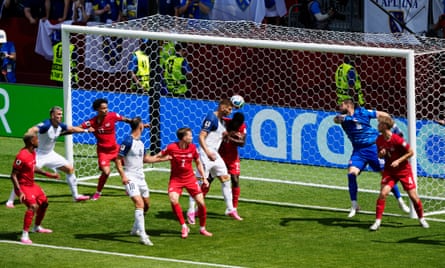
Trailing to Jovo Lukic’s first international goal, Larin stepped off the bench and pulled the co-hosts level with his first touch, lashing in 121 seconds after his entrance. It felt like a shot that carried pent-up frustration at being left out of the starting lineup, and maybe at losing his chance to play in the Premier League next season after Southampton’s expulsion from the playoffs.

This draw in Canada’s Group B opener represents their first point at a World Cup , trumping their demoralising last outing when they lost every game in Qatar four years ago. Jesse Marsch’s side always looked capable of a result, though Juventus’s Jonathan David missed a golden opportunity in the first half and a preposterous Sead Kolasinac block that sent the ball cannoning on to the crossbar prevented Richie Laryea finding the net in the second.

Bosnia, though, were always playing with fire, holding dear Lukic’s first-half header on his first competitive start for his country. His goal firmly tested the foundations of the south stand, where 7,000 temporary seats were erected to increase the stadium’s capacity, many of them occupied by Bosnia’s most ardent supporters.

There were a few celebrity fans in the house, too. Larin’s equaliser prompted Ryan Reynolds, the American-Canadian Wrexham co-owner, to high-five supporters in the stands, the ice hockey star Connor McDavid also in attendance.

In his post-match press conference Marsch was informed there was another famous actor present. “Mike Myers was here? Oh, sweet,” he said. Marsch’s final words to Larin, moments before he replaced Tani Oluwaseyi in the 76th minute, were simple. “I said: ‘Make sure you get yourself into the box, find ways to get chances and score.’ And he did that, right away.”

Marsch accepted improvements are required to overcome Qatar in Vancouver on Thursday, but was bursting with pride.

“How awesome was it to see all of the red jerseys, the sea of red? In a difficult moment, we responded. I have to also thank the crowd, they willed us into the game and the place erupted when we got the goal.” Canada’s substitutes emptied on to the pitch and the nation had a moment they craved.

For the locals, a first World Cup game on Canadian soil represented an occasion they were always going to savour, long before kick-off. By that point, it had been quite the show; Michael Bublé was smuggled on to the centre circle among the 48 flag bearers – the US flag was again booed in some quarters – before performing Bring It On Home to Me and, a few minutes later, Alanis Morissette took centre stage to sing Canada’s national anthem, Marsch, born in Wisconsin, singing every word. Oh, and there was a flypast from the The Snowbirds, the Canadian air force’s answer to the Red Arrows.

There was plenty of early gusto from Canada but Amar Memic, who started up front alongside Ermedin Demirovic with Edin Dzeko short of fitness, passed up the first chance inside the opening couple of minutes. David, Canada’s biggest hitter in the absence of Alphonso Davies, missed a sitter by his standards on 17 minutes, leaving Marsch to contort in agony on the touchline.

Then Bosnia compounded Marsch’s pain, Lukic glancing in from a training-ground routine; Kolasinac flicked on Ivan Basic’s corner and Lukic sparked delirium among the Bosnian fans. Sergej Barbarez, Bosnia’s head coach, was delighted with how his players acquitted themselves. “We were playing against a host, their opening match, a full stadium, 80% Canadian supporters … It was a huge pressure and a huge compliment that my team did not succumb,” he said.

Canada broadly carried on where they left off, promising moves fizzling out in the final phase. At the same time there was nothing more Laryea, who plays here for Toronto, could have done when Kolasinac made an extraordinary clearance eight minutes into the second half, intervening to divert his goal-bound shot on to the crossbar before Bosnia cleared.

Laryea’s sidefoot effort past Nikola Vasilj came at the end of a slick Canada interchange. If that stung, more pain almost followed but Demirovic fluffed his lines when a deflection put him clear on goal. Bosnia had to withstand plenty of Canada pressure. Dzeko, in a warmup bib on the sidelines, recognised as much, waving his hands like windmills, encouraging his teammates to respawn.

But the chances kept coming for Canada. Nikola Katic headed off the line to thwart Oluwaseyi and then Marsch thumped a ball down on the touchline as another opportunity eluded them. A triple substitution on the hour saw Marsch replenish his frontline and later arrived Larin. Ismaël Koné fed David, who located Larin with a first-time flick. Larin made the finish look easy, expertly rolling his touch-tight marker, Tarik Muharemovic, and volleying in past Vasilj, the ball kissing Katic’s calf en route.

Swiss wait to hear result of ballot on capping population at 10 million | Switzerland | The Guardian

Keyword – World news
Trefwoorden – Switzerland, The far right, Europe, World news
Title – Swiss wait to hear result of ballot on capping population at 10 million | Switzerland | The Guardian
Author – https://www.theguardian.com/profile/jonhenley
Link – Swiss wait to hear result of ballot on capping population at 10 million | Switzerland | The Guardian
Publish date – 2026-06-13T05:00:07.000Z
Category – News
URL – https://www.theguardian.com/world/2026/jun/13/swiss-wait-to-hear-result-of-ballot-on-capping-population-at-10-million

A national ballot on an unprecedented far-right proposal to limit Switzerland’s population to 10 million concludes this weekend, amid warnings of devastating consequences for the country’s economy if voters back the initiative.

A “yes” vote would require the Swiss government to take steps to cap the population at 10 million by 2050, enacting tough restrictions on family reunification, residency permits and asylum if the number reaches 9.5 million before that date.

If the 10m threshold is still exceeded before 2050, the proposal by the far-right Swiss People’s party (SVP) would oblige the government to pull out of the country’s free movement agreement with the EU – ending its access to the bloc’s single market.

Switzerland’s system of direct democracy allows for “popular initiatives” that are put to a referendum if they get 100,000 backers within 18 months. Typically held four times a year, plebiscites are a long-favoured tool of the anti-immigration SVP.

Switzerland’s population has grown far faster than that of surrounding EU states, rising by 23% since the free movement agreement came into effect in 2002. Economic output has risen by about 24% over the same period, government figures show.

About 27% of Swiss residents are not citizens. Supporters of the “No to a Switzerland with 10 million” initiative say the influx of mainly EU workers puts housing, schools, transport, welfare and the Swiss way of life itself under unbearable strain.

“Uncontrolled immigration is causing Switzerland to grow far too quickly. The negative consequences are palpable in all areas of life,” the SVP, the largest party in Switzerland’s parliament since 1999, argued in its campaign.

The seven-member government, made up of ministers from Switzerland’s four biggest parties, including the SVP, is collectively against the initiative, warning it would threaten national stability, harm the economy and hurt Swiss prosperity .

Clear majorities in both houses of parliament have also recommended rejecting the proposal, as have the Swiss trade union federation, the Swiss Employers’ Association and Economiesuisse, the country’s main business umbrella organisation.

Rudolf Minsch, Economiesuisse’s chief economist, said the proposal was a populist attempt to fix complex problems with a simplistic artificial cap. “It sells the illusion of a free lunch, and will not solve our housing or traffic problems,” he said.

Thomas Matter, an SVP MP, dismissed the concerns as scaremongering. “We are not against immigration, but it has to be moderate and controlled,” he said. “Before, we had qualitative immigration; now we have quantitative immigration.”

Populist rightwing parties in Europe have successfully exploited – and inflamed – concerns over immigration, reflected in Britain’s 2016 Brexit vote and in surging support for parties such as France’s National Rally and the AfD in Germany .

However, while many nations limit immigration, no country has ever voted explicitly to cap its population, Philippe Wanner, an expert in demography at the University of Geneva, said – although countries such as China have legislated to reduce growth.

Like many European countries, Switzerland needs immigration because birthrates are falling and it faces a steadily ageing population, with the proportion of people aged over 65 due to climb to more than 27% from 21% by 2055.

Recent opinion polls suggest the campaign against the proposal has gained ground since the referendum was announced in February, but most surveys have pointed to a close race, with the “no” camp predicted to win with about 52% of the vote.

Polling stations will open briefly on Sunday to allow in-person votes, but up to 90% of voters in Swiss referendums typically vote by post. To pass, the initiative must win both the popular vote and a majority of Switzerland’s 23 full and six half cantons.

Results should be known by mid to late afternoon on Sunday.

Jeff Bezos’s Blue Origin says it will fly again this year after explosion. Nasa needs it to | Blue Origin | The Guardian

Keyword – Science
Trefwoorden – Blue Origin, Nasa, Space, Jeff Bezos
Title – Jeff Bezos’s Blue Origin says it will fly again this year after explosion. Nasa needs it to | Blue Origin | The Guardian
Author – https://www.theguardian.com/profile/richardluscombe
Link – Jeff Bezos’s Blue Origin says it will fly again this year after explosion. Nasa needs it to | Blue Origin | The Guardian
Publish date – 2026-06-13T12:00:13.000Z
Category – News
URL – https://www.theguardian.com/science/2026/jun/13/jeff-bezos-blue-origin-nasa-aretemis

As Blue Origin tells it, the most spectacular launchpad explosion in recent memory, which destroyed its pioneering New Glenn space rocket last month and severely damaged almost everything around it, was merely a blip.

“We will fly again before the end of this year. Gradatim Ferociter ,” Dave Limp, the company’s chief executive, posted on X on 1 June, using the Latin form of its motto, “Step by step, ferociously”.

John Couluris, Blue Origin’s senior vice-president of lunar permanence, amplified the assertion at this week’s Nasa event in Houston, at which the crew for next year’s Artemis III mission was announced.

“As you know, we had a significant anomaly,” he said. “The response from Nasa , our partners and customers has been extraordinary. We’re making excellent progress on the investigation and pad cleanup.”

Given the magnitude of the catastrophic fireball at Cape Canaveral space force station’s launch complex 36A, an explosion visible more than 100 miles to the south, you would be forgiven for thinking Blue Origin’s statements and recovery timeline were blindly optimistic.

The disaster was seen immediately by analysts as a significant setback to Nasa’s ambitious moon plans. Just two days earlier, Jared Isaacman, the agency’s administrator, announced Blue Origin had won a contract to launch the first of three construction missions planned for this year for the agency’s ambitious $20bn moon base project. That flight appeared to be almost certainly doomed.

But what has transpired since has been an all-hands effort to identify what went wrong and get New Glenn swiftly back to flight, a response unmatched in speed and intensity since the Columbia space shuttle tragedy of 2003.

Isaacman, among the first to survey the wrecked pad , promised a “whole government response” to help Blue Origin, reflective of the importance of Jeff Bezos’s company to Nasa’s moon schedule.

“Everybody is responding quickly. Nasa is going to deploy subject matter experts to help with the investigation to get to the root cause of the problem [and] help them rebuild the pad,” he said on Fox News last week.

“We are doing everything we can to support Blue Origin, their New Glenn program, [and] the lander that we need for the lunar surface.”

As well as Nasa’s support, Blue Origin enjoys Bezos’s deep pockets, and will have the full resources of Space Force available for the rebuild on its base, the military wing’s chief of space operations, Gen Chance Saltzman, has said.

The urgency is because of Artemis III, planned for late 2027, when the crewed lander referenced by Isaacman – Blue Moon – will be tested with SpaceX’s Starship Human Landing System (HLS). The two are vying for selection for the scheduled 2028 mission of Artemis IV, when humans will return to the lunar surface for the first time since 1972.

Blue Origin is designed to fly only on the New Glenn rocket, and Nasa faced the very real possibility that Artemis III, which was to have tested both landers in lower Earth orbit, would take place only with HLS and Starship, a configuration that has followed its own bumpy path .

Another possible scenario is reconfiguring Blue Moon to fly on a different rocket, such as SpaceX’s Falcon Heavy. It is an option Nasa is reportedly urging Blue Origin to pursue, but one that could create a further delay to the Artemis program.

For that reason, Isaacman appears more eager to have New Glenn restored to flight. To keep options open, he told Fox, the agency was “decoupling” Blue Moon from both the rocket and the launchpad.

“Nasa is laser-focused on the lander, because we’re laser-focused on our mission to return astronauts to the surface of the moon before 2028,” he said.

“We’re going to be able to keep that lander in development, progressing, so it’s available for our test mission in 2027, which is Artemis III, and potentially available to meet our landing objectives in 2028.”

The explosion, he said, was “a setback that happens in this business”.

He said: “It’s incredibly complicated. A rocket is a controlled explosion. It’s an awful lot of energy. Things will happen. We have to learn from it and be ready to move forward.”

Limp’s tweet, meanwhile, and Couluris’s subsequent comments, suggest that the launchpad damage is not as bad as first feared, and could be repaired sooner than originally thought.

“The propellant farm, oxygen, liquid hydrogen and LNG [liquefied natural gas] tanks, are all in good shape,” Limp said.

“This is good luck because these are very long lead items. The water tower is also good. The big support tower is damaged, but it can be repaired in place rather than torn down and replaced.”

Space experts say the pace of Blue Origin’s recovery depends on how quickly it can figure out what went wrong.

“We don’t know what happened, and so we don’t know what expertise is required to fix it, so I don’t want to proclaim an obituary on Blue Origin,” said John Logsdon, founder and former director of the Space Policy Institute at George Washington University, and a former member of the Nasa advisory council.

“There are good people involved and the resources are available. I think we have to have a bit of patience.”

Logsdon said spaceflight’s long, chequered history is punctuated by setbacks and delays ranging from minor technological inconveniences to launchpad explosions, and full-on, in-space disasters, including two space shuttle tragedies, Challenger in 1986 and Columbia in 2003, that saw 14 crew members lose their lives.

“My reference point is past experience,” he said. “I remind you of the Apollo I fire in January 1967 that killed three people, and we didn’t stop, we fixed the problem and went on, and I think that’s the most likely situation now in recovering from this accident.

“It’s important to recognise that this is a setback. Mr Bezos says that they are going to spend the money required, whatever that amount is, to get back flying, and he certainly has enough money.”

Other experts say the company’s return-to-flight timeline is more likely to be affected by ground logistics, especially if the launchpad damage turns out to be worse than initial assessments.

“Blue Origin should be able to identify the cause of the failure and get the rocket flying safely again. The challenge is finding somewhere to launch it from,” Eric Berger, senior space editor for Ars Technica, wrote in an early analysis of the explosion last week that called the timeline “aggressive”.

The hill I will die on: I really don’t like ‘like’ – or other imprecise and redundant speech | Louis de Bernières | The Guardian

Keyword – Opinion
Trefwoorden – Language, Fast food, Norfolk, Science, UK news, Food
Title – The hill I will die on: I really don’t like ‘like’ – or other imprecise and redundant speech | Louis de Bernières | The Guardian
Author – https://www.theguardian.com/profile/louisdebernieres
Link – The hill I will die on: I really don’t like ‘like’ – or other imprecise and redundant speech | Louis de Bernières | The Guardian
Publish date – 2026-06-13T09:00:10.000Z
Category – Opinion
URL – https://www.theguardian.com/commentisfree/2026/jun/13/the-hill-i-will-die-on-like-imprecise-redundant-speech-junk-food-britain

I live in the Norfolk countryside, and what irritates me most about living here is the deluge of litter that gets thrown out of car windows in the lane outside my house. It is always from junk food outlets, so the question arises as to which way round things are: does junk food turn you into an antisocial moron, or is it that only antisocial morons eat junk food? Could it be an unfortunate confluence of both?

I never eat it, and never throw litter out of my window. QED . I do find other ways of being antisocial, I suppose, but farts disperse on their own and don’t have to be picked up by passing dog walkers and irate householders.

What winds me up the most about our national life in general is the fashion for imprecise and redundant speech. I inherit this deep-seated misosaskopeslexis* from my father, who was disdainful of the transatlantic accent we all affected in the 1960s and 1970s, and the now forgotten vocabulary that went with it (hey, wow man, cool, far out, heavy, groovy etc).

Like him, I had a classical humanist education in which I was carefully taught how to construct sentences, and how to link them into a coherent train of thought. Nowadays, of course, everyone is affecting a generic Thames corridor accent that is pure Essex. Glottal stops are thriving like Himalayan balsam on the banks of a beck. It is part of the continuing tragedy of our loss of regional dialect. Oi’m a proper vexed bout thaht, bor. Oi’d a rather be a hearin good ol Mardle, speakin pussnally*.

The imperialism of Essex doesn’t quite drive me bonkers, however. What gets my goat is the fashion for larding one’s speech with delays and interpolations that are designed to make one think that the speaker is cool, relaxed, on trend and modest.

I once went to speak to a sixth-form group where one perfectly intelligent young woman said “like” so much that it took her five minutes to say something that should have taken five seconds. The effect was embarrassing and bewildering. Afterwards, in private, I begged her to stop doing it.

Nowadays, I can’t even listen to Radio 4. It doesn’t care about my demographic any more; it’s been rejigged for younger people who say “like”, so that for fluent speakers such as myself it feels like being hit repeatedly on the head with a foam rubber mallet by a stoned Barbary ape. I sometimes wonder whether this junk speech has any connection with the consumption of junk food. And rural littering.

“Like” may be the most annoying of the grammatical fillers (it’s even more common than “um” and “er”) but it’s hardly the only one. I would kind of like (like) to sort of (like) strike speechless all those who (sort of like) think it’s cool to kind of sort of waste everybody’s time with their (like) contentless blether. And stuff. And shit.

* Hatred of pointless words. It’s Greek. Don’t look it up; I made it up myself. I think it might be useful.

* Mardle is the dialect of Norfolk.

Louis de Bernières’s fourth novel, Captain Corelli’s Mandolin, became a worldwide bestseller in 1994

Manchester United lead chase for West Ham’s £80m-rated Mateus Fernandes | Transfer window | The Guardian

Keyword – Football
Trefwoorden – Transfer window, Football, Manchester United, West Ham United, Sport
Title – Manchester United lead chase for West Ham’s £80m-rated Mateus Fernandes | Transfer window | The Guardian
Author – https://www.theguardian.com/profile/jacob-steinberg
Link – Manchester United lead chase for West Ham’s £80m-rated Mateus Fernandes | Transfer window | The Guardian
Publish date – 2026-06-13T01:01:57.000Z
Category – Sport
URL – https://www.theguardian.com/football/2026/jun/12/manchester-united-west-ham-mateus-fernandes-real-madrid-arsenal-psg

Manchester United are leading the race to sign Mateus Fernandes from West Ham. The midfielder also has interest from Arsenal, Real Madrid and Paris Saint-Germain, but the strongest early moves have come from United as they look to boost Michael Carrick’s squad.

West Ham hope to receive £80m for Fernandes, although they may face financial pressure to drop their asking price after their relegation from the Premier League. The club lost £104.2m last year and need to raise more than £100m in transfer sales this summer.

Fernandes, who joined West Ham from Southampton for £38m last summer, is one of their biggest assets and has caught the eye of a host of top clubs. United are keen to bolster their midfield after Casemiro’s departure on a free transfer and have already signed Éderson from Atalanta .

It is believed United are Fernandes’s likeliest destination if he moves to another English club. However, sources have cautioned that there could be a push from Madrid, who have just reappointed José Mourinho as their manager. United will be wary of missing out on Fernandes to their former coach.

Arsenal are thought to feel that West Ham’s asking price for Fernandes is too high. There is more confidence around United. They have been keen on Elliot Anderson but are likely to be outbid by Manchester City for the England and Nottingham Forest midfielder. Fernandes is more within their price range.

West Ham are expected to lose a host of top talent after dropping into the Championship. There is plenty of interest in Jarrod Bowen and Crysencio Summerville, who could be in even bigger demand if he impresses for the Netherlands at the World Cup. Taty Castellanos, the Argentinian striker, is an option for Everton.

David Beckham joins Hollywood Walk of Fame as World Cup comes to LA | World Cup 2026 | The Guardian

Keyword – Football
Trefwoorden – World Cup 2026, David Beckham, Tom Cruise, Football, World Cup, Sport
Title – David Beckham joins Hollywood Walk of Fame as World Cup comes to LA | World Cup 2026 | The Guardian
Author – https://www.theguardian.com/profile/guardian-sport
Link – David Beckham joins Hollywood Walk of Fame as World Cup comes to LA | World Cup 2026 | The Guardian
Publish date – 2026-06-13T09:09:43.000Z
Category – Sport
URL – https://www.theguardian.com/football/2026/jun/13/david-beckham-joins-hollywood-walk-of-fame-world-cup

David Beckham has been honoured with a star on the Hollywood Walk of Fame. Beckham called the ceremony “surreal” as his wife, Victoria, and his friend Tom Cruise praised him at the ceremony.

Cruise lauded Beckham’s journey, saying it was “a Hollywood story” of hard work, determination and global influence on sport and culture.

Rather than a traditional red carpet, the ceremony featured a green soccer-themed one to commemorate the occasion.

“I’ve always been a dreamer, but I could never have imagined that an honor like this would come to a working-class English soccer player like me,” Beckham said. “How fitting then that I am here today as we prepare to celebrate the opening here in the US of the 2026 World Cup . It’s a powerful moment to recognize how the sport I love so much has grown in this country over the past three decades.”

Beckham , who spent six seasons with LA Galaxy from 2007 and is the co-owner of Inter Miami, said: “To stand here in front of my friend Tom Cruise , the greatest movie star of our time, is quite frankly mind-blowing.”

He told the actor: “You welcomed us to LA 20 years ago and you have been a loyal friend and an inspiration to me ever since.”

Beckham and Cruise joined other celebrities at the Los Angeles Stadium, where a Hollywood-style opening ceremony preceded the United States’s opening game with Paraguay, which they won 4-1 . Leonardo DiCaprio, Halle Berry, Rob Lowe, Owen Wilson and Paris Hilton were among those looking on as performers danced around a giant World Cup trophy in the middle of the pitch.

Donald Trump did not attend, instead speaking to the US team via phone, telling them: “I think you’ve a really good chance of going all the way. I just want to wish you a lot of luck.”

“Welcome to the USA” announced a booming voiceover, as a closeup of the city’s Hollywood sign flashed on giant screens at the stadium.

A marching band struck up the music before being joined by singers including Future, Tyla, Anitta and K-pop star Lisa. Costumes and props were designed to evoke Los Angeles street art and the city’s creative industries.

Katy Perry, who also performed in the opening ceremony, then went to watch the action with her partner, the former Canadian prime minister Justin Trudeau.

Earlier, as Canada began their campaign in Toronto with a 1-1 draw with Bosnia and Herzegovina , the Canadian film stars Ryan Reynolds and Mike Myers were in the crowd. It was the first World Cup game on Canadian soil.

The singer-songwriter Alanis Morissette closed an upbeat opening ceremony with a compelling rendition of O Canada, the national anthem.

USA bulldoze Paraguay as co-hosts romp to victory in World Cup opener | World Cup 2026 | The Guardian

Keyword – Football
Trefwoorden – World Cup 2026, World Cup, Football, USA, Paraguay, US sports, Sport
Title – USA bulldoze Paraguay as co-hosts romp to victory in World Cup opener | World Cup 2026 | The Guardian
Author – https://www.theguardian.com/profile/jeff-rueter
Link – USA bulldoze Paraguay as co-hosts romp to victory in World Cup opener | World Cup 2026 | The Guardian
Publish date – 2026-06-13T03:03:01.000Z
Category – Sport
URL – https://www.theguardian.com/football/2026/jun/12/usa-paraguay-world-cup-2026-group-d-match-report

Across the parking lot from Los Angeles Stadium sits the Forum. In the 1980s, it served as the stage for one of American sports’ most enthralling entertainment outfits, the Los Angeles Lakers. Opening their campaign at the 2026 World Cup in front of 70,492 fans, the US men’s national team embraced the Lakers’ Showtime ethos.

The US began their campaign with aplomb, playing Paraguay off the pitch in a 4-1 win.

A day earlier, Mauricio Pochettino had preached quiet confidence . There was no need for a fiery pep talk for a group that has long aspired to impress at this home World Cup. Citing advice from a member of Argentina’s victorious 1986 World Cup side, Pochettino said his players needed to play with joy and focus.

He got exactly what he asked for in a dazzling first half.

The US created their own luck by taking the initiative from the opening whistle. Christian Pulisic and Malik Tillman seemed to be in a competition to see who could nutmeg the most opponents, baiting two Paraguay defenders into yellow cards. The opening goal came in less than 10 minutes. Tim Ream fizzed a ball along the back to Alex Freeman, who played a well-weighted ball up the channel for Weston McKennie. The Juventus midfielder scampered upfield, getting the ball to Pulisic as both players advanced on the box. Pulisic squared the ball for McKennie, whose shot caromed off Damián Bobadilla and tumbled into the net.

Past versions of the US often took their foot off the gas after scoring at World Cups. On Friday, this group of players kept pouring on the pressure. On his World Cup debut, Folarin Balogun bagged a brilliant 20-minute double. In the 31st minute, he finished off a cross from Pulisic. His second came with the final kick of the first half: he ran on to a ball up the channel from Tillman and, after some nimble work to bypass Gustavo Gómez, he placed a shot into the top corner.

Pulisic was taken off at half-time, although the move appeared to be due to caution rather than injury. Evidently, Pochettino saw no sense in subjecting the team’s star player to petty shin-kicks as Paraguay scrapped to get back into the game. Paraguay improved after the break, monitoring Balogun’s movement and tightening ranks to close down the half-spaces that were often available to the US in the opening 45 minutes.

Eventually, Paraguay were able to pull a goal back. In the 73rd minute, the US were caught out of position after a restart by goalkeeper Orlando Gill. Tyler Adams’s attempted clearance found Miguel Almirón just outside the box, and he quickly prodded the ball to Julio Enciso. From there, Enciso played the ball into substitute Maurício’s stride, and the Palmeiras winger ushered his shot beyond Matt Freese.

It was a consolation for Paraguay as well as a reminder that this US team have faults. There were holes for Paraguay to exploit across the defence and some concerns about Freese’s reluctance to leave his line. The US’s next opponents, Australia and Turkey, will most likely test Freese’s instincts more, and the defense will need to be sharp, even if they hold a healthy lead.

But those are problems for another day. Since the US were announced as co-hosts for this World Cup, every move by a US international has been viewed in the context of this summer’s tournament. Rather than buckle under the pressure, on Friday this team played with a determination to prove they belong at this tournament.

It’s hardly a show if you don’t hit the high notes at the end. With Paraguay trying to preserve their goal difference, Gio Reyna – who entered as a late substitute – placed the ball beyond Gill with the outside of his boot.

This World Cup cycle was seldom pretty, but it was all mere prelude. These are the bright lights under which this US team have prepared to play – and for 45 minutes, they didn’t flub a single line.