The pet I’ll never forget: Chewy the dog, who loves gardening – and saving lives | Dogs | The Guardian

Keyword – Life and style
Trefwoorden – Dogs, Pets, Life and style, Animals
Title – The pet I’ll never forget: Chewy the dog, who loves gardening – and saving lives | Dogs | The Guardian
Author – https://www.theguardian.com/profile/ann-lee
Link – The pet I’ll never forget: Chewy the dog, who loves gardening – and saving lives | Dogs | The Guardian
Publish date – 2026-06-08T10:00:21.000Z
Category – Lifestyle
URL – https://www.theguardian.com/lifeandstyle/2026/jun/08/the-pet-ill-never-forget-chewy-dog-newfoundland

I got Chewy, short for Chewbacca, when he was eight weeks old – he was this giant ball of a newfoundland puppy. I live in North Carolina and we drove five hours to Georgia to get him. It was love at first sight, but I never expected how much of a role he would play in my family.

Chewy was the craziest puppy, very clumsy and goofy. He grew so quickly – he went from 10lb (4.5kg) to 100lb (45kg) in the first 10 months. Now aged four, he’s calmed down quite a bit and looks like a big, fluffy, long-haired bear. He’s enormous – you just want to hug him.

His personality depends on the person he’s with. When he’s with my grandma, Barbara, who’s 96, he is soft, gentle and slow. When he’s with me, he is needy. He wants me to take care of him and give him cookies. When he’s with my kids, he is hyper, especially with my eldest daughter, who is 15. They like to tackle each other.

Newfoundlands are traditionally water rescue dogs. When we’re at the beach, my kids and I will play games, and we’ll push each other in the water. Then he will come up and save us. You have to grab on to his back, and he will bring you all the way to shore. He will not let my kids swim. He just wants to save them. We never taught him that – it’s just an automatic instinct.

He can dig on command, too. In April, my grandma wanted to do some gardening – she would point to a spot, he would dig the hole, and then she’d put in the plant and fill it in with dirt. He’s so intuitive: he knows she is older and doesn’t have as much strength any more, and the ground was really hard. He was helping her. I filmed it and posted it online – I didn’t expect the video to do so well.

Chewy and my grandma see each other multiple times a day, because we live next door to each other. We’re always doing something with her. I think he’s a big part of her longevity: being able to stay active and care for him gives her purpose, and he adores her.

I have three children. Chewy is like the fourth child because he’s such an important member of our household. It’s so inspiring to see how he acts – he’s full of compassion and so loving and caring. I never thought I could love a dog as much as I love him.

The Joy of Six: forgotten World Cup goals | World Cup | The Guardian

Keyword – Football
Trefwoorden – World Cup, Football, Sport
Title – The Joy of Six: forgotten World Cup goals | World Cup | The Guardian
Author – Jonathan O’Brien
Link – The Joy of Six: forgotten World Cup goals | World Cup | The Guardian
Publish date – 2026-06-12T04:00:35.000Z
Category – Sport
URL – https://www.theguardian.com/sport/2026/jun/12/the-joy-of-six-forgotten-world-cup-goals

Ivor Allchurch, Wales 2-1 Hungary, Group 3 playoff, 1958

The first six or seven World Cups certainly are not without their charms, but they are noticeably light on the kind of viscerally spectacular goals that we take for granted in the modern game. Hardly surprising when you contemplate what teams of the era had to endure: quagmire-like pitches, boots comprising 50% leather and 50% landfill, and balls so heavy that they basically constituted gym equipment.

Occasionally, however, a player would transcend the conditions to score a World Cup goal for the ages. For proof, head to YouTube and seek Lefter Kücükandonyadis’s thunderbolt for Turkey against South Korea in Geneva in 1954, or Pelé’s dance past several Mexicans in Viña del Mar in 1962. And Wales, on their maiden World Cup voyage, had a corker up their sleeve too.

The focus is usually on John Charles whenever the Wales team of 1958 are written about, but he wasn’t their only threat. The similarly blond Ivor Allchurch of Swansea had already scored in their 1-1 draw with Mexico, a disappointing result that forced them into a playoff with Hungary – where he scored one of the all-time great Wales goals.

In Solna, watched by a tiny crowd (including a few dozen black-clad Hungarians mourning the execution of the revolutionary leader Imre Nagy the previous day), the remnants of 1954’s Magical Magyars took a first-half lead through Lajos Tichy. But early in the second half, Charles instinctively flicked Derrick Sullivan’s pass high out to the left, where it dropped for Allchurch to meet it with a stunning volley that whizzed diagonally into the top corner. Later, a mistake by the goalkeeper Gyula Grosics gifted Terry Medwin the winner, sending Wales into a quarter-final against Brazil – but without the colossus Charles, who’d been kicked beyond repair by Hungary’s hatchet men.

Andrzej Buncol, Poland 5-1 Peru, Group 1, 1982

Group 1 of España 82 is remembered chiefly for Italy’s struggle to grind out the three draws that enabled them to scrape into the second round, where they finally ignited against Argentina and Brazil . But Poland initially outdid them for impotence, first failing to land a glove on Italy, then fortunately surviving that rarest of things, an end-to-end goalless draw, against Cameroon.

At half-time against Peru in A Coruña, with qualification in the balance, it was again 0-0 and Poland’s dressing room was an unhappy scene. They had hit the woodwork three times in the first half, but their first goal of the tournament was still stuck in transit. The manager, Antoni Piechniczek, told his players: “If we don’t win this, for me it’ll be the end of the adventure with the national team, but for most of you too. The next manager might not pick you.” The star man Zbigniew Boniek then shook a fist and roared: “We must finally score this goal!”

The call to arms did the trick as they blew Peru away in a one-sided second half . After slow-motion defending allowed Wlodzimierz Smolarek, Grzegorz Lato and Boniek to score at their leisure, Poland conjured up one of the best team goals of the competition.

When Peru’s much-hyped playmaker Julio César Uribe cheaply lost the ball outside Poland’s box, Lato galloped downfield and Boniek dummied over his diagonal pass, letting the ball roll through to the little redhead Andrzej Buncol. Spotting Boniek’s run out wide, Buncol picked him out, and back came the return via a delectable backheel. Buncol took a touch, then crashed an emphatic finish high past the goalkeeper Ramón Quiroga. It ended 5-1, and suddenly Poland were a team transformed .

Andreas Ogris, Austria 2-1 USA, Group A, 1990

Austria’s Italia 90 campaign was a best-forgotten slog of ponderous play and crude challenges. Only once did they bring something to the party, and it came 50 minutes into their third game, too late to change the trajectory of their tournament.

Having lost 1-0 to both Italy and Czechoslovakia, Pepi Hickersberger’s team went in scoreless at half-time against USA’s college boys in Florence. Moreover, they had been reduced to 10 men, Peter Artner having been sent off for going in studs-up on Peter Vermes. Some pizzazz was sorely needed, and Andreas Ogris injected it after 50 minutes.

The flame-haired attacker reacted quickest when a USA corner was cleared, knocking the ball past Jimmy Banks in his own half and flooring the accelerator for a 60-yard run downfield at top speed. He left Mike Windischmann in his slipstream, then dinked the ball over the USA keeper Tony Meola for an exhilarating goal. “I didn’t see any Americans,” Ogris said afterwards. “I did what a footballer should do: I just ran away.”

Though Gerhard Rodax then made it 2-0 , Austria’s hopes of survival took a big dent when Bruce Murray scored a farcical consolation goal near the end. “Ten players achieved a 2-1: now the quaking begins,” the Viennese paper Kurier observed, as a drawing of lots with Scotland loomed. But two days later, Daniel Fonseca’s injury-time winner for Uruguay against South Korea rendered it academic. Austria were out, and nobody would miss them.

Pierre Njanka, Cameroon 1-1 Austria, Group B, 1998

Most TV viewers could have been forgiven for tuning out long before the end of Cameroon’s unsightly 1-1 draw with Austria in Toulouse at France 98. Cameroon spent most of the evening gleefully clobbering and clattering their opponents, abetted by the indulgent refereeing of Epifanio González Chávez. A pity, because they could play when the mood took them.

The goal that put them ahead was a diamond amid the dirt. Pierre Njanka, a 23-year-old full-back from Olympique Mvolyé, embarked on a long run down Cameroon’s left flank with 13 minutes left, gliding away from Dietmar Kühbauer with a sudden change of pace. “I was looking to pass,” Njanka recalled, “but everyone was marked. So I just kept going.”

Wolfgang Feiersinger, diving in on him too soon, was left kicking at thin air; and when big Peter Schöttel tried to cover, Njanka foxed him with a clever turn, then cocked back his right foot and cracked a sublime shot across the goalkeeper Michael Konsel.

It almost spoils the narrative to mention that Austria ripped two of the three points out of Cameroon’s hands at the death , as their warhorse Toni Polster smashed a close-range equaliser in off the bar after being left unmarked at a corner. “I wish it could have got us more than a draw,” Njanka said of his goal, “but it’s a beautiful memory.”

Fabio Quagliarella, Slovakia 3-2 Italy, Group F, 2010

That Slovakia’s 3-2 defeat of Italy in Johannesburg is regarded as one of the best games of South Africa 2010 says much about the generally dire quality of that tournament. Not until the 73rd minute, when Robert Vittek put Slovakia 2-0 up, did the match lift itself out of one-paced mediocrity. But when it did…

Italy, a moribund team of past-its and never-weres, needed at least a draw to keep their title defence alive. But the manager, Marcello Lippi, unaccountably waited until half-time to throw on Fabio Quagliarella for his first (and last) taste of the tournament. The human highlight reel carried Italy throughout the second half, driving them forward and setting up numerous chances.

When he advanced on goal to be thwarted by the keeper Jan Mucha, Antonio Di Natale tucked away the rebound for 2-1. Quagliarella then had a goal disallowed for offside – but in the 89th minute Slovakia sprang for Italy’s throat again , as Kamil Kopunek dashed through to cushion an angled lob over the goalkeeper Federico Marchetti.

Game over, surely, but nobody told Quagliarella, who dragged Italy back into it with one of the most exquisite finishes witnessed in any World Cup. When the ball broke to him 25 yards out, he looked up, leaned back and caressed a gleaming chip over Mucha, who was close to his goalline and had done nothing wrong. But at the death, Simone Pepe miscued miserably wide , sealing Italy’s fate. Quagliarella wept as he left the field, and, instead of becoming a national hero, his stellar performance slid down the collective memory hole.

Yacine Brahimi, South Korea 2-4 Algeria, Group H, 2014

The columnist Declan Lynch once noted sagely that “you should never not watch a match”. While your physical health would probably suffer if you took this approach to its logical conclusion, anyone who took time to catch the unenticing meeting of Algeria and South Korea in Porto Alegre in 2014 must have been glad they did. World Cups have a pleasing habit of throwing up enjoyable ding-dongs between also-rans (think Colombia-Tunisia 1998 , USA-Slovenia 2010 or Serbia-Cameroon 2022 ), and this was another.

By the 38th minute, Algeria were 3-0 up thanks to South Korea’s inability to deal with high balls . And though Son Heung-min pulled one back early in the second half, South Korea were finished off by a wonderful latticework Algeria move through midfield on 62 minutes.

Yacine Brahimi, impressive throughout, crowned a delightful eight-pass sequence by marauding through on the left, playing a give-and-go with Sofiane Feghouli and sliding the return ball under the goalkeeper Jung Sung-ryong. It made Algeria the first African side to score four goals in a World Cup match – and it earned Brahimi a lucrative move to Porto, where he flourished for several seasons.

Jonathan O’Brien is the author of Glittering Prize: The Story of the World Cup Vols 1-3, out now through Pitch Publishing

Girl, 14, charged in connection with triple stabbing at school in Manchester | UK news | The Guardian

Keyword – UK news
Trefwoorden – UK news, England
Title – Girl, 14, charged in connection with triple stabbing at school in Manchester | UK news | The Guardian
Author – https://www.theguardian.com/profile/morgan-ofori,https://www.theguardian.com/profile/nadeembadshah
Link – Girl, 14, charged in connection with triple stabbing at school in Manchester | UK news | The Guardian
Publish date – 2026-06-11T22:35:51.000Z
Category – News
URL – https://www.theguardian.com/uk-news/2026/jun/11/counter-terror-unit-investigates-triple-stabbing-at-school-in-manchester

A 14-year-old girl has been charged in connection with three stabbings at a school in north Manchester, police said.

The girl was charged with three charges of attempted murder and two charges of possessing a bladed article on school premises over the incident on Tuesday.

She will appear at Westminster magistrates court on Friday.

Police have confirmed that a counter-terrorism unit is leading an investigation into the stabbings.

The girl was arrested after two students and a staff member were stabbed at the Co-op academy in Blackley on Tuesday morning.

Earlier, Greater Manchester police said the suspect had been arrested on suspicion of assault and detained under the Mental Health Act.

Detectives are “keeping an open mind to the motivation of the attack” and have not said it was a terrorist incident.

Ch Supt David Meeney, the city of Manchester’s district commander, said: “Since our last update, further information has come to light that we have made Counter-Terrorism Policing North-West aware of.”

Meeney added: “There is no information to indicate any further threat, and our local officers continue to be in the area. We are here to listen and to act, so please speak to our officers with any concerns.”

The injuries sustained by the two students, a boy and a girl each aged 14 – as well as a 27-year-old male staff member – were consistent with stab wounds but were “non-serious”, police confirmed.

Students were put into lockdown and told not to leave their classrooms after emergency services were called to the scene.

Within an hour of the stabbing, a large crowd of students, parents and passersby had gathered outside the school.

Some parents said they had not been told anything by the school and had been forced to piece together what had happened through texts and calls from their children as they were kept in their classrooms.

In a message sent to parents, the school stated that an “incident” had taken place but everyone was safe.

The three people who were injured have all been discharged from hospital.

‘This is honest art. Like Dostoevsky’: Tim Allen and Tom Hanks on Toy Story 5, tech peril and the joy of rusty nails | Toy Story | The Guardian

Keyword – Film
Trefwoorden – Toy Story, Tom Hanks, Animation in film, Pixar, Film, Culture, Toys, Life and style
Title – ‘This is honest art. Like Dostoevsky’: Tim Allen and Tom Hanks on Toy Story 5, tech peril and the joy of rusty nails | Toy Story | The Guardian
Author – https://www.theguardian.com/profile/catherineshoard
Link – ‘This is honest art. Like Dostoevsky’: Tim Allen and Tom Hanks on Toy Story 5, tech peril and the joy of rusty nails | Toy Story | The Guardian
Publish date – 2026-06-11T11:30:21.000Z
Category – Culture
URL – https://www.theguardian.com/film/2026/jun/11/tom-hanks-tim-allen-interview-toy-story-5-tech-pixar-joan-cusack
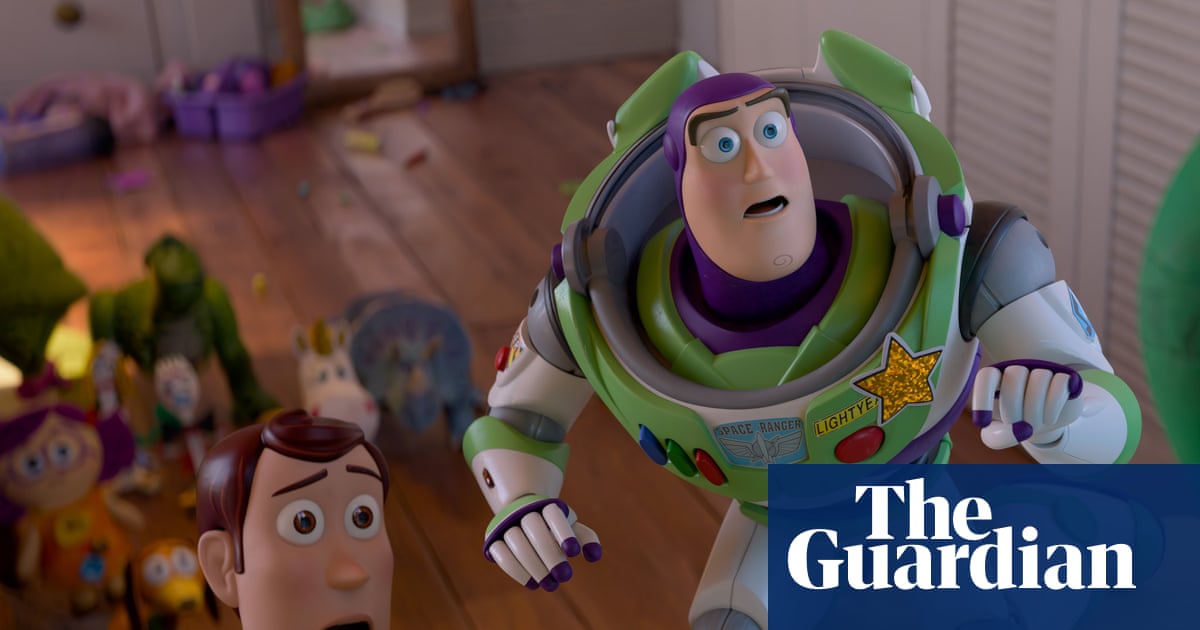
What is the thing you’ve learn ed most from this new film? Secretmission Tim Allen [the voice of Buzz Lightyear]: It sounds really self-gratifying, but it’s taking about 20% less time to make a better product. I know now how to focus and isolate my voice. I don’t do as many takes. Sometimes they’ll even say to me: “I think we got it. You can stop.”

Tom Hanks [Sheriff Woody]: Really? I will sometimes ask: “Please tell me you have it because I’m so done with this.” I find it to be exactly the same as it was at the get-go, except maybe there’s a little more importance put on it. I don’t think anybody picks our takes doing a Toy Story movie lightly. But I found everything else is just one damn thing after another.

Story-wise, there is something to the fact that Jessie [the cowgirl ragdoll] contacts us and says she needs our help. I am not good at asking for help. So I could use that as a life lesson in this world of ours: we’re not in this alone.
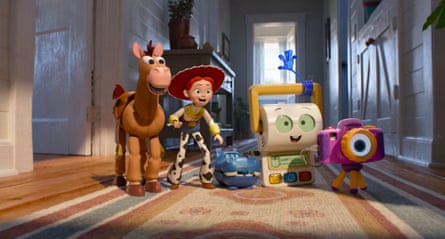
TA: In terms of tech, this new film is so fricking spot on. I feel like I could rob everybody at a coffee shop and they wouldn’t even know. Even the barista would just be scrolling. I love tech. I have a lot of phones and social media, and all of a sudden the algorithm manipulation to what I like got ridiculous. I’m looking at plane crashes that didn’t ever happen. It says: “The 747 lands on an island in Greece sideways. All these people died.” And I go: surely I would’ve read about this? Truck accidents in Singapore on a mountain? It’s just making stuff up! So I applaud our movie for shining a light on stuff like that.

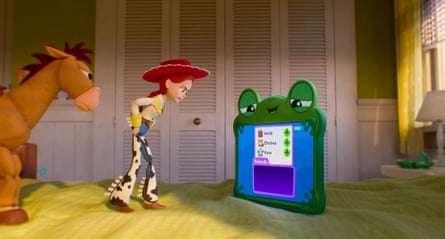
TH: There’s a moment when little Bonnie is spending time on Lilypad, which is supposed to be a communal, joyful experience. And her feelings are hurt by what is being texted about her. That’s a profound moment. No toy hurts your feelings if you are playing with it.

TA: Will this movie move the dial? Well, what motivates behaviour? Why do bacteria and viruses mutate? What activates the change? Even at a molecular level or quantum level? As the late Florine Mark [former president of the Weight Watchers Group], who was a good friend of mine, said: 10,000 women will come to a big Weight Watchers event and about 12% walk out having listened. There’s a weird part of me that really believes that there’s gonna be a bunch of kids that see our film and go: I do want to play with my toys. Being on a tablet is not playing with a toy. It’s playing with dopamine.

Greta, you represent the age of phones and iPads in this new film. What approach to screens have you taken with your own children? felixius4 Greta Lee [Lilypad]: We set a pretty clear boundary about how much time is acceptable and when and where that is appropriate. And stepping back and refocusing and reprioritising things like time spent outside in nature. Hiking and gardening and all the good old stuff that still proves so enjoyable for the kids. Even if it’s a fight. And accepting boredom – relishing boredom, and trying to counteract shrinking attention spans. It’s complicated and it’s a work in progress for everyone.

Joan Cusack [Jessie the cowgirl]: But you’re a parent that pays attention. And that’s the most important part. Otherwise you just let them have it because then you can do stuff.

GL: And it’s so understandable, but it’s not a substitute for parenting. I think it’s helpful, the message in the movie. Understanding that making friends is hard and you need parents’ help to do it.

TH: All society is dealing with this. Trying to outlaw social media for anybody under 16. Whether or not the film alters things, it will spark conversation. We’ll see how popular the idea of this motion picture from one of the most powerful media conglomerates turns out to be.

TA: When I worked in TV there was a thing called “standards in practice” which meant there’s things kids can’t access. Streaming has now opened that up to pornography 24 hours a day. Kids can get round parental controls. How do you pull it all back? You’re not allowed to drink alcohol in the US until you’re 21. I think we should let kids be kids as long as we can … I remember when I was at college, there was a guy in Miami who invented a bullet that could go through police armour. A valid project for a technical engineer. But is it a good idea?

TH: So now we have developed a plaything that will devour the time and attention of everybody.

TA: We are intoxicated by our own creativity. We don’t care if it’s a good or bad idea. It’s like in Oppenheimer when they ask how they know the atom bomb won’t set the atmosphere on fire and destroy the Earth. The guy pauses and says: “Well, it could …”

TH: “… So we can give this thing to our children that might make them never leave their rooms and become antisocial, unempathetic beasts?” “Well, it might , you know, if you let it. But it might help them with their homework …”

TA: There isn’t anything that I haven’t fixed in the last 10 years without the help of YouTube. So it’s not a zero-sum game. I’ve got a 16th-century music box with a little bird which pops up and sings. It has an amazing amount of gears. But I couldn’t find a key or work out the winding mechanism. And a guy online had the same one, and taught me the history, and showed me the secret hiding place for the key. I’d have never worked it out without the internet.
TH: When he was eight, my son made his own wallet with gaffer tape. He did it by watching a video online. And it’s still the wallet he carries around.

TA: So there’s this side and there’s the other side. The sick people that learn how to kill as many people as possible with a vehicle and a trash can.

TH: Who type insults and hurt people’s feelings. So the answer is it’s hopeless and all up to us. And we got a 50/50 shot at setting the atmosphere on fire.

If you could be a toy yourself, which toy would you be and why? stephenw1979 GL: I love Forky. A reanimated regular household object is appealing.

JC: Something cozy that a kid could love. A blanket.

GL: A child would be so distraught to receive a blanket as a present. “Happy birthday, sweetie! A blanket!”

JC: “You can hide under it! You can hold it!”

GL: Or a vase? Not very kid-friendly …

JC: But if it was soft? A soft vase? I wouldn’t want to be a bear because everyone has one. Maybe a manatee? They’re cozy.

TA: I’ve always wanted to be a soldier. A little military action figure. We have a thing called GI Joe in the US – a male Barbie you can dress up in fatigues. As a kid, I got one, but I lost interest pretty fast. I just wanted the equipment. A machine gun would have been more interesting.

TH: One of the best toys that I ever had was a rotorcraft, which was essentially a boomerang. If you threw it the right way – at two o’clock into the wind – it would come right back to you. It was great for the three hours I had it until it landed in a tree. I never saw it again.
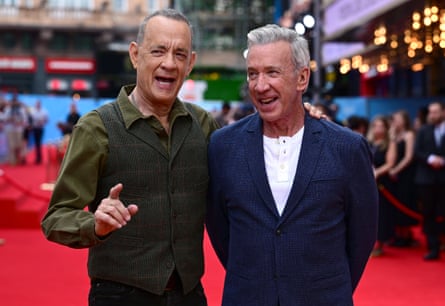
TA: I had a boomerang made of razor-thin, high-impact styrene that could cut you right open if it came back to you at speed. What could possibly go wrong?

TH: Well, chances are it’s not gonna come back. Because you weren’t throwing it at the right angle with the right wind.

Can you remember being scared of a toy when you were a child or are there any that continue to freak you out ? james__clayton GL: I had a Mother Goose toy: a large bird with blinky eyes and a beak. It was battery-operated and would recite nursery stories. She was a little scary at night. I didn’t like how she looked at me. She kept talking. Goose, let me rest! Me and my siblings had this whole thing of like: does she have free will? Why won’t she turn off? Why does she watch us? So that was imaginative play at least.

TH: I’ve never liked mannequins. They are all essentially like a Twilight Zone episode. Like a corpse.

TA: Lawn darts. A two-pound piece of steel, polished to a tip with wind vanes on it and a handle. You’d whip it at the target about 40 yards away. The kids wanted to see if it hit, so they’d stand by the target. It was amazing no one got it through the middle of their heads.

TH: They are now illegal by order of the United Nations. You’d be arrested by agents from Interpol.

TA: I go to the dark web for them now.

Joan, what are your thoughts on Buzz and Jessie’s relationship? Broppy23 JC: Buzz is awesome. End of story. He’s adorable. She likes hanging with him. A good match.

T im, what Space Ranger life advice would you give my two-year-old? KHausdelo88 TA: My three-year-old nephews can’t get enough of Buzz and I tell them: you gotta keep him away from water. Don’t take a bath with him. He also doesn’t like sand. He’s used to being in outer space.

TH: I’d tell would-be Woodys: you’re in charge. You’re taller than most of them. You’ve got a badge and you outsmart varmints and warn the bad guys to play nice. But use your authority with empathy.

Why do you think the films have such a huge impact on adults? Flimfancy2710, Harrylime53, FranTindz GL: The way they tackle the idea of the passage of time. Anything that touches on the idea of a child that is now an adult. A toy that used to be loved that is no longer loved. That really hits home with people trying to reckon with this idea of having one life to live.

TA: At the premiere I saw the same look on faces from three different generations. I think this is honest art. Like Dostoevsky’s The Brothers Karamazov on some sombre, wonderful level.

TH: There’s a moment in Toy Story 3 where Andy has grown up and he’s going to college and his mother is in Andy’s empty room. It’s a silent beat. When I saw it in a normal cinema it rang so perfectly because one of my kids was going off to college. The animators captured the pain that Andy’s mother felt that her boy had left and she had only the memories. How did this movie become so frigging profound? Often children’s films deal with grief for the very first time in someone’s life. Adults can get used to the realities of everything. But when you’re six and you’re facing up to the dog dying, or the toy being lost, that’s a powerful thing.

Greta, how would you rate the levels of in-yun between Lilypad, Buzz, Jessie and Woody? DanPoole1982 GL: In-yun is a Korean word that can loosely be translated as a deep connection that spans generations. It’s soulmate territory [and central to Lee’s 2023 film Past Lives ]. I think that the in-yun between Jessie and Woody and Buzz is very strong and reflected by the multiple generations of kids that they all have in common.

Tom, I read that as a child you used to make a lot of your own toys. Do you still do so? JaneMarple TH: I used a mechanical can-opener as a helicopter, and I would take three nails and any piece of wood and make the landing struts for a rocket ship. And finding them, building them, imagining them was as much satisfaction as with any toy I ever purchased from a store. Not perhaps as safe: the rusty nails from the construction site and the splintered wood.

TA: I got into building model airplanes or model cars in high-end balsa wood kits. But once you’d made and painted them they became so valuable you couldn’t actually play with them. So I’d hang them from the ceiling.

TH: That makes me sad. I would build a model plane and as soon as it resembled something like a plane, that’s all I wanted. I’d maybe build 60% of the instructions. Then I’m good. I got a toy out of it.

Can someone please tell me what to do when there’s a snake in my boot? McScootikins TH: There’s a way to store your boot so no snake can get inside it. I learned this from old cowboys. You stick the leg of one boot inside the other and sleep next to that. And if there is a snake in your boot, you throw the boot as far as you can. You don’t just dump it out right there.

TA: I am not afraid of snakes. We played with them quite a bit when I was young. Most snakes have no interest in biting.

TH: True that. First determine the make of the snake. But if there’s a scorpion in your boot, that’s a real problem.

Toy Story 5 is in cinemas on 19 June 2026

‘A long lunch is what we’re good at’: London bistro above a pub wins UK restaurant of the year | Restaurants | The Guardian

Keyword – Food
Trefwoorden – Restaurants, Food & drink industry, London, Hospitality industry, Food, UK news
Title – ‘A long lunch is what we’re good at’: London bistro above a pub wins UK restaurant of the year | Restaurants | The Guardian
Author – https://www.theguardian.com/profile/helena-horton
Link – ‘A long lunch is what we’re good at’: London bistro above a pub wins UK restaurant of the year | Restaurants | The Guardian
Publish date – 2026-06-12T13:19:25.000Z
Category – Lifestyle
URL – https://www.theguardian.com/food/2026/jun/12/bouchon-racine-bistro-above-london-pub-wins-uk-restaurant-year

I f you are someone who consults social media to find the best spots for a weeknight dinner reservation, you’d be forgiven for thinking that having a viral social media account or influencer chef at the stove is the only way to run a successful restaurant these days.

However, the operators of the newly crowned top UK restaurant are not just unbothered about competing in the algorithm olympics, they’re actively seeking out ways to be more analogue – even considering only take bookings by phone.

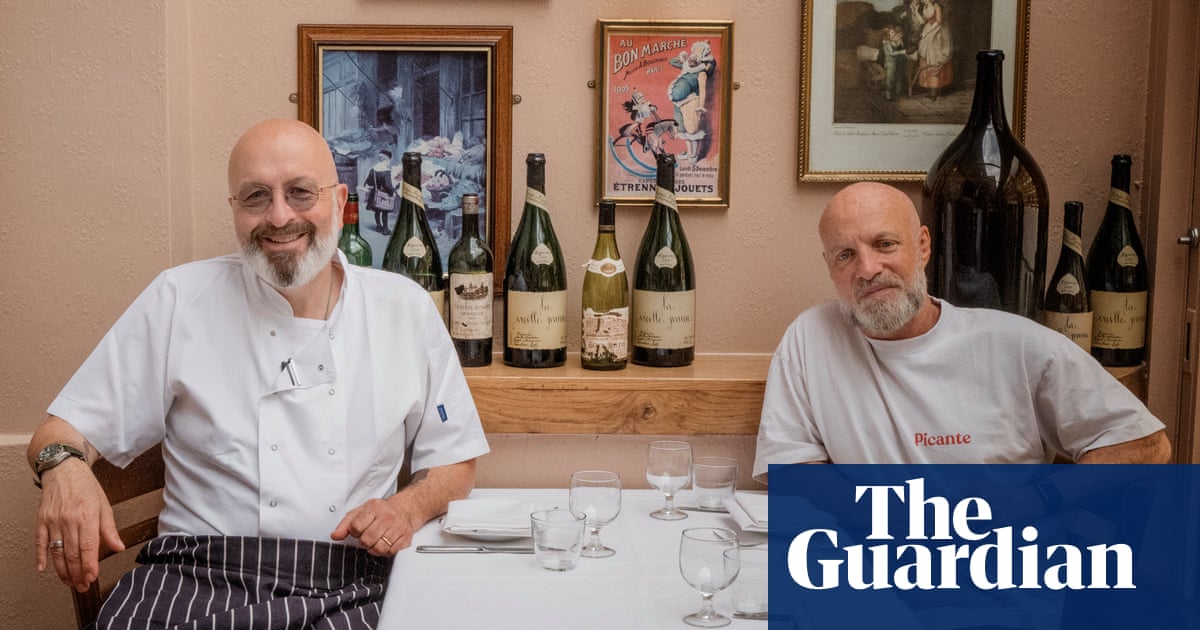
Henry Harris, 62, and Dave Strauss, 61, co-own Bouchon Racine, a restaurant above a pub in Farringdon, London . The bijou space has become a hit since it opened in 2023 and is one of the most coveted tables to secure in the capital.

Strauss said: “The goal is eventually to never take online bookings, and it’s just all done over the phone because I do all the bookings between 9am and 11, or you text me, and it’s just a lovely organic way to do it.” He said he had been having issues with people block booking four tables in a week and just turning up to the one they fancied, “and that jammed up all those tables”.

Harris and Strauss were shocked to win the National Restaurant Awards’ UK restaurant of the year prize this week: “No! We thought we’d be lucky to be in the top 20,” said Strauss. The judges said: “The downstairs pub, Three Compasses, remains just that, a boozer for the after-work crowd, while the upstairs restaurant feels like a secret dining room that whisks you away from London to the back streets of France. You might never want to leave.”

Harris, who has worked in Michelin-starred kitchens, had a French restaurant in Knightsbridge with a cult following, also called Racine, which was open from 2002 to 2015, before helming a pub group. Strauss spent a decade as operations director at the premium restaurant group Goodman and then operated the Rockfish restaurants in Devon and Cornwall.

Now, they have set up shop in what used to be a Thai restaurant above the pub. The cosy room is painted a very pale red, and bottles of amber armagnac and other digestifs – at various stages of emptiness – line the room, making it feel like you’ve stumbled into the fag-end of a party. On a bright morning in June, sunbeams hit the liquid in the bottles and cast golden shadows on the walls.

“We raided our savings and we had to take on four investors who were all enthusiastic industry friends that helped us get it over the line,” he said. Strauss interjected: “Literally everything we opened with was donated by friends.”

Harris said: “The only things that we bought were teaspoons, wine glasses, water glasses, a stove in the kitchen, a dishwasher; pretty much everything else was donated,” adding that the chairs were donated, and the tables left behind by the Thai restaurant. Strauss added: “It was all mismatched, because we just didn’t have the money to buy stuff.”

Today’s menu, which is being squeakily scrawled on a chalkboard as we talk, includes calf brains and tête de veau (a slow-cooked calf’s head), alongside more crowd-pleasing dishes such as oysters, steak frites and pork chops. On the pudding menu is Harris’s crème caramel served with a prune, and a cherry and almond tart.

“We change the menu daily depending on my ideas, what I see, what produce our suppliers have to offer,” Harris said. “But there are some things that are always on the menu; steak and chips, crème caramel, rabbit with mustard, and the chicken liver paté which is my mother’s recipe and has been part of my life for the last 50 years.”

The move to phone-only bookings is just one example of how restaurateurs are reasserting a desire to run a business on their own terms rather than bowing to the demands of culinary consumer culture.

Chef Hugh Corcoran did a similar thing at the Yellow Bittern in King’s Cross, in a move that – along with other old-school demands such as insisting on cash payments – proved divisive among London diners.

Harris, too, is unafraid to set out some house rules for his patrons. He has now banned people bringing in their own birthday cake. He recounted one occasion where a young man brought in a cake for his girlfriend. “It was a kind of sub-£5 Marks & Spencer’s cake with probably a walnut in the middle, a coffee cake. It had been bashed around and didn’t look pristine, and I wanted to go up to the table and just say to her, you need an upgrade. This is what he wants to serve you. Upgrade your boyfriend.”

He said he finds it irritating when people bring in their own desserts: “I am sort of at the point now that if people phone up and say can they bring a cake, we go ‘no’.”

Strauss added that the menu is a “very personal thing” for Harris: “It’s a menu full of things that he would want to eat that he wants other people to eat. If you went to Henry’s house for dinner, you wouldn’t bring a cake, and you wouldn’t do it to anyone else.”

Another old-fashioned tradition they are reviving is the long workers’ lunch, which died a death during Covid and the subsequent work-from-home years.

“Especially the financial places now have called everybody literally back in every day,” said Strauss, “We do a leisurely lunch, we do a seating at 2.30pm where the kitchen is happy to cook all afternoon, a long three-hour lunch, which has become more and more popular.”

In Strauss’s opinion “lunch is always going to be better than dinner. A long lunch in London, and then you’ve got pubs to go to afterwards, is what we’re good at. Where else can you sit at 4pm and just be surrounded by 30 other people who are drinking wine and having lunch, and that’s our goal, you know.”

Many restaurateurs are complaining that rising tax and food inflation are eating away at their margins. Strauss said: “The irony is that although we’re much busier than we were when we started, we probably make the same amount of profit. Everything’s just got chipped away, so you can see why people in the industry are upset, you should make more money if you’re twice as busy.”

One thing the government could do to help, Harris said, is smooth trade with the EU. “My poultry and lentils come from France, my tomatoes all come from Italy, cucumbers, the best summer vegetables at this time of year are from Italy. Brexit has made it harder. It’s slowed things down. It’s created far more food waste when lorries get stuck at customs checks.”

Wimbledon to escape protests after players accept 20% prize money increase | Wimbledon | The Guardian

Keyword – Sport
Trefwoorden – Wimbledon, Tennis, Sport
Title – Wimbledon to escape protests after players accept 20% prize money increase | Wimbledon | The Guardian
Author – https://www.theguardian.com/profile/tumaini-carayol
Link – Wimbledon to escape protests after players accept 20% prize money increase | Wimbledon | The Guardian
Publish date – 2026-06-12T12:20:31.000Z
Category – Sport
URL – https://www.theguardian.com/sport/2026/jun/12/wimbledon-escape-protests-players-accept-prize-money-increase-tennis

Wimbledon will avoid the threat of player protests after representatives of the world’s top players welcomed the significant prize‑money increase offered by the All England Club.

“Leading players from the ATP and WTA Tours welcome Wimbledon’s 2026 prize money announcement as a genuine and significant step forward – the 20% increase is the largest single-year uplift in the tournament’s history and a meaningful signal of intent,” the player group said in a statement.

“Players want to see Wimbledon continue to thrive and support the investment the tournament makes in the game. The question has never been whether those investments are valuable, but whether the athletes whose performances drive the event’s global success should receive a fair share of its tremendous financial growth. Our goal is not to diminish that success, it is to ensure that its continued growth benefits equitably everyone who contributes to it.”

Wimbledon had announced on Thursday a prize‑money purse of £64.2m for the 2026 Championships, which begin at the end of this month. The increase represents a £10.7m rise from last year, with the men’s and women’s singles champions receiving £3.6m and singles players defeated in the first round receiving £80,000.

The top tennis players and their representatives have been in dispute with the grand slam tournaments since last year, with the dispute escalating after the French Open’s prize‑money announcement and the top male and female players initiating a media boycott ahead of the tournament in response. In a subsequent meeting with the All England Club, the players’ representatives had pushed for Wimbledon’s prize money to reflect a 16% revenue share, which would have translated to around £71.2m in prize money.

Despite their reaction to Wimbledon’s prize money, the players group noted, however, that the revenue share of 14.4% is below the 14.9% offered in 2015. The relevance of using revenue share to measure prize money has been a point of contention between the two groups, with Debbie Jevans arguing on Thursday that it made “no sense” to do so considering Wimbledon’s status as a non-profit organisation.

The players’ group also noted that the increased prize money does not resolve the other issues for which they had campaigned, including contributions to a player welfare fund, a revenue sharing formula and a player council. The latter has been another sticking point.

While the All England Club believes initiating a player council would provide them with a platform to discuss these issues, the player group has previously stated that they expect the grand slam tournaments to respond formally to the other points before they move towards agreeing a player council.

London council seizes social housing flat rented by Sierra Leone first lady | Social housing | The Guardian

Keyword – Society
Trefwoorden – Social housing, Housing, Communities, Society, London, UK news, Local government, Sierra Leone, Africa
Title – London council seizes social housing flat rented by Sierra Leone first lady | Social housing | The Guardian
Author – https://www.theguardian.com/profile/sundus-abdi
Link – London council seizes social housing flat rented by Sierra Leone first lady | Social housing | The Guardian
Publish date – 2026-06-11T15:19:15.000Z
Category – News
URL – https://www.theguardian.com/society/2026/jun/11/london-council-seizes-social-housing-flat-sierra-leone-first-lady

A social housing flat rented by Sierra Leone’s first lady has been seized by a London council.

Southwark council confirmed it had repossessed the two-bedroom home in Walworth previously occupied by Fatima Jabbe-Bio, whose tenancy was reported by the Times last year.

Jabbe-Bio, who is married to Sierra Leone’s president, Julius Maada Bio, had been listed on the tenancy since 2007. She has divided her time between Sierra Leone and Britain since her husband was elected in 2018.

Housing rules state that council properties should ordinarily be a tenant’s principal residence. The Times investigation raised questions about whether the south London flat met that requirement after neighbours said they rarely saw Jabbe-Bio.

Announcing the recovery of the home, Reginald Popoola, Southwark’s executive member for council homes, said: “We can confirm we have taken possession of a property in Walworth following a 12-month investigation by our housing investigations team.”

He said the flat would be handed to a family on the waiting list. “I look forward to bringing this council property back to its original purpose, which is to provide a safe and secure home for people with legitimate housing need on the council’s waiting list,” he said.

The case drew widespread attention after reports that Jabbe-Bio had retained the tenancy despite living for much of the year in the presidential lodge in Freetown, Sierra Leone.

In an interview with the BBC last month, Jabbe-Bio defended keeping the flat, rejecting suggestions she had acted improperly. The former model and actor said: “My children are all British citizens. I’m paying for my council house myself. I have not committed any crime.”

There is no suggestion Jabbe-Bio has been charged with any offence.

The recovery of the property comes at a time of acute pressure on social housing in London , with growing waiting lists, rising homelessness and increasing demand for temporary accommodation.

In Southwark alone, more than 18,000 households are on the waiting list for social housing, council figures show. About 4,000 households are living in temporary accommodation while waiting for a permanent home.

Local authorities have stepped up efforts to tackle tenancy fraud and recover properties where tenancy agreements are being contravened. The council said it investigated all allegations of tenancy fraud and unlawful occupation and had recovered 107 properties over the past two years.

Southwark council did not disclose details of the results of its investigation into Jabbe-Bio’s tenancy.

France followed to World Cup by home politics after Mbappé’s swipe at far right | World Cup 2026 | The Guardian

Keyword – Football
Trefwoorden – World Cup 2026, France, Kylian Mbappé, World Cup, Football, Sport, Europe
Title – France followed to World Cup by home politics after Mbappé’s swipe at far right | World Cup 2026 | The Guardian
Author – https://www.theguardian.com/profile/raphael-jucobin
Link – France followed to World Cup by home politics after Mbappé’s swipe at far right | World Cup 2026 | The Guardian
Publish date – 2026-06-12T11:00:45.000Z
Category – Sport
URL – https://www.theguardian.com/football/2026/jun/12/france-followed-to-world-cup-by-home-politics-after-mbappes-swipe-at-far-right

“I f there’s one wish I have, it’s for you to ask my players about the opponents, about football,” Didier Deschamps told journalists after announcing France’s World Cup squad. “I understand that you might feel obliged to ask other questions, but they’re not there to answer them.”

Deschamps has found himself batting away questions about off-pitch matters beyond his scope before his final tournament as head coach. He has sought to protect his players from media scrutiny while insisting they are anything but sheltered from the wider political issues surrounding this tournament.

“The geopolitical situation is complex,” Deschamps said, “but that doesn’t make it a taboo subject. We talk about everything, whether it’s the players among themselves or between us.”

The 57-year-old was also asked about Kylian Mbappé’s criticism of the far right in an interview with Vanity Fair last month. In advance of next year’s presidential elections in France, the Real Madrid forward reiterated his criticism of Marine Le Pen’s National Rally party. “I know what it means and what consequences it can have for my country when people like them come to power,” the France captain said.

Deschamps defended Mbappé’s decision to continue speaking out: “You have freedom of expression, and so do my players. I’m not going to tell them not to speak. They are well aware that there are sensitive topics, they are citizens.” However, he added that he would “never” comment on the subject himself.

“There might be pros and cons, but what I’m interested in is Kylian, who he is and the footballer he is,” Deschamps went on. “But he is also a citizen, who is allowed to feel affected. It will spark debate but he’d be criticised either way, whether he speaks out or not. The only judgment I will make is based on what happens on the pitch.”

Mbappé is the latest in a distinguished line of France players to have taken on the far right. Zinedine Zidane famously called on voters to reject Jean-Marie Le Pen in the second round of the 2002 presidential election, describing his party as one “which does not correspond to France’s values”. Lilian Thuram was even more vocal in his opposition to Le Pen, who repeatedly attacked the national team over the diverse origins of its players.

Les Bleus ’ vocal opposition emerged again during Euro 2024 . The tournament had coincided with parliamentary snap elections in France, called by Emmanuel Macron shortly after the National Rally came out on top in that year’s European elections.

It was Marcus Thuram, Lilian’s son, who first urged his fellow citizens to “fight daily” against the far right in the buildup to the election. In a press conference a few days later, Mbappé said he agreed with his teammate and warned against voting for the “extremes” who were “at the gates of power”.

Le Pen’s party slipped to third in the parliamentary election’s runoff round, behind a coalition of leftwing parties and one consisting of Macron allies. The result, a few days before the semi-final against Spain, was celebrated by several France players on social media.

Mbappé’s most recent comments drew ambivalent responses from the rest of the French football landscape, however. “Politics isn’t my thing,” his former Paris Saint-Germain teammate Presnel Kimpembe told the radio station RTL. “It’s not a matter of being scared or otherwise. Everyone is entitled to think and to say what they want, but you do have to think about it.”

Others have accused the forward of creating a needless distraction before the tournament. The World Cup winner Christophe Dugarry, a pundit for the radio station RMC, argued that the comments could “create issues and tensions”. Although the former striker conceded that Mbappé’s statement was “courageous”, he lamented the “consequences” it could have for the France team.

That sentiment was echoed by Michel Platini, who told RTL that Mbappé should stay politically neutral as France’s captain. “You are playing for all French people,” Platini said. “Once you take a stand, you fall out with half of the world.” So far, Mbappé has opted against following their advice.

This tournament does not coincide with a national election but next year’s presidential vote looms large. The presumptive National Rally nominee, Jordan Bardella, has a clear lead in every poll and appears to be the favourite to be elected as Macron’s successor.

Despite Deschamps’ request, it will be difficult for Les Bleus to skirt around political questions, whether it comes to issues back home or those surrounding the United States, where they have made Boston their base. Mbappé, as the team’s de facto spokesperson, will be aware that his appearances will be eagerly scrutinised for reasons beyond his on-pitch displays.

SpaceX makes largest ever stock market debut, making Elon Musk world’s first trillionaire | SpaceX | The Guardian

Keyword – Science
Trefwoorden – SpaceX, Technology, Elon Musk, Stock markets, Business, AI (artificial intelligence), Aerospace industry, US markets, Datacenters (US)
Title – SpaceX makes largest ever stock market debut, making Elon Musk world’s first trillionaire | SpaceX | The Guardian
Author – https://www.theguardian.com/profile/dara-kerr
Link – SpaceX makes largest ever stock market debut, making Elon Musk world’s first trillionaire | SpaceX | The Guardian
Publish date – 2026-06-12T20:36:41.000Z
Category – News
URL – https://www.theguardian.com/science/2026/jun/12/spacex-stock-price-ipo-spcx

SpaceX made the biggest stock market debut in history on Friday after nearly two and a half decades as a private company. Public trading began around midday with a starting share price of $150, which quickly jumped by a double digit percentage and sent the company’s valuation above $2tn, where it remained through market close. The company’s initial public offering made the company’s CEO, Elon Musk , the world’s first trillionaire.

“It is certainly hard to believe that a little company that started in a warehouse in El Segundo is now going public with the largest IPO ever,” Musk said in an address at SpaceX’s headquarters Friday morning. He reiterated the company’s mission to “make humanity multiplanetary” and “take the fiction out of science fiction”.

Company executives rang the bell to open trading as Elton John’s Rocket Man played on the floor of the Nasdaq exchange in New York City.

“Today, we make history again. We have a history of making history,” said SpaceX’s president, Gwynne Shotwell, from the exchange building. Shotwell announced that the company had launched a Falcon 9 rocket on Friday morning from the Cape Canaveral Space Force Station in Florida, to take 29 Starlink satellites into low-Earth orbit.

SpaceX kicked off public trading at $150 a share, well above its pre-open price of $135. Throughout the company’s first day of trading, SpaceX saw its stock pop, reaching a high of $176 per share. At market close, the company’s shares traded at $160, up more than 19% from the initial price – putting SpaceX’s valuation at a historic $2.1tn.

Musk, the founder of SpaceX, has a large stake in the company as majority shareholder, so as investors’ enthusiasm validated the eye-popping valuation during Friday trading, he took title of the world’s first-ever trillionaire, with Forbes estimating his net worth at $1.1tn at the end of trading. The mogul is also the CEO of Tesla, which is valued at $1.2tn, and his stake in the EV maker is worth around $300bn.

SpaceX’s IPO comes in what is predicted to be a banner year for public offerings of artificial intelligence companies, a group the rocket maker is part of as the acquirer of Musk’s AI startup, xAI. Rivals OpenAI and Anthropic have also filed to go public sometime this year and are predicted to raise record sums at valuations near $1tn, which would orient the US stock market heavily towards AI companies.

Musk has said that the reason SpaceX is seeking to go public, raising billions of dollars, is to be able to obtain the capital necessary to further explore space and create human colonies on other planets.

“Our mission is to build the systems and technologies necessary to make life multiplanetary, to understand the true nature of the universe, and to extend the light of consciousness to the stars,” SpaceX’s investor prospectus reads.

SpaceX is a conglomeration of several of Musk’s businesses, including the satellite maker and internet service provider Starlink, xAI, social media platform X and the SpaceX rocket business.

While expansive, the company is not profitable. Last year, SpaceX pulled in a revenue of $18.7bn, while recording an operating loss of $4.3bn . For comparison, social media company Meta generated revenue of more than $200bn last year with a net income upwards of $60bn.

An untypical IPO

SpaceX’s highly anticipated IPO came with an unusual set of terms. The company offered an accept-it-or-leave-it share price of $135 before trading began , instead of providing the customary range of prices to investors. So, buy-in was largely been based on investor enthusiasm on that set price, rather than demand based on an array of prices. SpaceX reportedly stopped taking orders on Wednesday.

Earlier this week, reports from various news outlets indicated that investor demand was up to four times oversubscribed , meaning that the $75bn SpaceX was seeking to raise with its IPO could jump to $250bn in investment. This drew the ire of the Massachusetts senator Elizabeth Warren, who called on the Securities and Exchange Commission (SEC) to delay the company’s IPO over potentially “inaccurate or misleading accounting or valuation”.

SpaceX’s IPO has market watchers on high alert. Along with the lack of profitability, some analysts say such a big valuation for a company that’s burning cash on its AI buildout – xAI is spending big on datacenters – and is predominantly governed by one person – Musk, who commands roughly 85% of SpaceX’s voting shares – potentially makes for a volatile asset.

The company’s debut on Wall Street could also bolster its grip on the financial system. Its shares will reportedly be distributed into index funds shortly after its IPO, far quicker than most companies going public, though notably not into the S&P 500 . Those funds hold people’s retirement savings and pension plans, meaning individual investors could be unwittingly exposed to financial risk if SpaceX’s share price plummets.

For SpaceX employees, however, the record-shattering valuation means they are about to get a lot richer. More than 4,400 current and former employees are expected to become millionaires with the IPO, according to the New York Times , with 400 of them each securing $100m or more.

Gabriel Zucman, a French economist who studies extreme wealth , said the consolidation of capital brought on by the SpaceX, OpenAI and Anthropic IPOs could have profound effects on the economy and society – the like of which hasn’t been seen since the last century.

“There is a fundamental tension in democratic societies between extreme wealth … and the very possibility of a well-functioning democracy,” Zucman said. “After World War II, it looked like extreme wealth belonged to the past,” but now, he said, “the AI boom is minting billionaires by the day” and the first trillionaires are coming into view.

Why football does not remember the name of its greatest ever Jewish player | Football | The Guardian

Keyword – Football
Trefwoorden – Football, Hungary, Sport
Title – Why football does not remember the name of its greatest ever Jewish player | Football | The Guardian
Author – https://www.theguardian.com/profile/david-bolchover
Link – Why football does not remember the name of its greatest ever Jewish player | Football | The Guardian
Publish date – 2026-06-13T04:00:03.000Z
Category – Sport
URL – https://www.theguardian.com/football/2026/jun/13/why-football-does-not-remember-the-name-of-its-greatest-ever-jewish-player

W ho was the best Brazilian player of all time? Pelé comes the answer. Argentina? Maradona or Messi. Hungary ? Puskas. Holland? Cruyff. Germany? Beckenbauer. Portugal? Eusébio or Ronaldo – take your pick. France? Zidane? England? Perhaps Bobby Charlton?

What about the best Jewish footballer ever? Gotcha! That’s one to send even a group of the most historically literate Jewish football nerds into a prolonged silence. Not even a semblance of a suggestion is likely to emanate from their lips. Maybe they will break into a smile to indicate that we Jews are not very good at football, so choosing the best is probably a pointless exercise anyway, because the best would be rather bad in the broader scheme of things.

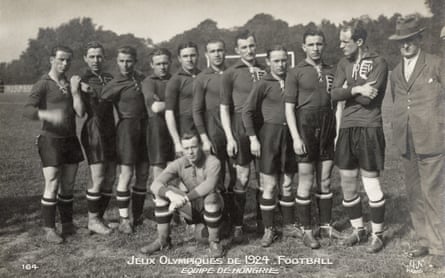
If you had asked me that question several years ago, I would also have drawn a blank and produced the same sardonic grin. But having now read a considerable number of contemporaneous press descriptions of top Jewish players, I can attempt an educated selection, even though the task is difficult because the standard is in fact extremely high and the competition intense. In the end, it boils down to a choice between two outstanding talents – Kalman Konrad and Jozsef Braun, both right-sided attacking players from Hungary.

My instinct would be to plump narrowly for the latter. Braun was the youngest of 12 siblings from a very religious Jewish family from the small town of Putnok in the north of Hungary, on what is now the border of Slovakia. Such was his immense ability that at the age of 17 he was selected for the national team of Hungary, then and for several decades afterwards among the elite footballing nations in Europe. Lightning quick and technically gifted, his displays of footballing genius and glittering international career were cut short in his mid-20s by a succession of injuries inflicted by vengeful defenders.

By the age of 41, Braun had been murdered, beaten to death as a slave labourer in the snow of a brutal Russian winter by Hungarians who, less than two decades previously, had perhaps spent evenings with their friends talking excitedly about his feats on the football pitch. The last image we have of Braun is of those same Hungarian guards crouching over his lifeless body, prising open his mouth to extract gold teeth.

Braun was not serenaded by tributes after his death like Eusébio, Johan Cruyff and Diego Maradona were. No public announcement of his death was broadcast. Proud Jews have never lauded his memory, as Hungarians born long after Ferenc Puskas retired may wax lyrical about his talents, or as old Brazilians may tell their young grandchildren that nothing will ever quite beat watching Pelé. Most of the people who might have gone all dewy-eyed about Braun left this earth pretty much around the same time that he did, along with their children or grandchildren, and the latter’s dreams of having their own children and grandchildren. Thus, the story pretty much stopped in its tracks.

This is what genocide does. It eliminates not just the people, but the stories of those people among those who continue to live. The European Holocaust did not only account for the murder of six million Jews, but also shattered the chain of Jewish collective memory to such an extent that if you throw up the name of Jozsef Braun as a quiz question to those aforementioned Jewish football fanatics, they might well hazard a guess that he was the man behind a famous electronics company, an enemy of five o’clock shadow rather than bewildered full-backs.

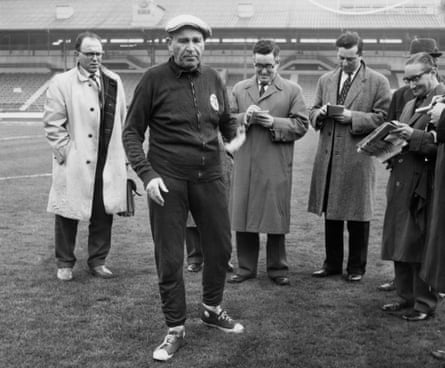
Several years ago, I wrote a book about Bela Guttmann, one of the greatest coaches that football has ever produced. I loved discovering the story of Guttmann, a highly charismatic and influential Jew from Hungary who recovered from the trauma of the Holocaust to reach the top of his trade.

Guttmann’s story was breathtaking enough, but I was even more transfixed by the remarkable wider story that hit me between the eyes as I ploughed through the research. Namely, the huge role European Jews played in football in the years before the catastrophe – the panoply of top players, the innovative coaches who revolutionised training and on-field tactics, the extraordinary personalities, the proud network of Zionist teams, the ubiquitous club presidents and investors, the administrators who played a key role in professionalising and internationalising the sport, the hordes of passionate fans, even the elite referees. I felt as if I was on an archaeological expedition, digging deep to reveal a few vestiges of a destroyed society, in particular its fascination for a game in which so many of them excelled.

After the book was finished, I started to think of an entirely separate subject to research and write about. After all, had I not already written about the European Holocaust and the Jews devastated by it? But the problem is, when you have entered the subject of the Holocaust in any depth – its bestiality and heroism, the sheer scale of the mass murder right in the middle of supposedly civilised Europe – then little else can compete. I was also mesmerised by the vision, denied to my generation in the real world, of a Europe with millions of highly productive and creative Jews, whose subsequent absence has completely and irrevocably transformed the continent’s character.

In my spare time I started writing and collecting biographical summaries of Jewish footballers and coaches, with often big question marks at the end querying an eventual fate still shrouded in mystery 80 years on. I also read up as much as I could about Jews in other sports, such as the boxer Salamo Arouch from Salonika in Greece, who won 200 bouts in Auschwitz on pain of death just to provide entertainment for the guards and who then lived out his life as a manager of a shipping company in Tel Aviv; or the world-record-holding swimmer Alfred Nakache, a French-Algerian Jew who emerged from the camps at Auschwitz and Buchenwald weighing 42kg (about six and a half stone) and mourning his murdered wife and two-year-old daughter, only to break another world record the following year.

There are enough similar jaw-dropping stories about Jewish sporting personalities and the Holocaust to fill a good number of bookshelves, many of them barely known. My own attention, however, became especially and increasingly drawn to the many among them who did not live to tell the tale. The against-all-the-odds stories of Guttmann, Arouch and Nakache, and of the other remarkable survivors we see or hear in now rapidly declining numbers on Holocaust memorial days, may offer hope and generate supreme admiration.

But I began to feel that, for all the school courses, films, books and television programmes, what many people understood by the Holocaust did not reflect the widespread reality, one often of almost complete obliteration. The Guttmann story represented the exception; I now felt a strong compulsion to write about the rule.

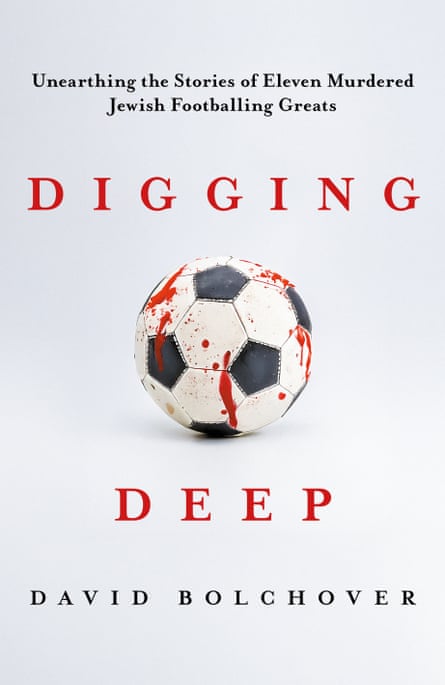
This is an edited extract from Digging Deep: Unearthing the Stories of Eleven Murdered Jewish Footballing Greats (Biteback, £22) by David Bolchover . To support the Guardian order your copy at guardianbookshop.com . Delivery charges may apply.