‘David Hockney caught the look of the modern world’: a tribute to the artist whose work was a feast of visual pleasure | David Hockney | The Guardian

Keyword – Art and design
Trefwoorden – David Hockney, Art, Culture, Art and design
Title – ‘David Hockney caught the look of the modern world’: a tribute to the artist whose work was a feast of visual pleasure | David Hockney | The Guardian
Author – https://www.theguardian.com/profile/jonathanjones
Link – ‘David Hockney caught the look of the modern world’: a tribute to the artist whose work was a feast of visual pleasure | David Hockney | The Guardian
Publish date – 2026-06-12T09:59:33.000Z
Category – Culture
URL – https://www.theguardian.com/artanddesign/2026/jun/12/david-hockney-death-tribute-feast-visual-pleasure

D avid Hockney changed the world just by looking at it. His art was a feast of unabashed visual pleasure, one long orgy of the gaze, the delighted lifelong epiphany of someone who cherished flowers in a vase and freeways in the sun and thought endlessly about new ways of making pictures of such passing treasures. It didn’t seem to occur to him that the way he saw was revolutionary – all he cared about was truth. But no one had ever captured the look and feel of the contemporary world with such acceptance before. He has the same simple perfection as the Beatles – just as they caught the sound of the modern world, he caught its look.

The most revealing fact about Hockney is that he loved LA. Where some might see a moronic inferno, he saw freedom and possibility under an unjudging blue sky. Low-lying houses with patio doors glinting vacantly, tall thin palm trees with tiny heads, the white spume of a diver’s splash – Hockney’s California is a vision of paradise. He is the Matisse of pop art, A Bigger Splash the 1960s answer to Matisse’s 1904 manifesto for hedonism, Luxe, Calme et Volupté.

Pop art had a miserable streak a Chevrolet wide. Most of its great exponents – Richard Hamilton, Andy Warhol, Gerhard Richter – were not fans but cold critics of the new western consumer society that was taking shape by 1960. Then along came Hockney. A childhood in the smoke-blackened industrial landscape of Bradford produced a young artist as free from nostalgia as he was from snobbery. His early pictures, made when he was a student at the Royal College of Art in London, accept modern life not ironically or ideologically but because it was his life: from desk lamps to dancing to taking a shower, why shouldn’t he show the way his generation lived?

Being gay was just part of the truth he lived and painted. It wasn’t a big deal and he’d be upset if we remembered him as “Britain’s first openly gay artist”. It’s exactly his relaxed and untroubled depiction of a sexuality that was illegal in early 1960s Britain that makes his art so insouciantly subversive. From his splashy 1960-1 painting Doll Boy that confesses to his passion for Cliff Richard (“very attractive, very sexy”) to a composed 1968 portrait of a mature and confident couple, Christopher Isherwood and Don Bachardy, the development of Hockney’s art in that decade of revolution is very much about finding the right style to show gay life as it is.

Yet Hockney is never simply a participant in the new, free, fulfilled world he sought in swinging London – and found in California. He is an observer, too, and a highly self-conscious one. When he visited the US for the first time in 1961, he made a comic record of the trip in a series of prints modelled on William Hogarth’s The Rake’s Progress. The bespectacled, weedy Rake is Hockney, at once entranced and mystified by America as he discovers there’s a gay scene and ends up surrounded by jeans-wearing clones listening to pop music on earphones (this was nearly 60 years ago: Hockney was already picturing the way we live now, even back then).

By the end of the 1960s, an eerie stillness dominated his paintings as he became more openly the observer, the looker-on. The loneliness of looking is the theme of what may be his greatest painting, Portrait of an Artist (Pool with Two Figures). It’s certainly his most expensive, selling in 2018 for $90.3m. In this huge 1972 canvas, an almost mystically radiant work, a young man in a pink jacket stands by an open air swimming pool watching a swimmer whose pale flesh flickers under translucent turquoise water. To give the kind of gossipy detail Hockney came to loathe, the man by the pool is Peter Schlesinger and the painting captures the end of their affair, a trauma that gives it painful authority.

Yet if looking can be solitary, it is also a delight. It’s almost embarrassing to admit that, for all the psychological tension of this painting, the glowing, molten landscape of the multi-coloured sun-blessed hills beyond the pool is just as captivating. Such sights ravished Hockney and his art shares his wonder. Some of his most memorable works of art are simple still lifes: his 1972 painting Mount Fuji and Flowers, or his gorgeous study of a fragile porcelain teapot against a roiling and heaving blue sea, Breakfast at Malibu, Sunday 1989.

In both these pictures, fragile still life scenes are juxtaposed with immense and sublime images of nature. It’s the kind of art historical game – in this case playing Chardin against Turner or Hokusai – that Hockney could carry off deftly because he was so curious about art’s changing styles and how they shape our perception of the world. There was nothing naive about his realism. One of his biggest heroes was Picasso. He not only portrayed an imaginary meeting between the two of them in a brilliant assimilation of Picasso’s own graphic style but, in an experiment that took him far from his easel, tried to apply the shifting perspectives of Picasso’s cubism to photography. His layered arrays of photographs that seek to capture the many glances and fractured glimpses in which we really see the world are among his most instantly recognisable works.

Hockney once took me around a Caravaggio exhibition at the National Gallery to demonstrate why he believed the painter must have used some kind of early camera. Then at his London residence, he produced a Japanese scroll to show how eastern landscape art uses shifting, unfurling viewpoints that are much more embracing of the world’s scale than the single-point perspective that has obsessed western art. His argument was fascinating and so was the scroll, which wasn’t an original but a facsimile. In other words, he valued it not for its rareness but its use.

Hockney’s house in Bridlington too was beautifully but unpretentiously decorated. He didn’t use his wealth to live luxuriously but to work and research. There was a modesty and directness about him that was hugely affecting. He became famous for his last stand refusal to give up smoking but, as a non-smoker, I can testify that when he once drove me across Yorkshire he used a hi-tech ashtray that kept his smoke to himself. He was a courteous libertarian.

That character came through in public and made Hockney a celebrity. He attained a kind of popularity that has eluded younger British artists and has more in common with that of David Attenborough or the queen. David Hockney was the real thing – a great artist and a great human.

‘They are adults’: Tuchel grants England players day off with few strings attached | World Cup 2026 | The Guardian

Keyword – Football
Trefwoorden – World Cup 2026, Thomas Tuchel, England, World Cup, Football, Sport
Title – ‘They are adults’: Tuchel grants England players day off with few strings attached | World Cup 2026 | The Guardian
Author – https://www.theguardian.com/profile/davidhytner
Link – ‘They are adults’: Tuchel grants England players day off with few strings attached | World Cup 2026 | The Guardian
Publish date – 2026-06-11T18:00:22.000Z
Category – Sport
URL – https://www.theguardian.com/football/2026/jun/11/they-are-adults-tuchel-grants-england-players-day-off-with-few-strings-attached

Thomas Tuchel is confident that his England players will not abuse his trust, as he granted them time off with few strings attached at the end of their pre-World Cup training camp in Florida.

The manager said he was happy for them to do whatever they wanted – as long as it did not involve air travel – before they fly on Saturday to Kansas City, their base for the tournament. Tuchel oversaw a training game against the amateur club Miami United in Palm Beach Gardens on Thursday before giving the players the rest of the day and Friday off.

The move was in keeping with the tone of the period in Florida, which has brought hard work on the training ground and two warm‑up matches but plenty of downtime with family and friends. Since the players’ arrival in West Palm Beach on the Monday of last week, they have been able to go out in the evenings and have not really been bothered or photographed.

England defeated New Zealand 1-0 in Tampa last Saturday before winning 3-0 against Costa Rica in Orlando on Wednesday. The focus will narrow when they get to Kansas City before their opening World Cup group game against Croatia in Dallas next Wednesday.

“The players are getting one and a half days off to relax and switch off, not only physically but mentally and then we start the next chapter,” Tuchel said. “The next chapter is the group stage and I’m happy that we switch location. This location has been amazing but it’s good to switch the brain.

“The players can almost do what they want [with the free time]. For example, they can’t take a flight. We said no flights because hopefully we have a lot of flights through the tournament.

“No one has asked for a flight. They are adults. They are determined, as well, so the trust is not only a one‑way street. We expect them to live up to the trust, the responsibility, we give them. Everything I have seen of them is [that they are] a determined group who have a dream but know what it takes. I have full belief and trust that they will not gamble on that.”

Tuchel said Jude Bellingham could play as a No 9 during the World Cup after he used him briefly there against Costa Rica. Bellingham pushed up into the role after Tuchel introduced Morgan Rogers for Harry Kane in the 63rd minute. Bellingham was withdrawn eight minutes later but not before his mazy run and pass teed up another substitute, Eberechi Eze, for the shot that led to a penalty for handball. Anthony Gordon scored it.

“Maybe … we’ll see in the tournament,” Tuchel said. “It’s easy. Jude can play as the No 9 almost like in a free role; come into midfield, drop into midfield, drop into half spaces, start more dribbling, Harry then starts more assisting.

“Jude has the personality to score, to be decisive and to arrive in the box so it is an option to play with him and Morgan. I wanted to see that for a few minutes, at least. Let’s see.

“Ollie Watkins was also good [as a substitute against Costa Rica], Ivan Toney was good against New Zealand and trains at a high level so it’s good. I have some options.”

Sam Bankman-Fried loses bid to appeal against fraud conviction in FTX case | Sam Bankman-Fried | The Guardian

Keyword – Business
Trefwoorden – Sam Bankman-Fried, Cryptocurrencies, Money, US news, New York, Business, Technology, US crime, Law (US), FTX
Title – Sam Bankman-Fried loses bid to appeal against fraud conviction in FTX case | Sam Bankman-Fried | The Guardian
Author – Reuters
Link – Sam Bankman-Fried loses bid to appeal against fraud conviction in FTX case | Sam Bankman-Fried | The Guardian
Publish date – 2026-06-12T13:52:59.000Z
Category – News
URL – https://www.theguardian.com/business/2026/jun/12/sam-bankman-fried-loses-appeal

Sam Bankman-Fried on Friday lost his bid to overturn his fraud conviction and 25-year prison sentence over the collapse of the FTX cryptocurrency exchange he founded.

The decision was handed down by a three-judge panel of the New York-based second US circuit court of appeals.

Bankman-Fried, who had been one of the cryptocurrency sector’s most influential figures and a multibillionaire before FTX’s spectacular collapse in 2022, was found guilty on seven felony charges by a federal jury in Manhattan in 2023.

Prosecutors with the Manhattan US attorney’s office, which prosecuted the case, said he stole $8bn from FTX customers in what they termed a “fraud of epic proportions”.

Bankman-Fried had pleaded not guilty to the two counts of fraud and five counts of conspiracy that he faced. At his trial, he admitted to making mistakes running FTX, but testified that he never stole funds.

In appealing against the conviction, Bankman-Fried’s defense lawyers argued that US district judge Lewis Kaplan, who oversaw the trial, improperly prevented Bankman-Fried from introducing evidence to back up his belief that FTX had enough funds to cover customer withdrawals.

Prosecutors countered that evidence at trial, including testimony from three of Bankman-Fried’s former deputies, overwhelmingly proved his guilt.

Those former employees, who pleaded guilty and agreed to cooperate with prosecutors, testified that he directed them to raid FTX customer funds to plug losses at Alameda Research, Bankman-Fried’s crypto-focused hedge fund.

At his March 2024 sentencing hearing, Kaplan said Bankman-Fried knew his actions were wrong but “made a very bad bet about the likelihood of getting caught”.

Bankman-Fried is being held at a low-security federal prison near Santa Barbara, California. He is eligible for release in 2044.

Bankman-Fried was a rising star in the rough-and-tumble crypto industry who burnished his reputation with lavish philanthropic and political donations.

Lovers XXX by Allie Rowbottom review – a wild journey through the 80s LA porn scene | Fiction | The Guardian

Keyword – Books
Trefwoorden – Fiction, Books, Culture
Title – Lovers XXX by Allie Rowbottom review – a wild journey through the 80s LA porn scene | Fiction | The Guardian
Author – https://www.theguardian.com/profile/madeleine-feeny
Link – Lovers XXX by Allie Rowbottom review – a wild journey through the 80s LA porn scene | Fiction | The Guardian
Publish date – 2026-06-10T08:00:14.000Z
Category – Culture
URL – https://www.theguardian.com/books/2026/jun/10/lovers-xxx-by-allie-rowbottom-review-a-wild-journey-through-the-80s-la-porn-scene

J ust as there is a lack of pornography made by women, there is a lack of books about making pornography written by women. Recent nonfiction titles such as Polly Barton’s Porn: An Oral History and Fiona Vera-Gray’s Women on Porn have sought to address the silence and moral confusion, while Rufi Thorpe’s novel Margo’s Got Money Troubles imagined a student mum paying her way with OnlyFans.

Now Allie Rowbottom, author of a memoir, Jell-O Girls, and a novel, Aesthetica, braves the dicey terrain in her sleazy, cinematic second novel. Published into a contemporary landscape where algorithms promote increasingly extreme content, Lovers XXX takes us to the so-called golden age of the Los Angeles porn industry, through the eyes of two teenage runaways who trade troubled homes for big-city dreams.

The obvious preoccupations of any porn industry narrative are: how do you get into it? What is it like? And how do you get out? Rowbottom answers these questions and more in a hurtling trip through LA’s early 1980s underworld. It’s a neon-lit, tobacco-stained scene as dusted with cocaine and packed with toupeed men touting “modelling” work as your wildest Boogie Nights fantasies might conjure; a place where desire is shaped by men, for men, yet which runs on an endless supply of disposable women.

The first half follows 18-year-old Jude, who washes up in an LA reeling from the crimes of the Hillside Stranglers – two serial killers who murdered 10 young women between 1977 and 1978 – to look for her friend Winnie, who arrived two years earlier. Immediately, it is clear that Rowbottom will not permit boredom, as Jude is snared by handsome wrong ’un Laird, who feeds her heroin and persuades her to hold up a liquor store.

Eventually, Jude locates Winnie dancing at a strip club, viewing it as material for her literary aspirations. Winnie gets Jude bartending work and a room in her cabin, which is let by her boss, Brad, a club owner and porn baron riding high on the VHS boom. Jude is at ease with her sexuality, and, despite Winnie’s disdain, begins doing nude shoots, lured by “Video Vixen” Cherry Lynn, the jewel in the crown of Brad’s empire. Yet no sooner has success arrived than it curdles, pitting the girls against one another. As gritty realities crowd in – STIs, addiction, a police crackdown – tensions build to a crisis from which there is no turning back.

The novel uses a mirroring structure, the first half opening with Jude searching for Winnie and the second with Winnie, 30 years later, on a mission to discover what happened to Jude, who vanishes in 1984. As Winnie retraces Jude’s steps, she must confront the industry she has struggled to outrun.

This duality, and Jude and Winnie’s divergent journeys, reflects the contrasting experiences of performers in this period. Rowbottom drew inspiration from real figures such as Traci Lords. Some – like Jude, who views porn as “her destiny, her art” – felt empowered by the celebrity treatment and paycheques they received. Others felt exploited by an industry that, in Rowbottom’s depiction, erodes female actors’ boundaries, breeds competitiveness, then discards them. Her characters think they can control porn, but time and again it controls them.

The plot uncoils in addictive twists, with the only false note Jude’s excessive naivety about Laird. Meanwhile the charged relationship between Winnie and Jude lends the novel its yearning melancholy. Rowbottom’s sensory, kinetic prose moves from dreamlike, Lana Del Rey lyricism to bald sterility. Porn guys all speak provocatively, “every word weighed down by innuendo”.

Lovers XXX is a reckless joyride into youthful longing and hedonism, and their bruising flipside. In its humane, heady portrayal of lives on the margins, and its evocative sense of place, it recalls the films of Sean Baker and the novels of Emma Cline – and is presided over by the ghost of Eve Babitz .

Rowbottom gives her characters dignity without underplaying porn’s murkiness. She marshals the competing forces of power, desire, love and betrayal to probe the complexities of being a woman in a patriarchal world, and of society’s conflicting responses to porn itself. Sex-positive and cathartic, or dehumanising and destructive? Read this book and decide.

Lovers XXX by Allie Rowbottom is published by Virago (£22). To support the Guardian, order your copy at guardianbookshop.com . Delivery charges may apply.

Entertaining, even educational: Mexico’s World Cup opening ceremony delivers | World Cup 2026 | The Guardian

Keyword – Football
Trefwoorden – World Cup 2026, World Cup, Football, Sport, Music
Title – Entertaining, even educational: Mexico’s World Cup opening ceremony delivers | World Cup 2026 | The Guardian
Author – https://www.theguardian.com/profile/alexispetridis
Link – Entertaining, even educational: Mexico’s World Cup opening ceremony delivers | World Cup 2026 | The Guardian
Publish date – 2026-06-12T06:41:16.000Z
Category – Sport
URL – https://www.theguardian.com/football/2026/jun/12/world-cup-2026-opening-ceremony-review-shakira-burna-boy-mexico

I TV’s Mark Pougatch could barely contain his excitement. “Let’s be honest, opening ceremonies aren’t very memorable,” he offered, clearly intent on whipping up viewers into a frenzy of anticipation before events in the Estadio Azteca got under way. A few minutes later, he was at it again. “Nothing is happening,” he shrugged, when the opening ceremony didn’t kick off bang on time. “This is why they don’t live long in the memory.”

No one was going to accuse him of overselling Mexico’s big night, but then perhaps he was underwhelmed by the lineup. With the global star power reserved for the final’s half-time show – which features Madonna, Coldplay and BTS – the Mexican ceremony stuck fast to relatively local talent. It kicked off with Maná, the most successful Latin American rock band of all time, who – to judge by the 1992 hit they performed, Oye Mi Amor – have sold 45m records by sounding not unlike The Police. They were pretty good, as was Venezuela’s Danny Ocean and the Mexican singer-songwriter Belinda, both of whom broke out one of the 18 (eighteen!) official World Cup songs: Ocean’s Partidazo was a nippy bit of reggaeton, Belinda’s Por Ella a sweet collaboration with veteran cumbia band Los Ángeles Azules, the latter a disconcerting sight for British viewers on account of the fact that their bass player looked as if he was being impersonated by Paul Whitehouse.

You couldn’t fault the ceremony for its brevity: it zipped along at a remarkable clip. Indeed, you could possibly have done with a bit more of J Balvin, who was charismatic and self-deprecating enough to turn up in a cardboard car to perform his 2017 hit I Like it, one of the few latterday Latin pop hits to make a splash in the UK. That notwithstanding, the big draw for anyone not immersed in Latin American music was Shakira and the Afrobeats star Burna Boy – who presumably even Mark Pougatch has heard of – performing yet another official World Cup song, Dai Dai.

You used to know where you were with the official World Cup song. It came out, no one cared – at least in England, where none of them have ever even made the Top 20 – and it was swiftly consigned to the dustbin of history. Who today recalls Ricky Martin’s La Copa de la Vida or indeed The Time Of Our Lives by Toni Braxton and operatic man-band Il Divo, the latter a musical cocktail only a lunatic would order? But in 2026, it’s showing signs of mission creep: you can’t move for the bloody things.

There is the official Fifa anthem, Desire, sung at the finals draw in December by Robbie Williams and Nicole Scherzinger but subsequently given a reboot. It’s now a frankly terrifying-sounding collaboration between Andrea Bocelli, David Guetta, K-pop singer EJAE and Megan Thee Stallion. There are 16 versions of the official theme, each remixed by a producer from one of the host cities. And there are the aforementioned 18 official World Cup songs, collected together on an album featuring not only Ocean and Belinda, but an online influencer called IShowSpeed and country pop star Jelly Roll. The latter caused consternation with his official World Cup song Lighter, which featured a lot of Bible-belt-pleasing lyrics about religious redemption and feeling “like a broke-down Chevy” and absolutely no references to the World Cup or even football: a suitably America First approach to the whole business.

If nothing else, it casts Dai Dai in a more forgiving light: a coolly minimal Afrobeats track that you could actually imagine listening to for pleasure, which given that it’s hard to imagine listening to Toni Braxton and Il Divo without crying for death’s merciful release, counts as a win. Shakira gyrated her famously non-lying hips, Burna Boy occasionally forgot to put the microphone up to his mouth on cue – mysteriously, his voice rang out loud and clear regardless – and the whole business was over in a flash. Cautioned to expect the worst, the viewer was instead presented with something genuinely entertaining, even educational: a pleasant surprise.

‘Autistic kids are being experimented on’: inside America’s booming market for unproven stem cell infusions | Autism | The Guardian

Keyword – Society
Trefwoorden – Autism, Stem cells, Robert F Kennedy Jr, Children’s health, Medical research, Health policy, Health, Children, Science, US news
Title – ‘Autistic kids are being experimented on’: inside America’s booming market for unproven stem cell infusions | Autism | The Guardian
Author – Ed Pilkington
Link – ‘Autistic kids are being experimented on’: inside America’s booming market for unproven stem cell infusions | Autism | The Guardian
Publish date – 2026-06-12T11:00:43.000Z
Category – News
URL – https://www.theguardian.com/society/ng-interactive/2026/jun/12/autistic-children-stem-cell-treatment-families

Landyn Holdren is an eight-year-old autistic child who has high support needs and is nonspeaking. His mother, Christy Holdren, says he can be self-harming, slapping his chest, face or head when distressed.

Later this month, she will spend $15,000 on an unapproved stem cell treatment she hopes might help him.

They went for the first round of the treatment last October at a Florida stem cell clinic that charged Holdren $12,500. The procedure is not approved by the Food and Drug Administration (FDA), and scientists say there is little evidence it works for autism, raising concerns that desperate families are being sold false hope.

Yet as stem cell clinics multiply across America, they are finding an influential ally in the US health secretary, Robert F Kennedy Jr .

Holdren knows there is no “cure” for autism, which is a condition, not a disease. But she said she was determined to do her utmost to help her child.

“He actually looks at us and not through us, and that’s huge for us,” she said of the small but significant changes she believes followed Landyn’s first infusion. “We can cut his hair without him freaking out. That may sound little, but when you have to wrangle an alligator to clip his nails, that’s big things.”

Seven months on, Landyn’s aggressive and self-harming behaviour is worsening again. So, despite the cost that has driven Holdren to take out a loan against her retirement savings, she is preparing to return for a second stem cell dose.

A ‘completely bogus’ treatment

The Holdrens are far from alone.

Across the US, children with autism as young as 18 months old are being given unapproved stem cell treatments at clinics in Florida, Texas and elsewhere, part of a growing market operating beyond the bounds of FDA approval.

The procedure often involves the child being sedated before receiving intravenous doses of millions of stem cells commonly derived from human umbilical cords harvested at birth.

In some cases, the doctors selling the treatments have no scientific expertise in autism or child development. Instead, physicians from unrelated specialties, including plastic surgery and orthopaedics, have entered the booming stem cell sector, billing the procedures as “regenerative medicine” for children, some of whom have severe disabilities.

Up to now, Americans seeking therapies that lack federal approval have tended to look abroad. That has fed the flourishing multibillion-dollar industry of “stem cell tourism” in places such as Mexico and Panama – and as far afield as Abu Dhabi.

Now the practice appears to be gaining strength inside the US, and there are fears that under Kennedy’s leadership, the FDA may be loosening its rigorous regulation.

Paul Knoepfler, a stem cell biologist at the UC Davis School of Medicine who acts as an unofficial watchdog of stem cell clinics through his blog, the Niche , has detected a slump in enforcement activity under Kennedy. He is concerned that the pattern will harden into a change of government policy.

“We haven’t seen the FDA taking action in the last 18 months. I think we’re going to see big change coming from the FDA very soon, backing off oversight of birth-related stem cells,” he said.

Arnold Kriegstein, professor of neurology at the University of California San Francisco who led its stem cell research for almost two decades until 2022, said that concern was growing about the spread of expensive and medically unproven interventions on highly vulnerable children.

“I’m appalled that this is being allowed to go on in the US, and that so many desperate people are being taken advantage of with a ‘treatment’ that in my view is completely bogus.”

The FDA has so far only approved stem cells for use in a very narrow range of cases, such as bone marrow transplants or to boost a cancer patient’s immune system after chemotherapy using their own, their siblings’ or unrelated donors’ matching stem cells. But the technique is attracting mounting attention for use in a range of treatments.

Stem cells are the body’s master cells, from which all other cells derive. They can renew themselves, develop into specialised cells and heal after injury.

Their use is showing enormous promise with specific diseases that involve dysfunctions at the cellular level, and there are more than 100 clinical trials currently under way under federal oversight.

Scientists are excited about the prospects for Parkinson’s disease, which causes dopamine-producing neurons in the brain to be depleted, and type 2 diabetes, in which beta cells in the pancreas produce insufficient insulin.

But autism is not like that. It is a very heterogeneous neurodevelopmental condition that varies almost with each person, and cannot be pinpointed to a precise cell-based complication. It is also still relatively poorly understood, which makes the search for new, effective treatments as hard as shooting a target in the dark.

So far, Kennedy has made no public moves to relax FDA restrictions on stem cell therapies. Instead, he has focused his energies on cutting scientific research into autism by about $31m, attacking existing evidence-based science, firing thousands of federal health officials and attempting to reduce the recommended list of childhood vaccinations.

At the same time as assailing established science, Kennedy has championed the providers of alternative medicine who operate on the margins of scientific controls, and has spoken openly about his desire to weaken federal regulation of the so-called “wellness industry”. He told Gary Brecka , a podcaster, that he would “end the war at FDA against alternative medicine”, including the “war on stem cells”.

He added that the FDA should “not tell physicians what they can and cannot prescribe. If you want to take an experimental drug, you can do that, you ought to be able to do that.”

Early in his tenure, Kennedy invited a leading provider of umbilical stem cells, Dr Chadwick Prodromos, an orthopaedic surgeon who had been operating largely out of the Caribbean island of Antigua, to join him at a roundtable in Washington DC that to reportedly discuss how to dilute federal regulations of stem cell treatments. Kennedy asked the physician to advise him on how to open up the US to such procedures despite the FDA’s ongoing prohibition without allowing a “‘wild, wild west’ environment”.

It later emerged that Prodromos had treated Kennedy personally in Antigua, administering him stem cells for his voice condition, spasmodic dysphonia.

In an email exchange with the Guardian, Prodromos said that he had made recommendations in line with Kennedy’s request that focused on how to lower the cost and timeline of new treatments so that FDA approval could be attained sooner. The process in the US “leading to drug approval is so expensive that the number of trials is very limited and many worthwhile treatments are never undertaken due to lack of funding”, he said.

He added that the challenge was to modify regulations without compromising safety. “The FDA is currently actively involved in attempting to do just this: an effort which I support.” When asked about whether the treatments amounted to experimentation, he replied that informed consent was carried out by the parents, adding: “We have seen no serious adverse events.”

Since Prodromos’s exchange with Kennedy, the Guardian has learned that he is now offering umbilical cord stem cell infusions to autistic children from two of his US clinics – in Naples, Florida, and Dallas, Texas. In its marketing , the clinic says that 85% of its autistic patients have had “meaningful improvement” in their behaviour and calmness, communication and speech, sleep, and seizure activity.

Fiona O’Leary, a campaigner against pseudoscience from Cork, Ireland, contacted the Prodromos Stem Cell Institute as part of her monitoring of regenerative medicine clinics. O’Leary, who has four autistic children, spoke to a Prodromos staff member and was told that families no longer needed to travel to Antigua for the procedure because it is newly available within the US.

“We do it in the US now, you don’t have to go overseas,” the employee said.

O’Leary was told that the shift had happened after Florida passed a law last year that allows clinics to offer stem cell treatments that were still unapproved by the FDA. She asked whether the Florida law covered autism, and the staff member said yes.

In fact, Florida’s law that came into effect last July only allows physicians to perform federally unapproved stem cell therapy for orthopaedics, wound care or pain management.

The areas covered are specifically stipulated, and autism is not one of them. “Florida’s law is super-specific – it only speaks to stem cells, and only speaks to physicians applying them for those three specific purposes,” said Jeff Cohen, an expert in health law who is founder of the Florida Healthcare Law Firm.

O’Leary said that the unraveling of US controls was upsetting. “Kennedy is undoing so much hard work to hold back the misinformation. Autistic kids are being experimented on. Families are spending huge amounts, and losing everything.”

After her conversation with Prodromos, O’Leary was sent a form to fill out as the first step towards receiving care. It asked her what specific condition she was interested in having treated, with options being “hair thickening, skin rejuvenation, improved intimacy, back pain, neck pain, joint pain, other … ”

The clinic told her that if she took up the treatment, her son would be administered 150m umbilically derived stem cells provided by a company in New Jersey. He would be mildly sedated to calm him, and then the cells would be transfused into his body through an IV.

The cost of the first transfusion: $20,000.

Prodromos told the Guardian that he had begun offering stem cells to autistic children in the US under the new Florida statute, using the “pain management” category. “The patients we treat for autism all have documented need for pain management – for example chronic headaches which are a well-described component of autism in many such patients,” he said.

He said the cost of treatment was in line with other reputable clinics and reflected the expense of the research they conduct. “We pay for a research study in which patients are followed up more or less in perpetuity that is incredibly expensive, but we do it because it is the right thing to do.”

Prodromos summarised his US offering as “evidence-backed treatment which is very safe. This is not exploiting vulnerable children, but rather providing real benefit.” Prodromos accepted that official warnings about unscrupulous clinics were to some extent valid. “Those disclaimers are unfortunately often true, and deception definitely occurs,” he said. But he described his own US offering as evidence-backed treatment.

The Tijuana experiment

For years, advocates of fringe autism treatments largely operated on the margins of US medicine. Under Kennedy, some are now gaining unprecedented influence with the federal government.

In January, Kennedy appointed Tracy Slepcevic, the mother of an autistic child and a vocal supporter of alternative therapies, to a federal committee that helps steer national autism research policy. She was one of 21 new appointees who were elevated to the panel after Kennedy dismissed all its previous members. Several of the new advisers, Slepcevic included, share the health secretary’s skepticism toward vaccines .

Slepcevic describes in her book, Warrior Mom, how she arranged for her child to undergo several unproven treatments including high-dose vitamin C, hyperbaric oxygen chambers, intravenous ozone and chelation therapy, a technique to remove heavy metals from the body. The FDA has warned that chelation can cause serious and possibly fatal side effects such as kidney failure.

Slepcevic also took her son to Ukraine for stem cell therapy following a protocol set by Jeff Bradstreet, a controversial anti-vaccine doctor. (Bradstreet died in an apparent suicide in 2015 shortly after his wellness center in Buford, Georgia, was raided by the FBI in an investigation into “frauds and swindles”.)

In April, Slepcevic, who is also a leader of the California chapter of Children’s Health Defense, the anti-vaccination group that Kennedy chaired until 2023, staged an Autism Health Summit in San Diego for the second year running.

The star speaker, beamed in on video, was Kennedy.

The health secretary described Slepcevic and her husband, Steve, as his “good friends”. He promised attenders that he planned to “create opportunities that extend across a lifetime”, and exhorted his audience to “work with us to drive solutions together”.

Slepcevic did not respond to a Guardian request for comment.

It was at the summit that Slepcevic announced a “pioneering” new experiment that she has initiated in partnership with a clinic in Tijuana, Mexico. Given its location, the center operates outside the FDA’s stringent controls , falling under the remit of the Mexican regulator Cofepris.

The Tijuana experiment, which is being billed as a “clinical trial” under Mexican oversight, will begin on 15 July. It will involve umbilical stem cells being given to a target group of 120 boys and girls aged seven to 15 who have an official autism diagnosis ranging from mild to severe.

Researchers will spend 12 months testing whether the treatment appears safe while also looking for signs in the children that it works. If the early results look promising, they hope to cross the border with a much larger trial at a newly opened clinic in Nashville, Tennessee, and other US sites.

The overall cost of the Mexican experiment has been put at between $1.5m and $5m, for which donations were being warmly invited in San Diego.

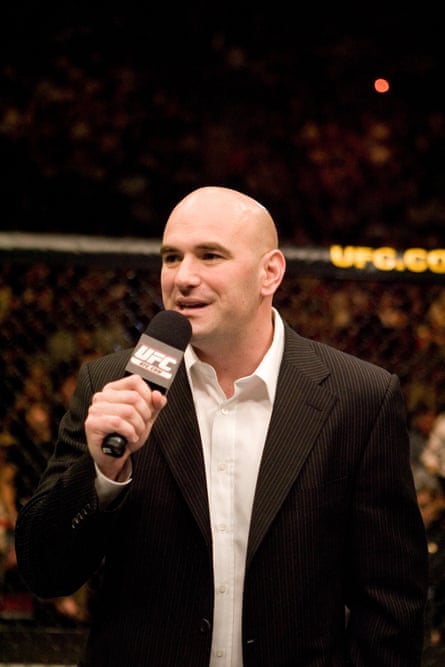
Slepcevic has partnered for the trial with Ed Clay, the founder and owner of the Tijuana-based Cellular Performance Institute (CPI). Clay, a Nashville native, is a former boxer and MMA fighter who manufactured Brazilian jiujitsu uniforms and owned the jiujitsu magazine Submission Fighter.

After he tore ligaments in a fight, he turned to alternative treatments. He bought a disused hospital in Mexico and converted it into a clinic that offers stem cells for “anti-aging” , chronic pain relief and sports injuries.

The CPI prides itself as being the official stem cell therapy provider of the Ultimate Fighting Championship (UFC). Clay also promotes his close ties to Kennedy’s Make America Healthy Again (Maha) movement, and his work has been enthusiastically backed by Joe Rogan , the podcaster.

The upcoming “clinical trial” in Tijuana is Clay’s first foray into stem cells for autistic children. “The goal definitely is to, if this works, get it approved in the United States,” he told the San Diego summit.

Clay gave further details of how the experiment came about to the Guardian. He said he was contacted by Autism Health, Slepcevic’s company, asking whether he could expand his clinic’s work into stem cells for autism.

He replied that as he had no experience in this area, he wouldn’t feel comfortable treating autism patients, especially children. But he did agree to pursue a clinical trial fully licensed under the Mexican health regulator Cofepris.

He said that any comparison between the work of his full-service hospital, staffed by experts and with laboratories in Boston and Nashville, and unscrupulous clinics scamming parents “could not be further from the truth”. “As to my position on the grifting that occurs in this field, I agree it is a problem. The claims that are made regarding stem cells as a cure-all for every condition are ridiculous. And the quality of cells is suspect.”

Merino sheep stem cells injected into children

One of the most arresting presentations at the San Diego summit came from Mike Chan, a Malaysian doctor who told the audience that stem cells could regenerate the body’s organs with the potential to prolong human life. His company, European Wellness, operates, despite its name, mainly out of Asian countries where, Chan says, “laws are more relaxed”. He claims to be able to “reverse” a person’s biological age by eight to 10 years and help them achieve a “more youthful appearance”.

At the summit, Chan introduced himself as an “esteemed scientist and stem cell research pioneer” and emphasised his work with autistic children.

“It is my ambition to God that I must save every child,” he said.

His clinic in Thailand markets five-day “autism treatment packages” priced at 450,000 baht (about $13,800), with parents told that for “best success” they should repeat the experience every six months.

Visual PowerPoint pages displayed in San Diego laid out the advances Chan claims to have made, including “expertise across species: specializing in human, animal, plant and myco stem cells & therapies”.

Chan said he was an innovator in “developing & introducing SPF sheep & rabbits to the world” (SPF stands for “specific-pathogen free”, meaning pure or disease free). A separate visual set out alleged benefits of using precursor stem cells obtained from a “certified closed colony of sheep and rabbits”, which are then introduced to the body through “intramuscular injection”.

The Guardian has learned that Chan’s center in Bangkok is injecting autistic kids with fetal stem cells extracted from slaughtered merino sheep raised in Germany. It markets the technique to parents with the promise that it can restore the children’s intellectual capacity.

The clinic’s staff explain to families how the fetal sheep cells are transmitted. Children are forcefully pinned down, often kicking and screaming, as the cells are injected into their buttocks.

“It’s very painful because the patient is crying,” an administrator told O’Leary when she called up Chan’s clinic in Bangkok. “The kid is trying to get loose and we are trying to pin the kid down to give the injections. We hold the back, we hold the buttocks and the feet so the patient will not kick.”

Knoepfler, the stem cell biologist, said that such techniques were “extremely worrisome. We don’t know how the human body reacts to rabbit or sheep stem cells. It might trigger activity by the immune system in ways that are harmful.”

Contacted by the Guardian in Miami, Chan said that he had been treating many autistic American children with compulsive behaviour. The sheep stem cells he administered were “totally safe”, he said.

He did not know why one of his staff had talked about restraining children. “You do not need to pin down the child. We never force any child to be treated, and all are accompanied by parents.”

He added: “People like what I am doing. I’m very confident in treating autistic children.”

‘It’s unreal that there’s so little assistance’

Parents who are drawn towards stem cell treatment often speak of a sense of abandonment living in the US.

“The lack of government assistance for children with autism is truly mind blowing,” a mother with a three-year-old son told the Guardian.

The mother, who asked not to be named given the sensitivities of her family’s situation, reckons she has already spent $20,000 in out-of-pocket expenses for her child. Now she is preparing to spend several thousand more to visit a clinic in Florida for umbilical stem cells that are not approved by the FDA.

“It’s unreal to me that there’s so little assistance. We were encouraged to put my child in a 40-hour-a-week facility for his autism, yet we couldn’t even get insurance to approve two hours of occupational therapy,” she said.

Her son has been diagnosed with the most severe level of autism spectrum disorder (ASD). He has minimal speech and a need for “very substantial support”.

He is unable to engage in conversation, though he can sing an entire song flawlessly. He also has challenges with motor skills – he has yet to be toilet trained, cannot eat with cutlery and needs help getting dressed.

The mother said her goal in going through stem cell treatment was partly to help other families like hers. “I hope one day maybe things will be different, and that there will be some peace and understanding for those of us who experience autism.”

She learned about the Florida clinic through a fellow parent on TikTok, which in itself tells a story. TikTok, Instagram, Facebook and other social media platforms are awash with families with young autistic children desperately seeking help.

“I found stem cells on TikTok,” said Katelyn Cook, 27, from Erie, Pennsylvania. “The algorithm served them to me. I know that sounds crazy, but it changed my life.”

To be precise, the algorithm served her videos titled Lynlee’s Journey , in which another mother describes taking her child to a clinic, North Florida Stem Cells, in Orange Park, Florida. The doctor who founded the clinic, Eric Weiss, says in one of the TikTok videos that “umbilical cord blood is like the chicken soup for healing”.

Having reviewed Lynlee’s journey, and having scoured through many other online parental accounts through Facebook groups, Cook decided to follow suit and take her son to Weiss’s clinic.

Colston, now five, initially hit all his developmental milestones: sitting, crawling, walking. But his parents started to worry that his speech was limited, as he spoke in single-word phrases. He was also unresponsive when people called his name, and engaged little with those around him. “He was not very present,” Cook said.

From about three, Colston began to elope, running off when the family was out in public. Most seriously, he developed issues with aggression, including biting.

On 26 June 2025, Colston was sedated and then injected with stem cells drawn from human umbilical cords. That first day, Cook said she noticed an instant change – he ran around and played with his younger sister for the first time.

He was hyperactive for a period after the infusion. But there were other positives in Cook’s view, including a reduction in aggressive behaviour. “He seemed a lot more present in life. He used more words together, though he’s still not conversational. He started holding my hand, and I don’t worry about him running off any more.”

After about six months, Colston started wrestling with emotions again, she said, and aggression returned. She puts it down to the stem cells having left his body, so she’s going back for more.

The first dose cost her $8,000, and she’ll pay the same again for an upcoming second visit. “I mean, it’s not fun. But I paid $10,000 for my car, and my kid, I value him over every single thing in my life. I would spend anything to give him a better chance at life.”

‘We still don’t understand exactly what goes wrong in autism’

Holdren, Landyn’s mom, has no illusions about the promise of stem cells. She worries, she said, about other families online who seem convinced the treatment is miraculous – and fears they could fall prey to unscrupulous providers.

At times, she has worried about being lured in herself.

“I would watch some of the clinics and feel internally uneasy,” she said.

But she has found comfort in the knowledge that Weiss is himself the parent of an autistic child. She was deeply impressed, she said, that he had changed his medical practice to help others. “He was willing to give up his plastic surgery practice to help these kiddos.”

Weiss is indeed certified as a plastic surgeon. In the wake of his son’s autism diagnosis, he has devoted his time to stem cell therapies.

His clinic offers umbilical stem cells obtained from a lab in Las Vegas as treatment for a range of conditions, including arthritis, Alzheimer’s disease and strokes, and as a means to “delay or mitigate signs of aging”. But the bulk of its patients are autistic kids.

The clinic says it treats on average eight children a day, with ketamine used to sedate them before the transfusion begins. Some of its patients are as young as 18 months old.

In his marketing to parents , Weiss makes bold claims. He says that 65-70% of autistic children “respond positively to treatment”, with documented improvements in “intellectual engagement”, “motor function” and “nonverbal communication”.

In one of the Lynlee’s Journey videos on TikTok, he tells families that stem cells are the “only thing that has been given to kids with autism and objectively shown that there’s new growth in the brain, that socialisation increases and there are quantum leaps up”.

In making these claims, Weiss leans heavily on a small, early-stage study carried out by Duke University from 2017. It found that among the 25 autistic children given umbilical cord stem cells, more than two-thirds appeared to show improvements in speech, socialisation and eye contact.

Weiss places much less emphasis in his marketing on a second clinical trial staged by Duke that was much larger, involving 180 children, and more rigorously controlled. It had a placebo group that was double blind, meaning that neither the participants nor the researchers knew which kids received active cells and which the placebo.

Duke released the findings of its second trial in 2020. It evaluated the kids six months after they received the stem cell infusions and found almost the exact opposite results to the first study: the treatment “was not associated with improved socialization skills or reduced autism symptoms”.

Though the Duke researchers found some improvement in communication skills among a subset of the children with no intellectual disabilities, they concluded that the results did not support the use of umbilical cord stem cells for treatment for autism outside formal clinical trials.

A similar placebo-controlled study with a small sample size of 29 children by Sutter Health reached the same conclusion. It found minimal evidence of any clinical effectiveness, with children given the stem cells responding identically to those given the placebo.

The Guardian asked Weiss detailed questions. He said: “I am a simple doctor who takes good care of his patients. I am trying to change the way the medical establishment looks and treats autism.”

His office is accredited to practise sedation on children and adults, which he has been doing for 40 years, he said. He asserted that umbilical cord blood has been used for various treatments in the US for 60 years.

The treatment, he said, “has been shown to be beneficial for autism. Dramatic benefits have been described, and I have witnessed them in my own son and patients.”

Stem cells changed his son’s life, he said. “He went from 30-40 words and much self-care to fully conversational, living on his own, driving a car and having a job.”

Yet the disappointing findings of Duke’s second trial did not come as a surprise to many stem cell scientists, for whom autism treatment was always going to be a long shot.

“We still don’t understand exactly what goes wrong in autism, and until we have an understanding it will be impossible to design a rational approach,” Kriegstein said.

The one redeeming feature so far has been that stringently conducted clinical trials, including both those by Duke and Sutter Health, have shown little safety risk in infusing stem cells into autistic children. That has brought comfort to parents such as Holdren, who took Landyn to Florida thinking that even if the stem cells didn’t work, at least they were unlikely to harm him.

“If we had heard of any harmful side effects, that would have been different,” she said.

Yet scientists remain concerned about the potential dangers of this under-regulated world, especially on its more extreme fringes where bacterial and other infections can thrive. A survey by the Pew Charitable Trust of hundreds of unapproved stem cell clinics in the US recorded 360 cases of side effects including life-threatening blood infections, heart attacks and organ damage.

There are worries too that families who are already financially and emotionally strapped are being ensnared by false and pricey hopes. Though many parents report positive changes in behaviour after stem cell transfusions, it is possible that those perceived improvements could be wishful thinking, or the result of other therapies the children may be receiving.

The cost can be harmful in itself, said Alycia Halladay, chief science officer of the Autism Science Foundation. “We’ve seen families drop out of evidence-based interventions like speech therapy or applied behavioural analysis therapy, or even stop medication, because they’ve gone for stem cells and think they no longer need it.”

Undoing the safeguards

Under Joe Biden, the FDA set out a rash of warning letters to several clinics , ordering them to comply with regulations.

The letters made clear that the FDA classes stem cell products as unapproved drugs that can only be distributed within a controlled clinical trial or with an approved licence.

The FDA laid out its thinking on umbilical cord stem cell therapies in 2021. In a statement , it cautioned that it had received “reports of blindness, tumor formation, infections and more due to the use of these unapproved products”. It reiterated that regenerative medicine therapies “have not been approved to treat autism”.

Addressing parents directly, the FDA said : “Please know that if you are being charged for these products or offered these products outside of a clinical trial, you are likely being deceived and offered a product illegally.”

It is this clearly framed regulatory regime that Kennedy now appears intent on dismantling.

In his interview with the podcaster Brecka, the health secretary said that he didn’t want to see a stem cell “wild west”. But in almost the next breath he contradicted himself, saying: “Of course, you’re going to get a lot of charlatans and people who have bad results, but ultimately you can’t prevent that.”

As Knoepfler pointed out, it is the job of the FDA to prevent precisely that.

“I would have hoped the health secretary would say he is going to do everything in his power to go after the charlatans and protect the kids,” the biologist said.

France accuses Israeli firm of interfering in Scottish elections and targeting SNP | Scotland | The Guardian

Keyword – UK news
Trefwoorden – Scotland, Israel, Scottish politics, Cybercrime, UK news, Politics, France, Technology, World news, Europe
Title – France accuses Israeli firm of interfering in Scottish elections and targeting SNP | Scotland | The Guardian
Author – https://www.theguardian.com/profile/severincarrell,https://www.theguardian.com/profile/angeliquechrisafis
Link – France accuses Israeli firm of interfering in Scottish elections and targeting SNP | Scotland | The Guardian
Publish date – 2026-06-12T14:00:39.000Z
Category – News
URL – https://www.theguardian.com/uk-news/2026/jun/12/france-accuses-israeli-firm-interfering-scottish-elections-john-swinney-snp

France’s cybersecurity agency has accused the Israeli tech company BlackCore of interfering in the Scottish elections earlier this year by targeting the first minister, John Swinney.

The disinformation detection agency Viginum said BlackCore had this year used proxy social media accounts to target Swinney, the Scottish National party, and the Scottish government on four occasions.

Viginum said BlackCore had focused its operations on municipal elections in France but had also targeted the mayoral elections in New York, won by Zohran Mamdani, and other countries such as Togo and Angola.

Speaking at a press conference on Thursday alongside the French prime minister, Sébastien Lecornu, Viginum’s head of digital interference, Marc-Antoine Brillant, said its investigations had identified BlackCore as the culprit but that it was still unclear who had commissioned the company.

He said: “This modus operandi was not limited to municipal elections in France. It also appears to have ⁠been used to carry out foreign digital interference operations in other countries or regions, such as Angola, Togo, the elections in Scotland , and the 2025 municipal election in New York.”

Brillant added: “Our investigations did not make it possible to identify the sponsor or sponsors, if indeed they exist, behind this foreign digital interference.”

The Viginum report alleges that Swinney, the SNP and the devolved government in Edinburgh were targeted by a specific campaign between 6 January and 8 May, before and during a hard-fought election for the Scottish parliament.

It said BlackCore had been involved with the “coordinated posting” and mobilisation of at least 256 accounts on the social media platform X, which enabled the distribution of about 1,400 comments. Swinney’s account was targeted 652 times, the SNP’s 338 and the Scottish government’s 112.

Swinney and fellow ministers have been vocal in their criticism of the Israeli government’s actions in Gaza and the West Bank, and have imposed a form of sanctions on the Israel Defense Forces by withholding state grants to arms firms that supply the IDF and freezing support for exports to Israel.

The news agency Reuters, which has previously reported on BlackCore, said the company had scrubbed its website after it was contacted by its reporters and had not responded to requests to comment.

Previously BlackCore had described itself as “an ⁠elite influence, cyber and technology company built for the modern era of information warfare”. It had ​said it provided governments and political campaigns with “cutting-edge strategies, advanced tools and robust security to shape narratives”.

The Israeli government said it was waiting to receive the French report before deciding whether to conduct its own investigation, and denied it had any interest in interfering in other countries’ elections. The Scottish government and the Cabinet Office have been approached for comment.

Swinney said online disinformation posed “a real and present threat” to democracy, and urged the UK government to make hostile state interference a much higher priority in line with recommendations from Philip Rycroft’s recent review .

“It is clear that orchestrated disinformation campaigns and foreign election interference are issues which need to be taken seriously,” Swinney said. “Urgent steps need to be taken to counter the threat of foreign online political interference and ensure that our democratic processes are not undermined in this way.”

Speaking in general terms, Lecornu said this week that there was a risk that next year’s French presidential election could be targeted by international interference and disinformation, without naming any potential perpetrators. After meeting political parties to discuss this threat with them, he said “the entire political class” could be a target.

Joy for Jiménez and Mexico as co-hosts make ideal start | World Cup Daily | Football | The Guardian

Keyword – Football
Trefwoorden – Football, World Cup 2026, Sport, World Cup
Title – Joy for Jiménez and Mexico as co-hosts make ideal start | World Cup Daily | Football | The Guardian
Author – Guardian sport
Link – Joy for Jiménez and Mexico as co-hosts make ideal start | World Cup Daily | Football | The Guardian
Publish date – 2026-06-12T08:09:06.000Z
Category – Sport
URL – https://www.theguardian.com/football/video/2026/jun/12/joy-for-jimenez-and-mexico-as-co-hosts-make-ideal-start-world-cup-daily

The pet I’ll never forget: Chewy the dog, who loves gardening – and saving lives | Dogs | The Guardian

Keyword – Life and style
Trefwoorden – Dogs, Pets, Life and style, Animals
Title – The pet I’ll never forget: Chewy the dog, who loves gardening – and saving lives | Dogs | The Guardian
Author – https://www.theguardian.com/profile/ann-lee
Link – The pet I’ll never forget: Chewy the dog, who loves gardening – and saving lives | Dogs | The Guardian
Publish date – 2026-06-08T10:00:21.000Z
Category – Lifestyle
URL – https://www.theguardian.com/lifeandstyle/2026/jun/08/the-pet-ill-never-forget-chewy-dog-newfoundland

I got Chewy, short for Chewbacca, when he was eight weeks old – he was this giant ball of a newfoundland puppy. I live in North Carolina and we drove five hours to Georgia to get him. It was love at first sight, but I never expected how much of a role he would play in my family.

Chewy was the craziest puppy, very clumsy and goofy. He grew so quickly – he went from 10lb (4.5kg) to 100lb (45kg) in the first 10 months. Now aged four, he’s calmed down quite a bit and looks like a big, fluffy, long-haired bear. He’s enormous – you just want to hug him.

His personality depends on the person he’s with. When he’s with my grandma, Barbara, who’s 96, he is soft, gentle and slow. When he’s with me, he is needy. He wants me to take care of him and give him cookies. When he’s with my kids, he is hyper, especially with my eldest daughter, who is 15. They like to tackle each other.

Newfoundlands are traditionally water rescue dogs. When we’re at the beach, my kids and I will play games, and we’ll push each other in the water. Then he will come up and save us. You have to grab on to his back, and he will bring you all the way to shore. He will not let my kids swim. He just wants to save them. We never taught him that – it’s just an automatic instinct.

He can dig on command, too. In April, my grandma wanted to do some gardening – she would point to a spot, he would dig the hole, and then she’d put in the plant and fill it in with dirt. He’s so intuitive: he knows she is older and doesn’t have as much strength any more, and the ground was really hard. He was helping her. I filmed it and posted it online – I didn’t expect the video to do so well.

Chewy and my grandma see each other multiple times a day, because we live next door to each other. We’re always doing something with her. I think he’s a big part of her longevity: being able to stay active and care for him gives her purpose, and he adores her.

I have three children. Chewy is like the fourth child because he’s such an important member of our household. It’s so inspiring to see how he acts – he’s full of compassion and so loving and caring. I never thought I could love a dog as much as I love him.

The Joy of Six: forgotten World Cup goals | World Cup | The Guardian

Keyword – Football
Trefwoorden – World Cup, Football, Sport
Title – The Joy of Six: forgotten World Cup goals | World Cup | The Guardian
Author – Jonathan O’Brien
Link – The Joy of Six: forgotten World Cup goals | World Cup | The Guardian
Publish date – 2026-06-12T04:00:35.000Z
Category – Sport
URL – https://www.theguardian.com/sport/2026/jun/12/the-joy-of-six-forgotten-world-cup-goals

Ivor Allchurch, Wales 2-1 Hungary, Group 3 playoff, 1958

The first six or seven World Cups certainly are not without their charms, but they are noticeably light on the kind of viscerally spectacular goals that we take for granted in the modern game. Hardly surprising when you contemplate what teams of the era had to endure: quagmire-like pitches, boots comprising 50% leather and 50% landfill, and balls so heavy that they basically constituted gym equipment.

Occasionally, however, a player would transcend the conditions to score a World Cup goal for the ages. For proof, head to YouTube and seek Lefter Kücükandonyadis’s thunderbolt for Turkey against South Korea in Geneva in 1954, or Pelé’s dance past several Mexicans in Viña del Mar in 1962. And Wales, on their maiden World Cup voyage, had a corker up their sleeve too.

The focus is usually on John Charles whenever the Wales team of 1958 are written about, but he wasn’t their only threat. The similarly blond Ivor Allchurch of Swansea had already scored in their 1-1 draw with Mexico, a disappointing result that forced them into a playoff with Hungary – where he scored one of the all-time great Wales goals.

In Solna, watched by a tiny crowd (including a few dozen black-clad Hungarians mourning the execution of the revolutionary leader Imre Nagy the previous day), the remnants of 1954’s Magical Magyars took a first-half lead through Lajos Tichy. But early in the second half, Charles instinctively flicked Derrick Sullivan’s pass high out to the left, where it dropped for Allchurch to meet it with a stunning volley that whizzed diagonally into the top corner. Later, a mistake by the goalkeeper Gyula Grosics gifted Terry Medwin the winner, sending Wales into a quarter-final against Brazil – but without the colossus Charles, who’d been kicked beyond repair by Hungary’s hatchet men.

Andrzej Buncol, Poland 5-1 Peru, Group 1, 1982

Group 1 of España 82 is remembered chiefly for Italy’s struggle to grind out the three draws that enabled them to scrape into the second round, where they finally ignited against Argentina and Brazil . But Poland initially outdid them for impotence, first failing to land a glove on Italy, then fortunately surviving that rarest of things, an end-to-end goalless draw, against Cameroon.

At half-time against Peru in A Coruña, with qualification in the balance, it was again 0-0 and Poland’s dressing room was an unhappy scene. They had hit the woodwork three times in the first half, but their first goal of the tournament was still stuck in transit. The manager, Antoni Piechniczek, told his players: “If we don’t win this, for me it’ll be the end of the adventure with the national team, but for most of you too. The next manager might not pick you.” The star man Zbigniew Boniek then shook a fist and roared: “We must finally score this goal!”

The call to arms did the trick as they blew Peru away in a one-sided second half . After slow-motion defending allowed Wlodzimierz Smolarek, Grzegorz Lato and Boniek to score at their leisure, Poland conjured up one of the best team goals of the competition.

When Peru’s much-hyped playmaker Julio César Uribe cheaply lost the ball outside Poland’s box, Lato galloped downfield and Boniek dummied over his diagonal pass, letting the ball roll through to the little redhead Andrzej Buncol. Spotting Boniek’s run out wide, Buncol picked him out, and back came the return via a delectable backheel. Buncol took a touch, then crashed an emphatic finish high past the goalkeeper Ramón Quiroga. It ended 5-1, and suddenly Poland were a team transformed .

Andreas Ogris, Austria 2-1 USA, Group A, 1990

Austria’s Italia 90 campaign was a best-forgotten slog of ponderous play and crude challenges. Only once did they bring something to the party, and it came 50 minutes into their third game, too late to change the trajectory of their tournament.

Having lost 1-0 to both Italy and Czechoslovakia, Pepi Hickersberger’s team went in scoreless at half-time against USA’s college boys in Florence. Moreover, they had been reduced to 10 men, Peter Artner having been sent off for going in studs-up on Peter Vermes. Some pizzazz was sorely needed, and Andreas Ogris injected it after 50 minutes.

The flame-haired attacker reacted quickest when a USA corner was cleared, knocking the ball past Jimmy Banks in his own half and flooring the accelerator for a 60-yard run downfield at top speed. He left Mike Windischmann in his slipstream, then dinked the ball over the USA keeper Tony Meola for an exhilarating goal. “I didn’t see any Americans,” Ogris said afterwards. “I did what a footballer should do: I just ran away.”

Though Gerhard Rodax then made it 2-0 , Austria’s hopes of survival took a big dent when Bruce Murray scored a farcical consolation goal near the end. “Ten players achieved a 2-1: now the quaking begins,” the Viennese paper Kurier observed, as a drawing of lots with Scotland loomed. But two days later, Daniel Fonseca’s injury-time winner for Uruguay against South Korea rendered it academic. Austria were out, and nobody would miss them.

Pierre Njanka, Cameroon 1-1 Austria, Group B, 1998

Most TV viewers could have been forgiven for tuning out long before the end of Cameroon’s unsightly 1-1 draw with Austria in Toulouse at France 98. Cameroon spent most of the evening gleefully clobbering and clattering their opponents, abetted by the indulgent refereeing of Epifanio González Chávez. A pity, because they could play when the mood took them.

The goal that put them ahead was a diamond amid the dirt. Pierre Njanka, a 23-year-old full-back from Olympique Mvolyé, embarked on a long run down Cameroon’s left flank with 13 minutes left, gliding away from Dietmar Kühbauer with a sudden change of pace. “I was looking to pass,” Njanka recalled, “but everyone was marked. So I just kept going.”

Wolfgang Feiersinger, diving in on him too soon, was left kicking at thin air; and when big Peter Schöttel tried to cover, Njanka foxed him with a clever turn, then cocked back his right foot and cracked a sublime shot across the goalkeeper Michael Konsel.

It almost spoils the narrative to mention that Austria ripped two of the three points out of Cameroon’s hands at the death , as their warhorse Toni Polster smashed a close-range equaliser in off the bar after being left unmarked at a corner. “I wish it could have got us more than a draw,” Njanka said of his goal, “but it’s a beautiful memory.”

Fabio Quagliarella, Slovakia 3-2 Italy, Group F, 2010

That Slovakia’s 3-2 defeat of Italy in Johannesburg is regarded as one of the best games of South Africa 2010 says much about the generally dire quality of that tournament. Not until the 73rd minute, when Robert Vittek put Slovakia 2-0 up, did the match lift itself out of one-paced mediocrity. But when it did…

Italy, a moribund team of past-its and never-weres, needed at least a draw to keep their title defence alive. But the manager, Marcello Lippi, unaccountably waited until half-time to throw on Fabio Quagliarella for his first (and last) taste of the tournament. The human highlight reel carried Italy throughout the second half, driving them forward and setting up numerous chances.

When he advanced on goal to be thwarted by the keeper Jan Mucha, Antonio Di Natale tucked away the rebound for 2-1. Quagliarella then had a goal disallowed for offside – but in the 89th minute Slovakia sprang for Italy’s throat again , as Kamil Kopunek dashed through to cushion an angled lob over the goalkeeper Federico Marchetti.

Game over, surely, but nobody told Quagliarella, who dragged Italy back into it with one of the most exquisite finishes witnessed in any World Cup. When the ball broke to him 25 yards out, he looked up, leaned back and caressed a gleaming chip over Mucha, who was close to his goalline and had done nothing wrong. But at the death, Simone Pepe miscued miserably wide , sealing Italy’s fate. Quagliarella wept as he left the field, and, instead of becoming a national hero, his stellar performance slid down the collective memory hole.

Yacine Brahimi, South Korea 2-4 Algeria, Group H, 2014

The columnist Declan Lynch once noted sagely that “you should never not watch a match”. While your physical health would probably suffer if you took this approach to its logical conclusion, anyone who took time to catch the unenticing meeting of Algeria and South Korea in Porto Alegre in 2014 must have been glad they did. World Cups have a pleasing habit of throwing up enjoyable ding-dongs between also-rans (think Colombia-Tunisia 1998 , USA-Slovenia 2010 or Serbia-Cameroon 2022 ), and this was another.

By the 38th minute, Algeria were 3-0 up thanks to South Korea’s inability to deal with high balls . And though Son Heung-min pulled one back early in the second half, South Korea were finished off by a wonderful latticework Algeria move through midfield on 62 minutes.

Yacine Brahimi, impressive throughout, crowned a delightful eight-pass sequence by marauding through on the left, playing a give-and-go with Sofiane Feghouli and sliding the return ball under the goalkeeper Jung Sung-ryong. It made Algeria the first African side to score four goals in a World Cup match – and it earned Brahimi a lucrative move to Porto, where he flourished for several seasons.

Jonathan O’Brien is the author of Glittering Prize: The Story of the World Cup Vols 1-3, out now through Pitch Publishing