Keyword – World news
Trefwoorden – US-Israel war on Iran, Iran, Strait of Hormuz, Trump administration, Israel, Lebanon, Hezbollah, Donald Trump, Switzerland, US foreign policy, Middle East and north Africa
Title – Middle East crisis live: Iran’s negotiating team leaves Switzerland after ‘constructive progress’ in first round of talks | US-Israel war on Iran | The Guardian
Author – https://www.theguardian.com/profile/yohannes-lowe,https://www.theguardian.com/profile/adam-fulton
Link – Middle East crisis live: Iran’s negotiating team leaves Switzerland after ‘constructive progress’ in first round of talks | US-Israel war on Iran | The Guardian
Publish date – 2026-06-22T09:17:33.000Z
Category – News
URL – https://www.theguardian.com/world/live/2026/jun/22/middle-east-crisis-iran-us-peace-talks-switzerland-strait-of-hormuz-latest-news-updates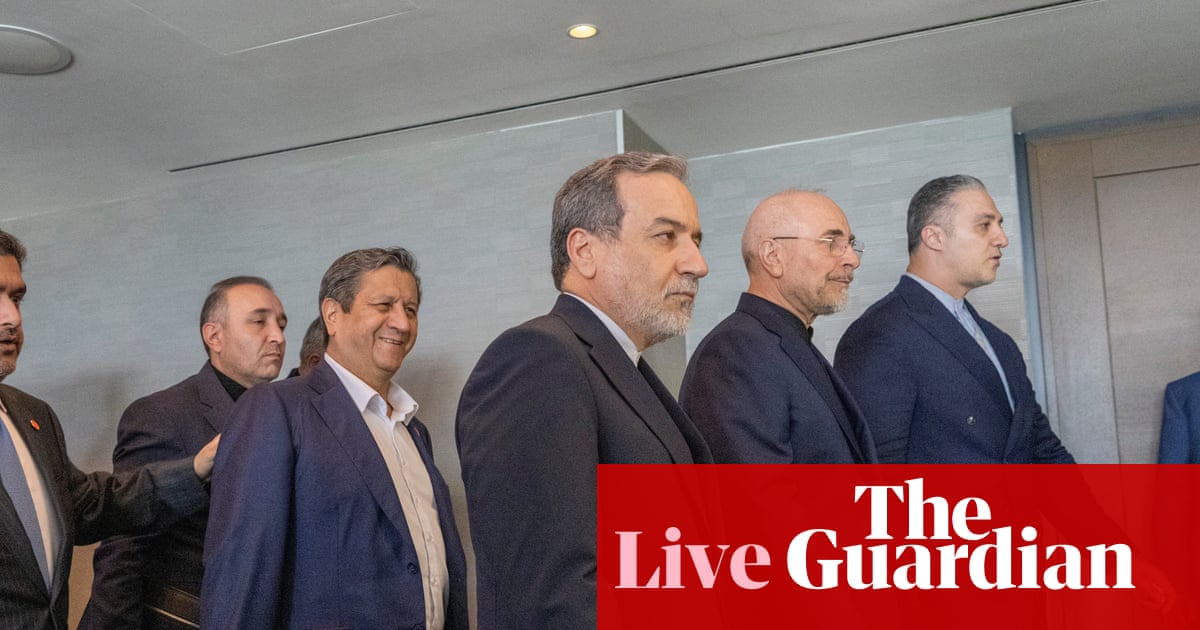
‘Major progress’ made to end Israel’s war in Lebanon, Iranian foreign minister says
In a post on X on Monday morning following the end of the first session of talks in Switzerland, Iranian foreign minister Abbas Araghchi said “major progress” had been made to end Israel’s war in Lebanon.
He wrote: “Oil and petrochem exports are waived, blockade lifted, some frozen assets released, and major reconstruction & development plan launched for Iran. 1st real test: Lebanon deconfliction cell. ”
Israeli prime minister, Benjamin Netanyahu, vowed yesterday to keep Israeli troops in the so-called “security zone” in southern Lebanon “for as long as necessary”, claiming this is to protect northern Israel from Hezbollah , the Iranian-backed Lebanese militant group.
“As prime minister of Israel, I insist on this unequivocally, and nothing will change it,” seemingly referring to his increasingly strained relationship with the US president, Donald Trump , who has said Netanyahu has been using disproportionate force in the attacks against Hezbollah, in which civilians are often killed. Trump is demanding the Israeli airstrikes stop in Lebanon because the negotiations with Iran will be derailed again if they don’t.
Last week, Israel announced the “security zone” in southern Lebanon, which comprises hundreds of square miles of territory. Lebanese officials have demanded a complete withdrawal of Israeli forces, something Iran said was required by the memorandum of understanding.
According to the Lebanese presidency’s office, Lebanon’s president Joseph Aoun has had a call with the US vice president JD Vance, Donald Trump’s son-in-law/adviser Jared Kushner, and Qatar’s prime minister Sheikh Mohammed bin Abdulrahman bin Jassim al-Thani.
“The discussion in the call addressed the issue of consolidating the ceasefire in Lebanon, halting the Israeli military escalation, and the steps that must be taken in this regard, including the possibility of forming a cell for this purpose,” according to a social media post by the office.
Iran’s senior negotiation team leaves Switzerland as technical talks on implementing MoU begin
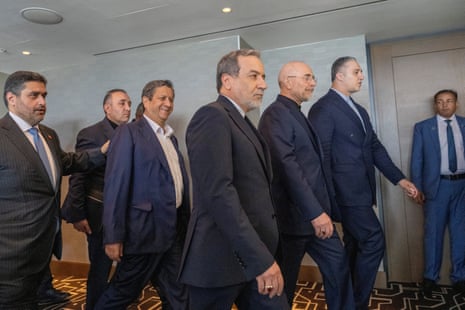
According to reports in Iranian media, Iran’s delegation, led by the speaker of the country’s parliament, Mohammad Bagher Ghalibaf, has left Switzerland after hours of intensive talks.
The technical team, led by Iran’s deputy foreign minister Kazem Gharibabadi, reportedly remains in Switzerland to continue with technical negotiations with the US on implementing the memorandum of understanding (see this post for more details).
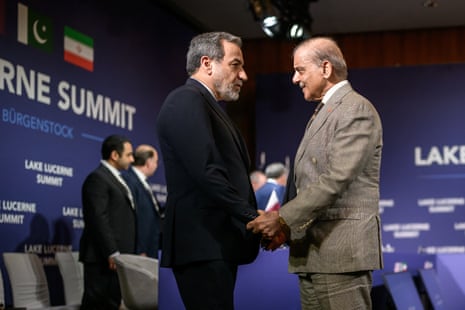
Representatives from mediator countries Qatar and Pakistan are also expected to participate.
Swiss foreign ministry welcomes ‘constructive progress’ in US-Iran talks
In a statement, the Swiss foreign ministry said: “The Swiss facilitator welcomes the constructive progress made during the intensive diplomatic talks that continued throughout the night of 21-22 June at the Burgenstock between the mediators, Iran and the United States”.
The ministry added that the roadmap agreed “ creates the conditions for the immediate resumption of new technical discussions ”.
Future talks are set to focus on Iran’s nuclear programme, sanctions, and a “monitoring and dispute resolution group to ensure the effective implementation of the MoU, and on other matters”, according to a joint statement by Qatar and Pakistan , the key mediators.
Lebanon was drawn into the war when Hezbollah fired rockets at Israel on 2 March to avenge the US-Israeli killing of Iran’s former supreme leader in Tehran in late February.
More than a million people have since been displaced by Israel’s renewed war on Lebanon , sparking a refugee and humanitarian crisis.
Some Lebanese people have cautiously returned to their homes in the south since the announcement of the framework US-Iran peace deal, but many have stayed away fearing a resumption in full-scale attacks.
Others don’t have any homes to return to because Israel has levelled entire villages inside the so-called “yellow line”, a large area that has been occupied by Israel along the Lebanese-Israeli border, as my colleague William Christou notes in this story .
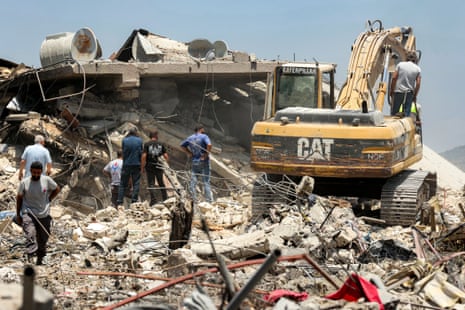
At least 4,106 people, including many women and children, have been killed and 12,153 injured by Israeli attacks since 2 March, according to Lebanon’s health ministry. Hezbollah has killed dozens of Israeli soldiers in Lebanon and at least three Israeli civilians.
Hezbollah chief Naim Qassem yesterday reportedly rejected any Israeli security zone in Lebanon and said the militant group would respond to any violation from the Israeli side. In a televised address, he was quoted as having said: Israeli troops “remaining on Lebanese land is impossible. There are no security zones for Israel… we have a national army which deploys, and it is responsible for preserving sovereignty, and it is who we cooperate with”.
Israel’s defence minister, Israel Katz, said Israel has no intention of withdrawing from Beaufort castle in southern Lebanon. In a statement to X last night , he said: “Israel has no intention of withdrawing from the Beaufort, which is an integral part of the security zone in Lebanon and essential for the defense of the Galilee settlements and IDF forces.”
“As prime minister Netanyahu and I have clarified – Israel will not withdraw from the security zone in Lebanon .”
The Israeli military, which already controlled territory up to the Litani River, captured the strategic castle at the end of May , as Israeli troops moved deeper into Lebanese territory.
It had symbolic significance because the Israeli military had used the castle, also known as Qalaat al-Shaqif, as a base during its previous occupation of southern Lebanon between 1982 and 2000.
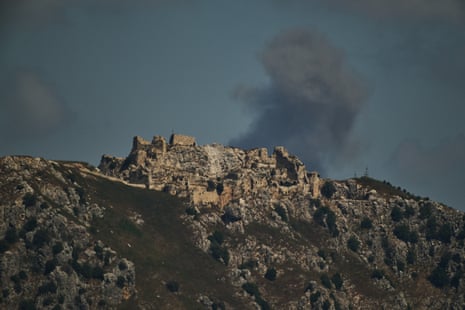
The Israeli newspaper Hareetz is reporting that ambassador-level talks this week between Israel and Lebanon will establish “pilot areas” which will be under exclusive control of the Lebanese military , meaning the IDF will have to leave some of the areas they currently occupy. It is not immediately clear if an Israeli withdrawal from Beaufort castle is planned.
Under the reported plan, the Lebanese forces’ conduct in those specified “pilot areas” would be under close American supervision and Lebanon’s army would also take control of some areas not currently held by Israel.
‘Major progress’ made to end Israel’s war in Lebanon, Iranian foreign minister says
In a post on X on Monday morning following the end of the first session of talks in Switzerland, Iranian foreign minister Abbas Araghchi said “major progress” had been made to end Israel’s war in Lebanon.
He wrote: “Oil and petrochem exports are waived, blockade lifted, some frozen assets released, and major reconstruction & development plan launched for Iran. 1st real test: Lebanon deconfliction cell. ”
Israeli prime minister, Benjamin Netanyahu, vowed yesterday to keep Israeli troops in the so-called “security zone” in southern Lebanon “for as long as necessary”, claiming this is to protect northern Israel from Hezbollah , the Iranian-backed Lebanese militant group.
“As prime minister of Israel, I insist on this unequivocally, and nothing will change it,” seemingly referring to his increasingly strained relationship with the US president, Donald Trump , who has said Netanyahu has been using disproportionate force in the attacks against Hezbollah, in which civilians are often killed. Trump is demanding the Israeli airstrikes stop in Lebanon because the negotiations with Iran will be derailed again if they don’t.
Last week, Israel announced the “security zone” in southern Lebanon, which comprises hundreds of square miles of territory. Lebanese officials have demanded a complete withdrawal of Israeli forces, something Iran said was required by the memorandum of understanding.
US-Iran talks set to continue despite Iranian walkout
The first round of face-to-face talks between the US and Iran ended in Switzerland on Monday, mediators said, after a tense opening marked by Tehran saying it had again closed the strait of Hormuz and Donald Trump repeating his threats to resume attacks on Iran.
Mediators Qatar and Pakistan said Washington and Tehran agreed to a roadmap towards a final deal within 60 days and that technical talks would continue for the rest of the week in the Swiss mountain resort of Buergenstock .
The parties agreed to a mechanism to end Israel’s war in Lebanon and opened a communications line to help ensure safe passages for commercial ships through the Hormuz strait, according to the joint statement which said that the first session of talks under the US-Iran agreement had concluded.
Just before the high-stakes talks officially began on Sunday, Fox News reported that Trump said he had told Iranian officials regarding the strait of Hormuz: “You close it and you won’t have a country. You won’t even make it back to your fucking country.” Trump also reiterated an earlier threat that the US would take over the strait and possibly charge a toll of its own, it said.
In other developments:
The talks had a tense start, with Iranian negotiators walking out in protest against Trump’s threats . Iranian state media said the talks had entered a “difficult phase” and recessed after the “publication of an insulting message by the US president”. But high-level negotiations continued before concluding in the early hours of Monday, with Pakistan and Qatar saying technical talks between the two sides would continue for the rest of the week.
After Trump’s threats became public, the Iranian delegation refused to return to the room where talks were held , though messages were still being traded via Pakistani and Qatari mediators, according to Iran’s Tasnim news agency.
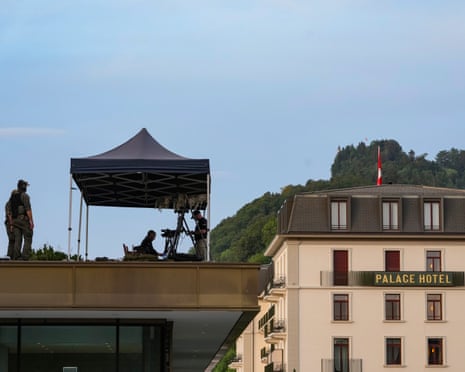
Iranian foreign minister Abbas Araghchi said on social media his country had secured waivers for oil and petrochemical exports, the release of some frozen assets and the launch of a reconstruction and development plan for Iran. The US did not immediately comment on the claims.
Iran said at the weekend that it had again stopped maritime traffic through the Hormuz strait , in response to continuing fighting in Lebanon between Hezbollah and Israel, and that Sunday’s talks would not cover substantive issues such as Iran’s nuclear program.
In Switzerland , US vice-president JD Vance played down the impact of the violence in Lebanon , saying progress had been made towards ending hostilities there. “These things are always a little bit messy,” said Vance, leading the American delegation.
In the US, Trump threatened to resume attacks on Iran if it did not rein in its allies . “Iran must immediately stop their highly paid PROXIES in Lebanon from causing trouble,” Trump said on social media, apparently referring to Hezbollah. “If they don’t, we’ll hit Iran very hard again, just like we did last week, only harder!!!”
Despite Trump’s threats, Vance told reporters the US president had “asked us to turn over a new leaf to transform our relationship with the people of Iran”.
Five vessels passed the strait on Sunday, a sharp drop from the 26 ships spotted a day earlier , data from analytics firm Kpler showed. The data may exclude vessels that switch off their transponders while travelling in the Gulf.
Sunday appeared to be the quietest day in Lebanon for some time , with no reports of major violence by nightfall, after two days of heavy Israeli strikes, which killed many people including civilians, and fire from Hezbollah fighters on Israeli positions. Reuters journalists in southern Lebanon on Sunday saw some of the heaviest traffic since the memorandum of understanding was signed, with residents returning to their homes, some waving Hezbollah flags. With news agencies