Messi’s record, Mbappé’s magic and Haaland’s big splash – World Cup Daily | World Cup 2026 | The Guardian

Keyword – Football
Trefwoorden – World Cup 2026, Football, Sport, World Cup
Title – Messi’s record, Mbappé’s magic and Haaland’s big splash – World Cup Daily | World Cup 2026 | The Guardian
Author – Max Rushden
Link – Messi’s record, Mbappé’s magic and Haaland’s big splash – World Cup Daily | World Cup 2026 | The Guardian
Publish date – 2026-06-17T06:21:19.000Z
Category – Sport
URL – https://www.theguardian.com/football/audio/2026/jun/17/lionel-messi-kylian-mbappe-erling-haaland-world-cup-daily-podcast

Rate, review, share on Apple Podcasts and join the conversation on email .

On the podcast today: Lionel Messi becomes the first man to appear at six World Cups and marks the occasion with a brilliant hat-trick against Algeria.

Elsewhere … France start slowly against Senegal, but a slight tweak and presumably some stern words from Didier Deschamps at half-time see them emerge a new team; Kylian Mbappé with two great goals, plus an unbelievable Michael Olise assist. They already look quite ominous …

Plus Erling Haaland scores a brace on his World Cup debut as Norway beat Iraq 4-1. Are they looking the dark horse candidate so many tipped them to be? There’s a preview of Wednesday’s action including England v Croatia, and your questions answered.

Support the Guardian here .

You can also find Football Weekly on Instagram , TikTok, and YouTube .

January 6 defendants pursue millions in claims through obscure federal process | US Capitol attack | The Guardian

Keyword – US news
Trefwoorden – US Capitol attack, Trump administration, US news, US politics
Title – January 6 defendants pursue millions in claims through obscure federal process | US Capitol attack | The Guardian
Author – https://www.theguardian.com/profile/sam-levine
Link – January 6 defendants pursue millions in claims through obscure federal process | US Capitol attack | The Guardian
Publish date – 2026-06-17T10:00:29.000Z
Category – News
URL – https://www.theguardian.com/us-news/2026/jun/17/january-6-defendants-compensation-process

January 6 defendants who assaulted police officers are pursuing legal claims for millions in compensation from the Trump administration using an obscure federal process with minimal oversight, but which offers the Trump administration a way to compensate those responsible for violence even after scrapping its “anti-weaponization fund”.

The defendants are pursuing their claims using the Federal Tort Claims Act (FTCA) , which allows individuals wronged by the government to file claims for monetary damages. The justice department has complete and unchecked discretion over whether to settle the claims, giving the Trump administration a powerful vehicle to reward those responsible for violence on January 6. The claims would be paid out from the judgment fund, a perpetual appropriation allowed for by Congress and the same pot of money Trump’s $1.8bn slush fund was going to draw from. All of the defendants seeking compensation received a pardon from Trump.

There was fierce bipartisan pushback to the “anti-weaponization fund” proposed by the administration last month after Trump reached a settlement with the Internal Revenue Service. In particular, members of Congress were concerned that people who harmed law enforcement officers on January 6 might receive compensation. “If you’ve been convicted of assault on a cop … doesn’t seem to me like people who are victims,” Josh Hawley, a Republican senator from Missouri, told NBC News .

While the “anti-weaponization fund” appears to be on ice for now, FTCA claims and lawsuits could provide another avenue for payouts.

“It risks turning the judgment fund into exactly the sort of slush fund that the ‘anti-weaponization’ was going to be,” said Rupa Bhattacharyya, a former director in the civil division’s tort branch at the justice department, who worked on FTCA claims and now is the legal director at the Institute for Constitutional Advocacy and Protection at Georgetown Law.

“If the treasury department is not going to enforce the restrictions on the use of the judgment fund, which is to settle impending or imminent lawsuits where there’s some risk of liability, then there’s no limit on what you can use that judgment fund money for, so long as someone files a bogus claim,” she said.

The justice department agreed to settle FTCA claims filed by Michael Flynn, a former national security adviser, and Carter Page , Trump’s foreign policy adviser, for $1.25m each earlier this year.

Many of the January 6 defendants are represented by Peter Ticktin, a Florida attorney who is a longtime friend of Trump. He said he had filed about 400 FTCA claims on behalf of January 6 defendants and expects to start frequently filing lawsuits now that the six-month waiting period has expired.

There may also be advantages to pursuing compensation through FTCA claims instead of the weaponization fund, said Mark McCloskey, a Missouri attorney who is representing many January 6 defendants. There were no restrictions on who could apply to the weaponization fund, making the pool of applicants so big that it could lower the per capita recovery, he said.

“The weaponization fund, for the brief fleeting moment which it allegedly existed, had no policies, procedures, or anything that would indicate what kind of evidence they would have required, what kind of format of a filing they would have required, or anything like that,” he said. “I never thought the weaponization fund, as a practical matter, was very meaningful. Whereas the FTCA gives you a statute with teeth that you can, as long as you can prove your claim, you have a right to recovery.”

Among those seeking money are Kenneth Joseph Thomas, an Ohio man who was sentenced to nearly five years in prison after being found guilty for assaulting several police officers . Video showed him shoving multiple police officers and throwing himself into a line of officers as he shouted for other rioters to “hold the fucking line”. Also seeking compensation is John George Todd III , a Missouri man sentenced to five years in prison after being found guilty on several charges, including injuring a Capitol police officer.

Both men are among nine plaintiffs seeking at least $1m each in damages in an FTCA suit filed 29 May in Washington DC. They say they are entitled to damages because they were unfairly and vindictively prosecuted by the government.

Andrew Taake , a Houston man sentenced to six years in prison and who pleaded guilty to assaulting police officers with bear spray and a whip-like weapon, is also seeking at least $2.5m in damages . Taake is entitled to damages because he received inadequate medical treatment and an unfair trial, his lawyers said in their FTCA lawsuit, filed last September in Washington.

Bhattacharyya said she believed the justice department could defend itself against the “malicious prosecution type claims” the January 6 defendants were bringing, and she hoped it would do so. When Trump filed his $10bn lawsuit against the IRS, the justice department did not try to defend itself against the suit.

“Most of these plaintiffs were indicted by grand juries, brought before a court. Many of them pled guilty, others were convicted, they were sentenced by judges, and so those sorts of malicious prosecution claims are eminently defensible,” she said.

Those who pleaded guilty or were convicted of assaulting police officers should still be entitled to payouts, McCloskey said. “The vast majority of people that pled guilty to or were found guilty of such offenses were either coerced into confessions based on threats of life imprisonment and threats against their family or went to trial in courts where the evidence was faked, rigged, perjury was testified to and fair trials were not had,” he said. There is no evidence of wrongdoing in the January 6 prosecutions.

In Taake’s case, the Trump administration is defending itself against the claims and seeking to have them thrown out. In February, a federal prosecutor in Washington wrote that many of the claims should be thrown out since the lawsuit did not name proper defendants and certain requirements were not met before the suit was filed.

The Trump administration faced immediate and bipartisan backlash after it announced it was creating the loosely controlled $1.8bn fund to resolve a $10bn lawsuit filed by Trump related to the leak of his tax returns. Some Republicans objected strongly to the idea that those who assaulted police officers could receive payouts.

“The concern my constituents and I have is that money possibly going to folks who hit cops,” Nick LaLota, a Republican congressman from New York, told NBC News. “Especially when there is video evidence, they shouldn’t get a dime from our government.”

Adam Schiff, a Democratic senator from California, introduced legislation last month that would bar anyone convicted of an offense related to January 6 from receiving a payout from the federal government. Among other things, the bill would amend the FTCA to prohibit those who were pardoned for actions related to January 6 from being eligible for claims.

“President Donald Trump still wants to pay off violent insurrectionists who attacked police officers on January 6th, despite any claims from members of his administration that say otherwise,” Schiff said in a statement. “Our taxpayer dollars should not be used to pay out criminals, and we can pass a law right now to prevent this president or any future administration from paying off their friends and political allies.”

Walter Parazaider, founding member of Chicago, dies aged 81 | Culture | The Guardian

Keyword – Culture
Trefwoorden – Culture, Pop and rock, Music, US news
Title – Walter Parazaider, founding member of Chicago, dies aged 81 | Culture | The Guardian
Author – https://www.theguardian.com/profile/owen-myers
Link – Walter Parazaider, founding member of Chicago, dies aged 81 | Culture | The Guardian
Publish date – 2026-06-17T18:34:46.000Z
Category – Culture
URL – https://www.theguardian.com/culture/2026/jun/17/walter-parazaider-death

Walter Parazaider, a co-founding member of the rock band Chicago, has died at the age of 81 following a battle with Alzheimer’s disease.

His daughter confirmed the news in a Facebook post on Wednesday morning.

“My father, my hero, is gone. He went peacefully about 20 minutes ago,” she wrote. “There’s no more pain. No more struggle … This was the worst six years. The hardest season of my life. And I’m so grateful that my dad is not suffering anymore. I love you poppy, my Pal.”

Parazaider was a co-founder of the group best known for 1970s and 80s soft rock classics like If You Leave Me Now and Hard to Say I’m Sorry. He played reed instruments and saxophone with the band from its inception in the late 60s to his retirement in 2018.

“He had put up a good fight with Alzheimer’s and unfortunately it ended tonight,” his wife JacLynn told TMZ . “We are going to miss him for sure … We were married for 59 years and we had 59 wonderful years.”

Born in the small town of Maywood, Illinois, Parazaider was inspired by the Beatles’ work on Revolver to start a rock band with a horn section, and helped found Chicago (initially called the Big Thing) in 1967 with Peter Cetera, Terry Kath, Robert Lamm, Lee Loughnane, James Pankow and Danny Seraphine.

“A Rock & Roll band with horns was Walt’s idea,” the band said in an Instagram statement. “He put the band together and they rehearsed in the basement of his mother’s home. He is also the one who did the hard work to book shows for the young, unknown band, performing top 40 covers at local bars in and around Chicago.”

As founding member Lee Loughnane put it in an interview with The Guardian, “We just got together and did a rehearsal at Walt’s basement and we never stopped playing together again.”

“It sounded great and we enjoyed it. We liked what it sounded like and every gig that we had from that time on – we started booking club dates – and we just learned enough songs to get through the night because we were playing like six hours a night: 45 on, 15 off.”

Parazaider played the well-known flute solo in the 1970 Chicago single Colour My World, as well as the recognizable saxophone on 1973’s top five hit Just You ‘n’ Me.

In 1976, Chicago reached number one in the US and UK with the soft rock balled If You Leave Me Now, written and sung by bass player Peter Cetera. The song was certified platinum and has been extensively used in films such as Shaun of the Dead, The Secret Agent as well as a fan-favorite episode of Sex and the City.

Chicago continued to have hits into the 80s with top 10 singles including Will You Still Love Me?, Look Away and What Kind of Man Would I Be? The band was inducted in the Rock & Roll Hall of Fame in April 2016.

In their Instagram statement, Chicago wrote: “We are forever grateful for his contributions. Perhaps his greatest gift was bringing people together. This amazing music may have never been heard had it not been for Walt’s vision.”

‘I get a gold star when I go to the gym’: the adults using sticker charts for motivation | Well actually | The Guardian

Keyword – Wellness
Trefwoorden – Well actually, Life and style, Psychology
Title – ‘I get a gold star when I go to the gym’: the adults using sticker charts for motivation | Well actually | The Guardian
Author – https://www.theguardian.com/profile/amelia-tait
Link – ‘I get a gold star when I go to the gym’: the adults using sticker charts for motivation | Well actually | The Guardian
Publish date – 2026-06-17T16:00:39.000Z
Category – Lifestyle
URL – https://www.theguardian.com/wellness/2026/jun/17/adult-sticker-charts-motivation

T here is a sticker chart on the kitchen cupboard in the Gray family home in Birmingham, England – the two Gray children, aged four and 10, get excited when it’s time to add another gold star. But they aren’t being rewarded for brushing their teeth or learning their spellings; this is someone else’s chart entirely.

“They know that mommy gets a gold star when she goes to the gym,” says Bek Gray, a 33-year-old healthcare professional who has been using sticker charts to motivate herself for one and a half years.

“There’s only so many times you can get told off by an app or your watch,” says Gray. “This is a nicer way of trying to motivate and discipline yourself.”

Gray had a gastric sleeve in September 2024 and bought her first sticker chart shortly afterwards – since then, she has lost 142lb while simultaneously gaining muscle. “It sounds really silly but I don’t think I would’ve pushed myself as much without the stickers,” she says. It changed her mindset from “Ugh, I’ve got to go to the gym” to “I need to get my three stars this week!”

Last year, my ability to self-motivate became so poor that I also started using sticker charts. I typed up a list of daily goals, printed out a bunch of pages and glued them to some cardboard backing, so I could tear off a new sheet each day. Instead of stars, I opted for little coloured dots – different colors tracked when I exercised, how many fruits and vegetables I ate and whether I’d flossed or read that day. I wasn’t motivated by the stickers themselves (although the constellation of gold, silver, purple and blue did look pretty), but by a sense of momentum and accountability – I didn’t want to see an empty page when the evening rolled around. And if I already had four stickers in my “fruits and veg” box, I was often compelled to push for five, so I could achieve my government-mandated goodness .

Lucy Mountain is the 34-year-old, London-based business owner of Silly Little Star Charts , the brand Gray buys. Founded in 2024, the company has charts for chores, workouts, sobriety and even staying away from your ex. While the business was originally a side project for Mountain, who has her own fitness app, it proved so successful that as of last summer, it is now her main source of income.

“It’s been so amazing to see how many people really respond well to it,” Mountain says. While critical social media commenters consider the charts infantilizing, users like Gray say their lives have been changed. One reviewer wrote: “Something about getting to stick a silly gold star on to the sticker sheet keeps me accountable”, while another claimed: “This chart is the only reason I got up to go to the gym today.”

“It’s not just about tapping into your inner child,” Mountain says. “I do just think it’s a system that works.”

Why exactly might it work? “Humans and animals work for rewards. That is their nature,” says Kou Murayama, the principal investigator at the Motivation Science Lab at the University of Tübingen in Germany. Unlike a child, you might not find the sticker itself to be a valuable object, but you can nonetheless still feel motivated by it. “Hitting a goal itself serves as a reward for humans,” Murayama says, “even if it does not give you tangible rewards such as food or money.”

Rewards for repetitive daily tasks could help with the tedium. “The problem with long-term goals such as eating fruit and vegetables [regularly] is that the goal is never complete,” says Thomas Webb, a professor of psychology at the University of Sheffield in England who researches self-regulation. After all, you won’t one day have eaten enough fruits and vegetables for life. Webb says sticker charts create a mechanism to “complete” the goal, at least for a day.

According to “goal-setting theory”, conceived by the psychologists Edwin Locke and Gary Latham, goals that are specific, proximal (that is, shorter-term) and challenging can be especially motivating, says Murayama. “Sticker charts at least meet the first two criteria – perhaps the third one too,” he says.

Gray has found her charts motivating for almost two years, but mine “stopped working” after a few months. If I had good momentum in the morning and quickly got a few stickers on the page, I could keep going for the rest of the day. But if I failed to get started, the stickers didn’t entice me to begin, and I often wrote the rest of the day off. Amazingly, the technical, academic term for this is the “ what the hell effect ”; once we’ve slipped up, we see ourselves as failures and give up completely.

Mountain has a fix for this: silver stars can be used on skip days to prevent people from feeling demotivated. “It’s trying to keep momentum going, because it’s not about perfection,” she says. “It’s just about trying to be consistent as much as you can.”

Murayama has a theory about why I couldn’t, well, stick with it. “Humans have a fundamental need to take control of ourselves or be autonomous,” he says, arguing that sticker charts initially satisfy this need. But over time, one could come to feel that the chart is actually in control. “Humans really don’t like to be controlled. Once you come to interpret the charts that way, either implicitly or explicitly, it will backfire,” Murayama says.

Nikos Ntoumanis, a professor of motivation science at the University of Southern Denmark, concurs. “Rewards can be a double-edged sword,” he says. He believes that ideally, rewards like stickers should be gradually phased out, “otherwise, they end up being the main reason for doing an activity”, and then, “once the rewards are withdrawn, usually the activity returns to a baseline level.”

Regardless, adult sticker charts are rising in popularity. Google searches for the term reached a five-year high this February, and Mountain’s business has just moved into a warehouse. But why are people willing to pay for them when there are countless free habit tracking apps? Mountain got the idea for her business after she started marking her workouts with a gold star emoji in her phone – so why didn’t she just keep doing that? “I think we are just generally so fatigued by being on our phones,” she says.

Mountain’s charts come with magnets so you can stick them on the fridge. That means users are constantly reminded of their goals without the need for a pushy app notification.

Gray loves her charts, and is not deterred by people who might find them childish. “We all get caught up in wanting to be grownups, and having to be serious,” she says. “There is no harm if people want to go back to their childhood ways to little extents like this.”

Sticker charts could help people, but we can’t necessarily rely on gold stars forever or for everything, warns Murayama.

“One needs to find a more intrinsic source of enjoyment,” he says, arguing this can sustain your motivation for longer. “If you decide to do exercise to reduce your weight, you may find that running itself is a joy,” he says.

Still, there’s no one magic trick to remaining productive. “It is important to understand that there is no panacea for motivation,” Murayama says. “If so, I wouldn’t need to do research any more.”

I had a blood clot. An AI diagnosis may have saved my life | Gleb Tsipursky | The Guardian

Keyword – Opinion
Trefwoorden – AI (artificial intelligence), Health, Society, Technology, Medical research
Title – I had a blood clot. An AI diagnosis may have saved my life | Gleb Tsipursky | The Guardian
Author – https://www.theguardian.com/profile/gleb-tsipursky
Link – I had a blood clot. An AI diagnosis may have saved my life | Gleb Tsipursky | The Guardian
Publish date – 2026-06-17T13:00:31.000Z
Category – Opinion
URL – https://www.theguardian.com/commentisfree/2026/jun/17/blood-clot-dvt-ai-diagnosis

A calf cramp should not be a brush with death. Mine almost was.

For five days, I had what felt like a stubborn muscle spasm in my left calf. It was tender, swollen and getting worse. I assumed it was a muscle problem and went to my chiropractor, who treated it as a muscle issue.

But the pain kept worsening, and I turned to an AI health tool I had built for myself, based on my expertise training companies on how to adopt AI tools effectively, using my medical records, medications, lab work, and visit notes. It flagged deep vein thrombosis, or DVT, and pointed me to the diagnostic step that mattered: an ultrasound.

DVT is a blood clot in a deep vein, usually in the leg. The blood clot symptoms include pain, swelling, warmth and skin color changes, especially when they affect one leg. It also said suspected DVT should be assessed urgently and, when a doctor thinks DVT is possible, the patient should be referred for an ultrasound scan quickly.

So I called my primary care office, which advised me to schedule an appointment or go to urgent care. Ordinarily, that would have sounded sensible. But urgent care could not provide the scan. My doctor’s office could not provide it either. If I followed the slow path, I might lose days before being sent to the emergency room anyway.

That question mattered because deep vein thrombosis can become deadly when part of a clot breaks off and travels to the lungs, causing a pulmonary embolism. The CDC describes DVT and pulmonary embolism as serious conditions that are often under-diagnosed. The National Heart, Lung, and Blood Institute warns that a pulmonary embolism can cause death when a clot is large or when there are multiple clots.

So I talked to my AI tool and went to the ER, despite knowing I would spend many hours there instead of a few minutes before being seen at urgent care. The ultrasound found four clots in my left leg.

Afterward, the danger stopped being theoretical. I learned that my wife’s grandfather had died from a pulmonary embolism. So had the mother of one of her close friends. What had felt like a nagging cramp suddenly looked like the edge of a cliff.

This is not an argument for replacing doctors with machines. The emergency room doctors did the indispensable work. They ordered imaging, interpreted results, weighed whether to admit me, spoke with specialists and sent me home on blood thinners when it was safe to do so. The AI did not cure me. It just helped me ask the right question in time.

The science is catching up with these stories. A new study on medical AI in Science, led by researchers affiliated with Harvard Medical School and Beth Israel Deaconess Medical Center, tested a large language model on clinical reasoning tasks, including real emergency department cases. Science News reported that the model was more likely than physicians to include the correct diagnosis among possible answers.

That does not mean patients should trust random chatbots over clinicians. It means doctors and AI may be safer together than either is alone. A useful AI system can surface possibilities, organize medical records, help patients describe symptoms clearly and reduce the chance that a dangerous pattern gets mistaken for something ordinary.

There is a real danger too. A Guardian report on AI health advice found that one in seven people in the UK are using AI chatbots for medical guidance instead of seeing a GP. That should worry everyone. A chatbot cannot examine a leg, hear breathlessness, notice distress or take responsibility for a patient.

But fear should not become denial. AI in healthcare needs regulation, testing, transparency and clinical supervision. It also needs humility from institutions that too often expect patients to navigate fragmented systems alone.

My lesson is not that everyone should outsource their health to software. It is that patient advocacy now has a new tool. A safe AI assistant, trained on your medical data, can help people gather their records, ask whether something urgent is being missed and push for the right diagnostic step. Medicine has always depended on second opinions. The next one may come from software, and the urgent task is to make sure it is accurate, accountable and used to save lives.

Gleb Tsipursky, PhD, serves as the CEO of the future-of-work work consultancy Disaster Avoidance Experts and wrote The Psychology of Generative AI Adoption at Work (Georgetown University Press, 2026)

Portugal 1-1 DR Congo: World Cup 2026 – live | World Cup 2026 | The Guardian

Keyword – Football
Trefwoorden – World Cup 2026, World Cup, Portugal, Democratic Republic of the Congo football team, Football, Sport
Title – Portugal 1-1 DR Congo: World Cup 2026 – live | World Cup 2026 | The Guardian
Author – https://www.theguardian.com/profile/danielharris
Link – Portugal 1-1 DR Congo: World Cup 2026 – live | World Cup 2026 | The Guardian
Publish date – 2026-06-17T19:21:53.000Z
Category – Sport
URL – https://www.theguardian.com/football/live/2026/jun/17/portugal-v-dr-congo-world-cup-2026-live

Of the favourites, I don’t think it’s controversial to say France have been most impressive. I wonder if they actually played well, or if Michael Olise was just on one, but it barely matters – he’s now good enough to do that on a regular, and it’s hard to get more than one man on him because of the quality around him. I do, think there are much better midfields than France’s, but converting that on-paper superiority into scoring more goals than them is not easily done.

Is there another game imminent? I’d thought not, but apparently there is – and the great Scott Murray is bringing it youse.

Alex returns on Ronaldo: “I think the answer boils down less to ‘it is impossible to play a modern style’ and more ‘Portugal don’t have the tools to cover his lack of defensive running like some other teams do’. The question of what he offers is a different one, and I do agree that when I see him play these days it is something between a twinge of sadness and a sense of my own mortality that his difficulties moving around evince. I’d like to see him as a super sub!”

I agree, off the bench he’d be a weapon [redacted]. I also think that Messi drops and helps with buildup, something Ronaldo also doesn’t do. Essentially, if he doesn’t score goals that are created for him, he doesn’t offer anything and, as we saw against Algeria, the same is not so of Messi.

Oh man, BBC have just shown footage from Lisbon, where people were watching the game, and when DRC score, a crew of about 15 go up, shouting and dancing . It’s great to see, and speaks well of the people around them – there are many places, I’m sure, where doing that would be bad for your health.

So how do Portugal improve? As I said below, if they’re sticking with Ronaldo – and nothing I’ve seen from Martinez tells me he’s the will or minerals to leave him out – I’d move Bernardo central, get the full-backs high, and try and get some tempo in the passing. If I’m leaving Ronaldo out, I’m probably bringing in Ramos, but also wondering if Neto or Leao might work up front.

The other game in this group. Uzbekistan v Colombia, kicks off seven hours from now. I’m not sure this result will delight either, who probably want Portugal to beat everyone, but at the same time, they’ve been shown how to stop them. Knowing and doing, though, are very different things.

FULL TIME: Portugal 1-1 DR Congo

After 52 years, DR Congo have a World Cup point and haven’t they deserved it, a lesson in fortitude, resilience, organisation and no little quality. Brilliant behaviour from them, a glorious buzz for us, and a lesson to Portugal, who need to improve – a lot.

90+4 min Another Portugal corner, another come-and-claim from Mpasi, and that might be enough!

90+4 min We’ve not even been going a week, but already these are some serious group stages; the problem is that, for all the vibes, there’s not much jeopardy, but when they’re this joyous and intense, we can cope.

90+2 min Moutoussamy turns around the corner for Wissa, so Araujo, isolated with bare space in behind, bodychecks him; he’s booked.

90+1 min We’ll have five additional minutes.

90 min Portugal won’t panic – next for them it’s Uzbekistan – but though they’ve not looked as dull-witted as Spain did, there should be greater cohesion about them than this. They find Bruno, 25 yards out, who bored of relying on others, drills low … and wide of the near post. What a night is in prospect in Kinshasa and around the country; I’m excited from my box-room in north London.

88 min Cancelo drives a low cross into the box and Mpasi is in trouble here because he daren’t fumble … and he doesn’t, diving on it well. He’s been very solid today.

87 min Ramos spreads to Leao, who tries to go at Kalulu with no momentum, and just runs into him. This is wonderful stuff from DRC, an uplifting lesson in the art and craft of defending.

85 min Two more changes for DRC: Kalulu and Banza for Wan-Bissaka and the righteously shattered Bakambu.

83 min Portugal sacrifice Vitinha to get another striker on in the shape of Goncalo Ramos. I’d have made that change a while ago – a front two is much harder to defend than a one, especially when you’re sending in crosses and that one is ancient.

81 min But also, they’re miles away. Ten minutes and whatever’s added is a long time – though they’re looking pretty comfortable, a credit to Sébastien Desabre, who ‘s coached them. Again, they counter cleverly, Kayembe making a mess of his cross, but this isn’t simply a rearguard; they’re springing whenever they can and a winner for them wouldn’t be a massive shock. This is a lesson in how to play against a top team, the mentality – discipline in defence, conviction in attack – as critical as any tactical approach.

80 min Bruno is exerting more influence now and he turns in midfield, then lofts another pass over the top, this time out wide, for Conceicao … so Kapaudi fouls him. But he was already offside, meaning DRC have a free-kick, and they’re nearly there.

77 min DRC counter, Bakamubu barrelling through the middle and finding Sadiki, outside him. He then stops – exactly! – collects the return, and sidefoots wide of the near post. He’s played really well today, a one-man forward-line; his performance reminds me a little of El-Hadji Diouf’s for Senegal against France in the opening game of the 2002 edition, and not just because of their bleached blond hair.

77 min Portugal win another corner down the right, but Bruno’s floaty outswinger is miserable, in the air so long, Mpasi comes a fair way to collect.

76 min Gosh, alone in midfield, Sadiki has Wissa in space, snaps the ball forward … and Araujo stretches to intercept. That was very, very close, and superb defending with no margin for error.

74 min Better again from Portugal , Leao square to Bruno, whose first-time pass picks out Conceicao inside the box, right-hand side. This time, his cut-back is reasonable, but again, Ronaldo’s shot spins around the near post, Tuanzebe’s tackle doing plenty to put him off. He’s having another stormer.

72 min Before we recommence, that change we mentioned: Leao is on, replacing Neto, whole Semedo is on for Nuno Mendes.

71 min Martinez is extremely animated in the huddle, which brings us to Hugh Collins. “Presumably if Portugal go out in first round, Martinez will get and even better job? Managing Brazil, or maybe running SpaceX?”

Ha! And I agree, for what it’s worth, that what he did with Belgium made him someone I’d absolutely have swerved were I picking the Portugal manager, and also think he’s doing well to still be in it.

70 min And that is drinks ads. I actually think that’ll suit both teams, Portugal needing to regroup and DRC needing a breather.

68 min More like it from Portugal , Cancelo slipping a ball into the box for Conceicao, whose cut-back isn’t the best, slightly behind Ronaldo, but Bruno is there behind him … and you can probably guess the rest. Yup, Ronaldo takes the shot anyway, skewing it from right foot on to left, and wide of the near post.

66 min DRC are defending really well and look more comfortable in the second half, now they’re also looking to get forward when they can. We said at the start that their defence is decent, and Portugal are starting to irate, Mbemba dragging Mendes down – and he’s not pleased.

65 min Cancelo tries to slide a ball into the box for Conceicao, but Kapaudi is in quickly to challenge. Portugal need to move the ball quicker and pass forward sooner.

63 min What we’re not seeing from Portugal is Ronaldo darting off the last line to take passes nipped in behind by Bruno. I also thought we might see them strike up a similar cross-header relationship to the he forged with Casemiro last season, but so far, they don’t seem to be trying to make it happen.

61 min But he picks out Wissa, who heads away, and when the ball comes back, it ends up over the by-line for a goalkick. Portugal have created almost nothing this half; actually, in this game, and I don’t think it’ll be long before we see Leao, who I’d have sent on ahead of Conceicao.

60 min Conceicao, who’s been quiet so far, wins a corner down the right, this time to be taken by Mendes…

58 min DRC send on Sadiki for Mukau.

57 min The corner is no good, but DRC sustain the attack and, with Bruno dallying on the ball inside his own box, Bakumbu bounces him off it, then rams a shot against the near post … before the ref penalises him for a foul. That’s harsh and, had he scored, I don’t think VAR would’ve saved Portugal .

55 min Fernandes picks out a cross to Neves, swinging in from the left to the far side of the box, and Neves chests square for Cancelo to score via volleyed overhead, a brilliant goal … but from an offside position. I wonder if Neves, who was on, might’ve headed for goal, or taken down for himself, but in the meantime, DRC move downfield and win a corner. They fancy this, and they’re playing well.

53 min Mendes plays a one-two with Ronaldo, motoring into the box, but when the cut-back comes, Tuanzebe, with a bit of help, from Kapaudi, slides in to avert the danger.

53 min He goes low, looking for Ronaldo peeling away – think Anderton for Sherigham at Spurs in the mid-90s – but the ball’s a little behind him and Kapaudi is there to make the tackle.

52 min Portugal haven’t got going in the second half, but they’ve got themselves a corner because Mpasi hangs on to the ball for too long, losing his goalkick. That’s the first of these I’ve seen, and Bruno goes over to take.

50 min DRC knock it about in midfield, getting Portugal chasing, then Mukau punches into the box from out on the right, Bakambu screaming for the ball; he swivels and shoots, Diogo Costa just about palming away … then the flag goes up for offside.

48 min Portugal get it wide to Neto, who again teases in an inviting cross, Conceicao going down in a challenge with Masuaku and asking for a penalty, but there nowhere near enough going on there.

47 min “I must say,” must says Adam Foster, “Wayne Rooney’s explanation on BBC of the amazing intelligence involved in Ronaldo’s lack of movement is giving me Liz Truss vibes.”

I know what you mean, but also think standing still is an underrated skill; Bruno Fernandes also does this intelligently.

46 min We go again, Portugal sent out very early by Martinez – who also sends on Conceicao for Bernardo, presumably on the basis that he wants dribbling and speed on the outside, rather than a cunning passer and mover.

Scheffler faces mighty Shinnecock test in bid to claim career slam with US Open victory | US Open | The Guardian

Keyword – Sport
Trefwoorden – US Open, Scottie Scheffler, Rory McIlroy, PGA Tour, Golf, US sports, Sport, European Tour
Title – Scheffler faces mighty Shinnecock test in bid to claim career slam with US Open victory | US Open | The Guardian
Author – https://www.theguardian.com/profile/bryan-armen-graham
Link – Scheffler faces mighty Shinnecock test in bid to claim career slam with US Open victory | US Open | The Guardian
Publish date – 2026-06-17T16:00:38.000Z
Category – Sport
URL – https://www.theguardian.com/sport/2026/jun/17/scottie-scheffler-us-open-preview-faces-mighty-shinnecock-test-in-bid-to-claim-career-slam

S hinnecock Hills is a study in restraint and attrition that has spent more than a century bringing the world’s finest golfers to heel. When the US Open returns here for a sixth time on Thursday, the current crop will once again face a rugged coastal masterpiece where calamity lurks around every corner and mistakes are punished with uncommon severity.

The William Flynn-designed layout, one of the United States Golf Association’s five founding clubs, is a 7,440-yard track of rare beauty and menace revered as one of the purest tests in championship golf. Three distinct clusters of holes form a rough triangle across the property, exposing players to shifting winds from different directions throughout the round. With gusts forecast to exceed 40mph at times, even players who know Shinnecock well acknowledge that controlling trajectory and accepting adversity will be every bit as important as making birdies.

The biggest storyline centers on Scottie Scheffler , the world No 1, who arrives with a chance to complete the career grand slam. Having won two Masters titles to go with the PGA Championship and Open Championship last year, the 29-year-old American needs only the US Open to join one of golf’s most select groups alongside Rory McIlroy, Tiger Woods, Jack Nicklaus, Gary Player, Ben Hogan and Gene Sarazen.

Any perceived dip in Scheffler’s form is largely relative. He has a win this season, recorded seven top-five finishes and remains a fixture near the top of the leaderboard. “I feel like maybe I’ve just been a touch dull,” Scheffler said this week. “By no means is it a bad year. Is it up to the play I’ve had the previous couple of years? Probably not, but it’s not far off.”

Scheffler insists the career slam itself is not a motivating factor, but the significance of the moment is undeniable. A year after McIlroy completed the set at Augusta, Scheffler has an opportunity to follow him into the club and further cement himself as the dominant player of his generation.

Standing in his way is a field packed with contenders and a windswept course that has been rattling champions’ vulnerabilities since the 1890s. McIlroy, who successfully defended his Masters title in April, arrives as perhaps Scheffler’s most obvious challenger. The Northern Irishman has become one of the game’s most consistent US Open performers, posting six top-10 finishes since missing the cut at Shinnecock in 2018. His approach to the track is simple: discipline.

“This course demands so much patience,” McIlroy said on Tuesday. “It can really lure you into taking on things that you probably shouldn’t.”

Europe enters the week with unusual momentum. McIlroy’s Masters triumph was followed by Aaron Rai’s victory at the PGA Championship at Aronimink, marking the first time Europeans have captured the season’s opening two majors in the modern four‑major era. England’s Matt Fitzpatrick, the 2022 US Open champion, has been among the most consistent players on the tour this year, collecting three victories and arriving fresh off a runner-up finish at the Canadian Open.

Fitzpatrick would happily see the screws tightened further. “I don’t particularly like playing birdie-fests,” he said after watching course staff water parts of the layout during practice rounds.

The fear for players is that Shinnecock’s reputation for brutality and dread is on merit. When Brooks Koepka won here in 2018 at one over par, the championship descended into controversy as greens became so fast and firm that balls struggled to stay in place. Phil Mickelson famously incurred a penalty after striking a moving ball on a green during a chaotic third round. Organizers have attempted to avoid a repeat by keeping the course greener and softer in advance of this week’s expected winds.

The scoring history illustrates the challenge. In five previous US Open tournaments at Shinnecock, only three players have finished under par, while Retief Goosen’s four-under total in 2004 remains the lowest winning score in a US Open held at the course.

Koepka arrives after a hand injury forced him to withdraw from the final round of the Canadian Open last week, though the two-time US Open champion has indicated he expects to play. The 36-year-old arrives with a proven advantage on a course where he claimed the trophy in 2018, becoming just the third man since the second world war and the seventh in history to defend America’s national championship successfully.

Beyond the championship race, Shinnecock’s return places a spotlight on its place in American golf lore. The course sits on land intertwined with the history of the Shinnecock Nation, whose members helped build and maintain the layout for generations. It was also the site of a landmark moment in 1896 when John Shippen, a 16-year-old Black golfer and clubmaker, and the Shinnecock tribe member Oscar Bunn competed in the US Open despite objections from several British professionals. Shippen became the first Black player in championship history, while he and Bunn are believed to have been the first US-born competitors in the event.

History gives Shinnecock its meaning, but difficulty gives it its mystique. The world’s best arrive knowing they are competing on one of golf’s most storied stages, but also one of its most unforgiving. If Shinnecock bares its teeth over the coming days as expected, by Sunday night the champion may simply be the player who has suffered the least.

Borthwick keen to rest Itoje but injuries may force England rethink | England rugby union team | The Guardian

Keyword – Sport
Trefwoorden – England rugby union team, Maro Itoje, Steve Borthwick, France rugby union team, Rugby union, Sport
Title – Borthwick keen to rest Itoje but injuries may force England rethink | England rugby union team | The Guardian
Author – https://www.theguardian.com/profile/guardian-sport
Link – Borthwick keen to rest Itoje but injuries may force England rethink | England rugby union team | The Guardian
Publish date – 2026-06-17T15:24:28.000Z
Category – Sport
URL – https://www.theguardian.com/sport/2026/jun/17/janse-van-rensburg-england-debut-ineligible-france-rugby-union-borthwick

Steve Borthwick will rest the England captain, Maro Itoje, this summer unless injury strikes in the second row over the weekend.

Itoje is poised to be stood down for the Tests against South Africa, Fiji and Argentina next month following a year during which he led the British & Irish Lions to a series victory against Australia, played in the autumn and Six Nations campaigns, and mourned the death of his mother.

It would also be in recognition of the 31-year-old having completed more Test minutes than any other player in the game over the past decade. While acknowledging that giving Itoje the summer off “would be the right thing to do”, Borthwick will wait to see if George Martin and Alex Coles emerge unscathed from their matches on Friday and Saturday.

Martin starts for England in their non‑cap international against a France XV in Vannes, before Coles packs down for Northampton in the Prem final against Exeter at Allianz Stadium. If either or both are injured, Borthwick insists he may be forced to think again knowing that he would be left with Itoje and Ollie Chessum as his only frontline locks for their Nations Championship opener against South Africa on 4 July.

Borthwick said: “Maro’s circumstances have been very specific and the right thing to do, in a best‑case scenario, would be for him not to be with the England squad this summer. Maro had a period this year where he was injured and had to deal with a personal situation on the back of captaining the Lions.

“What I want to make sure is that it’s also the right thing for the team. Clearly, the context is key. There are a number of different factors we take into consideration, one of those being other player availability in the position.

“Any discussion with a player about missing an opportunity to represent their country is challenging. Maro is fully on board with the plan.”

Under the terms of the Professional Game Partnership agreed between the Rugby Football Union and Prem clubs, Borthwick also has the ultimate say on whether Immanuel Feyi‑Waboso and Alex Mitchell play at Twickenham on Saturday. The Exeter wing Feyi‑Waboso could make a comeback from a facial injury, and the Northampton scrum-half Alex Mitchell is close to a return from a pulled hamstring. Both players would be in the matchday 23 against South Africa, but Borthwick hinted that they will be involved in the Prem final if at all possible.

“We want players playing in big games, competing for trophies and hopefully being involved in tight games where decisions have to be made, much like in Test rugby,” Borthwick said. “I want players playing in as many big games as possible because that is good for the England team, but each decision is taken on an individual basis.”

Benhard Janse van Rensburg is poised to make his England debut off the bench on Friday in the match against France. The South Africa-born Janse van Rensburg does not qualify for England on residency grounds until 8 July but may be picked because the Stade de la Rabine showdown is not a Test.

Max Ojomoh forms a centre partnership with Seb Atkinson, with one of them to make way when Janse van Rensburg is thrust into the action in the curtain-raiser to next month’s 25,000-mile tour that spans three continents.

Noah Caluori, Saracens’ teenage try machine, makes his third appearance for a senior England team after being chosen on the right wing, although he has yet to win his first cap. George Ford leads the team and forms a half-back axis alongside Harry Randall while Marcus Smith is fielded at full-back. Players from Prem finalists Northampton and Exeter, who meet at Allianz Stadium on Saturday, are unavailable for selection.

England’s squad for next month’s Tests against South Africa, Fiji and Argentina is named on Monday with Borthwick considering whether to rest captain Maro Itoje . Following the match in Vannes, England begin their Nations Championship campaign taking in Johannesburg on 4 July.

England XV (v France XV, Stade de la Rabine, 20 June) M Smith (Harlequins); N Caluori (Saracens), M Ojomoh (Bath), S Atkinson (Gloucester), C Murley (Harlequins); G Ford (Sale, capt), H Randall (Bristol); A Opoku-Fordjour (Sale), T Dan (Saracens), G Kloska (Bristol), C Ewels (Bath), G Martin (Leicester), T Hill (Bath), T Curry (Sale), A Dombrandt (Harlequins). Replacements J Blamire (Leicester), B Obano (Bath), V Sela (Bath), N Isiekwe (Saracens), J Kenningham (Harlequins), R Quirke (Sale), B Janse van Rensburg (Bristol), A Radwan (Leicester).

Golden ticket: why Versailles invite is the ‘real deal’ for Trump | Donald Trump | The Guardian

Keyword – US news
Trefwoorden – Donald Trump, Emmanuel Macron, France, Europe, G7, US news
Title – Golden ticket: why Versailles invite is the ‘real deal’ for Trump | Donald Trump | The Guardian
Author – https://www.theguardian.com/profile/angeliquechrisafis
Link – Golden ticket: why Versailles invite is the ‘real deal’ for Trump | Donald Trump | The Guardian
Publish date – 2026-06-17T17:48:18.000Z
Category – News
URL – https://www.theguardian.com/us-news/2026/jun/17/versailles-dinner-trump-macron-g7

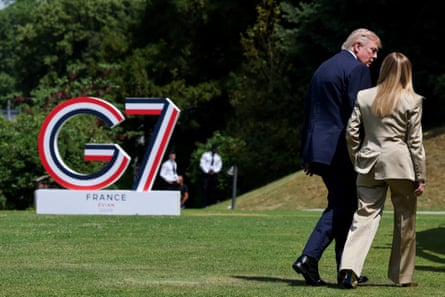
For a US president who has likened himself to a king and redecorated the Oval Office with golden paint and gold ornaments , it feels like the perfect dinner venue.

Donald Trump said one of the deciding factors in accepting an invitation to dine with Emmanuel Macron at the spectacular, 2,300-room Palace of Versailles was that it was “not gold leaf” but the “real deal”.

The palace, set in grounds of more than 800 hectares (almost 2,000 acres) to the west of Paris, is both a historic seat of royal power and a symbol of the French Revolution.

One of the greatest achievements in 17th-century art, it was designed to be an architectural embodiment of the Sun King, Louis XIV, and was home to his great-great-great-grandson Louis XVI when the Women’s March on Versailles heralded the beginning of the end of the French monarchy in 1789.

Of all modern French presidents, Macron has made most use of the palace as a symbol of French luxury, power and diplomacy. In 2017, he hosted Vladimir Putin there , driving the Russian leader around the grounds in an electric golf cart and holding a joint press event in a gallery of historic war paintings. In 2023, he hosted King Charles in the famed Hall of Mirrors and he regularly uses the palace as a showcase for investment summits.

Trump will tour key rooms in the palace before sitting down to dinner in the Lower Gallery, which opens on to a terrace with views of the gardens. The table will be set amid an array of statues commissioned by the Sun King himself.

It’s rare for a US president to be hosted at Versailles as the main guest of honour with no other foreign leaders present. Notable past recipients of the honour include John F Kennedy, who was hosted for a state dinner in 1961.

The vast estate has long held a fascination for American millionaires, with the Vanderbilts’ Marble House in Newport, Rhode Island, among many buildings inspired by its architecture.

French pomp and pageantry have also been an inspiration to Trump. When he was invited to the Bastille Day military parade in Paris in 2017 , he expressed an interest in a similar show of strength back home.

“Beautiful building,” Trump once said of the Élysée Palace – the 365-room presidential home in Paris that is twice the size of the White House.

Time will tell whether dinner at Versailles gives him any fresh ideas for grand design and décor projects back home.

Real estate event in London ‘advertised sale of land in illegal Israeli settlements’ | Real estate | The Guardian

Keyword – Business
Trefwoorden – Real estate, UK news, Israel, Palestine, West Bank, Business, Middle East and north Africa, World news, Advertising
Title – Real estate event in London ‘advertised sale of land in illegal Israeli settlements’ | Real estate | The Guardian
Author – https://www.theguardian.com/profile/geneva-abdul,https://www.theguardian.com/profile/aamna-mohdin
Link – Real estate event in London ‘advertised sale of land in illegal Israeli settlements’ | Real estate | The Guardian
Publish date – 2026-06-17T10:18:02.000Z
Category – News
URL – https://www.theguardian.com/business/2026/jun/17/real-estate-event-london-illegal-israeli-settlements-land-west-bank

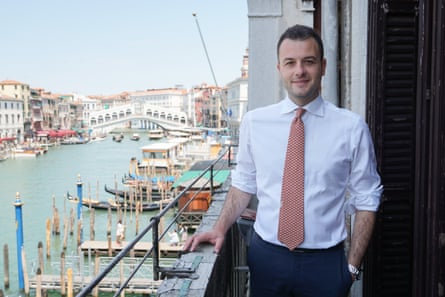
An Israeli real estate event in north London appears to have advertised the sale of land in Israeli settlements in East Jerusalem and the occupied West Bank, despite previous denials that illegal settlement properties would be marketed at the event.

Pamphlets shared with the Guardian from the event on Sunday showed real estate projects in Ma’ale Adumim, Givat Ze’ev, Kfar Eldad and Teneh Omarim in the occupied West Bank , as well as Ramat Eshkol and Givat Hamatos in East Jerusalem.

The event was held after more than 100 UK lawmakers as well as civil society organisations had called for its cancellation, saying it was inconsistent with the government’s obligations under international law as well as guidance on settlement-related economic activity.

“There is a prima facie case at the very least that people were advertising land in illegal settlements and that is contrary to law, and the government needs to act,” said Andy McDonald MP, co-chair of the British-Palestine all-party parliamentary group.

Last week, McDonald wrote a letter to the foreign secretary signed by 101 politicians saying that the event was “embedded in Israel’s project of colonial expansion” and calling on the government to stop it from going ahead.

Concerns were also raised beforehand by the London mayor, Sadiq Khan, who spoke to the Metropolitan police and said he was informed that any allegations of criminality over the unlawful sale of property at the event would be assessed with a view to investigation.

The Met declined to comment.

The London event was the final stop in a series of international roadshows – after Toronto and New York – which had appeared to advertise the sale of land in Israeli settlements in the occupied West Bank, and invited individuals to “explore the best Anglo neighbourhoods” and find their “dream home”.

The event had invited people to register their interest in Gush Etzion , an Israeli settlement in the occupied West Bank, which the UK government considers an illegal settlement.

Organisers had previously denied claims that the event would feature land for sale in the West Bank, calling the allegations “ridiculous” and “motivated by anti-Israeli and terrorist supporters”, and said exhibitors would provide information about properties and projects within the green line.

On Tuesday, organisers apologised for the “error” in event brochures, after concerns were raised in parliament.

“No one at the event promoted or spoke about properties in the ‘disputed territories’, such as Givat Ze’ev or Kfar Eldad. Their mention in the event brochure was made in error for which we apologise,” organisers told the Jewish News .

The website for the 2025 event that mentioned Gush Etzion has since been taken down, while mention of the settlement on the 2026 event page was removed after concerns were raised publicly. It also included a map of the territory featuring no delineation of Gaza and the occupied West Bank, as well as Syria’s Golan Heights.

“How is it that this government fails even to prevent the marketing of illegal property in this country and still fails to take action?” Ellie Chowns asked the foreign secretary, Yvette Cooper, in the Commons on Tuesday.

It is understood that the Foreign Office minister Hamish Falconer wrote to the Advertising Standards Authority (ASA) on Sunday, requesting that evidence of advertising or promoting property in illegal settlements be scrutinised under UK law.

“We have asked them now to urgently look into this,” Cooper said on Tuesday. “It is extremely important that those standards are met in the UK, and that is exactly why we have raised this so seriously with the ASA.”

The ASA told the Guardian it had received the letter from the government, but had not received any advertising complaints. The ASA also said it did not have a position on the law in this area and referred the matter to the government.

McDonald said the government’s reference to the ASA was “wholly inappropriate and completely inadequate”, and called on ministers to investigate whether there was a case under English and Welsh law to prosecute any British companies involved.

Amnesty International UK said the government’s decision to refer the matter to the ASA was “a ridiculous gimmick that fails to understand the devastation Israeli settlements cause for Palestinians”.

McDonald added: “You would not accept anybody offering settlement lands in the Donbas in the United Kingdom. The government would, quite rightly, come down on that like a ton of bricks.

“We appear to be completely inconsistent in applying international humanitarian law when it comes to Israel’s egregious behaviours, and that is why so many people in this country are angry and losing faith in the current leadership.”

The event in London took place as settler violence in the West Bank has reached unprecedented levels, and as a coalition of western countries – including the UK, France, Canada, Germany and Italy – called for an end to the construction of Israeli settlements it says breach international law .

Last week, the UK, along with other western powers, announced it was imposing sanctions on six firms and one individual for enabling and financing the recent surge in settler violence in the West Bank.

However, it fell short of banning trade with illegal Israeli settlements, something that more than 140 Labour MPs, including the chairs of every Labour-led select committee, called on the government to do earlier this month .

“They’re not inflicting any pain on Israel sufficient to get them to change course,” said McDonald. “We don’t have to be complicit in it, we can set out the standards that we adhere to and not murderous war crimes being perpetrated in the Middle East.”

Dora, who asked to withhold her surname, attended Sunday’s event undercover with other members of the group Jewish Anti-Zionist Action. “I went in there with the objective of collecting evidence of illegal land sale,” she said.

After being kicked out of the event, she joined a protest outside the venue, during which 14 people were arrested.

“Condemnation from the government is just never enough,” she added. “Nothing’s going to change if there’s no foreign intervention, if there’s no sanctions, if there’s nothing material.”

It is understood that the Charity Commission has not opened a compliance case or a statutory inquiry into the incident. A spokesperson said: “We are assessing concerns raised with us about an event held at a synagogue affiliated with United Synagogue. Our assessment will determine what regulatory role there is, if any, for the commission. In line with our guidance, the charity has submitted a serious incident report relating to concerns raised about the event.”

A source at the synagogue said the event was a third-party hire and due diligence beforehand confirmed that all properties being marketed were legal in English law. They added that trustees were fully aware of their legal responsibilities, and all of the proper checks were applied.