Who warned of ‘climate instability’ in 1988? The Saturday quiz | Quiz and trivia games | The Guardian

Keyword – Life and style
Trefwoorden – Quiz and trivia games, Life and style
Title – Who warned of ‘climate instability’ in 1988? The Saturday quiz | Quiz and trivia games | The Guardian
Author – https://www.theguardian.com/profile/thomas-eaton
Link – Who warned of ‘climate instability’ in 1988? The Saturday quiz | Quiz and trivia games | The Guardian
Publish date – 2026-06-20T06:00:03.000Z
Category – Lifestyle
URL – https://www.theguardian.com/lifeandstyle/2026/jun/20/who-warned-of-climate-instability-in-1988-the-saturday-quiz

The questions

1 How many times does the sun rise each year at the north pole? 2 Which board game inspired the creation of QR codes? 3 Five of the six cataracts of the Nile are in which country? 4 In what decade did Germany print a 100-trillion Mark note? 5 Who warned of a “global heat trap” and “climate instability” in 1988? 6 Which rhythm section had the surnames Dunbar and Shakespeare? 7 Free the Weatherfield One was a campaign to liberate whom? 8 What was the main language of the Inca empire? What links: 9 Barringer, US; Chicxulub, Mexico; Vredefort, South Africa; Wolfe Creek, Australia? 10 Smokin’ Joe; Fighting Marine; Neon Leon; Easton Assassin? 11 American Legion; Theodor Escherich; Daniel Salmon; staff; twisted berry? 12 Paul McCartney and Ringo Starr; Larry Bell, Dion DiMucci and Bob Dylan? 13 Bass beer; bleaching allowed; major seventh chord; youth hostel? 14 Cole Allen; Thomas Crooks; Ryan Routh? 15 1558 (25); 1689 (26); 1702 (37); 1837 (18); 1952 (25)?

The answers

1 Once. 2 Go. 3 Sudan. 4 1920s. 5 Margaret Thatcher. 6 Sly and Robbie. 7 Deirdre Rachid (in Coronation Street). 8 Quechua. 9 Meteor/asteroid impact craters. 10 Nicknames of boxers who defeated Muhammad Ali: Joe Frazier; Ken Norton; Leon Spinks; Larry Holmes (Trevor Berbick didn’t have one). 11 Etymology of types of bacteria: legionella; E coli ; salmonella; bacillus (Latin); streptococcus (Greek). 12 People on Beatles’ Sgt Pepper album cover who are still alive. 13 Represented by a triangle symbol: brewery logo; laundry label; jazz notation; on OS map. 14 Alleged attempted assassins of Donald Trump. 15 Queens: accession year (age on accession): Elizabeth I; Mary II; Anne; Victoria; Elizabeth II.

You may not sympathise with the Elbit four’s methods. But you should be outraged by their treatment under the law | Geoffrey Robertson | The Guardian

Keyword – Global
Trefwoorden – Law, Palestine Action, Protest, Arms trade, UK news, Gaza, Palestine, World news
Title – You may not sympathise with the Elbit four’s methods. But you should be outraged by their treatment under the law | Law | The Guardian
Author – https://www.theguardian.com/profile/geoffreyrobertson
Link – You may not sympathise with the Elbit four’s methods. But you should be outraged by their treatment under the law | Law | The Guardian
Publish date – 2026-06-20T11:00:03.000Z
Category – News
URL – https://www.theguardian.com/global/commentisfree/2026/jun/20/elbit-four-law-jurors-criminal-damage-terrorism

I n a London court in 1670, a judge, livid with the jury, locked them away for two days without food, water or even a chamber pot. The jury’s offence? Defying the judge’s direction to convict the Quaker William Penn – the future founder of Pennsylvania – charged with preaching sedition in the City of London. The foreman, Edward Bushell, would not yield and, when the matter reached the chief justice of England, he ruled that no juror could be punished for their refusal to convict, entitling a jury to decide according to its conscience, whatever the bench directed. A plaque honours Bushell at the Old Bailey, so jurors on their way inside may contemplate the man who secured their right to acquit.

The legal principle has held for three and a half centuries and, in my 50 years of practice, I have witnessed many juries bring back “sympathy verdicts”, that is, acquittals , because they think a defendant has been oppressively or unfairly prosecuted. But they are not usually reminded by barristers of their right to do so because of the profession’s concern that they should not be urging juries to lay aside the oath they took to decide according to the evidence.

This right sits at the centre of the case of the Elbit four who last week were sentenced to more than 22 years combined, for their part in a direct action protest. Leona Kamio, 30, a nursery teacher, Samuel Corner, 23, and Fatema Rajwani, 21, both students, and Charlotte Head, 30, a domestic abuse caseworker, broke into a factory owned by Elbit Systems, an Israeli company that manufactures drones. They are among more than two dozen people – “ the Filton 25 ” – being tried for breaking into an arms factory in Filton near Bristol, or in connection with the act. They are now in the process of going to court, spread over four trials .

The first group of defendants underwent not one, but two trials. At their first, they faced several charges, the gravest being aggravated burglary. Their leading counsel, Rajiv Menon KC, took to the floor to remind the jury of their historical right to acquit, and invited them to weigh the use to which the drones were being put. The judge, Mr Justice Johnson, referred Menon to the high court to be tried for the crime of contempt of court for breaching his order not to mention the jury’s right to acquit. The jury, however, went on to acquit the defendants of aggravated burglary. But they could not come to a majority decision on any of the remaining charges.

The prosecution decided that the defendants must face a retrial . This proceeded with the same Mr Justice Johnson presiding on the charges the first jury could not resolve: criminal damage, an offence ordinarily met with a fine or a sentence of 18 months or so. At this point, the four had already spent more than 18 months in pretrial detention. The second jury convicted the Elbit four of criminal damage .

One defendant was also convicted of grievous bodily harm without intent, having injured a female police officer with a sledgehammer. He said, and the jury must have accepted that, disoriented by the Pava pepper spray the officer had just deployed, he had swung the hammer to shield a co-defendant , accidentally hitting the police officer. His sentence nonetheless was seven years and eight months.

How does damaging property earn nearly eight years? At a secret hearing during the first trial, Mr Justice Johnson had ruled that the protest carried a “terrorist connection” . This was unprecedented in the history of direct action trials. His reasoning was that the defendants’ purpose was to “influence” the British government – which is the purpose of almost every political protest ever mounted. The judge’s ruling was kept secret from both the jury and the public, and the UK press was barred from reporting on it.

There was no terrorism in any ordinary sense: no violence meant to kill or maim, only a determination to expose British complicity in the killing of Palestinians. But the Sentencing Act of 2020 , passed by the then Conservative government, has significantly widened what counts as terrorism. That fateful act allowed the judge to impose a far heavier sentence. As “terrorists”, they will serve longer times in prison before they are up for parole and 15 years on a list that makes them police suspects for real terrorism crimes.

The Elbit four will be labelled as “terrorists” because they were convicted, in substance, of a quasi-terrorist offence that was never charged, never put to the jury, and never proven by the prosecution. The jurors who found them guilty of criminal damage had no idea their verdict would be treated as a verdict on terrorism. The prosecution was not required to establish the terrorist connection beyond reasonable doubt, or to any standard at all.

It is another foundational principle of English law that no one should be convicted of an offence that has not been charged and proved. In this case, the principle was suspended. The secrecy compounds the injury. The open-justice principle exists, as Jeremy Bentham put it, because “publicity is the very soul of justice; it keeps the judge, while trying, under trial”.

The court of appeal struck down the trial judge’s decision to have Menon tried by the high court for contempt. The better view is that contempt citations should be that contempt citations should be referred to the ttorney general to decide whether the public interest justifies a prosecution. The court ruled that Johnson’s decision was wrong; he apologised, but that did not stop him sentencing Menon’s clients when they were convicted at the second trial.

All of which returns us to Edward Bushell, and to what a jury is for. Juries have always had the power to temper law with mercy. It is among the oldest protections against an overbearing state. The difficulty is that judges seldom tell juries the power exists, leaving counsel to invoke it only obliquely.

Years ago, defending a woman who had killed a man for beating her every day of their life together, the great advocate Edward Marshall Hall closed with the words: “Just look at her, gentlemen of the jury. God never gave her a chance. Won’t you?” They did.

It would be far more transparent to bring the power into the open – to let the judge, where the defence claims it, remind the jury of the right, and let the prosecution argue against its exercise. Instead, the only lawful way to appeal to a jury’s conscience is to tell them to look at a plaque in the Old Bailey lobby.

The Elbit four did not act in ignorance of the consequences. Bentham held that a citizen may disobey a law they believe to be unjust, provided they are willing to accept the punishment. On that view, the protesters who knew very well they were breaking the law against criminal damage should have pleaded guilty. While on trial, they openly acknowledged participating in the factory break-in and damaging the drones. What no defendant should have to face is punishment for a crime of terrorism that was never charged.

A version of this article was originally published in The Key magazine

Geoffrey Robertson KC is founding head of Doughty Street Chambers and his latest book is World of War Crimes – Eyeless in Gaza and Beyond

I dived into my digital past to revisit my most cringe teenage moments – and realised how lucky I am to not be young and online today | Online abuse | The Guardian

Keyword – Society
Trefwoorden – Online abuse, Social media, Digital media, Internet, Technology, Young people, Society, Media
Title – I dived into my digital past to revisit my most cringe teenage moments – and realised how lucky I am to not be young and online today | Online abuse | The Guardian
Author – https://www.theguardian.com/profile/amelia-tait
Link – I dived into my digital past to revisit my most cringe teenage moments – and realised how lucky I am to not be young and online today | Online abuse | The Guardian
Publish date – 2026-06-20T05:00:53.000Z
Category – News
URL – https://www.theguardian.com/society/2026/jun/20/digital-past-cringe-teenage-moments-lucky-not-young-online-today

A s a teenager, I went kind of viral – and the most amazing thing about that is it had absolutely zero effect on my life. It was the summer holidays in 2006, and my friends Jessie, Emma and I decided to film ourselves singing along to our favourite song. We were overheated and hyperactive, jumping up and down and headbanging, stretching our arms to the heavens as we confessed to our mamas that we’d “just killed a maaaaaan” before asking Scaramouche if he’d do the fandango.

Later, I added a couple of captions to the video implying we were drunk, even though I was 14 and the closest I’d been to buzzed was the pure placebo of clutching a glass bottle of J2O. Then – for reasons that are now lost to me – I uploaded the video to YouTube a month later, on 19 September 2006, under the title “Bohemian Crap-sody”.

The comments drizzled in, then came the downpour. “There is a special place for girls like you in hell,” wrote one man. “I now understand why people become serial killers,” offered another. A far more straightforward missive – my personal favourite death threat – simply announced: “They must die!” The video ultimately accumulated 48,526 views. And, sure, OK, I might have stretched the definition of “viral” just then, but it’s worth remembering that in May 2006 the most‑subscribed YouTube channel didn’t even have 3,000 followers . And more than 100 pages of hate comments will never not feel like a lot.

You would think this experience might have left a scar, but I didn’t even mention it in my teenage diary. Five years later, in 2011, an almost-14-year-old named Rebecca Black posted her debut music video, Friday, and went eye-wateringly viral – the song became the most disliked YouTube video that year. Black had to drop out of school due to intense bullying, and the police even got involved after she received death threats. In the following years, the same thing happened to numerous other teenage girls. One California 17-year-old, Lauren Willey, was also unable to return to school after going viral, and later developed an eating disorder that she partly attributes to the hate comments.

Social media changed a lot between my video and these ones, but it has transformed even further since then, to the extent that the UK government wants to ban under-16s from the platforms . People have always hated teenage girls, of course, and there have never not been death threats. But once upon a time, the internet was a place you visited, a place you could leave. No one at school saw my video, and no one could easily screenshot it, download it or send it to each other’s phones, which means I retained the power to erase every last trace. Today, the internet is all around us, all of the time, and many of us feel stuck. It’s no wonder that a Yahoo/YouGov poll discovered this April that more than half of gen Z adults “have avoided expressing themselves freely online for fear of coming across as cringe”.

As a debut children’s author, I’ve spent much of the last few years reconnecting with my younger self. Rereading my teen diaries and rewatching my sort-of-viral video has made me reflect on how adolescent life has altered since I was a teen. When I was young, I was cringe – and I was free. My experiences with “Bohemian Crap-sody” reveal a lot about children’s changing aspirations and limitations, and the way that today’s internet can hold them back. But other traces of younger me online also tell a more complicated story, about the mistakes young people make, and the conflict between being forced to remember and desperately trying to forget.

I don’t know why we filmed our video. I do know that we’d been out playing in the local river, and we’d eaten a truly outrageous amount of fizzy strawberry laces. Perhaps it was the sheer novelty of being able to record anything that inspired us – the webcam might as well have been the printing press for all the change it brought to our lives. And so we positioned ourselves in front of the computer in my family’s mint‑green dining room and we sang Bohemian Rhapsody – at one point so passionately that I hit my head on the ceiling light.

Back then, a funny quirk of YouTube meant that you could reply to videos with another video, thereby linking them together. I set our video as a response to the real Bohemian Rhapsody, which meant that everyone who pressed play on the music video would see our version directly underneath it (that’s how we accumulated so many views). Watching our video back now, I can see that I intermittently shushed my friends or made sure the door was shut properly, clearly embarrassed that my parents or siblings would hear. It’s funny to think that my fear of being perceived somehow didn’t extend to the entire internet.

Because I repeatedly turned the video from public to private over the years, the comments are now totally wiped – but I can still read them via my old inbox, because YouTube used to email you every time someone commented (and from 2008 onwards, the text of the comment was included in the email itself). Hunting through my teen inbox like this makes me feel a bit like an archaeologist, digging for memories.

Shortly after Christmas in 2007, my friend Emma emailed to say that she’d been reading the comments on the video and “they’re mean”. My response was blase, filled with the indestructible ego of youth. “There are, like, five nice ones, though,” I wrote before a smiley face emoji, adding, “And a few people just wanna assault us, s’all good.” Only I didn’t use the word “assault”, and neither did the commenters – there were numerous rape threats.

The reason we angered so many men to the point of threatening us is simply because they were dumb. I titled our video “Bohemian Crap-sody” to reflect the fact that our singing was crap – our cover left a lot to be desired when it came to things such as pitch, harmony and correctly hitting a single note. The commenters, however, interpreted the name as a slight on the song – they thought we were personally insulting Freddie Mercury, and informed us he was “shaking his head in shame in his grave”. While the threats, slurs, and “sluts” and “slags” under the video aren’t remotely funny, looking back at some of the comments now makes me weep with mirth. “U look like the aunts from james and the giant peach,” one person wrote. “Please respectably kill yourselves” still intrigues me deeply. And I adore the exceptionally authored: “Each of you are despicably ugly in your own special way.”

I have no real explanation for why this didn’t bother me at the time, except perhaps that it felt novel, that any attention seemed like good attention at that age, and – as I said – it had zero impact on my real life. I must have understood the video was a little embarrassing before posting it, otherwise why would I have tried to seem cool by pretending we were drunk? But I wasn’t embarrassed enough to hide it away for good until I turned 18. Perhaps I thought that people on the internet were a strange subsection of society, rather than, as is the case now, literally everyone. Or perhaps it’s because the horror stories were yet to come, so I didn’t even realise what could happen when people online got angry. And maybe I clung on to the occasional voice of reason arguing that we were just kids having fun, or as one commenter put it: “THEY ARE A POOR CHILDRENS.”

Or, it could be that the truth is more terrible and less logical, as it often is: I wasn’t just a victim, I was a perpetrator, too. How can I possibly explain that – two months after posting my video – I left my own hate comment on a video of a much younger, more vulnerable girl?

She was small, angelic and singing about her brother – a soldier who was at war. Her video was going viral viral: the real, written-up-in-local-newspapers kind. I recall that my friend and I were sitting at the computer, giddily egging each other on. I want to tell you that we knew our comment would be lost in a sea of thousands of others; that we didn’t think the little girl would ever read it; that we were actually super-smart and disgusted by the cynicism of a parent exploiting their child to make musical military propaganda. In actual fact, we just thought we were funny, and thrilled with the ease by which we could do something bad. The exact cadence of the comment is burned into my brain, and it pops into my head whenever I see that friend again: “Shut up, your brother’s dead.”

Perhaps I remember this so clearly because I worried it would come back to haunt me. It’s almost pointless for me to write this, it’s such a defining fact of our age, but: the things people have posted on the internet have often destroyed their lives. Even telling you this story now, directly, myself – in sentences designed to land with the most impact, to not hide what I did – worries me. I’m taking something that was gone from the internet and ensuring it lives there permanently, on a newspaper’s website, no less. But at least that’s my choice. I’m worried about today’s teens and how their digital histories will affect their lives. Of course, I don’t think they should be freely allowed to be as cruel as I was without repercussions, but I do worry that their mistakes now seem to be eternally etched in stone.

People my age often express gratitude that the social media sites we used as teens have died and taken our Myspace pouts and blingy Bebo selfies with them. Meanwhile, older people seem delighted that they didn’t have to grow up on the internet at all. Again, I believe something more complicated and less logical: like most people, I’ve somehow convinced myself I was young at exactly the right time. Growing up when the internet existed but wasn’t our entire existence was fun and freeing – for good (it allowed us to play with different personae) and for ill (sometimes that persona was “internet troll”). When I see my younger cousins delete all their Instagram pictures and start again, I feel both sad and simultaneously relieved for them. And yet, equally, there’s so much I wish I could delete that’s now out of my hands.

Until a few short years ago, a forum was still home to comments I made about my eating disorder as a teenager in 2008 (the website has since thankfully been deleted). I rediscovered it as a young journalist writing an article about “chew and spitting disorder” – when I searched the relatively underdiscussed topic, my own ancient comments came up. On the thread, other anorexia sufferers and I discussed our experiences of chewing and spitting out food to avoid consuming calories. I lamented that “towards the end of the day i get so hungry i pig out on cereal”. When I gained a few pounds I wrote: “OMG. how do i lose this weight?” Then I came back a few months later having gained more: “im such a huge hideous beast i want to die.”

My eating disorder wasn’t remotely related to “Bohemian Crap-sody”, and ultimately I emerged relatively unscathed from my “viral” video. The same can’t be said for everyone. When she was 17, Lauren Willey, in California, and her friend created a satirical music video called Hot Problems, with the delightfully transgressive lyrics: “Hot girls we have problems too, we’re just like you, except we’re hot.” The video was uploaded in 2012 and went viral almost instantly; it now has nearly 3m views. Commenters assumed the girls weren’t in on the joke, and labelled them tone-deaf (in both senses of the term). Willey was considered a distraction by teaching staff, which is whey she wasn’t allowed to return to school. The video followed her to college, where she developed an eating disorder.

“It was hard as a 17-year-old girl getting thousands and thousands of people commenting on your looks,” says Willey, now a 31-year-old publicist. “People got off on the hate of 17-year-old girls; I think it’s really sad.” Nonetheless, some of the attention was exciting and fun – Willey was invited on to breakfast television and had meetings with reality TV producers – and she says she doesn’t regret the video because it is a good representation of her humour and personality. Still, it had an unexpected, lasting impact on her life. “I did feel like less of a person and more just like a piece of pop culture,” she says. Over the years, she experienced stalking, judgmental colleagues and, to top it all off, ultimately made no money from the song. “There are people that I don’t stand a chance with that already just hate me. Sometimes people will be so mean to me, and then I’m, like, ‘Ohhh, OK, it’s because they know who I am.’”

Today, Willey avoids posting on the internet too much, and she advises young people to protect themselves online. But, like me, she finds it complicated, because she hopes they continue to express themselves, too. “I hope it doesn’t discourage people from being themselves and being goofy, because that’s kind of the spice to life,” Willey says. “If we’re all afraid of being ourselves and being lighthearted and wanting people to laugh, then we’re not going to have joy.”

Now that the distinction between “real life” and “the internet” is completely blurred, I fear that limiting teenagers from expressing themselves online means limiting them full stop. It truly is no mystery why teens today look scared to dance in footage from concerts, clubs and Coachella (so sorry you experienced that, Madonna). I still yearn for the time when the internet was something we turned on and off.

How lucky I was that I could press the power button off the computer and leave the comments on “Bohemian Crap-sody” behind – how equally lucky I am now that I can retrieve those comments and laugh about them to the point of tears. “Just one word fock you” is a favourite, for reasons I don’t have to explain.

I am especially charmed by the person who wrote “Please, die soon!” and followed it up with “(sorry bad English)” – apologetic for the language barrier but not the fact they wished us dead. Even the kind comments are comedic, such as this person who believed there are but two options that face all teens. “It’s just a bunch of happy go lucky kids having fun and enjoying themselves,” they wrote. “It is better than going round the street corners mugging people.” And do you know what? It was!

Some names have been changed.

Amelia Tait’s debut novel, Lily Tripp: Diary of an Accidental Time Traveller, is published by Starboard (£8.99). To support the Guardian, order your copy at guardianbookshop.com . Delivery charges may apply.


Even in this age of global rupture, do not despair: there is still hope for international law | Nathalie Tocci | The Guardian

Keyword – Opinion
Trefwoorden – International law, Europe, European Union, Israel, Middle East and north Africa, Ukraine, Iran, Trump administration, Gaza, West Bank, Palestine
Title – Even in this age of global rupture, do not despair: there is still hope for international law | Nathalie Tocci | The Guardian
Author – https://www.theguardian.com/profile/nathalie-tocci
Link – Even in this age of global rupture, do not despair: there is still hope for international law | Nathalie Tocci | The Guardian
Publish date – 2026-06-20T04:00:52.000Z
Category – Opinion
URL – https://www.theguardian.com/commentisfree/2026/jun/20/global-rupture-international-law-ukraine-middle-east-military-superpowers

O ur age of what Mark Carney called global rupture is also often described as following the “ law of the jungle ”, in which the strong do what they can and the weak suffer what they must, with international law shattered and multilateral organisations hollowed out. Russia’s invasion of Ukraine, Israel’s onslaught on Gaza, and the US and Israel’s attacks on Iran and Lebanon seem to confirm this bleak outlook. On closer inspection, however, these wars offer a different, and far brighter, clue to the way forward.

Russia, once seen as a formidable military power, was expected to overwhelm Ukraine , a much smaller and weaker country backed by a divided, fearful and hesitant west. Even after the war settled into a protracted stalemate, the prevailing belief was that Ukraine was doomed to lose. But the narrative has shifted.

Yes, Russia has trampled all over international law and remains the stronger party both militarily and demographically. Yes, Donald Trump’s US has betrayed Ukraine, and while European support has been strong and consistent, it remains insufficient. Yet Ukraine stands tall.

In the Middle East, the US and Israel attacked Iran twice, again in blatant violation of international law . European leaders, initially shamefully evasive on the question of legality, eventually acknowledged as much. There was never any doubt about who held the power: the US, the world’s major military superpower, alongside Israel, aspiring to assert itself as the regional hegemon, struck Iran, a country weakened by internal protest and an unprecedented wave of repression. Benjamin Netanyahu convinced Trump that one final push would topple the Islamic Republic like a house of cards.

Four months later, a memorandum of understanding (MoU) was agreed by the US and the same Iranian regime – now younger, more militaristic and more hardline – reopening the strait of Hormuz . Iranian control of the strait is de facto recognised, its frozen assets are expected to start flowing again and oil sanctions will be temporarily waived as nuclear negotiations resume. The MoU was the best deal Trump could secure, but it was not a good deal for the US or Israel – and criticism in both countries is mounting. But this cannot alter the implicit acknowledgement in the MoU that the strongest have not prevailed.

These two wars simultaneously represent egregious violations of international law and demonstrate that even those at the top of the food chain can fail.

Will Europe, which has stood with Kyiv and international law while hypocritically flirting with its abandonment in the Middle East, use this moment to reassert its commitment to international norms? There are two encouraging signals.

A coalition of about 40 countries, led by France and the UK, has assembled a taskforce to be deployed to the strait of Hormuz to clear it of mines and secure the waterway for shipping. This initiative signals Europe’s willingness to play an active and constructive role. It revives Europe’s multilateral instincts by involving a broad group of countries not directly involved in hostilities. It also clarifies that any deployment would be grounded in international law and coordinated with all coastal states, beginning with Iran .

The operation will probably not proceed. Much like the “coalition of the willing” to deploy a reassurance force in Ukraine after an eventual ceasefire, the hypothetical Hormuz coalition is mainly aimed at managing the US – it is a signal to Washington that while European governments were unwilling to fight in the war, they are ready to contribute to securing the peace. Trump has made it clear he is not interested in Europe’s overtures, however, as he reiterated at the G7 summit in Evian. Above all, Iran rejects the idea of European warships in the strait. Without Tehran’s consent, Europeans acknowledge, there will be no operation.

A second European initiative – one which is far more concrete and useful – has quietly taken shape below the radar. Norway, which has strong political credentials in the Middle East (having clearly condemned the war from the outset, like Spain), possesses both credibility and expertise in the law of the sea. The UN convention on the law of the sea (Unclos) has been ratified by most states – among the few holdouts are the US, Israel and Iran.

The good news is that, while not parties to Unclos, both the US and Iran are interested in respecting its terms in the strait. Norway has thus provided invaluable legal counsel to Iran and Oman, as well as Pakistani and Qatari mediators, to ensure that any post-strait arrangements remain compliant with Unclos’s core principle: the freedom of navigation. It is through this kind of unassuming, soft and demand-driven contribution that Europeans can restore their credibility and play a useful role in the region.

Where European credibility remains in shreds is in relation to the Israeli-Palestinian conflict, where just as in Lebanon, European “concern” about Israel’s actions has failed to translate into meaningful policy. The trampling of international law by Israel is most acute, as it remains completely unaccountable for its war crimes, crimes against humanity and possibly the crime of genocide in Gaza . European governments have played no small part in shielding Israel from its international legal obligations.

Yet perhaps change is finally on the horizon. EU sanctions on extremist Israeli ministers Itamar Ben-Gvir and Bezalel Smotrich will not come to pass, as they require an unattainable unanimity. But in any case it is the Israeli state that should be held accountable, not individual ministers.

A far more significant move, which the EU’s legal service has clarified would require only a qualified majority vote, would be to ban imports from illegal Israeli settlements in the occupied West Bank. A majority of member states already support this. Others, like Italy, which were once opposed, have signalled a possible shift. Germany remains the only large country in opposition, arguing that banning settlement trade would be reminiscent of Nazi discrimination against Jews. This argument is obscene, suggesting a moral equivalence between illegal Israeli settlements today and the Jewish people persecuted in Germany in the 1930s.

Fortunately the pressure is mounting . The EU’s high representative, Kaja Kallas, pushed by the majority of member state governments, has formally asked the European Commission to table a proposal on the matter. Commission president, Ursula von der Leyen, may still try to obfuscate. But the indefensibility of the EU’s trade with Israel’s illegal settlements is clear for all to see. Rather than fighting a losing battle and stubbornly refusing to uphold international law, Europe would do well to return to the winning side by once again embracing its rule.

Nathalie Tocci is a Guardian Europe columnist

Do you have an opinion on the issues raised in this article? If you would like to submit a response of up to 300 words by email to be considered for publication in our letters section, please click here .

Saibari strikes after 70 seconds as Morocco puncture Scotland’s World Cup party | World Cup 2026 | The Guardian

Keyword – Football
Trefwoorden – World Cup 2026, Scotland, Morocco football team, World Cup, Football, Sport
Title – Saibari strikes after 70 seconds as Morocco puncture Scotland’s World Cup party | World Cup 2026 | The Guardian
Author – https://www.theguardian.com/profile/ewanmurray
Link – Saibari strikes after 70 seconds as Morocco puncture Scotland’s World Cup party | World Cup 2026 | The Guardian
Publish date – 2026-06-20T00:07:10.000Z
Category – Sport
URL – https://www.theguardian.com/football/2026/jun/20/scotland-morocco-world-cup-match-report

Scotland would have taken this outcome after 70 seconds. Ismael Saibiri had fired this highly-rated Moroccan team ahead. Men in kilts gulped under the blazing Massachusetts sun. Scotland may even privately have taken this outcome before a ball was kicked. Avoidance of a comprehensive defeat against Brazil will leave them with at least a fighting chance of becoming the first Scotland team to progress to the knockout phase of a major tournament.

Easier said than done, of course, but a scenario where history remains within the grasp of Steve Clarke and his players. Onwards to Miami, for what promises to be quite the spectacle. The value in beating Haiti by a goal or only losing this by the same will all be apparent by full-time on Wednesday. The Tartan Army need calculators in hand.

Morocco will feel frustration when assessing this game, despite the claiming of four points out of six. They have individual and collective ability to dwarf that of Scotland, which at times was perfectly obvious. Nonetheless, victory by only a single goal leaves the sense of a team failing to make the most of opportunity. They will want to be much more ruthless against Haiti.

The good news for Scotland at the interval was that they only trailed by a goal. There were ominous similarities to the opening game of Euro 2024, when the Scots froze in the first period and were 3-0 down to Germany. As then, Clarke’s team were jittery and ragged. Players in navy shirts seemed surprised when opponents tried to hassle them off the ball. Scotland were dreadful in possession and lacked attacking impetus, until a stoppage time flurry not in keeping with anything that had come before. John McGinn had a half chance then, which he miscued from Andy Robertson’s cross.

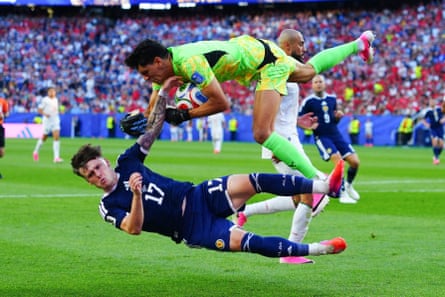
Clarke had sprung a surprise with the deployment of Kieran Tierney on the left of a five man midfield. The widespread assumption had been Clarke would opt for a five-man defensive line. Instead, four was maintained with Tierney ahead of Robertson.

Scotland had little chance to find their positional bearings when Saibari cracked Morocco in front. Braham Díaz’s lofted pass deceived Grant Hanley, who appealed in vain for offside as Saibari ghosted in behind him. With a single touch, Saibari finished high beyond Angus Gunn. Scots on the pitch and in the stands were shellshocked.

It could and should have been much worse for Clarke by the break. His team had chased shadows. Morocco moved the ball with an urgency and menace that their opponents could not handle. After Ryan Christie was all-too easily shrugged off the ball, Azzedine Ounahi played a glorious ball across goal that somehow eluded both Díaz and Saibari.

Gunn reacted sharply to deny Achraf Hakimi, who had baffled the Scottish defence with an underlapping run. In front of the watching Pep Guardiola, both Ounahi and Bilal El Khannouss shot over the bar. Despite being comfortably the superior side, Morocco’s slender advantage fuelled Scottish hope.

The Scots did indeed start the second half in much more competent fashion. They screamed for a penalty as McGinn tumbled under the challenge of Neil El Aynaoui. Any such award would have been soft. Morocco responded immediately, Jack Hendry deflecting Saibari’s shot onto the crossbar before Gunn clawed an El Khannouss header out of his top corner.

An injury to Tierney triggered the introduction of Ben Gannon-Doak in the 60th minute. While the switch was enforced, Clarke would inevitably have turned towards the Bournemouth forward anyway. Instead it was Christie who threatened after collecting a pass from the hitherto anonymous Scott McTominay. By the final hydration – advert – break of the game, it had clearly flatlined. Morocco, who tend not to be high scorers, had failed to properly press home their superiority. Scotland, while still in the game, looked blunt. A World Cup classic, this was not.

Díaz dallied on the ball when Saibari stood in space and within yards of the Scotland goal. This final ball element had cost Morocco umpteen times.

Scotland screamed again for a penalty, this time after McTominay stumbled when seeking to evade El Aynaoui. The referee’s dismissal of the appeal was perfectly fair. This came, however, in a closing spell where the Scots were on the front foot. McTominay’s shot was deflected into side-netting with five minutes of regulation time to play. It was no coincidence that Scotland had markedly improved as McTominay’s influence on proceedings grew.

Morocco, who were profligate on the counterattack, did not look entirely comfortable as Scotland closed the game in route one style. With seconds remaining, the Scots won a corner. Near post, cleared. It’s only Brazil next.

Socceroos aggrieved by referee’s ‘stinker’ in World Cup defeat to USA | World Cup 2026 | The Guardian

Keyword – Football
Trefwoorden – World Cup 2026, Australia national football team – Socceroos, USA, Football, World Cup, Australia sport, Sport
Title – Socceroos aggrieved by referee’s ‘stinker’ in World Cup defeat to USA | World Cup 2026 | The Guardian
Author – https://www.theguardian.com/profile/jack-snape
Link – Socceroos aggrieved by referee’s ‘stinker’ in World Cup defeat to USA | World Cup 2026 | The Guardian
Publish date – 2026-06-20T02:32:28.000Z
Category – Sport
URL – https://www.theguardian.com/football/2026/jun/20/socceroos-usa-world-cup-group-d-reaction-australia-still-belive

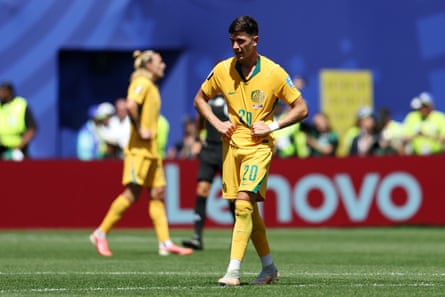
Referee Felix Zwayer has come in for criticism from the Socceroos, who labelled the German’s performance a “stinker” after what they believed was a series of injustices in their 2-0 defeat to the USA in the World Cup match in Seattle.

The co-hosts’ second goal was awarded by the video referee, and it was contentious given what appeared to be an offside player in the proximity of goalkeeper Patrick Beach when he tried to recover from a misdirected shot.

The main grievance, however, was what they believed to be a string of non-calls during the match. Connor Metcalfe appeared to be tripped in the area and forward Nestory Irankunda was taken out off the ball by American defender Chris Richards. Several more players’ pleas to the referee during the match were ignored.

Irankunda said the team was unlucky. “If you look at how the referee was today, [there’s] not much I can say about that,” he said. Asked to elaborate, the forward’s criticism was more pointed.

“The ref was having a stinker today, but I mean it is what it is,” he said. “He was giving every call to the USA . I get it, but at the same time, we know there’s two teams on the field, so you have to give the calls both ways and he didn’t do that today.”

Coach Tony Popovic said the contest was not overly physical, but the whistle was inconsistent. “I thought the referee gave too many fouls away, in all honesty, he said. “Sometimes you didn’t have to do much to win a foul, and on the other occasions you you had to do a fair bit to get one.”

Despite the result, the Socceroos believe they can quickly correct their listing World Cup campaign.

Australia found themselves down 2-0 at half-time after being outplayed in the opening half. The result at the 68,000-capacity Seattle Stadium secured a berth in the knockout rounds for the US, who later found out they had won Group D following Paraguay’s victory over Turkey. But it leaves Australia’s campaign on the bubble ahead of their final group-stage match against the South Americans in San Francisco next week; a win or draw will be enough for them to qualify in second place, but it remains to be seen whether a defeat will end their hopes of progressing to the last 32.

Captain Harry Souttar was downcast after the match and admitted it was a frustrating afternoon, but said the Socceroos know they can still progress to the last 32. “[The reaction] has got to be a positive one tomorrow,” he said. “We can look back at the game properly and take bits that we did well and that we didn’t do well – there’s a lot of them.”

“We’re in that position where we know we can go through, if we get a result. So yeah, full focus and positivity has got to be [there] for that last game,” Souttar said.

The Socceroos worked their way into the contest in the second half, but were unable to find a way back into the match against an opposition who were hungry and composed.

“We didn’t start well enough,” Souttar said. “They were in our faces, we couldn’t keep the ball down, we were always trying to get in behind early, we just didn’t really show that composure that I think you think you needed. But the reaction was good.”

Nestory Irankunda and Connor Metcalfe – goalscorers against Turkey last week – came on during the break and were impressive, alongside Cristian Volpato who made his World Cup debut.

Midfielder Aiden O’Neill said the Socceroos “still believe”, and they can take positives into the clash against Paraguay after the second half performance. He said Volpato had a “massive impact”, as did the other substitutes, which helped turn around the match.

“The boss always talks about the belief in the squad and I think maybe in the second half we really truly believed that we would get back into it,” he said. “Maybe you could see that on the field, and we gave everything. I think everyone can see that.”

Popovic could not fully explain the first-half performance. “I don’t know if it’s the occasion, but we looked sluggish, heavy legged, dull,” he said. “They won every duel, they won every second ball and when you do that, it makes it very difficult to get any, gain any momentum.”

He said the second half response was “outstanding” and gives a platform to take into the next match.

“We’ve got to accept what happened today, and I’m really delighted with the second half, to be honest, with all the players that came on, and the players that didn’t have a good first half,” he said. “It’s a World Cup. We move on to Paraguay and we’ll work hard to be ready for that.”

The hill I will die on: Going to a gig is an endurance test | Sasha Mistlin | The Guardian

Keyword – Opinion
Trefwoorden – Pop and rock, Music, Culture, UK news
Title – The hill I will die on: Going to a gig is an endurance test | Sasha Mistlin | The Guardian
Author – https://www.theguardian.com/profile/alex-mistlin
Link – The hill I will die on: Going to a gig is an endurance test | Sasha Mistlin | The Guardian
Publish date – 2026-06-20T07:00:03.000Z
Category – Opinion
URL – https://www.theguardian.com/commentisfree/2026/jun/20/the-hill-i-will-die-on-gig-endurance-test

A few years back I went to see one of my favourite rappers, Earl Sweatshirt , at a venue in north London. The sound was so muddy I couldn’t tell which song he was playing. The setlist lurched between his old and new stuff in a way that did justice to neither. The bloke in front of me filmed the entire thing on a phone he was holding above his head for an Instagram story that will be watched by no one. With 45 minutes remaining, I wished I could leave. With 15 minutes left, I decided that making it to the nearest kebab shop before the rush meant more to me than seeing the end of the set.

As a culture journalist, I’ve been to a lot of gigs. Most of them were endured rather than enjoyed, and I secretly think it’s only the most extroverted (or simply least self-conscious) among us who actually feel otherwise. This is the dirty secret of the music industry, which has tackled economic headwinds mainly by transitioning out of actually selling music and into live events. This feeling has occasionally caused professional embarrassment for me, since I am forever inventing reasons to turn down what is supposedly one of the main perks of the job: free tickets.

To make matters worse, we blame the artist for things that are almost entirely outside their control. They don’t design the PA system, they’re not responsible for security and they certainly don’t decide to charge their fans extortionate booking fees. They are working, often gruellingly, to a tour schedule designed to maximise revenue rather than allow them to regularly perform at their best. The fact that more gigs aren’t straight unlistenable is a minor miracle.

The residency model only makes this worse, and it’s hard not to feel a degree of contempt towards artists like Harry Styles whose “tours” primarily consist of turning up at a mega-venue that requires fans to fork out for travel and a hotel on top of the £200 ticket. The artist gets to sleep in their own bed; the audience has to take time off work or school for an expensive city break. Somehow this has been sold to us as luxury – an evolution in how gigs are supposed to work.

Then there is the eternal claim that gigs are about communion – a rapturous coming-together, shared grief, shared ecstasy etc. I have never truly felt it. What I have felt is the soggy embrace of the contents of a plastic cup pouring down my face. Is it a discarded pint or someone’s piss? Pray for the former but neither is ideal.

Compare all of this with the cinema, which has only got better in recent years. You’re sitting down and forced to put your phone away; the screen is massive, you’re in complete darkness and the beverage of choice is delicious Coca-Cola rather than stale lager. Nobody is throwing a pint over your head. Nobody is drowning out the band by screaming half-remembered lyrics.

Mind you, none of this has stopped me from being a typical Glasto bore, and I will be doing everything I can to get a ticket in 2027. But am I devastated that the festival is on a fallow year? Reader, I am secretly thrilled.

Sasha Mistlin is a commissioning editor on the Guardian’s Saturday magazine

David Guetta and Sia’s song Titanium got me through my fertility treatment | Dance music | The Guardian

Keyword – Culture
Trefwoorden – Dance music, Pop and rock, Culture, Music, IVF, Life and style, Fertility problems, David Guetta, Sia Furler
Title – David Guetta and Sia’s song Titanium got me through my fertility treatment | Dance music | The Guardian
Author – https://www.theguardian.com/profile/deborah-linton
Link – David Guetta and Sia’s song Titanium got me through my fertility treatment | Dance music | The Guardian
Publish date – 2026-06-20T06:00:04.000Z
Category – Culture
URL – https://www.theguardian.com/culture/2026/jun/20/my-cultural-awakening-david-guetta-sia-titanium-fertility-treatment

A t the end of 2011, party season was under way but I was in no mood for festivities. Two years into fertility treatment, my body was pumped full of synthetic hormones and felt like a pin cushion, while my head was filled with both the fragile hope of having a baby, and the exhaustion of failed clinical attempts to do so.

I was in my late 20s. I met my husband when I was 22; we got married when I was 25. “I want to have kids young,” I’d told him. It was a feeling I’d harboured since my teenage years. But I’d also had the nagging sense that it might not come easily to me. As it turned out, my intuition was right. Approaching 28, I was a regular on the infertility merry-go-round.

I was recovering from my second miscarriage that year when I heard Sia’s raspy voice on the car radio belting out words that sounded emotionally weighty for an electronic dance number – her David Guetta collaboration, Titanium.

It’s not a song I would have necessarily rated or listened to again – I’m more likely to play 00s R&B and hip-hop – but it came at the perfect time in my life. I had forgotten how days felt before fertility drugs and the diarised cycles of administering them. I’d been constantly wearing a brave face and cramming in hospital appointments before and after work, going about my job through a fog of longing and hormones. It had left me in a “cry on the bedroom floor” kind of a heap. I needed something to drag the hope back into me.

I turned the radio up and listened to the lyrics: “I’m bulletproof, nothing to lose / Fire away, fire away.” It felt as if it was talking to and about me, issuing a riposte to all those shots of disappointment that had been fired our way. As Sia’s vocals ascended through the chorus with Guetta’s soaring synths – “Ricochet, you take your aim” – I cried, but I felt myself gaining power with her, too. “You shoot me down, but I won’t fall / I am titanium.” Those were the words I needed to hear.

I felt like a puppet pulled upright again. I streamed it on repeat in the days that followed. I might not have been able to face the work Christmas party but I wasn’t going to languish on the bedroom floor any more.

Over the next months, I spent a lot of time in my car, travelling to work and to fertility appointments to get my blood tested, hormones measured or insides scanned. Listening to Titanium became routine. Each time, its cinematic surge had the same empowering effect and I’d turn up the volume, wind down the windows and defiantly sing along in my terrible voice so it could wash over me.

The following May, when my husband and I headed to the clinic for another IVF embryo transfer, I let it motivate me; when we drove back from scans confirming we were six weeks, then 12 weeks pregnant, I celebrated with it. As I nervously made my way through my pregnancy, I turned to it when I needed the boost.

In January 2013, our first son was born. Today, he is the eldest of three: his brother arrived 15 months later, via IVF too (the last of our fertilised embryos) and four years later, another brother, without fertility treatment. We consider ourselves unspeakably lucky; for many, the outcome is not the same.

In our family, everyone knows Titanium is my fight song. It’s the only big commercial dance hit on my playlists, and a marker of something I overcame.

My kids call me in whenever it streams or plays on TV. When I made my husband a playlist for our 15th wedding anniversary, it’s the song that represented our 2011. And the other week, when he was out with friends, he sent me a voice note from the bar: he’d recorded it playing in the background.

There’s something all-consuming about fertility treatment: you view life only through the filter of your efforts to get pregnant. If you’re lucky, the filter lifts. It did for me, but the fight song remained. So, now, elsewhere in life, when I need a shot of strength and find myself alone in the car, down goes the window and on it goes.

The rise of OnlyFans managers, the footsteps of Frida Kahlo and what you should actually store in the fridge | Pornography | The Guardian

Keyword – News
Trefwoorden – Pornography, Society, Women, Frida Kahlo, Art and design, Social media, Digital media, Internet, Jamaica
Title – The rise of OnlyFans managers, the footsteps of Frida Kahlo and what you should actually store in the fridge | Pornography | The Guardian
Author – Guardian Staff
Link – The rise of OnlyFans managers, the footsteps of Frida Kahlo and what you should actually store in the fridge | Pornography | The Guardian
Publish date – 2026-06-20T05:00:53.000Z
Category – News
URL – https://www.theguardian.com/news/2026/jun/20/the-rise-of-onlyfans-managers-the-footsteps-of-frida-kahlo-and-what-you-should-actually-store-in-the-fridge

1. The malignant rise of OnlyFans managers: ‘It’s exploiting. It’s grooming. It’s predatory’

If you try to leave them they threaten to sue you, or they do sue you, or they threaten to post all your content somewhere else and make money off of you.

As the pornography platform has exploded in popularity, a side industry has emerged: middlemen who encourage young women into the industry, then take a large cut of their earnings. Amelia Gentleman looked in depth at the world of OnlyFans management.

Read more

2. ‘Is it true she bombed her school?’ My thrilling week in the footsteps of Frida Kahlo

The bar she drank at, the bed she recuperated in, the canals she day tripped to, the studio she stormed out of, the easel she painted her final masterpiece at … ahead of a major Tate show, Andrew Gilchrist found Kahlo’s spirit alive in Mexico City.

Read more

3. ‘Have I been influenced, or is this actually me?’ How personal taste fell out of fashion

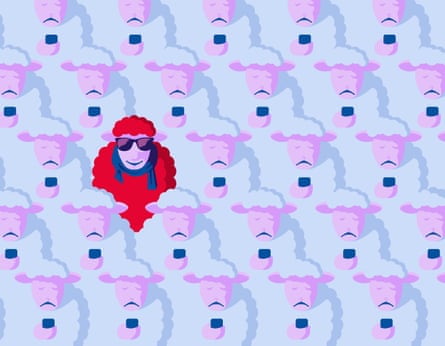
We know the internet has radically altered the way we form our opinions and beliefs. Now we’re waking up to another sobering truth: it has wrecked our capacity to form our own preferences. Our favourite music, clothes and books used to be markers of individuality – but the algorithm has made us all sheep. Rachel Aroesti met the style rebels fighting back.

Read more

4. Jamaica’s beach access crisis: ‘We shouldn’t be forced to fight for what is already ours’

Activists argue that a multibillion-dollar all-inclusive tourism business model is “plantation tourism” designed to benefit rich visitors and the elite and disadvantage most Jamaicans. Natricia Duncan and Anthony Lugg spoke to some of them.

Read more

5. The cold, hard truth: what you should actually store in the fridge – from red wine to nuts

Yours may already be a household where domestic disputes have been caused by the presence – or not – of a ketchup bottle in the fridge; where wondering what to do with your eggs is a cause of constant mild anxiety.

Is chocolate better served chilled? Do bananas go mushy? And won’t someone think of the avocados? Emine Saner delivered the final word on the fridge or cupboard conflict.

Read more

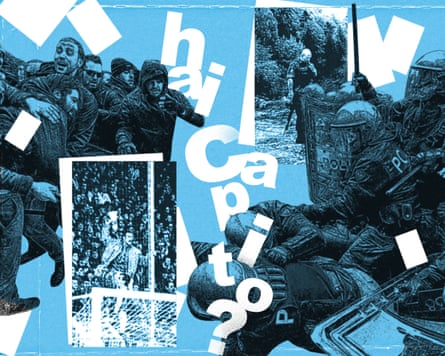
6. ‘He liked that people were scared of him’: my year unpicking fantasy and reality with a veteran of Italy’s football ultras

Tobias Jones had met many hardcore, violent fans having spent years reporting on Italy’s football ultras. But the hostage-negotiating, cocaine-smuggling, Marxist-Leninist Alessandro Casolari still stood out. He profiled him for this Guardian Long read.

Read more

From coal to cabernet: the wine seller using a flooded mine to cut heating bills | Energy | The Guardian

Keyword – Environment
Trefwoorden – Energy, Geothermal energy, Wine, Heat pumps, Coal, Food, Environment, North of England, England, UK news, Fossil fuels
Title – From coal to cabernet: the wine seller using a flooded mine to cut heating bills | Energy | The Guardian
Author – https://www.theguardian.com/profile/chris-baraniuk
Link – From coal to cabernet: the wine seller using a flooded mine to cut heating bills | Energy | The Guardian
Publish date – 2026-06-20T09:00:05.000Z
Category – News
URL – https://www.theguardian.com/environment/2026/jun/20/coal-to-cabernet-wine-seller-flooded-mine-cut-heating-bills

S hove them in a fridge, stash them in a cellar – this is how most people store their favourite bottles of wine. But if you have warehouses full of thousands of vintages, you have to think a little differently.

For the last eight winters, Lanchester Wines has used heat from a disused coalmine to maintain ideal storage temperatures at its facilities in the north-east of England , helping to prevent freezing or spoilage.

“For wine, we like it to be 8-10C,” says Veronica Cleary, a director at the company. “For staff, obviously, a bit higher. We do still encourage them to wear fleeces and what have you.”

Few wine companies use geothermal heat to control the temperature of their warehouses; fewer still source that heat from disused, flooded mines. But Lanchester Wines hopes its experience of the pitfalls and wins will make things easier for other companies hoping to take advantage of subterranean warmth. That warmth, once accessed, reduces dependence on fossil fuels and can make a real difference to heating bills.

Thousands of vintage wines are stored at the cluster of warehouses in Gateshead owned by Lanchester Wines. Water in the mine near the warehouses sits at roughly 19C year-round. The company’s system works by pumping some of the mine water out, extracting a portion of its heat, boosting that heat with a heat pump, and distributing it through pipes.

In the UK and Europe, a handful of similar schemes are also making use of the heat in mine water but are relatively rare. Businesses in the UK are often left struggling in the face of permitting complexities and the risks that come with drilling into the ground, according to a report published in February by the US-based research organisation Project InnerSpace.

“To our mind, it was a relatively simple thing to do,” said Cleary, recalling the early years of the Lanchester Wines system. “[But] it didn’t prove that easy at all.”

Some of the boreholes drilled to reach the mine water turned out to be poorly located. And a previous access agreement with the government-run Mining Remediation Authority (MRA) caused many headaches. After nearly two years of renegotiations, however, a new streamlined deal between the two parties is now in place until 2044.

“It’s opened up greater potential,” said Joanne Eynon, principal mine water heat-licensing manager at the MRA. “It gives them a better return, I understand, on their system.”

Lanchester Wines estimates the system has cut heating bills at its Gateshead warehouses by roughly 35%.

The redrafted agreement has also become a template for others who want to access the heat available in mine water around the UK. It was redesigned, in part, to allow for a swifter application process.

“What we wanted to try and do was pioneer a path so others could follow on from our experience,” said Cleary.

It was a welcome development, said Matthew Jackson at Imperial College London, who contributed to the Project InnerSpace report. “There have been a lot of barriers in the way. One of those barriers was the relatively onerous regulatory framework.”

Using mine water for heating presents technical challenges. Drilling into old mines can release toxic gases, so venting these away is important . Plus, minerals present in mine water can cause corrosion or blocking of heating system components.

Nonetheless, the relatively high temperatures of mine water, even as high as 40C at depths of 1km, mean it is sometimes an attractive option compared with other forms of geothermal energy.

“The reward on offer is potentially greater but there’s a little more risk in getting there,” said Fleur Loveridge, professor of geo-energy engineering at the University of Leeds.

There are 23,000 flooded coalmines in the UK: about 25% of UK homes, and many businesses, are located above or near to disused coalmines, meaning there is much more potential for supplying properties with heat from mine water.

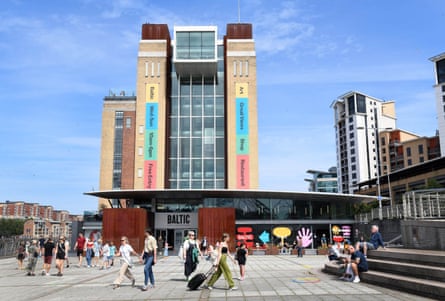
The north-east currently leads the way. Great Britain’s largest mine water heat network , a stone’s throw from Lanchester Wines’ warehouses, supplies Gateshead college, the Baltic Centre for Contemporary Art, and 350 social homes. There are plans to expand it to 270 private homes, and a conference centre and hotel.

A similar network links homes in the city of Heerlen, the Netherlands, to heat sourced from mine water. Many thousands of dwellings there are due to be added to that scheme in the next two decades.

There is also the town hall in Bad Ems, Germany. A study published in February found the mine water from which it has drawn heat for the past seven years is warmer than most people’s living rooms: 25C. This significant resource is “far from reaching its full potential”, the study authors wrote – many more buildings could access it.

The Lanchester Wines’ system “does show that it works, and it works in UK conditions”, said Loveridge. “It’s great that they’re securing the future of it.”