A new off-grid cabin stay in Scotland – on a farm where kids can run wild

Scotland holidays
A new off-grid cabin stay in Scotland – on a farm where kids can run wild

Tue 19 May 2026 08.00 CESTLast modified on Tue 19 May 2026 12.15 CEST
News
https://www.theguardian.com/travel/2026/may/19/family-farm-holiday-eco-cabins-perthshire-scotland

O n a January morning in 1938, Pitmiddle’s last resident, James Gillies, closed the door to his cottage for the final time and walked away through the snow. High on the south-facing slopes of the Sidlaw Hills in Perthshire, the village is now little more than a jumble of half-ruined walls gradually being reclaimed by the land.

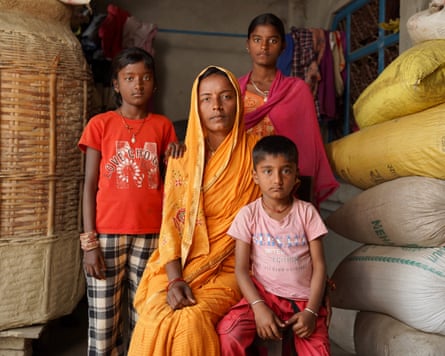
My children pick around the overgrown stones like explorers discovering a lost civilisation, before scampering back through the gate and over the grass to our cabin in a neighbouring field. Called the Pitmiddle Hut, it’s the latest addition to Guardswell Farm, which spans 81 hectares (200 acres) of countryside halfway between Perth and Dundee (an hour and a half from Glasgow or Edinburgh). “People gradually moved away from Pitmiddle’s way of life,” says Anna Lamotte, who runs Guardswell with her husband, Digby Legge, often aided by their four-year-old daughter and a smiley 10-month-old in a vintage pram. “Villagers each had a pendicle, the small area they could farm, a system of outfields, infields and ‘kailyards’ – a Scots word for a kitchen garden.” Anna and Digby grew up on farms and small-holdings nearby, and today they rear cattle, sheep, goats and chickens and tend to the vegetable gardens, alongside welcoming guests to stay.


The Pitmiddle Hut sits in the old village’s pendicle field and the slim volume Pitmiddle Village and Elcho Nunnery in our cabin inspired the names of Guardswell’s huts: the Pendicle with its wildflower roof, the Infield with a stargazing window above the bed and shepherd’s hut the Kailyard. They can be rented alongside two cottages and a large farmhouse, all clustered around the Steading, once a dilapidated barn that is now a smart events space for weddings, craft and cuisine classes including cheese-making, and a popular monthly market. It’s also home to a small shop (stocked with the farm’s meat, eggs and Diggers cider), smart washrooms and a cosy room filled with games and wellies.

All the existing cabins were made for two, but as Anna and Digby’s family grew, and couples who married at Guardswell returned with first a dog then a baby, a bigger hideout made sense. The Pitmiddle Hut is a 10-minute stomp uphill and has a mezzanine bed up above the kitchen for grownups and a second bedroom for children to pile into the set of bunks and a double bed. The two are linked by a central indoor-outdoor space, with sliding doors for sunnier days. It’s the end of March when we stay, and the thick blankets (made with wool from Digby’s parents’ farm) and douglas fir planks lining the cabin give it a deep cosiness.


As a somewhat reluctant camper in a tent-loving family, it’s an ideal balance. We build fires in the Esse Bakeheart stove to cook dinner and keep the wool-insulated cabin toasty (there’ll soon be an outside kitchen and a firepit for toasting marshmallows too). My son dashes in and out fetching ingredients from the giant coolbox on the deck. The hut is off-grid, but uses solar-power for lights and the single induction hob. There’s a proper loo, but it’s a walk down to the Steading in the morning for a shower. It quickly becomes our favourite part of the day, saying good morning to fluffy Shetland cows, dinky Hebridean sheep, donkeys Ollie and Hugo, and cheeky pygmy goat Jimmy, who once escaped his pen and crashed a wedding. It feels as though we have the farm to ourselves.

There’s no wifi, no TV and, on my phone at least, blissfully little phone signal. Instead, a basket beside the kindling is filled with Uno, playing cards, drawing pencils and a watercolour set. My daughter washes a page with streaks of blue sky and green fields that are framed by the hut’s huge picture window, before taking a nature scavenger hunt sheet around the farm, checking off pine cones and primroses.


It would be easy to simply roam here for a couple of days, foraging for wild garlic, helping feed the animals and exploring the Big Wood at the bottom of the farm, counting the 198 steps cut into the hillside among the trees. But with all of Perthshire on the other side of the Sidlaws and Fife across the River Tay there’s plenty to get stuck into, from sandy beaches at East Neuk to Highlands hills just beyond the foodie town of Dunkeld , where the Taybank pub and Aran Bakery make a delicious detour. We swerve the Munros and instead stride out on the nearby Scone circular , starting at Old Scone Church, rebuilt stone by stone in 1805 when the village moved a couple of miles east from its original site next to Scone Palace, and climbing through gorse-thick moorland to MacDuff’s Monument and the Lynedoch Obelisk with their sweeping views to Perth beyond.

We get back to the farm just as some wet weather blows in and hole up in the boat-turned-bothy called Girl Linda’s cabin at the top of a field. Scooping up a bottle of Diggers cider and apple juice from the hut, we run for it, the kids screaming into the wind. We light candles and the tiniest wood-burning stove – the valley below now so lost in mist that it feels like the River Tay might rise up and sweep us out to sea. We play Monopoly Deal as the rain whips against the portholes, before rousing a sing-song with the boat’s motley crew of instruments – bongos, guitar, glockenspiel and a giant metal triangle. “Let it go, let it go, I am one with the wind and sky …” My daughter’s favourite, suddenly apt.

We wake on the final morning to milk-glass skies and the rhythmic whirl of two woodpeckers in the trees as the sun rises through a fringe of woodland below us. There are recorded Guardswell morning meditations to start the day, a gentle prompt to pause. But stillness is low on my children’s agenda, so we throw on boots and fleeces over pyjamas and head for the swings on the hill above the hut. Pitmiddle’s simple way of life might not have survived against the advances of the modern world, but for a few days its slower rhythm feels within reach.

Accommodation was provided by Guardswell Farm. The Pitmiddle Hut sleeps six (two adults and up to four children) from £2 20 a night (two-night minimum), guardswell.co.uk

The ICC’s investigation of its chief prosecutor has been a failure | Kenneth Roth

International criminal court
The ICC’s investigation of its chief prosecutor has been a failure
Kenneth Roth
Tue 19 May 2026 17.00 CESTLast modified on Tue 19 May 2026 17.59 CEST
News
https://www.theguardian.com/commentisfree/2026/may/19/icc-karim-khan-investigation

T he international criminal court’s chief prosecutor, Karim Khan, has been on an exoneration tour, with stops including an interview with Mehdi Hasan and an appearance at the Oxford Union. Accused by a lawyer in his office of repeated sexual misconduct, which he denies, he claims that an internal review of the allegations has vindicated him but the situation is more complex than that.

It has been a year since Khan took a leave of absence while the claims against him were investigated as an internal employment matter. That absence has left the ICC under the control of his deputies, with important decisions to be taken in Gaza, Ukraine, Sudan, eastern Democratic Republic of Congo, and elsewhere. Yet the ICC member states, which have ultimate authority over whether Khan stays or goes, have dawdled, acting as if they had all the time in the world. And the procedure that they relied on to resolve the matter turned out to be a travesty.

They assigned fact-finding to the UN’s Office of Internal Oversight Services (OIOS). It interviewed the complainant as well as Khan and other people in the prosecutor’s office. Yet shockingly, it did not decide what had happened. It detailed the complainant’s testimony and Khan’s denials but refused to make the assessments of credibility that were needed to decide who was telling the truth. On the key matters in dispute, it made no findings of fact at all.

For example, the complainant, who is married and has a child, alleged a pattern of coercive sexual behavior by Khan that occurred in hotel rooms during work trips, in Khan’s office at the ICC, and at his home. The OIOS reported her detailed testimony but never opined whether she was credible in revealing alleging these humiliating and painful encounters, ones that reportedly led to “ suicidal thoughts ” and placement on a “ suicide watch ”.

When the OIOS asked Khan whether he had had a sexual relationship with the complainant, he gave a prepared statement that he had never engaged in any prohibited conduct with her that “could be construed as inappropriate, unwelcome or abusive”. He reinforced this in his recent interview with Mehdi Hassan once again stating that he did not have a “sexual relationship” with her and denying allegations of sexual misconduct.

Instead of making the credibility determinations needed to resolve this differing testimony, the OIOS delivered a 150-page “he said, she said” account.

That, in turn, was handed to a panel of three judges who had been tasked to advise the ICC’s member states by assessing the findings under the relevant standard of law – in this case, whether the allegations had been proven beyond a reasonable doubt.

But there were no findings to assess. When it came to the heart of the matter, the OIOS had not made any .

Given that factual void, the three-judge panel had no choice but to conclude that the burden of proof had not been met. The panel chastised the OIOS for not making judgments of credibility or resolving the contradictory testimony, but the panel’s mandate precluded it from conducting its own fact-finding, so all it could do was to assess the non-existent fact-finding of the OIOS. The panel noted that this incomplete record does “not disprove the allegations of misconduct”, yet Khan claims , “the process exonerated me”.

The matter has now gone before the 21-member executive bureau of the Assembly of States Parties. The bureau is composed of states chosen from among the 125 ICC members. Khan argues that it should defer to the judges. But since the judges had no factual findings before them, a better approach would be to recognize that the OIOS utterly failed in its fact-finding responsibilities and rectify it.

One option would be to return the matter to the OIOS with explicit instructions to make credibility assessments and determine what happened between Khan and the complainant.

But unless the OIOS is ordered to act with a dispatch that it so far has lacked, that would lengthen a process that has already gone on far too long. Even though the ICC prosecutorial team continues to do important work, there is no substitute for having an active chief prosecutor.

The other option would be for the bureau to make its own credibility judgments, as reportedly 15 of the 21 bureau member states seem inclined to do. Normally credibility is assessed by hearing witnesses testify in person, but it may be possible to make adequate credibility determinations from the extensive, detailed written record, especially because this is not a criminal prosecution but a review of alleged workplace misconduct.

The judges did that to some extent, noting adversely, for example, that the complainant kept traveling with Khan on court business and often maintained a facade of cordiality with him. That struck me as insensitive to the realities of some workplace hierarchies and how sexual misconduct often plays out . It would have been better to ask the complainant rather than assume the answers.

As the Wall Street Journal reported, “The woman, a lawyer from Malaysia, stayed at the job because she didn’t want to leave one of the most important offices in human-rights law and worried she wouldn’t be able to pay the medical bills of her mother, who was dying of cancer, according to her testimony and ICC officials. She also came to fear retaliation from Khan, according to interviews with current and former ICC officials.” Khan has described the allegations as an effort to undermine the ICC.

If the bureau decides to make credibility assessments itself, it could ask: why would the complainant have subjected herself to the ordeal of having filed a complaint – the pall it has cast over her legal career, the apparent disruption to her family life, the mental anguish she has reportedly endured? Would Khan have endangered his position by behaving in the way she alleges?

If the bureau finds serious misconduct on Khan’s part, the decision on his fate goes to the full Assembly of States Parties. If the bureau finds lesser or no misconduct, it can resolve the matter on its own. Either way, another obstacle stands in the way of a just resolution.

The complaint has become caught up in the issue of Israel and Palestine. As soon as the allegations against Khan became public, supporters of the Israeli government sought to instrumentalize them. The Wall Street Journal suggested that Khan might have accelerated his war-crime charges against the Israeli prime minister, Benjamin Netanyahu, and former defense minister Yoav Gallant to change the subject from the accusations against him. The investigation of Israeli conduct in Palestine had long preceded the complainant’s allegations. And a different three-judge panel upheld the charges against Netanyahu and Gallant (They have rejected those charges as false and absurd). Khan has denied any link between the Israeli warrants and the sexual assault claims.

Some suggest that the complainant is acting at the behest of the Israeli government or its Mossad spy agency. Mossad did threaten the prior ICC chief prosecutor, Fatou Bensouda, to try to forestall an investigation of Israeli conduct, but a private investigation found no evidence to support the allegation that the complainant had anything to do with the Israeli government. She had undergone numerous security reviews while working at the court, and a Qatari-financed investigation failed to unearth any such link.

Indeed, the complainant reportedly was reluctant to complain about Khan’s behavior in part because she strongly supported the investigation of Israeli leaders. In her testimony, according to the account given in the Wall Street Journal, she claimed that Khan cited the negative consequences for the case as an argument for why she should not make any complaint. Khan has denied this, saying that from the beginning, while he denied the allegations, he encouraged the complainant to report them following the normal process and he called for an investigation.

But the biggest threat to justice is that governments seem to be lining up for or against Khan not on the basis of the case brought by the complainant but according to their views on the Israel-Palestine case. Some governments , mostly western, apparently want to see Khan ousted because he had the audacity to charge Israeli officials; they hope a successor will be more restrained. Many other governments evidently want to see Khan stay because he did ultimately charge Israeli officials, even if before 7 October 2023 he had been slow-walking the investigation (he never advanced a case on Israel’s war-crime settlements) and while still on active duty, never publicly charged Israeli officials for anything involving indiscriminate bombing , executions , torture or genocide in Gaza.

Personally, I want to see the Israel-Palestine case advance, but that is no reason to ignore the claims against Khan. If he did what he is alleged to have done, he should not stay on as chief prosecutor. And the complainant deserves real consideration of her claims, not an investigation with no meaningful fact-finding and a legal review of that evidentiary void. If he did not do as she alleges, then he should be properly cleared.

It is appalling that so much time has been wasted. The ICC bureau should ignore Khan’s exoneration tour and take matters into its own hands. It should either make the credibility judgments itself that the OIOS was unwilling to make or press the OIOS to expeditiously fulfill the responsibility that it disappointingly shirked.

Kenneth Roth is a Guardian US columnist, visiting professor at Princeton’s School of Public and International Affairs, and former executive director of Human Rights Watch. He is the author of Righting Wrongs: Three Decades on the Front Lines Battling Abusive Governments . Before joining Human Rights Watch, he served as a federal prosecutor in New York and Washington

Burberry’s £2,000 Cotswolds handbag hits ‘a sweet spot’ with Americans

Burberry group
Burberry’s £2,000 Cotswolds handbag hits ‘a sweet spot’ with Americans
Sarah Butler
Thu 14 May 2026 13.38 CESTFirst published on Thu 14 May 2026 12.20 CEST
News
https://www.theguardian.com/business/2026/may/14/burberrys-handbag-cotswolds-hits-sweet-spot-americans

The luxury fashion brand Burberry has said a new £2,000 handbag named after the Cotswolds has bolstered sales, as the English region becomes increasingly popular with wealthy Americans.

Joshua Schulman, the company’s chief executive, said its tote bags – which mix leather and the signature Burberry check – had helped drive its best performance in bag sales since 2023.

He said: “During Mother’s Day in North America the customer has been responding to our vintage check introductions and Cotswolds lines. We’ve hit a sweet spot on price and value for money in a luxury context.”

The Cotswolds region, which runs through counties including Gloucestershire and Oxfordshire, has become popular with wealthy Americans, and has been referred to as the “Hamptons of England” .

Schulman said Burberry had phased out its Knight bag, which was selling at more than £2,400 for certain versions, and last year had brought in the Cotswolds bags , which are priced at “around and under £2,000”.

Schulman – who joined Burberry in 2024 – said the shift marked a change from a focus under the brand’s previous management on “all attention on bags and having those at pinnacle price points without recognisable brand signatures”. He added: “That strategy didn’t work.”

Burberry on Thursday reported a return to full-year profits amid rising sales in the US and China.

The company made pre-tax profits of £49m in the year to 28 March, compared with a loss of £66m in the previous 12 months, as it cut £80m of annual costs, trimmed store numbers and won back Chinese and North American shoppers.

Sales were flat year on year, once the impact of exchange rates was taken into account, at £2.4bn.

“I am more optimistic than ever that Burberry can meet the £3bn [sales] milestone and go beyond that,” Schulman said.

He added that a revival had been led by core categories of scarves and outerwear but sales of ready-to-wear items had now “taken off”, bag sales were beginning to improve and the brand had “strong attraction” among younger shoppers.

Global sales were knocked back by poor performance in Europe and the Middle East, where travel was affected by the Iran war. The Middle East accounts for 2% of Burberry’s global sales.

Shares in Burberry fell 5% on Thursday amid fears about the conflict’s impact.

However, Kate Ferry, the finance director of Burberry, said the company was confident it could meet the consensus of analysts’ profit expectations for the year ahead, despite the problems in the Middle East.

“We have great momentum starting the year and we are confident we are going to make progress on sales growth and margin,” she said.

‘It’s heartbreaking’: panic in eastern DRC over return of Ebola

Democratic Republic of the Congo
‘It’s heartbreaking’: panic in eastern DRC over return of Ebola
Carlos Mureithi
Mon 18 May 2026 20.33 CESTLast modified on Tue 19 May 2026 08.07 CEST
News
https://www.theguardian.com/world/2026/may/18/ituri-eastern-drc-ebola-outbreak-panic-fear

“O n public transport, in bars and at mass gatherings, everyone is talking about Ebola,” said Gloire Mumbesa, a resident of Mongbwalu, a mining town in the Democratic Republic of the Congo . He said cases of the disease had been reported locally and panic was engulfing the area because of the lack of a vaccine for the Bundibudyo strain. “The fear is that this disease may spread to many other areas.”

Residents of Ituri province in eastern DRC, where the World Health Organization announced an outbreak of Ebola last week, are living in growing fear of the possible continued spread of the disease and its deadly impacts, nearly six years after the last outbreak in the region ended.

“We’re stunned by the resurgence of Ebola in our region,” said Dieudonné Lossadekana, a resident of Bunia city, where the first suspected case was reported. “We’ve already recorded several dozen deaths. For us, it’s heartbreaking.”

The economic impacts of the outbreak are a serious worry, and residents are concerned that authorities may impose restrictions that would hinder them from earning a living in a region plagued by armed conflict and where people are already struggling financially.

“We live in a region where poverty is rife and people live from hand to mouth,” said Claude Kasuna in Irumu territory. “When a health emergency like this one strikes, it hits us hard economically.”

The WHO director general, Dr Tedros Adhanom Ghebreyesus, declared the outbreak a “public health emergency of international concern” after more than 300 suspected cases and 88 deaths were reported in the DRC and two deaths in neighbouring Uganda.

The majority of the deaths and suspected cases have been reported in Ituri province, a business centre and migratory hub that borders Uganda and South Sudan. The gold-rich province is the centre of a long-running conflict between militias allied to the Hema and the Lendu, who are fighting over land and the mineral. The fighting has killed more than 50,000 people since 1999.

A health worker who was the first suspected case reported fever, haemorrhaging, vomiting and other symptoms on 24 April and died at a medical centre in Bunia, according to WHO .

Jean Pierre Badombo, a former mayor of Mongbwalu, which is at the centre of the outbreak, told Reuters that people started falling ill in mid-April after a large open-casket funeral procession arrived from Bunia. “After that, we experienced a cascade of deaths,” he said.


On Monday the Congolese health minister, Samuel Roger Kamba, said the government would open three treatment centres for Ebola in Ituri.

The WHO regional office for Africa said on Sunday that 35 experts from the organisation and seven tonnes of emergency medical supplies and equipment had arrived in Bunia.

Elsewhere in eastern DRC, where fighting between government and rebel forces has persisted for years , one case was reported in rebel-controlled Goma – that of a woman who travelled to the city from Bunia where her husband had died of the disease.

Heather Kerr, the DRC country director at the International Rescue Committee, said the conflict in the region made containing the Ebola outbreak “all the harder.” “Eastern DRC’s years of conflict and displacement have left health systems on their knees,” she said. “With dozens of lives already lost and an already overstretched health system, we need to act fast.”

Manenji Mangundu, the DRC country director at Oxfam, said the outbreak was “hitting a country already stretched to breaking point” due to ongoing conflict and years of aid cuts.

First identified in 1976 in what is now the DRC, Ebola is a highly contagious and often fatal viral disease that affects humans and non-human primates. It spreads through body fluids or contaminated materials and causes organ damage, blood vessel impairment and sometimes severe internal and external bleeding.

WHO has said the current outbreak involves the rare Bundibugyo variant, which has no approved treatment or vaccine. It is named after the district in western Uganda where it was first discovered in 2007.

Dr Jean Kaseya, the director general of Africa CDC, said he was in “panic mode” due to the lack of a vaccine and highlighted the need for manufacturing capacity on the continent.

Jean-Jacques Muyembe-Tamfum, the director general of the National Institute of Biomedical Research in the DRC and a co-discoverer of the Ebola virus, said some candidate compounds for a Bundibugyo vaccine were expected to enter trials by the end of May or in June.

In the meantime, he said, the government was implementing public health preventive measures including protecting healthcare workers and treating cases based on symptoms. “This is how we brought the Bundibugyo strain outbreak under control in 2012 in Isiro, not far from Ituri,” he said.

This is the 17th Ebola outbreak in the DRC. From August 2018 to June 2020, the country recorded the second largest outbreak of the disease in history globally, and the country’s deadliest, centred in North Kivu and Ituri provinces. It caused more than 2,000 deaths.

In Ituri, authorities have to address enduring stigma and misconceptions and rumours associated with Ebola in fighting the disease, just as with past outbreaks . Kasuna, the Irumu resident, said: “Our people tend to believe in false myths rather than rely on scientific evidence. We need to raise awareness to save people’s lives.”

In pictures, Manhattan, 1972
You can spray that again! New York drenched in colour – in pictures
Harry Gruyeart
2026-05-19
https://www.theguardian.com/artanddesign/gallery/2026/may/19/new-york-harry-gruyaert-in-pictures
Culture

Harry Gruyaert is a Belgian photographer known for his images of India, Morocco and Egypt as well as his innovative use of colour.

He is a member of Magnum Photos and his work has been published in a number of books and exhibited widely. For more than 50 years, Gruyaert has wandered New York City’s streets, capturing its dazzling contrasts – from towering skylines and neon-lit diners to multicultural neighbourhoods and fleeting street scenes. Harry Gruyaert: New York is published by Thames and Hudson.


Manhattan, 2014Cédric Klapisch is a French film director, screenwriter and producer. In 2015, he co-founded La Cinetek, a streaming platform dedicated to the world’s greatest films, selectedby filmmakers from around the globe.


Manhattan, liquor store, 1985

Acclaimed French film director, screenwriter and producer Cédric Klapisch has collaborated with Gruyaert, providing text to accompany this striking visual journey. Klapisch’s fictional vignettes blur the lines between reality and imagination. A city of endless spectacle, New York becomes a global stage in Gruyaert’s hands – alive with drama, diversity and colour.


Manhattan, 2010

Cédric Klapisch: ‘Harry knows my personal connection with New York, having studied and lived there. It took me some time to figure out what it was about the city that fascinated me so much. There’s a particular kind of light there. The sunlight is sharp and the shadows of the skyscrapers sometimes plunge the streets into a deep penumbra. Tourist guides lead you to believe that it’s a gridlike city, neat and orderly. They claim that it’s divided into three sections: downtown, midtown and uptown. But when you live there, you learn that it’s much more subtle and complex than that’


Manhattan, 1985

‘Living in New York means experiencing chaos and diversity. It’s the very definition of “cosmopolitan”. The word comes from the Greek cosmos, meaning “world” or “universe” and politês, which means “citizen” or “of a city”. When Harry takes pictures on the streets of New York, this is exactly what he’s trying to capture. A cosmopolitan and multicultural population that welcomes strangers without treating them as “other”. Harry creates a portrait of the city that focuses on otherness’


Manhattan, 1985

‘You can’t talk about Harry without mentioning his relationship with colour. His images follow in the footsteps of great colourists like Stephen Shore, Helen Levitt, Ernst Haas, Saul Leiter, Joel Meyerowitz, William Eggleston and Alex Webb: photographers who are very conscious of the key role that colour plays in the structure of an image’


Manhattan, 1985

‘Looking through the images in this selection gives you the same feeling you’d get walking down a New York street. You’re not following a thread of logic but you can feel an effervescence, a commotion, a frenetic fusion of people, signs, street furniture, advertising and cars. The world capital of social contrast and unparalleled ethnic diversity, New York is a combination of rich and poor, communities and skin tones from around the world. The city is a magnificent, many-coloured melee’


Manhattan, 2017

‘While millions of people take millions of photos in the street and the vast majority of these are simply banal, Harry notices the banality but when he captures it with his camera, it turns into something else. When I look at his photos, I immediately see life. I often find myself wondering who these people are that I’m looking at; they turn into characters in a potential movie. And that’s what I’ve enjoyed doing throughout this book’


Madison Avenue, 1985

A vignette by Cédric Klapisch: ‘George told me to check the weather on TV this morning. But I didn’t listen and now I’m stuck in this ridiculous raincoat. It was a gift from my mother-in-law. She’s from South Carolina and she’s always saying “Why did you want to move to New York? Manhattan’s nothing but rain, rain, rain.” I came out of the subway, which was packed, and I’m sweating like nobody’s business under this blue plastic. Yesterday it rained all day but I wasn’t wearing this coat. I wished I had, I was so cold. Apparently it was the wind coming down from Canada’


Queens, 2002

Another vignette: ‘“Did you do it? Is he dead?” “No, not yet. I’m still thinking about it.” “What’s there to think about?” “Look, it’s a tough decision. I know he’s in a bad way, but it’s hard to think I won’t ever see him again. We had some great times together. Walking in this park every morning, it was nice, you know? It’ll be weird not coming here any more.” “But if he’s in pain, you’ve got no choice. Just take him to the vet and they’ll take care of him.” “Yeah, I guess so.”


Manhattan, 2017

‘I know that Harry’s much too modest to consider himself an artist. To me, the purpose of photography – and perhaps a definition of art itself – is to make the banal beautiful. Harry elevates the real by never seeing it as elevated. Reality is reality, it’s the everyday, it’s insignificant, it’s often messy, and sometimes pretty ugly’


Manhattan, 1978

‘By celebrating the man on the street, the “man of no importance”, all the people walking through the city, shopping and running errands, waiting for a bus, a subway train, or a friend, heading for who-knows-where, Harry Gruyaert methodically builds up, step by step and place by place, a multicoloured map of humanity’


Manhattan, 2014

All text by Cédric Klapisch. Harry Gruyaert was born in 1941 in Antwerp, Belgium. He currently lives in Belgium

Immunotherapy could be used to treat depression, early trial suggests

Depressie
Immunotherapie zou gebruikt kunnen worden bij de behandeling van depressie, suggereert een eerste onderzoek.
Tobi Thomas
https://www.theguardian.com/society/2026/may/20/immunotherapy-drug-tocilizumab-potential-treatment-depression-uk-trial

Britse wetenschappers ontdekken dat tocilizumab, een medicijn dat wordt gebruikt bij reumatoïde artritis, mogelijk kan helpen bij patiënten die resistent zijn tegen antidepressiva.

[IMG]https://i.guim.co.uk/img/media/d45af1937d3957f1c40f3fc2107df33f23eec116/583_0_2917_2333/master/2917.jpg?width=620&dpr=2&s=none&crop=none[/IMG]

Deelnemers die tocilizumab kregen, leken na verloop van tijd grotere verbeteringen te ervaren dan degenen die een placebo kregen. Foto: Pascal Rossignol/Reuters
Depressie
Immunotherapie zou gebruikt kunnen worden bij de behandeling van depressie, suggereert een eerste onderzoek.
Britse wetenschappers ontdekken dat tocilizumab, een medicijn dat wordt gebruikt bij reumatoïde artritis, mogelijk kan helpen bij patiënten die resistent zijn tegen antidepressiva.

Tobi Thomas, correspondent Gezondheid en ongelijkheid
Woensdag 20 mei 2026 16.00 BST

Deel
Geef de voorkeur aan The Guardian op Google.
Immunotherapie zou gebruikt kunnen worden om depressie te behandelen bij patiënten die niet reageren op conventionele antidepressiva, zo blijkt uit de resultaten van een eerste klinische studie.

Onderzoekers van de Universiteit van Bristol onderzochten of tocilizumab, een ontstekingsremmend medicijn dat vaak wordt gebruikt bij auto-immuunziekten zoals reumatoïde artritis, de symptomen van moeilijk te behandelen depressie zou kunnen verbeteren.

Ongeveer een op de drie mensen met een depressie knapt niet op ondanks de gangbare medische behandelingen, die gericht zijn op chemische stoffen in de hersenen. Naar schatting één op de zes volwassenen in het Verenigd Koninkrijk krijgt in zijn of haar leven te maken met matige tot ernstige depressieve symptomen.

Tocilizumab werkt door de IL-6R-receptor te blokkeren. Hierdoor kan de receptor zich niet aan cellen binden, waardoor de ontstekingssignalen die verband houden met auto-immuunziekten worden voorkomen.

Aan het onderzoek namen 30 mensen deel met matige tot ernstige depressie die niet goed reageerden op standaard antidepressiva. De deelnemers werden willekeurig toegewezen aan een groep die tocilizumab kreeg of een groep die een placebo kreeg, gedurende een periode van vier weken.

Hoewel de resultaten weinig statistisch bewijs leverden voor een significant verschil tussen de twee groepen, zoals te verwachten was bij een kleinschalige studie, leken deelnemers die tocilizumab kregen na verloop van tijd op verschillende gebieden grotere verbeteringen te ervaren in vergelijking met degenen die een placebo kregen, waaronder de algehele ernst van de depressie, vermoeidheid, angstgevoelens en kwaliteit van leven.

Golam Khandakar, hoogleraar psychiatrie en immunologie aan de medische faculteit van Bristol en hoofdauteur van de studie, zei dat de proef een “belangrijke mijlpaal” betekende in de ontwikkeling van nieuwe behandelingen voor depressie, een aandoening die bijzonder moeilijk te behandelen is.

“Dit is een van de eerste gerandomiseerde, gecontroleerde onderzoeken naar immunotherapie voor depressie, het eerste onderzoek naar IL-6R als behandelingsdoelwit en het eerste onderzoek dat een gerichte aanpak hanteert om patiënten te selecteren die er het meest baat bij hebben, en dat aantoont dat het werkt,” voegde Khandakar eraan toe, onderzoeker bij de MRC-eenheid voor integratieve epidemiologie aan de universiteit.

Deelnemers aan de studie die met tocilizumab werden behandeld, hadden ook een grotere kans op remissie van hun depressie dan degenen in de placebogroep, namelijk 54% tegenover 31%. Deze verhoogde kans was significant, aangezien het overeenkomt met een ‘number needed to treat’ (NNT) van 5, wat betekent dat er vijf extra patiënten behandeld zouden moeten worden om één patiënt te helpen. Ter vergelijking: de NNT voor SSRI’s – het meest gebruikte eerstelijns antidepressivum voor patiënten met matige tot ernstige depressie – is ongeveer 7, wat erop wijst dat immunotherapie mogelijk een grotere kans heeft om patiënten zich beter te laten voelen.

De onderzoekers gaven aan dat, hoewel het onderzoek slechts een klein aantal mensen betrof, het een vroeg bewijs leverde dat bepaalde vormen van immunotherapie de symptomen van depressie kunnen helpen verminderen.

Dr. Éimear Foley, senior onderzoeksmedewerker immunopsychiatrie bij de MRC Integrative Epidemiology Unit en mede-auteur van de studie, zei: “Naar schatting krijgt ongeveer 10-20% van de mensen wereldwijd in hun leven te maken met depressie, maar voor veel patiënten werken de huidige behandelingen niet goed genoeg.

“Ons onderzoek brengt ons dichter bij een meer op maat gemaakte behandeling van depressie, waarbij behandelingen worden gekozen die beter aansluiten bij de biologische behoeften van een persoon. Dit zal ons helpen om de juiste behandeling op het juiste moment aan de juiste patiënt te bieden.”

Haaland’s Norway to Ronaldo’s swansong: Who are the most likely first-time World Cup winners?

World Cup 2026
Haaland’s Norway to Ronaldo’s swansong: Who are the most likely first-time World Cup winners?
Jeff Rueter
Thu 21 May 2026 11.00 CESTLast modified on Thu 21 May 2026 11.09 CEST
News
https://www.theguardian.com/football/2026/may/21/world-cup-first-time-winners-norway-haaland-portugal-ronaldo

When Fifa expanded the field for the 2026 World Cup to 48 teams, the sales pitch included giving more nations a chance at glory. In reality, the favorites are nearly always former champions.

To date, only eight nations have won the men’s World Cup. And yet, few of the former champions arrive at this summer’s tournament in their finest form. Spain are a justifiably popular pick as the reigning European champions have plenty of world-class talent. Argentina will hope to defend their title from 2022 after following it up with the Copa América in 2024. France, who top our power rankings , have reached the last two finals, and Kylian Mbappé claims this squad is the best he has been a part of.

Beyond them, however, lie plenty of questions. England strolled through qualifying but were unimpressive in their last two friendlies. Brazil struggled in qualifying – they lost six matches – and are still acclimating to Carlo Ancelotti , while Germany have some great young players but arrive without a dependable No 9. Uruguay are a longshot under Marcelo Bielsa, while Italy missed out altogether (again).

The newly hatched Round of 32 is another hurdle to trip up one of the favorites. Tack on the considerable travel teams must negotiate and historically high temperatures , plus expensive tickets that may lead to tense atmospheres as supporters look to get their money’s worth, and there are plenty of reasons to think we could be in for a surprise winner.

So who could be a first-time champion this summer? Let’s look at the contenders.

The most likely

Portugal

2022 finish: Quarter-finals

Best finish: Third place (1966)

Arguably as worthy a frontrunner as any of the past winners. Success wasn’t always a given for the Seleção in the 20th century, but the modern era has seen Portugal emerge with serious staying power. This may be their best all-around squad since they won their first major competition at Euro 2016.

This will almost certainly be Cristiano Ronaldo’s international swansong. He was a regular starter at center-forward in qualifying – though he hasn’t featured for Portugal since his petulant red card against Ireland in November. While his declining athleticism complicated Portugal’s 2022 World Cup campaign, this year’s team have better balance behind Ronaldo. Vitinha is arguably the world’s finest midfielder, a metronome who can recirculate and break lines with ease and seldom abandons his station. João Neves has emerged alongside him at Paris Saint-Germain, while Bruno Fernandes arrives at the peak of his powers. The backline is more solid this time, too, with Gonçalo Inácio proving a dependable partner for Rúben Dias. Nuno Mendes is one of the world’s best full-backs, while Diogo Costa is dependable in goal.

There’s also plenty of strength behind the starters, including Gonçalo Ramos, the nimble João Félix, and gamechangers like Rúben Neves and Bernardo Silva. Roberto Martínez will be eager to erase the stigma of having arguably underperformed when he was in charge of Belgium’s golden generation with a deep run this time around.

The hopefuls

The Netherlands

2022 finish: Quarter-finals

Best finish: Runners-up (1974, 1978, 2010)

Can they get over the hump this time? The Dutch breezed through Uefa qualifying, outsourcing opponents 27-4 across eight matches without defeat. The collective will always be in focus, as is customary for the nation and its national team alike, but Xavi Simons’s ACL injury robs Ronald Koeman of some needed unpredictability. There’s depth aplenty in defense and midfield, but the lack of a clinical goalscorer has hampered the Dutch in recent years. A balanced group also featuring Japan , Sweden and Tunisia will provide worthy tests before the knockout rounds start, where they’ll hope to better their run to the quarter-final in 1994, the last time the World Cup was played in North America.

Morocco

2022 finish : Fourth place

Best finish: Fourth place (2022)

Depending whom you ask , Morocco are the reigning Africa Cup of Nations champions. Morocco won’t surprise their opponents as they did four years ago, storming to the semi-finals in Qatar with fearless counterattacking and a well-curated structure. Success in that tournament and thereafter has built an experienced group with a chip on their shoulder due to their asterisk-laden claim to continental supremacy. Keep an eye on 18-year-old Ayyoub Bouaddi: the midfielder had his switch from France approved after a promising season with Lille, and fills an area of need for Morocco manager Mohamed Ouahbi.

Senegal

2022 finish: Round of 16

Best finish: Quarter-finalist (2002)

Depending whom you ask , Senegal are the reigning Africa Cup of Nations champions. One assumes they won’t leave games unless they’re explicitly told to do so this time around, though they’ll hope for fewer shenanigans around them in North America. A veteran core has maintained fairly good fitness since the winter, with Édouard Mendy (age 34) in goal, Kalidou Koulibaly (34) anchoring the backline, Idrissa Gueye (36) at the heart of the midfield and Sadio Mané (34) the program’s record scorer. Younger players have begun to emerge, as evidenced by a team effort en route to the Afcon final, but few have forced the old guard toward the door. Young midfielder Habib Diarra (22) could turn heads after navigating his club-record switch from Strasbourg to Sunderland with great success.

Japan

2022 finish: Round of 16

Best finish: Round of 16 (2002, 2010, 2018, 2022)

While Japan have yet to advance to even the quarter-finals, they earned rave reviews at the last two World Cups for valiant challenges. Hajime Moriyasu has his finger on his team’s pulse and makes Samurai Blue a difficult matchup for any opponent. Just ask England, who fell 1-0 to Japan in a friendly earlier this year. Zion Suzuki has been sharp in goal for Parma and could get a boost by playing two group games in the US, where he was born. Kaoru Mitoma’s absence as he recovers from a hamstring injury is a shame, but a deep squad could finally reach the tournament’s business end in a year without clear favorites.

The longshots

One of the co-hosts

2022 finishes

Canada: Group stage

Mexico: Group stage

United States: Round of 16

Best finish:

Canada: Group stage (1986, 2022)

Mexico: Quarter-finals (1970, 1986)

United States: Third place (1930)

“Success” will be defined on different curves for each co-host, but none of them are likely to reach the final. Canada will hope to advance from the group stage for the first time, with Jesse Marsch blessed with plenty of fine strikers but a relatively thin midfield and defense. Mauricio Pochettino still seems to be learning the nuances of international management, and a first quarter-final since 2002 would be a fine showing to cap a tumultuous cycle for the USMNT. Both of Mexico’s runs to the quarter-finals came on home soil, boding well for this instalment, and 17-year-old phenom Gilberto Mora could be the breakout star of the summer.

Ecuador

2022 finish: Group stage

Best finish: Round of 16 (2006)

The best of the rest in South America at present, Ecuador trailed only Argentina in Conmebol qualifying and hope to avenge 2022’s failure to advance from a watered-down Group A. Their squad is thin in areas, but they have one of the field’s best defenses (Pervis Estupiñán, Willian Pacho, Piero Hincapié and Joel Ordóñez). Enner Valencia, his country’s all-time leading scorer with 49 goals, remains a man for the big moment.

Turkey

2022 finish: Did not qualify

Best finish: Third place (2002)

Turkey’s impenetrable defense made them a shock semi-finalist in 2002, and they’re making their return to the World Cup after a 24-year absence. This generation boasts considerable high-end talent (Hakan Çalhanoğlu, Arda Güler, Kenan Yıldız), a deep defense that won’t shy from the thankless stuff. They could easily win their group – which also features the US, Australia and Paraguay – but a 6-0 loss at home to Spain in the qualifiers showed just how far a gap remains between them and the global heavyweights. Perhaps Uğurcan Çakır has a flawless Rüştü Reçber impression up his sleeves …

Norway

2022 finish: Did not qualify

Best finish: Round of 16 (1938, 1998)

Norway were flawless in the qualifiers: they won all eight of their games and scored 37 goals in a group that featured Italy to snap a 28-year World Cup drought. While they lack a top goalkeeper and there remain questions about a few spots in Ståle Solbakken’s lineup, they have something no opponent can match: Erling Haaland, the world’s best striker. Norwegians will anxiously monitor Martin Ødegaard’s fitness, but if Haaland and the bruising Alexander Sørloth maximize their chances, they’ll keep opponents from getting comfortable.

Aaron Rodgers says 2026 will be his final NFL season: ‘This is it’

Aaron Rodgers
Aaron Rodgers says 2026 will be his final NFL season: ‘This is it’
Guardian sport
Wed 20 May 2026 21.25 CESTLast modified on Wed 20 May 2026 21.39 CEST
News
https://www.theguardian.com/sport/2026/may/20/aaron-rodgers-final-season-steelers-retire

Aaron Rodgers has said that the 2026 season will be the final one of his NFL career.

“Yes. This is it,” the Steelers quarterback told reporters in Pittsburgh on Wednesday when asked if the upcoming campaign would be his last.

The four-time MVP agreed last weekend to return to the Steelers on a one-year deal reportedly worth up to $25m. The 42-year-old, who is entering his 22nd NFL season, led the Steelers to the AFC North division title last season.

The Steelers hired Mike McCarthy, Rodgers’s coach for 13 seasons with the Green Bay Packers, after Mike Tomlin stepped down this offseason. McCarthy and Rodgers defeated Tomlin’s Steelers to win the Super Bowl during the 2010 season in Green Bay, and the quarterback earned two of his four MVPs playing under McCarthy.

After signing a one-year deal with the Steelers last June, he told the Pat McAfee Show that the 2025 season would probably be his final in the NFL. He then guided the Steelers to the division title and a playoff appearance, throwing for 3,322 yards, 24 touchdowns and seven interceptions.

Rodgers said Wednesday that he contemplated retirement after Tomlin resigned following the Steelers’ playoff loss to the Houston Texans in January, but the hiring of McCarthy changed his mind.

“When [Tomlin] said he was stepping away, that was an emotional moment just because we all love him so much and care about him, and I thought that was probably it for me in Pittsburgh,” Rodgers said. “But when the decision was made to hire [McCarthy], I started opening my mind back up to coming back.”

After 18 seasons with the Packers, Rodgers played for the New York Jets from 2023 to 2024. He told reporters that playing under McCarthy again would be a “full circle” moment.

“There was some doubt for sure, but I had good conversations with Mike going back to when he was hired. It’s nice to come back. It felt different than last year, cause I knew some of the guys and the people that work here,” Rodgers said. “So it felt good coming in.”

The Guardian view on tackling Ebola: pathogens aren’t the only things that kill | Editorial

Ebola
The Guardian view on tackling Ebola: pathogens aren’t the only things that kill
Editorial
Wed 20 May 2026 19.51 CESTLast modified on Thu 21 May 2026 06.22 CEST
News
https://www.theguardian.com/commentisfree/2026/may/20/the-guardian-view-on-tackling-ebola-pathogens-arent-the-only-things-that-kill

T he Democratic Republic of the Congo has faced the deadly threat of Ebola 16 times since the virus was discovered there in 1976, with a 2018-20 outbreak killing almost 2,300 people. On Sunday, the World Health Organization declared the 17th outbreak to be a public health emergency of international concern . So far, 139 suspected deaths and almost 600 suspected cases of the haemorrhagic fever virus have been identified, nearly all in the DRC’s north-eastern provinces of Ituri and North Kivu, with two cases in Uganda of people who had travelled from the DRC.

There is also anxiety about neighbouring South Sudan. The WHO fears the disease has been spreading for a couple of months and, given the highly mobile population, warns that it could take months more to bring it under control. While it judges the risk of global spread to be low, it thinks the regional risk is high.

The Bundibugyo virus responsible for the DRC cases is believed to be less deadly than more common Ebola strains such as the one that killed 11,000 people in the 2014-16 west African outbreak. But one study suggested that it still kills around a third of those infected , and there are no licensed vaccines or approved treatments , though some are in the pipeline. Its rarity may also have contributed to how long it took to be detected, with authorities initially testing for other strains.

Yet human choices shape disease outbreaks as much as the characteristics of the pathogens themselves. The eastern DRC has endured years of armed conflict, with a surge over the last year . War makes it harder to reach communities, forces displaced people into often crowded and insanitary conditions, and reduces access to healthcare. Too often – including in Ituri – combatants attack health facilities. Beleaguered communities receiving minimal support distrust the authorities and those sent by them, including health workers. Overcoming that requires not only sensitivity to local beliefs, customs and concerns, but also a surge in provision, with medical teams providing routine healthcare and vaccinations to establish trust and facilitate the creation of Ebola treatment centres.

Medical workers in the region have expertise and experience – they don’t need international teams flying in, but adequate resources. Instead, the slashing of aid budgets by Donald Trump and leaders in the UK and elsewhere has had punitive effects. The International Rescue Committee says that it had to cut its health and outbreak preparedness areas in eastern DRC from five to two because of US cuts, affecting everything from disease surveillance to the provision of handwashing stations and latrines. It blames the funding reduction directly for the delayed detection of the virus. US criticism of the WHO’s response as “a little late” is rich from an administration that withdrew from it , taking away the body’s biggest pot of funding.

International governments are now offering emergency-response funding. While that is essential, keeping deadly diseases under control depends on consistent support for those on the frontline and for expertise and monitoring internationally. A Global Preparedness Monitoring Board report published on Monday warned that infectious disease outbreaks are becoming more common due to the climate crisis and war, while geopolitical fragmentation is weakening collective responses. The DRC’s outbreak should remind us all that our choices have long-term consequences.

Do you have an opinion on the issues raised in this article? If you would like to submit a response of up to 300 words by email to be considered for publication in our letters section, please click here