Julen Lopetegui: ‘Going to the World Cup just for the sake of going is stupid’ | Qatar | The Guardian

Keyword – Football
Trefwoorden – Qatar, World Cup 2026, World Cup, Football, Sport
Title – Julen Lopetegui: ‘Going to the World Cup just for the sake of going is stupid’ | Qatar | The Guardian
Author – https://www.theguardian.com/profile/sidlowe
Link – Julen Lopetegui: ‘Going to the World Cup just for the sake of going is stupid’ | Qatar | The Guardian
Publish date – 2026-06-12T07:00:38.000Z
Category – Sport
URL – https://www.theguardian.com/football/2026/jun/12/julen-lopetegui-going-to-the-world-cup-just-for-the-sake-of-going-is-stupid

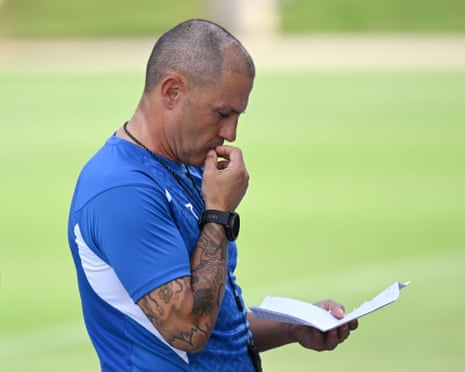
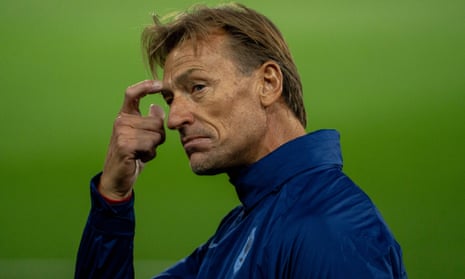
W hen the Qatari national team’s flight from Dublin touched down in Los Angeles at 2.12pm on 30 May there was applause on board the Boeing 777‑300ER. For the 26 players arriving in America, this represents the first time they have qualified for a World Cup . For the coach who has led them there it is the third, but this time is different; this time he will get a game.

“Football didn’t owe me anything,” says Julen Lopetegui in the dining room at the team hotel in Montecito, Santa Barbara, yet maybe he owed himself a moment like this. And, he says, if there were many reasons to answer the call from Doha 12 months ago, the simplest stood out most of all: this is the World Cup.

The first time Lopetegui went to a World Cup was 32 years ago, also in America. The last time was Russia in 2018. In 1994, he did not play a minute: Spain’s third-choice goalkeeper, he never expected to and, the way he tells it, he might not even have been able to if they had asked.

Eight years ago, he arrived as Spain’s head coach, unbeaten in more than two years in charge, but was sacked one day before the tournament started after agreeing to coach Real Madrid once it was over .

Now, here he is again, third time lucky. If lucky is the word. Getting a game is one thing, winning a game another. Qatar may be the weakest team at the tournament, their preparation hit by bombings and a lack of competition. Lopetegui, though, is determined to compete.

The game that secured Spain’s qualification in 1994 was against Denmark the previous November. “I was back-up goalkeeper to Zubi [Andoni Zubizarreta], but I suffered a back injury a couple of weeks before,” Lopetegui says, slipping into an impression of the coach, Javier Clemente, as he tells the story.

“I had two herniated discs. I rang Javi and said: ‘Javi, sorry, I’m not in a fit state to be called up because if I have to play I don’t think I can’. And he says, very Clemente: ‘Bah, don’t be daft. Like an old man’s going to get flu on a Monday.’ I shouldn’t worry; I wasn’t going to be needed. I said: ‘Yes, but if he does get flu I can’t come on.’ ‘Right, I’ll call that Santi kid from Celta’.”

“And then,” Lopetegui says, laughing, “what had to happen, happened. Clemente called up Santi Cañizares and, although the old man didn’t get flu, Zubi did get sent off, 10 minutes in, the only red in his [international] career. Santi comes on, plays very well, wins the right to be No 2, later No 1.

“Although I wasn’t playing well at Logroñés, struggling with the injury, Javi called me up as third-choice as a reward for that gesture. I couldn’t enjoy it much because I was living with a lot of pain, but I did what I could, knowing I wasn’t going to play and supporting everyone, contributing my bit.”

Lopetegui is one of three coaches at the World Cup, along with Hong Myung-bo and Ronald Koeman, who went to USA 94 as players and the only coach who used to be a goalkeeper. He finds it difficult to list any goalkeeping coaches: “Nuno [Espírito Santo], [Dino] Zoff, [Walter] Zenga, [Ricardo] La Volpe …”

Which is when he cracks up and says: “But if you’re a sub goalkeeper you watch most games from next to the manager.”

Not just any manager either: after USA 94 Lopetegui joined Barcelona, where he was also a backup, occupying a place on the bench near Johan Cruyff and Cruyff, he says, was unique, even if “there was no point asking Johan how to defend”.

Cruyff awakened a curiosity in his players, Lopetegui says. “There’s a photo from the Super Cup final, one of the few games I played, and nine of that starting XI became coaches.”

There were other elements too: a Spanish footballing culture and coaching structure that emphasises the collective and the Basque milieu that led him, Mikel Arteta, Xabi Alonso and Andoni Iraola to emerge from the same, tiny province. The son of a champion stone-lifter, there was his own family’s sporting heritage, too .

All of which took Lopetegui into coaching and the biggest honour of all: leading Spain into a World Cup. But then, at dawn and with less than a day to go, that was taken from him in one of the most shocking stories the competition has produced . Sacked by the since disgraced Spanish federation president, Luis Rubiales, Lopetegui flew back to Madrid alone, leaving behind the team he had built, his dream shattered. In his absence, Spain collapsed . “It was the saddest day of my life,” Lopetegui said.

Now, via Real Madrid, Sevilla, Wolves and West Ham, here he is. Back at a World Cup.

The mind is inevitably drawn to Russia, to what might have been, towards some kind of nostalgia. “Nostalgia?” Lopetegui says. “No. There’s no time for that. But you think about it. I’ve lived many wonderful experiences, but, yes, that one too.

“I haven’t stopped working since, you don’t look back, and that experience gives you a thicker skin. You learn from them, too. But if you asked me: ‘Would you do the same again?’ One hundred per cent. Why? Because we always took what we thought were the right decisions from a position of deep respect for our responsibilities.”

An opportunity is returned at last. It is not the same, but it is something. “We came for two main reasons: to take on a huge challenge no one had done [qualifying for the World Cup, Qatar were in automatically as hosts in 2022] and to test ourselves in a very different context,” Lopetegui says. “And, of course, there was that feeling, the hope of being at a World Cup, which we could have had with another national team.

“We could have gone out straight away against Iran, the Brazil of [the region], but we won 1-0, which gave us time for Emirates [UAE] and Oman. We had to see what we could do, not what we wanted to do.

“You’re used to different players, intensity, qualities. That was an important shock for us when we started. Qatar is a country of 300,000 people; maybe 10,000 play. Against us, the Emirates had maybe one starter who was from the Emirates: the rest were Brazilians, Portuguese, Poles … we beat them. You have to improve quality, but maintain that essence.

“The biggest difference we found was in the level of competitiveness, the pace, the games they’re playing. We’re maybe the only national team [here] with lots of players who have only played four, five times this year. Our league has a lot of foreigners so there are 19, 20, 21-year-old players not getting the opportunity. The goalkeepers are all Qatari so often it’s as little as two outfield players.”

In March, two planned friendlies were cancelled when Iran bombed Qatar. “Those games would have been useful, especially to define our gameplans,” Lopetegui says. “We had to make do with sessions among ourselves and there were three weeks when players couldn’t train at all because they weren’t allowed to leave home. The physical preparation wasn’t ideal.

“It was unpleasant, unlike anything I have ever experienced. You’re waiting on the alerts, hanging on your phone. You get a message saying don’t leave home, another when the risk has dropped. Stay in safe areas, indoors, away from glass.

“Most of the bombs fell where the US bases are so you felt more or less safe away from there, but your family is saying: ‘Come back.’ First, you can’t: for 10, 15 days the airspace was shut. Then I didn’t think it was right.

“When the airspace opened and my wife went back, I stayed. I had a responsibility to be there. It’s not being a hero or anything; it’s that I felt that was our duty, what I had to do.”

Through it all, Lopetegui had a team to prepare. This is unlike anything he has experienced and it is enriching, he says, making a better coach of him. “One of the things that most concerned us was finding a message that reflected our reality without losing that excitement.

“The first part of the process is emotional, the second is footballing. Find a structure to extenuate our qualities and hide our defects. We need a plan for three games without getting frustrated.

“We know that when the ball [at the draw] comes out with Qatar in, the other teams are happy. That shouldn’t annoy us; we should know. They have to beat us.

“We have to construct the best competitive scenario. We have to find a balance. We can’t let a player’s head drop – we still have ambition, still have excitement – but nor can we think we’re something we’re not.

“All this has been an incredible experience, tremendously constructive, a reset. It’s been a period of personal introspection and that’s been a powerful process: a lesson in humility, in accepting what I can do and what I can’t do.

“When you go to a World Cup, you can think: ‘Bloody hell, this is a success.’ And it is a success in capital letters, but you can’t just cling on to that. You can’t think: ‘It’s done.’ No. Not likely. That’s a mistake. So now we have to ‘sharpen’ our ‘lance’ and compete.

“Qatar celebrated being here as something unique and it is. But as José Mota[’s famous comedy sketch] goes: We can go, but going just for the sake of going is stupid. We’re going to the World Cup to compete. We’ve earned the right to try.”

Here in Georgia our festivals are full, but our poets are in prison – and now we feel abandoned by Europe | Archil Kikodze | The Guardian

Keyword – Opinion
Trefwoorden – Georgia, European Union, Europe, Freedom of speech, World news, Poetry, Books, Culture
Title – Here in Georgia our festivals are full, but our poets are in prison – and now we feel abandoned by Europe | Archil Kikodze | The Guardian
Author – https://www.theguardian.com/profile/archil-kikodze
Link – Here in Georgia our festivals are full, but our poets are in prison – and now we feel abandoned by Europe | Archil Kikodze | The Guardian
Publish date – 2026-06-12T04:00:34.000Z
Category – Opinion
URL – https://www.theguardian.com/commentisfree/2026/jun/12/georgia-festivals-poets-prison-europe-cultural

‘T hey want us to stop seeing each other, to lose contact, to feel alone,” the Icelandic writer Sjón told me. By “they”, he meant the dark forces rising across the world: populists, fascists, fundamentalists.

That was in September 2025, at the Tbilisi international festival of literature , attended by more people than ever before. The halls were full, and I think everyone present felt grateful to the foreign guests for coming – in defiance of “them.”

I don’t think coming to Tbilisi is an act of great heroism – yet. But already I have countless examples of people no longer coming – people who hold this city and this country dear, people who understand the context, who don’t need things explained to them. Their absence gives me a completely new and unfamiliar feeling of abandonment.

Europeans who put down roots here over decades are leaving Tbilisi. Most of them came in the 1990s on humanitarian missions. My father jokingly called them “cultural refugees”. They fell in love with this place and stayed here for ever. But nothing lasts for ever, and their departure feels like an alarm bell to me.

Our young people are leaving, too. Quietly, without fuss. You think someone is still here because they remain active on social media, and then it turns out they are already trying to settle in Lisbon, Dublin or Berlin.

There are too few of us to create communities and diasporas abroad. We will simply dissolve, scatter across the world, and disappear. Or rather, the part of us that loves thinking and is incapable of flattery will disappear.

For those of us who remain here, literary festivals and similar cultural events are places where it is possible to breathe freely. You see like-minded people and tell them how glad you are to meet them somewhere other than one of the protests that have continued since the government called a halt to Georgia’s EU membership negotiations. The festival doors are open to everyone, but regime conformists have no need to meet foreign or Georgian authors. They already know everything.

There was an empty chair for poet Zviad Ratiani at the book festival. Two months earlier, he had effectively forced his own arrest by repeating the act of another political prisoner, the nonconformist journalist Mzia Amaghlobeli , who slapped a police officer.

Ratiani believed his action would change something. The last time I saw him was in court. He stood throughout the hearing, rolling cigarettes in his hands. Even his refusal to sit in the defendant’s chair was symbolic.

Ratiani is in prison now. Yet I often see him in the city streets, regularly mistaking passersby for him.

A t the annual Tbilisi film festival in December, the name most often heard from the stage was that of another prisoner of the regime, actor Andro Chichinadz. Every speaker mentioned Chichinadze, transformed from a charming and talented young man into a hero and a symbol of resistance.

I watched every film, even Ukrainian director Sergei Loznitsa’s Two Prosecutors , about Stalinist repression from a new perspective. Following Russia’s example , the cult of Joseph Stalin has been brought out of mothballs here in Georgia, and to my astonishment it is alive. Stalin’s resurrection coincides with the rebirth of the most absurd ideas of Georgian messianism. Unknown professors and pseudoscientists have begun speaking about the uniqueness of Georgian civilisation.

The festival opened with the Italian biopic Duse . I asked the person beside me why such a boring work was chosen as the opening film, and he whispered back that outside, in the cinema foyer, there was a buffet and several bottles of wine gifted to the festival by the Italian embassy.

Everything became clear.

The Tbilisi international film festival was always poor, but this one was simply destitute.

Despite its poverty, the festival always had interesting guests who were happy to come here. And we eagerly awaited meeting them, attending their masterclasses and public lectures.

This time there was one foreign guest, the actor who played Benito Mussolini in the film. I missed the 10-minute scene featuring Mussolini because I fell asleep, but woke up after the screening to see the Il Duce actor on stage – with his thick neck and square jaw – saying that Tbilisi was a beautiful city. Why Mussolini, of all people? Perhaps the actor was simply in Tbilisi as a tourist, and his visit coincided with the festival.

T he most emotional audience at the film festival was the one at the screening of Richard Linklater’s Nouvelle Vague . Nobody wanted to go home afterwards; strangers hugged, smoked together. This joy and excitement felt very real.

“We are part of this, we always were, and they want to separate us from it,” a woman from my generation, whom I know from the protest rallies, told me.

By “this”, she meant Europe.

The film touched me deeply, too, taking me back to the day my young parents came home after seeing Jean-Luc Godard’s masterpiece Breathless .

In my Soviet childhood, everything reached us late, and I vividly remember my parents watching Breathless 20 years after its release and being overwhelmed by it.

In Linklater’s nostalgic film, the young Godard and his friends are shooting Breathless. It is a tribute to the past, made with great tact and love – to people who in the distant 1960s created a masterpiece and laid the foundation for something new and real, perhaps for that very Europe we admire so much, the Europe we aspire to, the Europe each of us imagines differently; a Europe that has already become a myth, and now even the road toward that myth is being closed to us. We are forbidden from approaching it, and we grow angry, sometimes cry, sometimes fall into complete helplessness.

A mong like-minded people, you believe everything will be fine, that the efforts of so many good people cannot possibly end in defeat. Yet, still, the tragic feeling of abandonment does not leave me. It feels as though we have returned to those old days when European films reached us, but their creators never did.

Above the hall full of nonconformists hovered the spectre of isolation. The film festival ended, but the street protests continued, and so does our life in a country where laws designed to oppress and constrict us are being adopted at accelerated speed.

We have neither money nor brute force nor, thank God, weapons. They are not afraid of us, but we greatly irritate the government and those who have chosen the path of conformism – as well as others who possess the skills necessary for life in an empire but not in a free society. Such people have begun calling themselves “traditionalists”. They label the pro-European part of the population “liberals”, regardless of political views, and have learned to pronounce the word with particular hatred.

Traditionalists are driven by spite towards liberals. If liberals are noticed caring for stray dogs, traditionalists consider it their duty to treat stray dogs with cruelty.

Tbilisi is becoming a difficult and depressing city to live in.

I walk through the streets of my native city and, once again, I think I see the imprisoned poet and his carrot-coloured jacket.

E very April, I spend several weeks guiding European birdwatchers, and the work never tires me – I enjoy it. But this year, I had only one group, from the Netherlands, in May. No matter where my guests are from – the Netherlands, Belgium or Germany – at some point they will ask me why there are so many EU flags hanging in Georgian towns and villages.

I would usually answer that my country strives to join the EU, and that this is the will of the Georgian people.

Birdwatchers are pleasant people and they come prepared. They know everything about our birds in advance; they have even studied their calls. But most are surprised to hear that 80% of Georgia’s population wants EU membership.

And if the birdwatcher is a good person, that surprise is inevitably followed by discomfort. Especially after I tell them that people have stood in the streets for more than 500 days for European ideals, that many have lost their jobs because of their civic stance, that even more have been fined and beaten. Some protesters are in prison, showing rare resilience, committing acts of civic heroism, refusing pardons.

With my Dutch visitors, we travelled through different regions of Georgia, through various bird habitats, and the tour was a great success. Despite wars and countless disasters, birds continue their annual cycles: crossing borders they know nothing about, rebuilding nests, pairing up.

After five days on the road, none of my birdwatchers had asked the awkward question about EU flags. I do not have to give my prepared angry answer – that, yes, people here go to prison for the European idea. They have stopped asking this question because, in the cities and villages of Georgia, EU flags are now a rarity.

Archil Kikodze is a Georgian fiction writer, screenwriter, professional photographer and ecoguide

This article, published on the occasion of the Tbilisi Debates on Europe , 12 and 13 June 2026, was translated by Maia Gabuldani-Schneider. A longer version was published by VoxEurop.eu

Video of visually impaired Palestinian boy crying over broken glasses draws global attention | Gaza | The Guardian

Keyword – World news
Trefwoorden – Gaza, Palestine, Middle East and north Africa, Children’s health, World news
Title – Video of visually impaired Palestinian boy crying over broken glasses draws global attention | Gaza | The Guardian
Author – https://www.theguardian.com/profile/seham-tantesh,https://www.theguardian.com/profile/lorenzo-tondo
Link – Video of visually impaired Palestinian boy crying over broken glasses draws global attention | Gaza | The Guardian
Publish date – 2026-06-12T04:00:37.000Z
Category – News
URL – https://www.theguardian.com/world/2026/jun/12/video-visually-impaired-palestinian-boy-gaza-ayoub-junaid-crying-broken-glasses

A video of a seven-year-old Palestinian boy in Gaza who suffers from a severe visual impairment crying over his shattered glasses has drawn widespread attention across social and international media.

The footage of Ayoub Junaid has shone a light on the plight of the many visually impaired children in Gaza who, because of Israel’s blockade and the devastation caused by the war, have been unable to access eye examinations, corrective lenses or specialist ophthalmic surgery.

After the clip was viewed by tens of millions of people, Ayoub received a new pair of glasses. This good news, however, does not solve the underlying problem, as he urgently needs surgery.

Ayoub’s mother, Eman Junaid, 30, displaced in the Gaza City port area, tells the Guardian her son’s problem began when he was two.

“Ayoub suffers from very severe nearsightedness after having a fever illness,” she says. A doctor told Junaid that Ayoub’s vision would gradually improve as he got older, but the opposite happened – the prescription he required increased and the lenses he now needs are not available in Gaza.

“We were preparing to travel for treatment, but the war started and everything stopped,” she adds.

Ayoub rarely leaves his tent, Junaid says. When he wants to play with his siblings or other children, he clings tightly to his glasses and moves with extreme caution. He does not run, jump or move freely. The doctors warned the family not to let him engage in strenuous activities because any fall or blow could cause further damage to his retinas.

Ayoub used to ask his mother why he was different from other children. He often asks her: “Why don’t the other children wear glasses like me? Why can’t I move like them? Why can’t I go to school like them?”

“At the end of April, while walking with a family member along a road strewn with rubble, he fell and struck his face on the ground, breaking the glasses,” his mother says. “He burst into tears, rolled on the ground and desperately tried to piece them back together. For Ayoub, those glasses were everything. Even with them, he cannot see clearly and often has to hold objects just inches from his face. But without them, he can barely move around at all.”

His family says the time Ayoub spent without glasses was particularly distressing. For three or four days, he rarely left a corner of the tent and was unable to move around without assistance. When he tried to walk on his own, he would crouch close to the ground, bringing his eyes near the floor in an effort to make out his surroundings.

Relatives said they repeatedly tried to repair his glasses, but the damaged lenses could not be fixed.

“ The video I shared was filmed after we reached the tent,” his mother says. “In the street, he was crying even more and saying he wanted to fix his glasses because he could not see without them. After the video spread, donors helped us and we were able to get a new pair of glasses, but it is still not the correct prescription he needs.”

According to his family, Ayoub’s emotional state has shown signs of improvement. In recent days, he has appeared more willing to interact with visitors and those offering support. While the change remains modest, his family say it has brought them a sense of relief and hope.

Health officials in Gaza say the war has devastated eye care services, leaving thousands of visually impaired patients without treatment amid severe shortages of medical equipment and surgical supplies.

Hospitals are lacking key items including surgical microscopes and phaco machines. Officials say more than 2,800 patients are currently waiting for cataract surgery alone, while the total backlog for eye procedures, including corneal transplants, glaucoma operations and reconstructive surgery, exceeds 4,000 cases.

In addition to this, Israeli bombardment around medical facilities has forced the temporary shutdown of Gaza City’s Government Eye Hospital, the only public eye care centre in the territory.

“The current situation clearly shows a shortage in all medical consumables and surgical tools,” says Dr Hussam Dawoud, a senior consultant in ophthalmology and eye surgery and the director of the hospital. “Currently, we are providing services at around 60% of what we used to offer before the war. The main reason is that Israel is preventing the entry of medical equipment and surgical instruments.”

Doctors have also reported a sharp rise in severe corneal infections, which they attribute to overcrowded living conditions, poor sanitation and limited access to medication, with some patients suffering permanent vision loss.

Their situation is part of a broader humanitarian crisis affecting Gaza’s children. There are more child amputees per inhabitant in the territory than anywhere else in the world. Tens of thousands of young people who are sick or injured remain in need of urgent medical treatment, while many who require specialised care outside the territory have yet to be evacuated.

According to the latest figures from health officials in Gaza, an estimated 4,000 children are in urgent need of medical evacuation.

“A child who breaks their glasses may remain effectively blind for a long time because replacement glasses are impossible to find,” says Dr Irdi Memaj, a surgeon working in Gaza with the humanitarian organisation Emergency. “Around 40% of the patients treated at our clinic in al-Qarara are children under the age of 14. One of the most recent concerns has been infestations of parasites and rats , with numerous reports of children being bitten by rodents while they sleep.”

Reached by the Guardian, the Israeli Defense Ministry’s Coordinator of Government Activities in the Territories, rejected accusations over restrictions on Gaza. “Israel is working to allow and facilitate the entry of all required medical equipment and continues to facilitate the entry into Gaza of trucks carrying medical supplies without any quantitative restrictions,” it said.

Nigerian man unable to claim Italian lottery win gains residency permit | Italy | The Guardian

Keyword – World news
Trefwoorden – Italy, World news, Europe, Migration
Title – Nigerian man unable to claim Italian lottery win gains residency permit | Italy | The Guardian
Author – https://www.theguardian.com/profile/angela-giuffrida
Link – Nigerian man unable to claim Italian lottery win gains residency permit | Italy | The Guardian
Publish date – 2026-06-12T06:59:40.000Z
Category – News
URL – https://www.theguardian.com/world/2026/jun/12/nigerian-man-unable-to-claim-italian-lottery-win-gains-residency-permit

A Nigerian man who won €500,000 in an Italian lottery – but was barred from collecting his windfall because he was undocumented – said the hardship of his more than decade-long immigration journey had been eased after he was finally granted a residency permit.

“I’ve been praying for this moment ever since I arrived in Italy ,” said Imagbe Ehizomwengie, 36. “It’s a huge relief. You might think it’s incredible, but receiving the permit means more to me than winning the money. I want to work and contribute to society.”

Ehizomwengie bought the €5 Gratta e Vinci – Italy’s official instant scratchcard lottery – last October with money scraped together from selling handkerchiefs and begging outside a supermarket in Turin.

He cried tears of joy and relief when he discovered he had hit the jackpot, only for the win to be overshadowed by his bureaucratic quagmire.

Speaking to the Guardian, Ehizomwengie said he had arrived in Italy in 2016 after a treacherous journey across the Mediterranean from Libya, where he had been held captive for two years and was only released after a ransom was paid.

His request for a “special protection” permit – which until being restricted by Giorgia Meloni’s far-right government in 2023 granted residency to asylum seekers who did not qualify as refugees but faced serious risks to their life if sent home – was rejected.

Unable to work, Ehizomwengie got by as a street seller, occasionally chancing his luck with scratchcards in the hope of reversing his fortunes.

“When I lived in Nigeria, I was always praying for opportunities, but they never came,” he said. “But you also need to take risks in life, and I kept believing that one day I might even become a millionaire.”

He added: “I stopped buying the scratchcards for years but on the day I won … I truly believe God was watching over me.”

But then began his quest to claim his winnings. Without a residency permit, Ehizomwengie could not open a bank account to receive the money. In turn, without the money he could not demonstrate the financial independence needed to support his renewed appeal for a residency permit.

Scrambling for a solution, after being taken advantage of by a Nigerian friend to whom he had entrusted the money, the friend agreed to transfer about half of the post-tax winnings to Ehizomwengie’s cousin’s account. The funds were then used to buy Mama Africa, a shop selling food produce from Africa in the seaside town of Falconara in the Marche region of Italy.

In the meantime, Ehizomwengie’s lawyer, Andrea Palazzeschi, pursued his case through a court in Ancona, which this week ordered that a residence permit be issued, taking into consideration Ehizomwengie’s competent Italian, his work at Mama Africa and, pertinently, his new financial independence.

Palazzeschi said: “But it’s important to stress that Imagbe didn’t get the residence permit because he won the money, he got it because he proved to be a good candidate.”

Gratta e Vinci scratchcards are hugely popular in Italy. In 2019, an unemployed fisher in Puglia found a winning €100,000 scratchcard in a rubbish bin and was able to cash it in, while in 2022 a young man in northern Italy won €500,000 and fainted on the spot due to the shock.

Needless to say, Ehizomwengie has attracted much attention in Falconara, where he said he would organise a party to which everyone will be invited. “But only to celebrate receiving my permit,” he said. “I want to work and intend to keep my feet firmly on the ground. I just want to live a normal life.”

Left, right and centre – I see all strands of the Labour tribe pulling together in Makerfield. This is bigger than Burnham | Polly Toynbee | The Guardian

Keyword – Opinion
Trefwoorden – Makerfield byelection, Andy Burnham, Keir Starmer, Labour, Labour party leadership, Reform UK, Politics, UK news
Title – Left, right and centre – I see all strands of the Labour tribe pulling together in Makerfield. This is bigger than Burnham | Polly Toynbee | The Guardian
Author – https://www.theguardian.com/profile/pollytoynbee
Link – Left, right and centre – I see all strands of the Labour tribe pulling together in Makerfield. This is bigger than Burnham | Polly Toynbee | The Guardian
Publish date – 2026-06-12T07:00:37.000Z
Category – Opinion
URL – https://www.theguardian.com/commentisfree/2026/jun/12/andy-burnham-reform-makerfield-labour-party-wipeout

T hey flock to Makerfield from everywhere: canvassers and camera crews, MPs, peers and volunteers, from Swansea to Gateshead, 700 a day to help the Labour campaign. Every door has already been knocked four times, boasts the Burnham team.

How does it feel for voters to be the most important constituency in living memory ? Most are quite pleased, bar the usual “we only see them round here when they want our votes”. But with a chance to choose a prime minister , never was a vote so valuable.

Beyond Britain’s fate, the world sees in Makerfield a signpost on far-right populism: here, reporters have arrived from Italy, Germany, Sweden and five different Japanese TV news channels, among others. Expecting great rallies and flag-waving marches, they are crestfallen at nothing much to film beyond sparse signs on stakes in front gardens . This is a local, shoe-leather, person-to-person campaign by all parties. Andy Burnham himself leaves a personal video message for anyone who’s out, recorded on their front door security camera to show he really was there, with no grandstanding as he dashes around undecideds across the small towns here.

What a high-risk gamble to trigger an election here , rolling the dice in a constituency where every council ward voted Reform in May , making up part of Wigan, where 64% voted Brexit . Against that, Wigan voted 66% for Burnham as mayor , and he is the only popular senior politician in the country, the only one with a net favourable rating . To lose here would be an unimaginable calamity, everyone arriving at his HQ knows, clutching teas between canvass rounds. If not here, with this ultra-local man who offers them a rare chance to elect their own prime minister, then every one of Labour’s 402 MPs is in peril. Would the party survive?

The prospect of that cataclysmic wipeout has gathered a rarely united Labour campaign. Squeezed in a Makerfield taxi together was Tulip Siddiq – an ardent Keir Starmer loyalist, from his next-door constituency, who tells me that if Burnham wins he should make no leadership challenge – squashed up beside Miatta Fahnbulleh, the first minister to resign after the May elections because she and her constituents had “ lost faith and confidence in the prime minister ” for lack of clarity about “values” and “purpose”. How odd this campaign is, when Labour canvassers encountering “I hate Keir Starmer” (as voters often say, however unjustly) reply, in effect: “Vote for Andy to get rid of him.” The chief whip, Jonathan Reynolds, has been here , but who is he whipping to say what?

Look, there is John McDonnell, the Corbynite ex-shadow chancellor, pausing between canvasses to tell me what Burnham could do as PM: take control of water companies . No, Burnham need not be constrained by his pledge to stick to the manifesto, as there are wider interpretations available, he says. Torsten Bell, the former head of the radical Resolution Foundation, now Treasury minister, has a canvassing style that sees him bounding like a gazelle from door to door: a husband and wife give him a beaming thumbs up. He gets the best door-knock, when elderly Shirley says she has never voted before: “I’m not political.” But she will vote for Burnham. “Farage is like Hitler and Trump!” she says.

Someone could set up a profitable stall here, selling voxpops to any passing journo. When I worked in the BBC newsroom, it was easy: grab one of each, preferably in a picturesque market with a mouthy stall holder, and conclude “only time will tell”. I can take my pick here, but be none the wiser on the result.

There was the Reform voter whose home bears the sign, “This house is protected by the Good Lord and a pitbull”. He hasn’t voted Labour for years: “Andy will be gone off down to Westminster, won’t he?” Well, yes, that’s what you’re electing an MP to do. Or there was Susan, definitely Labour. “No one I know votes Reform,” she said, though there were Reform signs in gardens down her street. “I don’t speak to them.” The divide, she says, runs deep and many don’t like to say what they’re voting.

Every MP is under orders to be here at least twice. Murmurs condemn a handful of Starmer loyalist ministers not seen here (yet). I never got a reply from the office of one as to whether they had been here. You hear some MPs doubting yet another prime minister is the answer to Britain’s impossible spending problems, alarmed at some Burnham promises – though he denies a report that he would pay billions to the Waspi women’s pensions campaign.

But the big picture here is of right and left, loyalists and rebels, Burnham fans and not so much, knowing that their own, the party’s and the country’s fate depends on victory here. Even those doubting him as PM have no choice but to pray that his unique popularity, warmth and principled clarity will triumph against Faragism. His effortlessly strong and graceful Question Time performance encouraged many, and the misogynist posts of the Reform candidate boosted women’s support: the FT reports him with a 17% lead among women , only 2% ahead with men.

Don’t jinx the result by suggesting Labour is ahead, beg Burnham’s people, poring over meagre polls, less reliable in a single constituency. But the analyst Peter Kellner, YouGov founder, expects a reasonable Burnham win .

A loss would heap fury on Burnham for risking all on a needless contest. A win could save Labour. In the tooth-rattling anxiety of the next week, the prospect of a gloating triumph for Nigel Farage brings Labour people of all shades pouring in, begging Makerfield to “vote Andy for us”.

Polly Toynbee is a Guardian columnist

The Guardian view on John Healey: the defence secretary’s resignation undermines Labour as well as Keir Starmer | Editorial | The Guardian

Keyword – Opinion
Trefwoorden – John Healey, Keir Starmer, Labour, Defence policy, Ministry of Defence, Nato, Military
Title – The Guardian view on John Healey: the defence secretary’s resignation undermines Labour as well as Keir Starmer | Editorial | The Guardian
Author – https://www.theguardian.com/profile/editorial
Link – The Guardian view on John Healey: the defence secretary’s resignation undermines Labour as well as Keir Starmer | Editorial | The Guardian
Publish date – 2026-06-11T18:04:30.000Z
Category – Opinion
URL – https://www.theguardian.com/commentisfree/2026/jun/11/the-guardian-view-on-john-healey-the-defence-secretarys-resignation-undermines-labour-as-well-as-keir-starmer

J ohn Healey’s resignation as defence secretary on Thursday morning was genuinely shocking. Mr Healey is not just a veteran minister, but a Labour loyalist who previously served both Tony Blair and Jeremy Corbyn. In an interview in March, he observed that he didn’t toil to rebuild confidence in Labour “just to see that wasted with internal chatter and commentary”.

Now he has maximised external chatter with a withering denunciation of the prime minister and chancellor. In his resignation letter , Mr Healey said that Sir Keir Starmer was “unable” and the Treasury “unwilling” to provide the budget needed to protect the UK – forcing him to make decisions that increased the risk to personnel and could make the country less safe. Having spent years rebuilding Labour’s credibility on national security, he appears to be demolishing it, weeks before Sir Keir faces a Nato summit. Doubtless he feels the damage was done by the repeated failure to publish the defence investment plan (DIP) – originally due last autumn – or match the armed forces’ expectations.

Though the defence secretary’s decision was startling, its security and political contexts were both well rehearsed. Russian menace, Chinese might, Middle Eastern chaos and the disintegration of relations with the US have forced European countries to bolster defence investment. The UK committed to increase spending to 3.5% of GDP by 2035, in line with a Nato target. The DIP was supposed to lay out the detail.

The government postponed difficult decisions in last year’s cross-government spending review. It didn’t help when defence officials then came back and demanded billions more in funding. Rachel Reeves eventually agreed to more modest additional spending, funded by cuts to other departments. The chancellor’s self-imposed fiscal restraints were partly responsible for a bitter “guns v benefits” row .

Mr Healey quit rather than accept the finalised plan. He believes spending must hit 3% by 2030 to meet the 2035 target – and revealed that Sir Keir planned to raise it to just 2.68% by 2030. Debate will continue over whether he has been captured by the defence establishment, or is simply willing to face hard truths; and whether the armed forces have correctly identified the best areas and strategy for investing whatever money they are given, or are still in thrall to an anachronistic transatlanticism .

The politics, however, are clear. International affairs and security were rare areas of relative credibility for Sir Keir. No longer. The core of Mr Healey’s attack is familiar from the resignation letters of other ministers and the private complaints of many more: the prime minister is too weak and indecisive to make clear plans or push them through. Colleagues have concluded that he cannot change. Mr Healey is said to have privately urged the prime minister to consider his future after May’s elections. (While he has previously been touted as a potential caretaker, allies insist he is not interested in the leadership.) Now he has gone public.

A prime minister who appears destined for his own exit has little to offer colleagues, who are inclined to look to their political future or their legacy. Principle appears to have driven Mr Healey’s departure, but such considerations surely factored in – as they may have in the refusal of the chancellor and others to accept cuts elsewhere. A successor to Sir Keir, however, would face their own challenge. Mr Healey has presented a willingness to meet the budgetary demands of the defence establishment as the bar for Labour’s credibility on national security.

Do you have an opinion on the issues raised in this article? If you would like to submit a response of up to 300 words by email to be considered for publication in our letters section, please click here .

The best podcasts of 2026 so far | Podcasts | The Guardian

Keyword – Television & radio
Trefwoorden – Podcasts, Television & radio, Culture, Podcasting, Radio
Title – The best podcasts of 2026 so far | Podcasts | The Guardian
Author – Alexi Duggins
Link – The best podcasts of 2026 so far | Podcasts | The Guardian
Publish date – 2026-06-12T09:00:40.000Z
Category – Culture
URL – https://www.theguardian.com/tv-and-radio/ng-interactive/2026/jun/12/the-best-podcasts-of-2026-so-far

The Harry Hill Show

“What’s going on?” Adam Hills is just one confused guest who, despite having no idea what is happening, is still having a ball in comedy great Harry Hill’s daft new series. Who else would bring out a puppet with a giant tongue that licks guests? Or a viral star called Simon from Morley’s department store in Bexleyheath? Not to mention Sarah the AI bot who likes to give celebrity profiles and dispense chocolate bars. The show is so surreal that it is even better in its video format – and rare is the podcast we say that about.

Off Duty

This true-crime Guardian series drops one bombshell after another as it tells the story of murdered police officer Clifton Lewis and the man who was convicted. In 2011, Lewis was moonlighting as a mini-mart security guard when two men walked in and shot him. The resulting trial saw a man named Alex Villa jailed – despite always denying his guilt. Investigative journalist Melissa Segura hasn’t been able to stop thinking about the case since. In this seven-parter, she looks at the sweeping 12-year legal odyssey that follows, as Villa fights to clear his name, laying bare gaping cracks in the criminal legal system. It’s a compelling listen, delving into misconduct allegations, confessions made and recanted, and what she calls “a system determined to keep [Villa] there at all costs”.

Sisters of Defiance

From Radio 4 Woman’s Hour host Anita Rani, this is a spirited and fascinating new interview series. Rani loves a rebellious woman – just look at last year’s wonderful Sky documentary, Sisters of Disruption, where she celebrated the Brontë sisters for being punks. In each episode, she sits down for deep chats with those who have broken boundaries and expectations, including Bridgerton star Adjoa Andoh, comedian Fatiha El-Ghorri and feminist icon Gisèle Pelicot. Her opening episode with Meera Syal sets the bar high, with a flowing conversation that touches on empty-nest homes, divorce in south Asian communities and, of course, the triumph of Syal’s groundbreaking sitcom Goodness Gracious Me.

A History of the United States in 100 Objects

This winning North American offshoot of A History of the World in 100 Objects, from BBC Studios and SiriusXM, sees Roman Mars of feted design pod 99% Invisible take a look at the minutiae of the modern world. Everything from coins to once-forgotten civil war documents have their rich backstories explored, as a way to tell the tale of the US’s shames and triumphs. Historians such as Jill Lepore (also a Pulitzer-winning writer) give the series historical oomph, while the Avengers-esque slate of podcasters set to appear – among them Missing Richard Simmons’s Dan Taberski and Latif Nasser of Radiolab – makes it one of the year’s most star-stuffed pods.

The Book Club

What happens when an unlikely intergenerational pair team up to make a book club podcast? This lovely, open-minded series from The Rest is History co-host Dominic Sandbrook and his TRIH producer Tabitha Syrett, where brand new novels are just as welcome as the classics. So far they’ve had enlightening chats about everything from Wuthering Heights to A Court of Thorns and Roses, Mrs Dalloway and Normal People. The kind of club bookworms dream of being part of.

Love and Radio: Blood Memory

This intimate 10-episode series introduces us to Michael Thompson – a convicted murderer and one-time leader of the Aryan Brotherhood who turned his back on the white supremacist gang – and it’s a deeply engrossing listen. Is Thompson a misunderstood soul who only chose violence out of necessity and is now fully reformed? Or a pathological liar and manipulator? Built on years of interviews, this often feels like sitting on a psychiatrist’s couch with a man of many contrasts, but it also doubles up as a fascinating study of a lifetime spent in prison.

Foundling

Reporter Lucy Greenwell has never been able to shake a childhood memory of a newborn baby being found on a country lane near where she grew up in Suffolk. Decades later, she tracks down that baby – to find adopted adult Jess – and in doing so opens up an emotionally wrought world of secrets, lies and abandonments. This is a series full of twists, turns and jaw-dropping reveals, but its real success is its tact when exploring such tricky, sensitive and at times traumatic subject matter.

Serial: The Idiot

New York Times columnist M Gessen had always suspected their braggadocious, ostentatious cousin, Allen, was something of a fool – or, in their words, “a pompous ass”. But when Allen is charged with ordering a hit on his ex-wife, Gessen plunges deeper into his story to discover a dark world of abduction and deceit. While technically a true-crime series, this avoids the usual trappings and cliches. Instead, it takes a more subtle and introspective approach when investigating this troubling history – and the knotty dynamics that come with their family being connected to it.

Get Birding With Sean Bean

You wouldn’t think that the most adorable thing about a birdwatching podcast would be the guy who had his head chopped off in Game of Thrones. But Sean Bean is an absolute delight as the host here, as he sweetly enthuses about the wildlife garden he has created at home and offers up lyrical descriptions of the glory of nature. It’s full of expert and celebrity interviews whose descriptions feel like borderline comedy – Johnny Vaughan reminisces about youthful ornithology, Will Young on birdsong – but Bean’s warmth turns them into something utterly lovable. A real, soothing delight.

MF Doom: Long Island to Leeds

When the hugely influential hip-hop artist MF Doom – described here as “your favourite rapper’s favourite rapper” – died in 2020, it came as a shock to many that he passed away in a Leeds hospital. Hip-hop head Adam Batty, along with DJ and broadcaster Afrodeutsche, explore how the permanently masked New York artist, who changed the world of hip-hop, wound up living his final years in West Yorkshire. With numerous guests featured along the way – such as super-fan Romesh Ranganathan – this is as much a passionate ode to a pioneering artist and his legacy as it is a curious quest for unearthing his life’s unique trajectory.

Brad Pitt in the frame as older men embrace ‘hot professor’ glasses | Accessories | The Guardian

Keyword – Fashion
Trefwoorden – Accessories, Men’s fashion, Fashion, Life and style, Brad Pitt, Film, Daniel Craig, Ian Wright, Timothée Chalamet
Title – Brad Pitt in the frame as older men embrace ‘hot professor’ glasses | Accessories | The Guardian
Author – https://www.theguardian.com/profile/laurencochrane
Link – Brad Pitt in the frame as older men embrace ‘hot professor’ glasses | Accessories | The Guardian
Publish date – 2026-06-12T13:44:31.000Z
Category – Lifestyle
URL – https://www.theguardian.com/fashion/2026/jun/12/brad-pitt-men-embrace-hot-professor-glasses

A heart-throb for more than 40 years, Brad Pitt is no doubt used to people looking at him. But this week, that gaze was distracted by an addition to his face – aviator-style glasses.

Worn to watch the tennis at Roland Garros and with a pink trenchcoat when out for dinner in Paris, these retro glassesare more typically worn by younger men. That’s changed recently – they’re now becoming central to a makeover for men entering their “late life” era, but who aren’t willing to submit to the fashion invisibility associated with ageing.

Gary Lineker, 65, wore glasses like this to appear on Louis Theroux this week. Ian Wright – a 62-year-old man with an impressive collection of glasses – wore bold aviator styles as a pundit for the first game of the World Cup. Daniel Craig is perhaps the early adopter. After appearing in the Loewe campaign in a pair of yellow-tinted glasses and jumper in 2024, the 58-year-old actor has doubled down on fashion-friendly specs. In January 2025, GQ called a pair he was wearing, similar to Pitt’s, “hot professor glasses” .

Johnny Davis, luxury director at Esquire, has noticed the trend. He says it’s a clever trick. “They’re not trying to disguise the fact that they’re of an age where they need to wear spectacles,” he argues. “They’re making them part of their look.”

For Pitt, they’re part of a wider shift. On last year’s press tour of F1 , the actor worked with Taylor McNeill , the same stylist who creates viral looks for Timothée Chalamet and Kendrick Lamar. Pitt – her oldest client by some distance at 62 – wore 90s silk shirts, crushed velvet and even tie dye. Style commentators online dubbed it “the reinvention of Brad Pitt”. Similarly, since the Loewe campaign, Craig has leaned into more kooky fashion choices such as a jacket with a skeleton on it from the Japanese brand Kapital, or a sweater with holes in it. Wright, meanwhile, who is often on the front row at Burberry shows and the face of Marks & Spencer, has a style that is fun but also attainable.

According to Esquire’s Davis, these glasses do a lot of heavy lifting. “They say: ‘I have taste. I pay attention. I know who I am.’ You can wear a fairly simple outfit – like Lineker’s dark tops – and the glasses provide the character.”

This is an idea that goes beyond celebrity. Jaki Baranski, a senior frame buyer at Specsavers, is familiar with shapes like the ones worn by Pitt. The retailer has a design called the Glover , popular with men in their 50s and upwards. She sees these glasses as part of a wider trend in how men look at fashion. “Men are taking a bit more time choosing a pair of frames from an aesthetic point of view,” she says. “It’s more in line with how someone selects a watch or trainers.”

Like these other accessories, glasses are a shortcut. “Not everyone feels comfortable wearing bright colours, fashion-forward tailoring or more extreme trends, but a pair of distinctive glasses is different,” says Davis. “They allow you to signal that you still care about style without feeling as though you’re trying too hard.”

While Pitt might have drafted in help from McNeill to reinvent his look, Baranski says a lot of men at this age are confident with their style. “They know who they are and what they like. These frames all work into that. It’s not like they are super understated, they talk to some sort of personal expression.”

Davis agrees, and says the symbolism of the glasses can be misconstrued. “People sometimes compare this sort of thing to the classic midlife-crisis Porsche, but I think it’s almost the opposite,” he says. “A sports car says: ‘Look at me.’ Interesting glasses say: ‘This is who I am.’”

How the Belfast stabbing was the spark to a fuse loaded with grievance and provocation | UK news | The Guardian

Keyword – UK news
Trefwoorden – UK news
Title – How the Belfast stabbing was the spark to a fuse loaded with grievance and provocation | UK news | The Guardian
Author – https://www.theguardian.com/profile/rorycarroll
Link – How the Belfast stabbing was the spark to a fuse loaded with grievance and provocation | UK news | The Guardian
Publish date – 2026-06-11T05:00:07.000Z
Category – News
URL – https://www.theguardian.com/uk-news/2026/jun/11/how-the-belfast-stabbing-was-the-spark-to-a-fuse-loaded-with-grievance-and-provocation

Within minutes of the footage going online – of a Black man stabbing a white man – there was a sense of inexorability to what came next in Northern Ireland.

The grievances, the social media platforms, the politicians’ doublespeak and the international cheerleaders all provided a fuse. On Monday night came the spark.

Those who saw the video will not easily forget it: an assailant on a north Belfast street stabbing and slashing his victim in the face and neck, shouting in Arabic. Residents intervened and halted the assault but the victim, Stephen Ogilvie, was seriously injured, including having lost an eye.

On Wednesday, Hadi Alodid, 30, a Sudanese refugee, appeared in Belfast magistrates court charged with attempted murder. The judicial system was fast, but the gutted homes of minority ethnic families showed that a warped form of vigilante justice was even faster.

“Who was in there?” a woman asked on Tuesday night, indicating a scorched, smouldering ruin on McMaster Street, off Newtownards Road, in east Belfast.

“A Romanian gypsy family in that one,” came the reply.

The woman nodded, as if it made sense that a family should be expelled for a crime committed by a stranger on the other side of the city and that hundreds of youths, many with masks, should be prowling streets filled with acrid smoke and the drone of police helicopters. To the rioters who burned homes and vehicles, including a Glider bus and a police car, it did, in fact, make perfect sense.

Their social media feeds, elected representatives and far-right agitators, such as Elon Musk and Tommy Robinson, assured them it was all connected: immigrants and refugees were taking houses, imposing alien customs and committing crimes while the police did nothing, thus requiring community action.

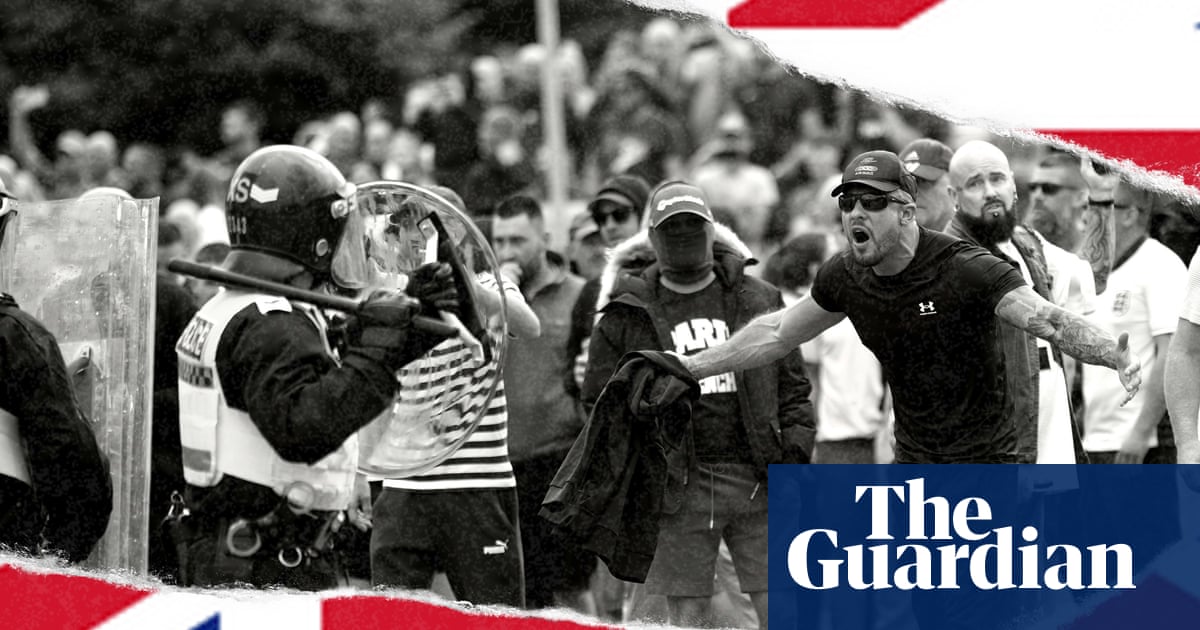
That worldview underpinned riots in Belfast in 2024 , a copycat to riots in England after the Southport attacks , and impelled the ethnic cleansing of Roma from Ballymena last year and patrols by vigilante groups who intimidate dark-skinned men.

Yet Northern Ireland’s crime rate fell last year by 3.3% from the previous 12 months and reached its lowest level since 1998 , with especially steep falls in violence and injury. Racist hate crime and racist incidents, in contrast, reached their highest level since records began in 2004.

Within hours of Monday night’s attack, social media platforms crackled with rage. “Enough is enough!” many posted. By 10am on Tuesday activists where sharing lists of assembly points and times. All businesses were to close at 5.30pm – “no excuses” – and from 7pm crowds were to close roads. Some posts urged peaceful action, others advised the wearing of dark clothes and a readiness to be arrested.

At midday, leaders of five main political parties issued a joint statement condemning the stabbing attack and urging restraint. “We call for calm and for space to allow justice to take its course.”

Other statements, however, used loaded language. Gavin Robinson, the leader of the Democratic Unionist party (DUP), called the attack “medieval”. Jim Allister, the leader of the Traditional Unionist Voice party, went further. “What is going to be done to stop this importation of an alien culture that seems to now include attempted beheading?”

From thousands of miles away, Musk and Robinson, who was in Moscow, chimed in with exhortations for mass protests.

By 4pm, steel shutters were coming down over African- and Arab-owned supermarkets, barber shops and gadget stores and their owners and staff were preparing to hunker at home. The Belfast Islamic Centre cancelled evening prayers and urged the congregation to stay indoors.

Crowds gathered at designated intersections from 6.30pm. Some remained peaceful and eventually dispersed. Others swelled and splintered into breakaway groups that attacked vehicles and homes owned or occupied by people with dark skin.

“Foreigners out!” some chanted. Others spraypainted “fuck Islam”, with crosshairs, on walls. By 10pm, smoke plumed over multiple locations: Oakley Street, Crumlin Road, Lendrick Street, McMaster Street, Newtownards Road. In places there was a carnival atmosphere, with people posing for selfies and drinking beer. One man hoisted up his young son for a better view of a burning house. “Get a duke at that,” he said. “Wow,” the boy replied.

Outside Belfast, mobs torched targets in Portadown, Dundonald and Newtownabbey. The fire service received 256 calls and attended 62 incidents.

Similar scenes have played out in England, but Northern Ireland’s history echoed through the mayhem. In 1969, mobs burned Catholic families from some of the same streets, setting a precedent. “It’s the same type of behaviour – driving out people who are the other,” said Peter Shirlow, the director of the Institute of Irish Studies at the University of Liverpool.

The Troubles provided the iconography of boys and men with dark clothing and covered faces posing as defenders of their communities, though now the enemy has changed. “The evidence we have collected on this is quite clear,” Shirlow said. ‘The majority of Catholics and Protestants agree that immigrants do not make a positive contribution to society and the economy.”

Elements of republicanism “monitor and suppress” xenophobic displays, but loyalists are fractured over the issue and some unionist leaders stoke the notion of cultural invasion, Shirlow said. “It is well within the definition of racism in terms of stereotyping and dehumanising ethnic minorities.”

Kashif Akram, a board member of the Belfast Islamic Centre, said some politicians sought scapegoats for Stormont’s failure to build enough houses. “The blame is directed at the most vulnerable: the immigrants.”

Patrick Corrigan, Amnesty International’s Northern Ireland programme director, said this was the region’s third consecutive summer of organised racist violence, with each outbreak more serious than the last. “This was racist violence on a shocking scale. It did not emerge in a vacuum.”

On Tuesday night, a teenage boy on Newtownards Road, inspecting the remains of the burned bus, looked perplexed when asked why his peers were rioting. “If they don’t do it, who will?”

Real Madrid confirm José Mourinho’s return as manager after 13 years away | Real Madrid | The Guardian

Keyword – Football
Trefwoorden – Real Madrid, La Liga, Football, Sport
Title – Real Madrid confirm José Mourinho’s return as manager after 13 years away | Real Madrid | The Guardian
Author – https://www.theguardian.com/profile/guardian-sport
Link – Real Madrid confirm José Mourinho’s return as manager after 13 years away | Real Madrid | The Guardian
Publish date – 2026-06-11T18:29:53.000Z
Category – Sport
URL – https://www.theguardian.com/football/2026/jun/11/real-madrid-confirm-jose-mourinho-manager

José Mourinho’s blockbuster return as Real Madrid manager has been confirmed. The 63-year-old, who was in the dugout at the Bernabéu from 2010 until 2013, joins the 15-times European champions from Benfica on a three-year contract.

Mourinho’s appointment comes after a torrid season at Real Madrid, with Xabi Alonso sacked in January amid player unrest. Álvaro Arbeloa came in as interim head coach, but failed to turn around the campaign as Real exited the Champions League to Bayern Munich at the quarter-final stage and Barcelona cantered to the La Liga title. Disharmony within the squad also continued, with Fede Valverde taken to hospital to have stitches after a confrontation with his teammate Aurélien Tchouaméni.

Florentino Pérez, who was re-elected as president last Sunday, made Mourinho his target and will hope the Portuguese can restore order to the dressing room and success on the pitch. Mourinho won La Liga in the 2011-12 season, along with the Copa del Rey in 2010-2011. He achieved phenomenal feats in the early part of his managerial career, winning the Champions League with Porto and Inter and three Premier League titles across two spells at Chelsea.

Mourinho returned to Benfica, where he had started his managerial career, last September and guided them to an unbeaten league season, but that was enough only for third place. He has also had recent spells in charge of Fenerbahce in Turkey and Roma in Italy. Madrid said he would officially start on 13 July, when pre-season training begins.

On Wednesday Benfica said they would receive €15m (£13m) in compensation for Mourinho from Madrid and that an agreement had been reached for Marco Silva to take over on a two-year deal with an option to extend for a season. Silva left Fulham last week after five years.