The net benefits of net zero: why there’s more to renewables than tackling the climate crisis | The Grid | The Guardian

Keyword – The Grid
Trefwoorden – The Grid
Title – The net benefits of net zero: why there’s more to renewables than tackling the climate crisis | The Grid | The Guardian
Author – https://www.theguardian.com/profile/rhymer-rigby
Link – The net benefits of net zero: why there’s more to renewables than tackling the climate crisis | The Grid | The Guardian
Publish date – 2026-03-23T16:20:02.000Z
Category – Labs
URL – https://www.theguardian.com/the-grid/2026/mar/23/the-benefits-of-net-zero-beyond-climate-change

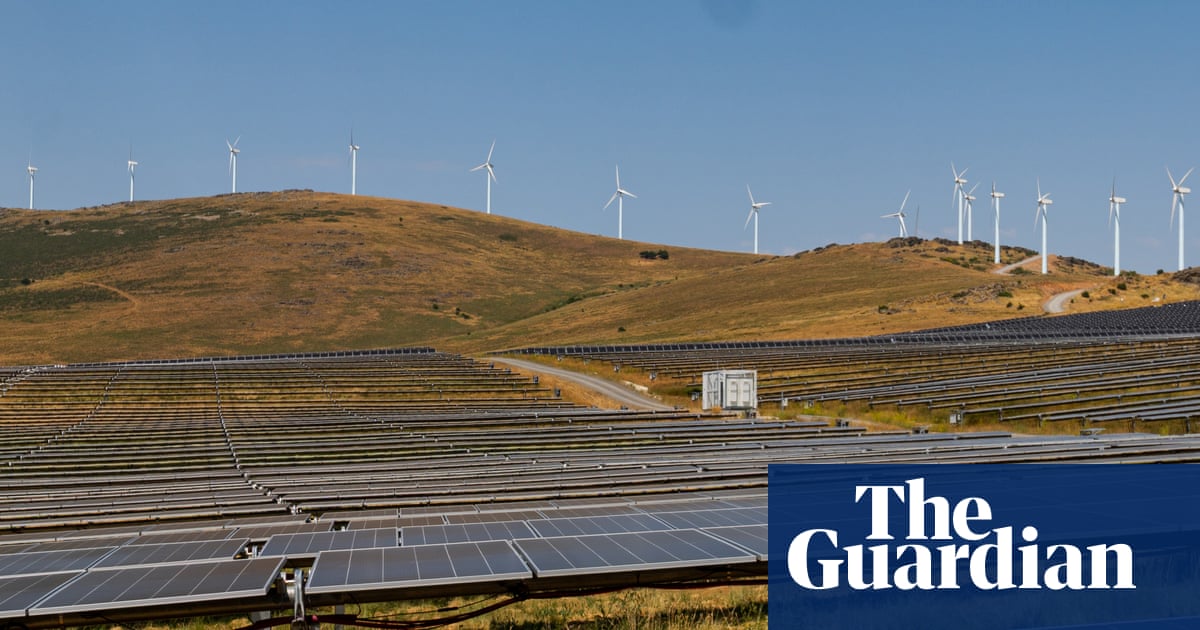
The environmental benefits of cleaner energy are well known. These range from mitigating climate change to eliminating pollution near generating sources. In the UK, decarbonising the electricity grid is already a big environmental success story. Greenhouse gas emissions attributable to electricity supply fell by more than 50% between 1990 and 2022, faster than any other source. Meanwhile, once widespread problems such as acid rain are a fading memory in many countries, especially in the west.

But there are myriad other benefits to having a clean energy network. Clean power generation and distribution are very much industries of the future and tend to deliver high value jobs. Better still, in countries like the UK and the US, these jobs are likely to be located outside the prosperous cities and are often in the areas that have been hit the hardest by industrial decline.

“The green economy, which is the second fastest growing sector globally, has the capacity to create well-paid jobs, revitalising communities across the country,” says James Alexander, CEO of the UK Sustainable Investment and Finance Association.

Job creation

It is estimated that up to 300,000 more skilled workers are required to build out the network. As well as creating jobs building equipment and making components, these industries also deliver new jobs servicing infrastructure. The biggest ever rewiring of Britain’s electricity grid since electrification is now underway and creating tens of thousands of jobs in energy and its supply chains. ScottishPower’s SP Energy Networks will create 1,400 new jobs and support 11,000 more just in its transmission upgrades alone. It is also true of offshore wind, which requires significant maintenance by highly skilled workers. The number of people working in the offshore wind industry has risen from just over 32,000 in 2023 to almost 40,000 in 2025 – an increase of 24%. Altogether 55,000 people now work in the wind industry. These jobs typically pay well and are predominantly located in places where they often didn’t exist before – for instance in the UK’s coastal towns, particularly in the north-east of Scotland, east of England and the Humber. Decarbonised energy also creates jobs in related areas ranging from green finance to domestic retrofit.

Analysis by the Confederation of British Industry (CBI) last year showed that the UK net zero economy (encompassing renewable energy and related activities such as green finance) grew by 10% in 2024 , far more strongly than the economy as a whole, generating £83bn in gross value added. The CBI further found that net zero businesses employed almost a million people and paid average salaries of £43,000, which is £5,600 higher than the national average. Speaking in January this year, the chancellor, Rachel Reeves, said: “There is no trade-off between economic growth and net zero. Quite the opposite. Net zero is the industrial opportunity of the 21st century.”

Cheaper bills

Green energy also holds out the possibility of significantly cheaper power. While renewables tend to be expensive to build, with high upfront costs, they provide cheaper power once built and aren’t exposed to the volatile global gas markets.

Of course, this isn’t just good for household consumers. Cheaper renewable power benefits existing industries, particularly those that are power intensive. One notable example of this outside the UK is Iceland, which is a major aluminium exporter despite having no bauxite (aluminium ore) mines. Rather, its abundant geothermal energy capacity makes it economical to ship in aluminium ore, smelt it and export low-carbon aluminium.

Although decarbonising the grid is often viewed as being about inputs (such as solar and wind power), the actual grid itself is equally crucial and requires significant investment and upgrading. “An economy powered by renewable energy will require an equally powerful electricity grid,” says Layla Sawyer, secretary general of CurrENT, which represents grid technology providers in Europe. “Investing in new, innovative technologies that can transport enormous quantities of electricity to the places where it is needed will allow Europe to remain an attractive location for industries that rely on cheap energy.”

National security

Another significant benefit of a decarbonised grid is national security. “For decades, the UK’s dependence on imported fossil fuels has left us hugely vulnerable to price shocks, threatening families and businesses,” says Alexander. “We can break this cycle by expanding our use of domestic renewable power.”

Energy security also has a strong geopolitical dimension. A country that is largely self-sufficient in terms of energy has more freedom to act if its interests suddenly diverge from those of major energy suppliers. This issue was thrown into sharp relief in 2022 when Russia invaded Ukraine. Gas prices spiked, and suddenly many European countries found themselves energy dependent on an aggressive neighbour. If that wasn’t enough of a wake-up call, this year’s war in the Middle East has given us the latest geopolitical lesson in the connection between national resilience and energy self-sufficiency.

Finally, there are the economic and geopolitical benefits of being at the forefront of technology in an ever more competitive world. Sawyer says: “We also have the chance to remain a global leader in the development of innovative grid technologies, while decreasing our reliance on imported fossil fuels, and the strings that are attached.”

Alexander adds: “Investors recognise the fundamental opportunities that a cleaner grid has for jobs, growth and our long-term energy security,”

Up to 90% of Ireland’s asylum seekers may have entered from Northern Ireland, data shows | Immigration and asylum | The Guardian

Keyword – UK news
Trefwoorden – Immigration and asylum, Ireland, UK news, Northern Ireland, Northern Irish politics, Belfast, Europe, Politics, Brexit, Foreign policy, European Union
Title – Up to 90% of Ireland’s asylum seekers may have entered from Northern Ireland, data shows | Immigration and asylum | The Guardian
Author – https://www.theguardian.com/profile/lisaocarroll
Link – Up to 90% of Ireland’s asylum seekers may have entered from Northern Ireland, data shows | Immigration and asylum | The Guardian
Publish date – 2026-06-12T04:00:36.000Z
Category – News
URL – https://www.theguardian.com/uk-news/2026/jun/12/ireland-asylum-seekers-northern-land-border

Up to 90% of asylum seekers in Ireland may have entered the country via the Northern Ireland land border in the last three years, figures suggest.

Irish government data shows the common travel area (CTA) is being exploited in both directions but suggests it may be more popular for those seeking asylum in Ireland than in the UK.

The UK Home Office revealed overnight that in the past year it had apprehended more than 900 “immigration offenders” abusing the open land border.

Data from the Department of Foreign Affairs and Trade (DFAT) in Dublin, however, showed 18,500 people had sought asylum in 2024, of which 90% were thought to have travelled from Great Britain to Ireland via a flight or ferry to Belfast .

The CTA has come under renewed scrutiny this week after a knife attack in Belfast on Monday. The suspect, Hadi Alodid, a 30-year-old Sudanese refugee, has been charged with attempted murder.

The attack triggered two nights of violence after it emerged Alodid had travelled from Sudan to Paris and then Dublin before taking a bus to Belfast where he claimed asylum in 2023. Police reinforcements were sent from Great Britain to Northern Ireland on Thursday.

Before 2019, the number of people seeking asylum in Ireland was relatively small, about 5,000, commensurate with the experience of a small country on the farthest outreaches of Europe .

That number grew significantly between 2022 and 2024, when it peaked at 18,500. Just 10% of people applied for asylum at an airport or port, while 90% made a first-time application in person at the International Protection Office in Dublin. This figure includes some who may have entered the country legally and days, weeks or months later sought asylum.

In 2025 and 2026 to date, the proportion of asylum seekers applying at the office in person were 88% and 90% respectively.

Without physical checks on the Irish border, neither the UK nor Irish governments can verify the precise numbers of people crossing the border illegally, but in 2024 Ireland’s then justice minister, Helen McEntee, said publicly that 80% were coming over the land border.

Last year, DFAT said: “The department’s assessment, based on the experience of staff and others working in the field, and based on the material gathered at interviews, is that in a significant proportion of cases, those applying for the first time for international protection have entered over the land border.”

The Irish government said on Thursday it shared the “deep concern” over the violence in Belfast and was working closely with the British government over CTA abuses.

It was also expecting to revive a post-Brexit returns agreement that has so far seen only one asylum seeker returned to Ireland from the UK.

The deal agreed in 2020 was delayed after Ireland’s high court ruled that the UK’s policy on sending asylum seekers to Rwanda meant it was not a legally defined “safe country”.

“Arrangements for re-operationalising the agreement, on foot of the redesignation of the UK as a safe third country, will be put in place in consultation with the UK,” DFAT said.

The Northern Ireland secretary, Hilary Benn, spoke to Ireland’s justice minister, Jim O’Callaghan, on Wednesday and McEntee, who is now the foreign minister, on Tuesday. The Irish ministers were also in touch with their Stormont counterparts to ensure all sides continued to coordinate a response.

A call between Benn, O’Callaghan and Northern Ireland’s justice minister, Naomi Long, discussed “the importance of cross border cooperation in protecting the CTA for both Ireland and the UK”.

Northern Ireland’s deputy first minister, Emma Little-Pengelly, said there were “questions to be asked” about immigration policy across the two islands and about the checks taking place in Dublin.

Critics have called the CTA a “back door to Britain”, and the Democratic Unionist leader, Gavin Robinson, has called for the border to be closed.

Katy Hayward, a professor of political sociology at Queen’s University Belfast, said any issue relatiing to borders and border controls were bound to be contentious in Northern Ireland. But, she added: “It has taken on a particular and dangerous intensity post-Brexit. Unionist political leaders face the challenge of wanting to show empathy with that furious sentiment at the same time as working with and in the institutions that have to try to manage it.”

Ireland’s taoiseach, Micheál Martin, said on Thursday the CTA was positive for Irish and British people but that it constantly needed to be managed as people would “endeavour to abuse it”.

Tears and tributes as crowds gather to mourn death of Thailand’s Princess Bha | Thailand | The Guardian

Keyword – World news
Trefwoorden – Thailand, Asia Pacific, World news
Title – Tears and tributes as crowds gather to mourn death of Thailand’s Princess Bha | Thailand | The Guardian
Author – https://www.theguardian.com/profile/natasha-may
Link – Tears and tributes as crowds gather to mourn death of Thailand’s Princess Bha | Thailand | The Guardian
Publish date – 2026-06-12T10:14:43.000Z
Category – News
URL – https://www.theguardian.com/world/2026/jun/12/crowds-mourn-death-thailand-princess-bha

At King Chulalongkorn Memorial hospital in Bangkok, mourners dressed in black sat side by side, their eyes pink from crying for the woman whose portraits they cradled in their laps.

Some images were framed in gold, others in plastic sleeves, charting the life of Thailand’s Princess Bajrakitiyabha from a rosy-cheeked baby to a young royal in red military dress replete with shining badges and ceremonial sword. Later photos showed her posing with one of the dogs she was out training in 2022 when she became gravely ill with heart problems.

Bajrakitiyabha, known by the nickname Princess Bha, had been in hospital ever since, and after nearly four years in a coma, died on Thursday night at the hospital, aged 47.

Bajrakitiyabha had been considered by many analysts to be a well-suited heir to the throne, though this had never been addressed officially.

“I don’t believe she died,” said Sittinee Damaonsondpoan, one of the mourners. “The people of Thailand love her very much.”

The Thai language teacher had taken the day off work to come to the hospital to grieve. “I’m so sad,” Damaonsondpoan said, adding that the princess had carried the qualities of “everything good in Thailand: loyalty, kindness”.

She said the grief for the princess was compounded, coming so soon after the queen mother’s death in October .

While patients and medical staff passed by in the hospital’s busy central corridor, the mourners gathered in an outdoor covered foyer in humid 32C conditions. Volunteers handed out tissues and bottles of scent. Some people sat silently, their heads bowed, while others embraced.

The signs of the nation in mourning were visible beyond the hospital. News websites switched to black and white, while bus-ticket collectors wore black ribbon pins. The number 47 – the princess’s age – was sold out at local lotteries around the city, such as that run by Dao Buekaew in the central riverside district of Bang Rak.

The official mourning rites announced by the Royal Palace will begin on Saturday, when a funeral procession will bring the princess’s coffin from Chulalongkorn hospital to Piman Rattaya Throne Hall in the Grand Palace. According to local media reports based on a palace statement, the public will be allowed to take part in the royal bathing rites , pouring water over the princess.

Boonruksa Louhavitayarat, another mourner at the hospital, said she had heard the news from her child on Thursday night and knew she had to come the next morning.

Louhavitayarat said that, like the other women at the hospital, she had printed an image of Bajrakitiyabha to bring to the hospital in her honour. She carried multiple images of the princess, at various ages from infancy to adulthood. “My heart is very deep[ly] sad,” Louhavitayarat said.

In a televised statement , the prime minister, Anutin Charnvirakul, said the news had brought “profound sorrow and grief to Thai people throughout the Kingdom” and that no words could fully convey “the feelings of the Thai people for this great loss”.

“With her firm determination, Her Royal Highness dedicated her strength and ingenuity to creating a society founded upon justice, equality and human dignity,” Charnvirakul said.

“Her well-rounded abilities – as a legal scholar, diplomat and social worker – served as an enduring example, inspiring Thai people to believe in their own potential, strive for self-improvement, and use their knowledge for the benefit of society and the country.”

I’m 17 and very sensitive to graphic content. Does this mean I’m immature? | Young people | The Guardian

Keyword – Life and style
Trefwoorden – Young people, Australian lifestyle, Life and style
Title – I’m 17 and very sensitive to graphic content. Does this mean I’m immature? | Young people | The Guardian
Author – https://www.theguardian.com/profile/eleanor-gordon-smith
Link – I’m 17 and very sensitive to graphic content. Does this mean I’m immature? | Young people | The Guardian
Publish date – 2026-06-11T15:00:18.000Z
Category – Lifestyle
URL – https://www.theguardian.com/lifeandstyle/2026/jun/12/sensitive-graphic-content-film-tv-does-this-mean-im-immature

I’m 17, and feel like a sore thumb among my peers due to my aversion to almost everything stereotypically adult. I don’t want to consume drugs or alcohol, I’ve never been in a relationship and, in particular, I’m very sensitive to graphic content.

Earlier this year, I tried to warm myself up to several films featuring either explicit violence or sex, but a part of me felt uncomfortable beyond what was probably intended by the film-makers. The entire time, it felt as if I was pushing down my real self. After consuming various media, I quit the process of numbing myself, retreating back to only films and television with “moderate” or “mild” classification ratings.

I’m worried it reflects on my maturity. How can I not feel cowardice and like I’m unready for the real world, when almost every peer and adult I know is unbothered by it? I keep insisting to myself that this aspect of myself doesn’t matter – if it does to others, it’s not worth developing a relationship with them. But how can I feel as if I’m not keeping my life stagnant, inadvertently halting my psychological and emotional development to cater to my fears?

Eleanor says: I’m struck by the bundling of drugs, sex, relationships and violence. Movie ratings combine these too; we use “inappropriate” for depictions of evil and for good things that young people aren’t ready for. But I think it could be helpful to distinguish “things I don’t feel ready for” from “things I don’t like, and I don’t see why I ever should”.

For romance or depictions of sex, it’s totally fine to simply not feel ready. Just as few 17-year-olds want to role play being a parent even though they might one day want kids, knowing something is potentially part of a nice life later doesn’t need to mean you want to spend time around it now.

For depictions of violence, though, there are genuine questions about the ethics of enjoying it ever. Cards on table: I’m like you. I was once so disturbed by a movie I tried to make the case that horror films are fundamentally immoral. If you told me, “Great news, we’ve trained some puppies to act as though they’re being tortured for two hours,” I wouldn’t say, “Great, where can I watch?” So why am I supposed to enjoy the simulation of the worst things imaginable being done to people?

There are answers, as my viewing companions rightly pointed out. The story can be good enough, aesthetic experiences are interesting unto themselves, and since the Greeks we’ve thought that getting close to difficult emotions through fiction might let us process them in an environment where we know they can’t hurt us. Like a safe viewing platform over grief and fear. So I stress there are interesting questions about the ethics of watching violence, not obvious answers.

It might help to peel apart relationships, alcohol, depictions of sex and depictions of violence. For you they’re united by being adult: under that description you feel both averse to them and obliged to get used to them. But the people around you could categorise them totally differently. Romantic relationships could feel delightfully adolescent – not adult at all! Horror movies could be enjoyable not because they involve steely, grownup toleration for horrible things but because they feel silly, thrilling, like a rollercoaster.

So try not to feel as though enjoying this stuff is a bright line dividing the mature from the immature. Maturity and personal development have very little to do with drinking or watching things you don’t want to watch. It’s about learning to be you , on purpose, in ways that are kind to other people.

One way to be mature is to be calm and accepting about your feelings. These things disturb you. Some of them disturb me too. If we’re agitated and embarrassed about that reaction, funny things start happening. You’ve already seen how you can force yourself to do things you don’t really want to.

But it can also make us overcompensate, swing the pendulum too far the other way. In an effort to justify our feelings, we can act like other people’s aren’t justifiable – narrating a whole me-v-them personality trait to purchase some self-acceptance. Convert a simple “I don’t much enjoy alcohol” into a way of life organised around the idea that people who do drink are stupid; take “sex kind of freaks me out” and turn it into judgment of people who have it sooner. You don’t want to get stuck ping-ponging between two critical reactions, changing only what you’re critical of : “I’m immature, I have to force myself to change,” or “I don’t want to be around Them.”

A more stable synthesis might be: “I feel averse to these things for reasons I am curious about. I’m going to give myself time to see if that changes, and to ask myself how others might see them differently, in ways that explain their reactions, too.”

Ask Eleanor a question

The United States enter a charged World Cup asking: what is enough? | USA | The Guardian

Keyword – Football
Trefwoorden – USA, Football, World Cup 2026, US sports, Sport, World Cup
Title – The United States enter a charged World Cup asking: what is enough? | USA | The Guardian
Author – https://www.theguardian.com/profile/alexander-abnos
Link – The United States enter a charged World Cup asking: what is enough? | USA | The Guardian
Publish date – 2026-06-11T16:01:18.000Z
Category – Sport
URL – https://www.theguardian.com/football/2026/jun/11/usmnt-world-cup-preview

M auricio Pochettino paused. The microphone signal flickered. He tried, for a second time, to say a few things to the 5,500 fans who had gathered in the sun Monday at Championship Soccer Stadium in Irvine, California – the United States’ World Cup home base – for an open training session. Nothing. Then something. More choppy audio. By the time things came back online, he had developed a quip.

“We are in the greatest country in the world,” he said in his Rioplatense-accented English. “But the technology does not work.”

Pochettino’s adaptation to the US soccer scene has not been without hiccups. The Argentinian arrived on a $6m-per-year contract (the largest outlay for a coach in US Soccer history) with a résumé featuring some of the most famous clubs and players in the world. His job: to lead a nation more known for excellence in other sports to a historic finish at a World Cup they would co-host.

Over his 22 months in charge, the results – 15 wins, 10 losses, and a draw – are hardly indicative that a run of that magnitude is coming. His side have looked unsettled in their structure at various points, alternating brilliant passages with lackadaisical moments, full of fight one minute then meek the next. Yet Pochettino has fed into the hype, saying repeatedly that the US can win the World Cup. (“Why not?”, he is fond of asking.)

Many observers argue that it’s just as easy to see the team crash out in the group stage, or exit at the first knockout round, as they did at Qatar 2022. There are no pushovers in a group with Paraguay, Australia and Turkey. And the team have struggled against the type of quality sides they may face in the Round of 32, last 16, and beyond.

What is enough? It’s the uncomfortably vague question that looms over the US more than most at this tournament. The elite, like Spain, France, Brazil and Argentina, enter the World Cup knowing that anything less than winning the trophy will be a failure. Minnows – the likes of Curaçao, Jordan and Cape Verde – know that simply giving a good account of themselves will count for a whole lot.

The US performance, meanwhile, will be read as a referendum not just on a group of players considered to be the most talented in the history of the men’s program, but on the potential of American soccer itself.

“We want to do this for ourselves and for our own country,” Christian Pulisic, the team’s biggest star, told reporters earlier this month. “We have really good players playing in top clubs in the world, we have a good team. We’re going to do the best we can to prove ourselves right.”

The coach believes. The players believe. But what would be enough to make their country believe? The sport is no longer anathema here, but it is dominated by foreign powers – the Premier League, Mexico’s Liga MX and the Champions League all have a vice grip on what the public considers to be top-class soccer worth watching. What would be enough to make American soccer dominate soccer in America? To unleash an avalanche of attention that, for once, may match that given to baseball, basketball and American football? To hoover up an influx of commercial dollars that could – could – be put to good use and help solidify a domestic soccer culture in the American mainstream?

“The first gift an Argentinian gets is a football; here, it’s a baseball bat, a basketball, an oval ball,” Pochettino told the Guardian . “Changing that’s not today or tomorrow. But there are almost 400 million people, 80 million Latinos, who already have that football DNA, and there’s space [for all sports]. What’s the problem? That people want results now.”

Theoretically, a 2026 run that exceeds the previous modern high mark – the 2002 run to the quarter-finals – could lead to a boost in all these areas, if not instant results. But just as important, if not more so, is whether the public can truly connect with these players; from the trio of childhood friends (Pulisic, Weston McKennie and Tyler Adams) who form this team’s backbone, to the defensive anchor Chris Richards, to dual-nationals such as Antonee Robinson, Folarin Balogun, Alejandro Zendejas and Ricardo Pepi.

What would be enough to turn them into genuine household names?

That sort of work lies partially in events like Monday’s, where Pochettino addressed the crowd. Once the microphone was fully operational, he spoke of how proud he was to be based in Irvine, where the mayor’s office said more than 30,000 people applied for tickets to that open training. He thanked the fans for their support, and the thousands who won the lottery cheered, providing a pleasant counterbalance to the internet-fuelled negativity that can fester among this program’s diehards. They closely watched the team go through passing drills and took selfies in the autograph line as they congratulated the players on their success, asked about moments in their career, regaled them with stories of how long and far they had come to see them. To them, this team is already a ray of light in an otherwise dark world.

Yet among some in the broader US soccer fandom, there exists a palpable sense of unease about this tournament, and what US success could represent, and who may co-opt it. The US players did not go to war with Iran, and they did not enact racist travel bans that have already seen a top referee barred from entering the country. They did not send federal forces to terrorize their own citizens, or systematically demonize anyone who comes to this country in search of asylum or a better life. They did not build a UFC arena on the White House lawn, essentially a middle finger of counter-programming of a world event that so many in this country have worked so hard to bring to life.

But the waving stripes and shimmering stars on the players’ kits represent the country, and the government, that did all those things. Will any amount of success, any number of indelible, joy-generating goals be enough to erase that? Or to move past it?

Pochettino has completely steered away from political discussions, and seems to have advised his players to do so as well. On Monday he told the Orange county crowd that he could not be prouder to lead the US, that their players, the fans and the federation have made him a better person and a better coach.

“Well, I don’t know if I could be made a better coach,” he quipped – a clear joke that nonetheless did not land, at least not until he apologized for his “Argentinian humor”. He closed his speech with what he clearly thought would be an automatic rouser – a short 1, 2, 3 countdown, and “USA!” The crowd couldn’t find the cadence Pochettino intended, and struggled to match the rhythm. He tried again. “I think you can do better,” he said. “1, 2, 3 …”

The entire crowd shouted “USA” in unison.

Tartan Army toast Scotland’s World Cup return: ‘It’s a once-in-a-lifetime opportunity’ | Scotland | The Guardian

Keyword – Football
Trefwoorden – Scotland, Football, Sport, World Cup 2026, World Cup, US sports, Boston
Title – Tartan Army toast Scotland’s World Cup return: ‘It’s a once-in-a-lifetime opportunity’ | Scotland | The Guardian
Author – https://www.theguardian.com/profile/paulmacinnes
Link – Tartan Army toast Scotland’s World Cup return: ‘It’s a once-in-a-lifetime opportunity’ | Scotland | The Guardian
Publish date – 2026-06-12T09:00:42.000Z
Category – Sport
URL – https://www.theguardian.com/football/2026/jun/12/tartan-army-toast-scotland-world-cup-return-boston

S am Adams is the beer of Boston, named after a founding father of the United States who was the fourth governor of Massachusetts. Downtown, there’s a tap room where you can drink it all day. On Thursday lunchtime the bar was packed, full of Scotland fans, and hanging over the first-floor balcony was a big yellow flag. It bore the legend “Remember Bannockburn 1314”.

Of all the bases the Tartan Army could have found for their World Cup journey, it had to be the city renowned for chasing the English out of town. Supporters dressed like William Wallace have been bonding with tour guides dressed as Paul Revere.

Others have been walking around wearing “Boston T Party” T-shirts, where the T stands for Tennent’s. Meanwhile, next to the site of the Battle of Bunker Hill, the Scottish Football Association has rebranded a local pub as Scotland House, and even had it sponsored by M&S Food.

The 2,000-person venue is expected to be at capacity on Saturday night, full of fans who have travelled to the US but don’t have a ticket for the game with Haiti and are in the market for complimentary Percy Pigs. But most bars in the city are already full of punters, with many giving interviews to local TV. With flights from Scotland crammed all week, estimates suggest as many as 40,000 Scots could be heading to New England for the World Cup.

“There are very few things in life left that you can genuinely describe as once-in-a-lifetime opportunities, but getting to see Scotland at a World Cup is one of them,” says Gordon Sheach. “I’m old enough to remember 1998. I was nine years old and actually it was what made me a Scotland fan. I watched the tournament and I thought: ‘I can’t wait till the next one.’ I didn’t think it would take the entirety of my teenage years, my 20s, and almost my 30s to come back. So now that it’s here, we’re fully committed to having the absolute time of our lives.”

Sheach runs the Tartan Scarf account on social media, a place that has become, over the past few years, an ever-expanding archive of clips and commentary on Scotland’s return from the international wilderness. First Euro 2020, then Germany two years ago and now this, a first World Cup in 28 years, and a tournament where expectations look to change. “As much as being part of the Tartan Army is about having a great time – you travel, you drink, you have a wonderful experience – I’d still quite like us to be successful on the pitch as well,” Sheach says.

“And I think for this team under Steve Clarke, that’s what they deserve. The last two Euros, where we’ve been great in qualifying, we haven’t done ourselves justice at the tournament. Now is the time to do that.”

Alan Risk is another travelling fan and part of the Hampden Roar podcast . He regards Scotland’s story under Clarke as one of growing resilience and the creation of a team supporters can identify with. “What we’ve got is a squad that has rebounded numerous times from disappointment,” he says. “As a fanbase, we’ve done the exact same thing.” Equally, the stories of the players who have become national heroes, from Andy Robertson to Scott McTominay, have been told in defiance of hard starts and setbacks. “There are so many players you can feel attached to. At one end you’ve got the bold personality of John McGinn but at the other there’s Aaron Hickey, someone who has had his setbacks but subtly gone about his work. I think quieter fans identify with his subtle professionalism.”

From being knocked out of the World Cup without losing a match in 1974, to the infamous campaign of ’78, a solitary point from Uruguay in ’86, defeat by Costa Rica in 1990 and a drubbing by Morocco eight years later, Scotland’s World Cup record is full of examples of the folly of daring to dream. But Sheach and Risk are focused on looking forward and convinced that victory will be secured on Saturday night.

“I think Haiti will come out of the traps very fast,” says Risk. “They’ve got a lot of speed and I think they’ll have to start the game rapid. But if we can get control of it fairly quickly, we can take control of the game.”

The venue for this Group C encounter is the Fifa-renamed Boston Stadium, actually 22 miles from the city in the town of Foxborough. The journey to the ground is poised to be a second odyssey of the week, with reports of phalanxes of school buses being secured to drive Scotland fans to the game. Sheach and Risk will be on the first train, stumping up the $80 (£60) return fare, arriving about three hours before kick-off in the hope of meeting Haiti fans.

“This is just as big a moment for them as it is for us, if not more so,” says Sheach. “It’s their first World Cup game in more than 50 years. So it’s a very special thing. It’s just one of those unique moments the World Cup can throw up.”

Helen Goh’s recipe for lemon pistachio snacking cake | Food | The Guardian

Keyword – Food
Trefwoorden – Food, Cake, Baking, Fruit, Eggs, Dessert, Snacks, Nuts and seeds
Title – Helen Goh’s recipe for lemon pistachio snacking cake | Food | The Guardian
Author – https://www.theguardian.com/profile/helen-goh
Link – Helen Goh’s recipe for lemon pistachio snacking cake | Food | The Guardian
Publish date – 2026-06-12T05:00:35.000Z
Category – Lifestyle
URL – https://www.theguardian.com/food/2026/jun/12/lemon-pistachio-snacking-cake-recipe-helen-goh

A good snacking cake earns its place not through grandeur, but reliability. It sits patiently on the counter, improves with a day’s rest and can be sliced into at odd hours: with coffee in the morning, tea in the afternoon or something stronger during a tense World Cup match. This lemon and pistachio version is especially companionable: tender, bright and just sharp enough to keep things lively.

Lemon pistachio snacking cake

Prep 10 min Cook 1 hr Serves 8-10

For the cake 220g unsalted butter 2 tbsp sunflower or olive oil 200g plain flour ¼ tsp baking powder ¼ tsp baking soda ½ tsp fine sea salt 250g caster sugar 1 tbsp finely grated lemon zest (from 2 large unwaxed lemons) 80ml lemon juice 3 eggs , at room temperature

For the glaze and topping 120g icing sugar , sifted 2-3 tbsp lemon juice 30g shelled pistachios , finely chopped

Heat the oven to 180C (160C fan)/350F/gas 4, and grease and line a 20cm square tin with baking paper, leaving an overhang on the sides. Put the butter in a small saucepan on a low heat, then, once melted, add the oil and leave to cool slightly.

In a small bowl, sift the flour, baking powder, baking soda and salt. In a large bowl, rub the sugar and lemon zest with your fingertips, until fragrant and damp – this helps draw out the oils in the zest and intensifies the lemon flavour. Pour in the melted butter mix, whisk until smooth and combined, then add the eggs one at a time, whisking well after each addition, until the mixture thickens and turns glossy. Whisk in the lemon juice, then add the dry ingredients, gently stirring and folding with the whisk until the mix is smooth and fully incorporated.

Scrape the batter into the lined tin, smooth the top and bake for about 35 minutes, or until a skewer inserted into the centre of the cake comes out clean. The cake should be lightly golden around the edges, with a slightly paler centre. Remove from the oven and put the tin on a rack to cool.

To make the glaze, in a small bowl whisk the icing sugar and lemon juice to a thick but pourable consistency. Spoon this over the top of the cooled cake and spread out into a thin, even layer. Scatter over the pistachios straight away, before the glaze begins to set, then cut into squares to serve.

The best recent science fiction, fantasy and horror – review roundup | Books | The Guardian

Keyword – Books
Trefwoorden – Books, Culture, Horror books, Fantasy books, Science fiction books
Title – The best recent science fiction, fantasy and horror – review roundup | Books | The Guardian
Author – https://www.theguardian.com/profile/lisa-tuttle
Link – The best recent science fiction, fantasy and horror – review roundup | Books | The Guardian
Publish date – 2026-06-12T11:00:45.000Z
Category – Culture
URL – https://www.theguardian.com/books/2026/jun/12/the-best-recent-science-fiction-fantasy-and-horror-review-roundup

Not With a Bang by Temi Oh (Solstice, £20) The four daughters of a doomsday prepper were trained what to do in an emergency: grab their bags and head for the well-stocked bunker he had built in the garden of their London home. But when a world-shattering event occurs, the family are dispersed, individually forced to weigh their best options for survival as they shelter in place or struggle through devastated, chaotic streets. The story could suit a disaster movie (the author also writes screenplays), but it’s the complex characterisations and conflicted relationships that make for a powerfully compelling read. The characters are shown from different perspectives, and are flawed, human and real. Perfectly paced, this is a suspenseful depiction of survival amid civilisational collapse.

Tillinghast by Clare Cavenagh (Borough, £16.99) Stutley Tillinghast has lived alone for a long time. Formerly a minister in a rural Rhode Island parish, he is now caretaker of an empty church. He avoids contact with others – except when his peculiar need drives him to find someone he can kill without attracting attention, take what he requires, and then bury the body in the cellar with all the others. His life is upended by the arrival of a visitor from England, a young woman called Sarah who has come looking for her mother. There’s no possibility that Sarah could be his daughter, yet he recognises the symptoms of her illness: it is the same as his. She has become too weak to do what she must to save her own life, and he will not let her die. This debut novel, inspired by the 19th-century New England vampire panic, is a haunting, original modern gothic, a welcome departure from the usual tropes.

Atomic Coffin by Benedict Anning (Bantam, £20) This 1984-set debut combines a cold war spy novel with lurking horrors beneath the sea. Heidi Sperling, codename Thistle, is a British field asset in East Germany, where she intercepts a message regarding a previously unknown Soviet nuclear submarine on the seabed between Scotland and Iceland. Heidi is inexperienced as an agent, but required to meet the nearest British submarine and go with it to assess the threat. As the only person who speaks Russian, she is forced to overcome her fear and join the initial boarding party. The Russian sub appears empty of life, yet something is there. After the expedition’s leader disappears, Heidi finds herself under suspicion, and realises she can’t trust her own memories in what is a creepy, disorienting journey into fear.

The Unicorn Hunters by Katherine Arden ( Century, £20) In this historical fantasy inspired by the life of Anne of Brittany, Anne is a few years older than the teenager whose marriage was arranged to the king of France in the 15th century, and we are fully in a realm of folklore and fantasy, where Breton fairies are real. No one has seen a live unicorn in 100 years, but Anne is able to encounter one in the legend-haunted forest of Brocéliande, and to meet a wild-eyed man emerging from the Lost Lands two centuries after he strayed out of the mortal world. The result is rich, immersive and wonderfully escapist.

Bad Things Happen Here by Mark Morris (Flame Tree, £20) That a place can be haunted, or have a sinister atmosphere, is well established; less readily accepted is the idea that a resident spirit could leave one location to travel about and haunt others. In the latest novel by the British Fantasy award-winning author, the fifth floor of an otherwise ordinary hall of residence was the place where bad things happened to some first-year students. Twenty years on, the survivors find their lives disrupted by intrusive thoughts and hallucinations, until even the most determined rationalist among them considers calling in an exorcist, and decides they must go back to the source. A terrifyingly believable modern horror that will hold believers and sceptics in its thrall.

The best games of 2026 so far | Games | The Guardian

Keyword – Culture
Trefwoorden – Games, Culture
Title – The best games of 2026 so far | Games | The Guardian
Author – Keza MacDonald
Link – The best games of 2026 so far | Games | The Guardian
Publish date – 2026-06-11T09:00:18.000Z
Category – Culture
URL – https://www.theguardian.com/culture/ng-interactive/2026/jun/11/the-best-games-of-2026-so-far

007 First Light

Bond sets out to earn his licence to kill in IO Interactive’s hugely enjoyable retelling of the agent’s early years. Mixing the stealth and open environments of Hitman with the narrative drive of the Uncharted games, there are fistfights, cool cars and hi-tech gadgets aplenty. Read the full review .

Forza Horizon 6

The grand festival of car racing returns, this time bringing its automotive chaos to Japan, where bamboo forests, winding mountain roads and dense city streets play host to a wealth of driving challenges. With astonishing visuals and more than 500 beautiful vehicles, this is escapist gaming on a whole new level. Read the full review .

Forbidden Solitaire

Trapped in a hellish dungeon surrounded by monsters, your only way out is to play increasingly challenging rounds of solitaire while your sister figures out who the heck made this cursed game in the first place. A brilliant puzzler housed within a clever meta conceit. Read the full review .

Mythmatch

Cast out by the insufferable dudebros of Mount Olympus, aspiring goddess Artemis must prove her worth by helping the mortal inhabitants of a small village. Mixing the dynamics of a match-three puzzler with a warm narrative about kinship and perseverance, this is a multilayered treat. Read the full review .

Titanium Court

A fascinating combination of match-three puzzler, tower defence game and fourth-wall-breaking stage-play, Titanium Court has you crowned queen of a faerie citadel that you must defend from its mysterious enemies, matching tiles to arrange the battlefield to your advantage and exploring the court at night. Confused? You almost certainly will be. But in this spectacularly innovative game, that’s almost the point.

Pragmata

When contact is lost with a lunar research station, space cop Hugh Williams is sent to investigate – only to discover a seemingly abandoned base ruled over by a despotic AI. With the help of a charming android child, he attempts to shut it down, hacking robots and blasting drones as he goes. An engrossing sci-fi romp with a cute parental relationship at its core. Read the full review .

Resident Evil: Requiem

Rookie FBI operative Grace Ashcroft sets out to investigate a series of mysterious deaths tied to the destruction of Raccoon City many years before. Soon, she’s being stalked, spooked and kidnapped, while series hero Leon Kennedy closes in. Combining tense stealth and barnstorming action sequences, Requiem gets to have its zombie and kill it too. Read the full review .

Saros

Colonists have gone missing on a distant planet and as part of the team sent in to find them, you must battle cybernetic creatures, explore weird fractured environments and die over and over again. Saros is an action game with style and vision, placing truly uncompromising demands on brave (foolhardy) space farers. Read the full review .

Cairn

Aava is not a normal person; she is one of those fascinating maniacs obsessed with scaling places that no human ought to reach. On her trip up this forbidding mountain, you control her individual limbs, searching for hand and footholds in the rock. The higher you get, the more urgent the question becomes: why is she doing this, and what kind of person do you need to be to follow this kind of obsession? Read the full review

Pokémon Pokopia

The latest spin-off from the Pokémon series is a delightful life simulation in which you must restore a ruined planet by building, planting and exploring – all with the help of various Pokémon pals with distinct personalities. Combining elements of Minecraft, Stardew Valley and Viva Piñata, this is a cosy yet complex adventure that brings new dimensions to Pikachu and co. Read the full review .

Honourable mentions

Mario Tennis Fever

Mewgenics

TR-49

Marathon

Pieced Together

Life Is Strange: Reunion

You be the judge: should my girlfriend make better use of our shared calendar? | Relationships | The Guardian

Keyword – Life and style
Trefwoorden – Relationships, Life and style, Time management
Title – You be the judge: should my girlfriend make better use of our shared calendar? | Relationships | The Guardian
Author – https://www.theguardian.com/profile/georgina-lawton
Link – You be the judge: should my girlfriend make better use of our shared calendar? | Relationships | The Guardian
Publish date – 2026-06-11T07:00:09.000Z
Category – Lifestyle
URL – https://www.theguardian.com/lifeandstyle/2026/jun/11/you-be-the-judge-should-my-girlfriend-use-our-shared-calendar

The prosecution: Jordan

I’m not trying to control her but having one shared calendar helps us plan our lives together

In the last year, I’ve made my girlfriend Charlene share her calendars with me. We’ve lived together for six years and it’s only recently that she’s given in. I thought it would be helpful to know what the other was doing – not because I’m controlling, but because it helps us plan our lives together – but she doesn’t like it.

Charlene says that “we need to have independent lives”, but I think that’s impossible when you live with someone. We can still be independent and give each other a heads-up if we are hosting or going away.

Charlene is always having people over to our house. She hosts knitting mornings once a week for her friends and she’s always having dinner parties and work events here too. I’ll come home and there’ll be three random girls she met on Instagram in my living room, discussing something heated.

Charlene is very social and I love that about her, but it would help to have some advance notice. If I’m tired and coming home late, the last thing I want to do is talk to strangers about knitting patterns or work politics. I meet my friends out and about, but Charlene loves being at home and having people round.

Charlene is quite stubborn. She has resisted making the calendar sharing easy, and has made three separate calendars. She has a colour-coded one for work, one for sports and one for socials, but they’re hard to read. I have one for everything, that I share with her.

Charlene says I should “communicate better, instead of fussing over the details of the calendar”, but we both have full-time jobs and busy lives. We don’t always remember to say everything in person. She’s also not the best texter.

She says the calendar is pointless, but today she told me she’s going to Scotland for a friend’s birthday on the same weekend I wanted her to come to my mum’s birthday, which I’d put in the calendar. She needs to stop being so half-arsed about the calendar thing, so that we’re both on the same page.

The defence: Charlene

The idea of sharing every activity and keeping tabs on each other makes me feel a bit sick

I think it’s good to have independent lives. Jordan knows that I have a busy social life. I run things past him in person, but the idea of sharing every activity that we’re doing every day makes me feel a bit sick. Overall, he’s relaxed and not controlling, but I hate the idea of being surveilled.

Jordan recently joked that we could do Find My iPhone to see where we are at any given point, but I would never do that. It’s creepy and I’d rather not be checking up on him.

I agreed to sharing calendars recently to appease Jordan, but he’s still not happy. He says my method is complicated because I have several different calendars. I’d rather just find out where he is by texting, or even have a written calendar in the kitchen.

Jordan always texts back if I want to know where he is in the evening, but he says I’m not the best texter when it’s the other way round. However, Jordan doesn’t tend to text asking me where I am.

I created the digital calendars to make his life easier but I prefer just communicating in the week about our plans. I use them more now, but sometimes I forget to add everything.

I reminded Jordan this week, in person, that we’re having a friend to stay in our spare room for four nights and he was fine with it. Putting it into the digital calendar wouldn’t have made any difference as we have to discuss it in person beforehand, anyway. For things like that, I’d always run it past him.

I disagree that I have random people off the internet in our house. I just have a lot of female friends. Jordan never hosts his male friends. I don’t think that men in their 30s socialise and have dinners at home like women do. Because they never meet at our home, I don’t know as many of his friends, which I find weird.

Jordan wants me to use the calendar more but I’ve already colour-coded mine and shared them with him. What more can I do?

The jury of Guardian readers

No wonder Jordan can’t keep up with Charlene’s three-calendar system. It would drive anyone nuts. However, I agree that sharing every activity would make Charlene feel “surveilled”, so they should keep it simple with her kitchen calendar suggestion, and just give each other notice of bigger things, like weekends away. Then the writing’s on the wall, so to speak. Carla, 45

I get that Jordan needs to know when Charlene has people coming over, or if she’s going away, but total diary sharing is a bit intrusive. The kitchen calendar is a good idea for the big stuff – as for the rest, just chat over breakfast. Jack, 37

As much as I sympathise with Jordan, I think he’ll just have to suck it up and accept that Charlene is pursuing the life she wants to lead, with friends and acquaintances constantly part of the picture. The real issue is that it seems Jordan wants a quieter life – a shared calendar won’t solve that. Neil, 56

I’m with Jordan: it is good to know what your partner is up when you live together, so you can plan accordingly. They could use a wall calendar, but that would be less efficient because paper calendars can’t send you reminders. Mayling, 28

I can think of nothing less romantic or spontaneous than a shared electronic diary. Surely a kitchen calendar is the way to go – you can get them with three columns for each day: Jordan, Charlene and Together. Sorted. Carlinhos, 49

Now you be the judge

In our online poll, tell us: is it time Charlene became a calendar girl?

The poll closes on Wednesday 17 June at 9am BST

Last week’s results

We asked if Alice should get rid of her old dishcloths and sponges . 56% of you said yes – Alice is guilty 44% of you said no – Alice is innocent