Keyword – Football
Trefwoorden – World Cup 2026, World Cup, Football, Sport
Title – I don’t like the World Cup hydration breaks but trust me – they help the coaches | World Cup 2026 | The Guardian
Author – https://www.theguardian.com/profile/emma-hayes
Link – I don’t like the World Cup hydration breaks but trust me – they help the coaches | World Cup 2026 | The Guardian
Publish date – 2026-06-20T04:00:53.000Z
Category – Sport
URL – https://www.theguardian.com/football/2026/jun/20/i-dont-like-the-world-cup-hydration-breaks-but-trust-me-they-help-the-coaches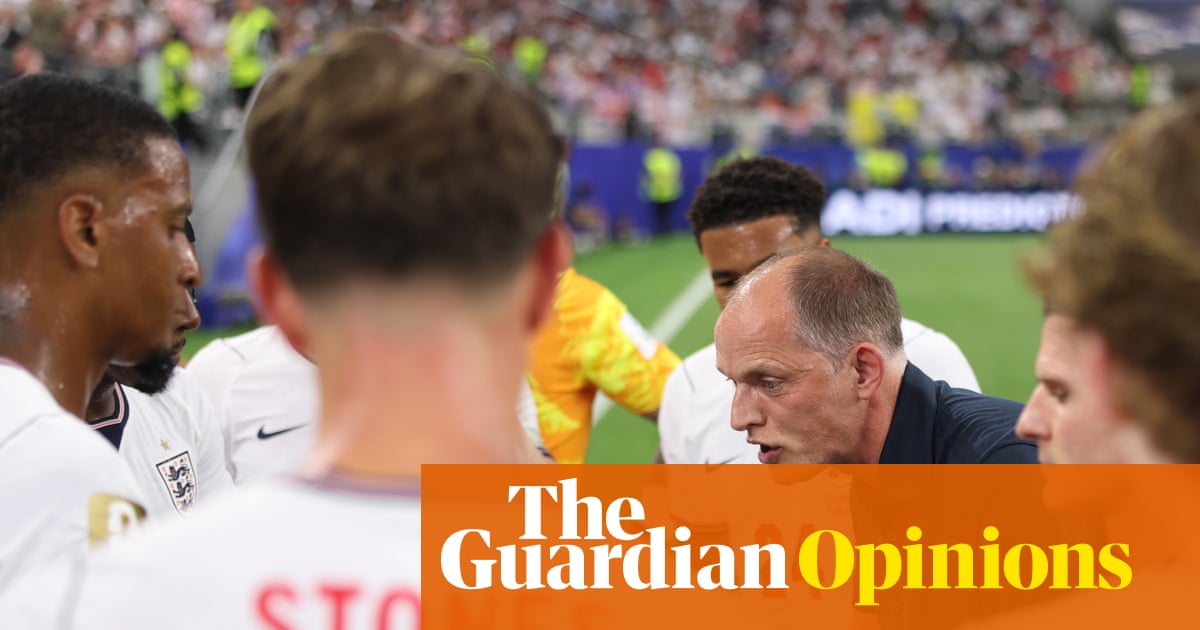
I n the NFL or NBA, a head coach can sometimes affect momentum in the game during a timeout. Even as a head coach in American football you get three timeouts per half. In most cases in soccer, players have to problem-solve and think on their feet.
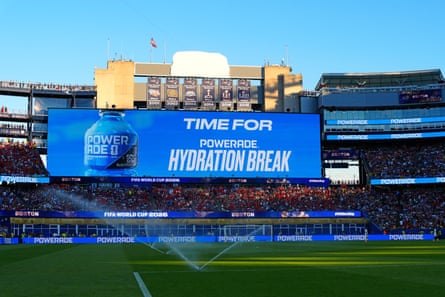
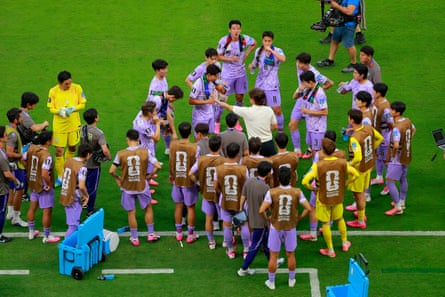
I’m not a fan of the hydration breaks that have been introduced at this World Cup , but they’re here for now and it is fascinating from a coaching perspective because the momentum has swung straight after several hydration breaks. That could suggest coach involvement has helped teams to tweak things.
Turning the game into four quarters – it felt inevitable it was going to head in that direction, and I hope it doesn’t carry on going in that direction. I don’t like it, but let me also be clear – when it’s hot, you really need it, for health and safety. So put yourself in Fifa’s shoes. If you only have drinks breaks in the hot cities you could be accused of giving certain teams an advantage with a chance for a tactical discussion over, say, a team playing in Seattle, where it’s cooler. Imagine turning around and saying: “We’ll only have VAR in some of the stadiums, not all.” You’re either going to have it or you’re not going to have it.
So I get why they have brought this in at every venue. It’s got to be fair across the board. And trust me, this helps coaches. The Netherlands coach, Ronald Koeman, said: “You can use it in different ways to your advantage and this is what we will be doing”. All the coaches will be utilising it.
I agree with Arsène Wenger; I want the ball in play more. I want goal-kicks taken quicker, I want throw-ins taken quicker. I want the ball in play for at least 60 minutes a game, so I like some of the new rule changes that have been introduced. The average ball-in-play time has been about 40 seconds down compared with 2022 at 57 minutes and 22 seconds, but when you factor in the hydration breaks and remove the time it takes for those breaks from the total match-time, the ball-in-play percentage has risen slightly.
There are already enough stoppages in games, so the last thing we want is more . But, for now, it’s there. On ITV, we used it by broadcasting tactical analysis, which was an idea of one of the producers and I felt I was doing what I do every day as coach; trying to simplify complex ideas in a concise way.
Viewers at home have a varying degree of knowledge around the game; some will be very knowledgable, while others may only watch football when the World Cup comes around, so I enjoy trying to be mindful of that.
The speed at which VAR has worked has also been noticeable; how quickly they’re making decisions and moving on. I don’t think it’s been disruptive in a way we’ve been accustomed to and has irritated us all in other tournaments or leagues. And being able to change key moments for reasons like mistaken identity and whether it is a corner or not are welcome changes.
The new rules making it harder for teams to get tactical information while a goalkeeper is receiving treatment is also a welcome change, even though somebody could still pass on information from further away. There’s still a lot of work to be done in these areas to make the game better, but in general they’ve made steps in the right direction.
The most significant change compared with 2022 has been the increase to 48 teams, up from 32. When you expand the number of teams in a tournament there’s always that conversation around a dilution of quality. The answer is clearly far from it. From Cape Verde to DR Congo, it has been great that so many nations started strongly. This is what opportunity provides: competition. You can’t develop until you are in situations where you can grow and get better. It’s great for the global nature of the game.
I loved Cape Verde’s performance in their draw against Spain . What struck me was how brave they were and not just out of possession. As Ange Postecoglou quite rightly said on ITV, Cape Verde weren’t passive. They didn’t just sit in and get picked off. They were stepping out in the right moments. They wanted to get on the ball. They wanted to go forward. They committed numbers going forward. They created chances. Even if they’re half-chances, I was impressed with how well coached they were. And their goalkeeper was heroic .
What has stood out has been the quality of the stadiums, the fans showing up and the real sense of “only the World Cup can do this”, namely bringing people together. The atmosphere in New York has been palpable. There are people wearing shirts for every team. Unlike 1994, you don’t have to walk into a bar or a restaurant and ask them to put the match on the TV. It’s already on.
The country is much more equipped to grow the game beyond this than in 1994 and you’re starting to really feel that. You expect to sense this fervour for the game in the more traditional football nations so, to witness that across the United States, has been wonderful to see.