Category Archives: Uncategorised

Sally Rooney on a new Hebrew translation of Intermezzo: ‘The Israeli culture sector is complicit in apartheid’

Palestine
Sally Rooney on a new Hebrew translation of Intermezzo: ‘The Israeli culture sector is complicit in apartheid’
Sally Rooney
Tue 19 May 2026 16.00 CESTLast modified on Tue 19 May 2026 16.11 CEST
News
https://www.theguardian.com/world/ng-interactive/2026/may/19/sally-rooney-new-hebrew-translation-intermezzo

Intermezzo, the most recent book by Irish novelist Sally Rooney, will be published in Hebrew this month by the Israeli publisher November Books, in collaboration with +972 Magazine and Local Call. The announcement comes more than four years after Rooney, citing the global boycott movement against Israel, turned down a translation offer by a different Israeli publisher for an earlier book.

Below, Rooney talks to Irish Palestinian activist Samir Eskanda about her decision to work with November Books, which has been deemed to be in compliance with the Boycott, Divestment and Sanctions (BDS) movement. They discuss what first brought her to the boycott, the movement’s aims and targets and the role of the artist in bringing about radical change.

The discussion, which took place over email, has been condensed and edited for clarity.

Samir Eskanda: Before getting to the specifics of this new release, I thought we could start with the wider context. Palestinians have called since 2004 for the boycott of complicit Israeli cultural institutions. Since then, many thousands of artists, writers, cultural workers and arts institutions have publicly endorsed this call.

The Palestinian Campaign for the Academic and Cultural Boycott of Israel (PACBI) leads and guides this work. It’s a founding member of the nonviolent BDS movement, which launched in 2005 and is led by the broadest Palestinian civil society coalition. The boycott targets institutions rather than individuals, and complicity, not identity. Israeli cultural organisations, companies and institutions are overwhelmingly complicit in whitewashing and justifying Israel’s ongoing genocide against Palestinians in Gaza, its wider regional wars of aggression and expansionism, and its decades-old regime of military occupation and settler-colonial apartheid, which must be isolated and entirely dismantled.
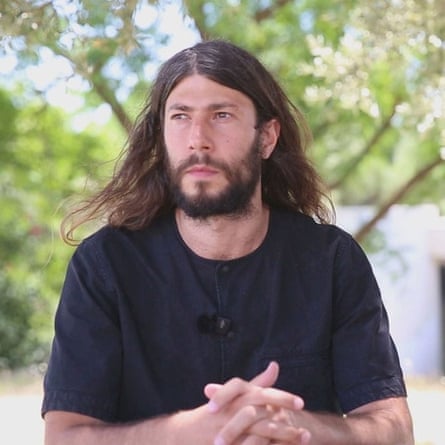

Sally, when did you first become aware of the Palestinian call for the cultural boycott of Israel? Was supporting it a difficult decision to make?

Sally Rooney: In Dublin in 2014, I was involved in the protest movement against Israel’s illegal military campaign in Gaza. For readers who aren’t aware, I should say that Israeli forces killed more than 2,000 people in Gaza that year, including hundreds of children. That moment of horror and outrage was a formative experience for me, as a person and as a writer. My second novel, Normal People, includes a scene set at those same protests. I couldn’t write about life in Dublin at that time without acknowledging the centrality of that political moment.

I was certainly aware of the boycott, divestment and sanctions movement then, and I tried to comply with the boycott in my role as a consumer. And yet I sold the translation rights to both my first two novels to an Israeli publisher, which I later discovered had links to the Israeli military. How could my actions be so inconsistent with my beliefs?

I remember trying at the time to find BDS guidance on the publishing industry. Of course, the information available online was targeted at consumers, not at literary novelists, who do not make up a big constituency of the general public (!). It seems so obvious now that I should have reached out and contacted PACBI. In truth I think I felt too awkward, or I felt as if it would be attention-seeking. I had never published a book before and no one had ever heard of me. From what I could see online, most of the authors I admired seemed to have translation deals in Israel. I wrongly assumed that the complicit institutions targeted by BDS did not include literary publishers.
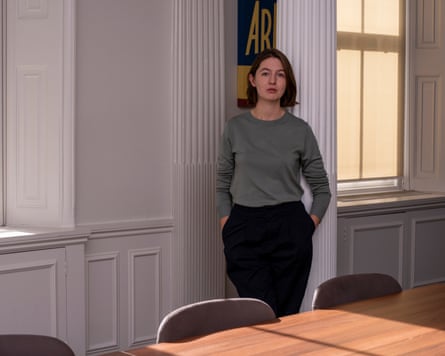

By the time it came to selling the rights for my third book in 2021, things had changed in a few ways. An increasing number of international human rights organisations were confirming what Palestinians had long said: that the Israeli system of racial domination met the legal definition of apartheid. I had come to a better understanding of the complicity of the Israeli culture sector in that apartheid system. And meanwhile, I had also become something of a public figure, and I felt a greater sense of responsibility in making decisions around my work.

But I still didn’t reach out to anyone for advice. With what I knew, I decided that I couldn’t in good conscience sell translation rights to a mainstream Israeli publisher and still comply with the boycott – but I didn’t even really tell anyone what I was doing. I just turned down the specific deal that I was offered. Looking back, I obviously should have contacted PACBI from the very start and asked for guidance.

Samir, you’ve long been involved in the cultural boycott of Israel. Can you tell us a little bit about the roots of that call, how it relates to the broader BDS movement and how you came to be involved?

SE: I grew up in Britain, where I came to understand the state’s hypocrisy and complicity in enabling, while obscuring, Israel’s colonial oppression against Indigenous Palestinians. But it was the emergence of the BDS movement that provided a principled and strategic way to actually do something about international complicity, and spurred me on to take sustained action. I’ve been involved for a decade, but I joined a movement that was already thriving.

Since the onset of Israel’s genocide and the unspeakable crimes committed by Israeli forces against Palestinians in Gaza, tens of thousands of artists have demanded justice and liberation for Palestinians, accountability for the perpetrators, and refused to allow their work to “artwash” these atrocities.

At heart, the authoritative Palestinian call on artists and all others is about ending complicity. As Martin Luther King Jr said of the Montgomery bus boycott, we are “withdrawing our cooperation from an evil system”. In the colonial west, this ethical obligation is especially profound, given its centuries of domination and oppression. In the context of genocide – and given the rulings by the international court of justice (ICJ) that Israel must “prevent” any and all genocidal acts, that it is guilty of apartheid, and its occupation is illegal and must end – this is also a legal responsibility for states, corporations and institutions.
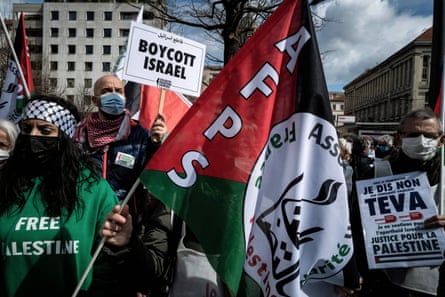

You said in 2021 that you would be happy to work with an Israeli publisher that is not complicit in Israel’s regime of oppression, and that recognises the comprehensive rights of the Palestinian people under international law, including the right of return of Palestinian refugees. This is now happening almost five years later. What was the process that led to this release?

SR: In a way, it wasn’t so different from any other process around the sale of translation rights. The publisher November Books approached my agent with a proposal to translate one of my novels into Hebrew. Because the team at November is based in Israel, they were careful to explain how the publication would meet the requirements of the cultural boycott. For instance, November Books does not operate in illegal Israeli settlements, receives no state funding and explicitly recognises the international legal rights of the Palestinian people, including the right of return. I also kept in touch with PACBI along the way to try to ensure that I was upholding both the letter and the spirit of the institutional boycott.

For me, the act of translation is in itself a beautiful ideal. Though my refusal to work with complicit Israeli publishing houses made the contractual side of things more complex, I was, of course, never boycotting the Hebrew language or any language. I’m very pleased that Intermezzo will soon be available in Hebrew with November Books. I am a devoted admirer of literary translators and the work they do. It means a great deal to me that my books are available in languages other than my own and I’m very grateful. I’m also delighted that the novel is published in Arabic with the Palestinian publishing house Tibaq.

What do you think is the role of radical – or if you like, dissident – Israeli institutions such as November Books in the academic and cultural boycott?

SE: According to an Israeli poll published in November 2023, when Israeli forces had already murdered at least 10,000 Palestinians in Gaza, 94% of Jewish Israelis supported Israel’s genocide. Most agreed that Israel should use even more deadly force. Clearly, many Israelis have also participated in the genocide, which has killed at least 80,000 Palestinians and likely far more, with the toll still rising since Israel has systematically annihilated the necessary conditions for sustaining life. Israel has also destroyed every university in Gaza and obliterated its educational and cultural infrastructure. It has targeted and murdered at least 242 journalists. It has filled mass graves, including outside hospitals . It has killed tens of thousands of Palestinian children, including premature babies . It has targeted IVF facilities and destroyed thousands of embryos. It has executed well over 1,000 starving Palestinians at “aid distribution points”. All this depravity has been done with the support of the overwhelming majority of the Israeli public, which includes cultural workers, academics, athletes and others.
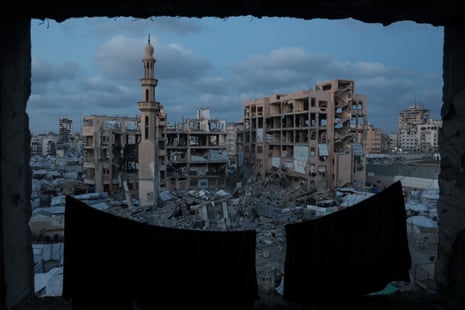

So it is perhaps unsurprising that very few Israeli cultural institutions have met the conditions that the BDS movement has set for exemption from the boycott: end diverse forms of complicity, and publicly endorse the full, UN-stipulated rights of the Palestinian people. Working with complicit Israeli publishers that have failed to take these basic steps can only harm the Palestinian struggle, as you and at least 7,000 other writers, including winners of the Nobel prize, Booker prize, Pulitzer prize, and National Book Award have publicly recognised .

Ta-Nehisi Coates is also publishing a translation with November Books, since it is the only Israeli publisher that has met these conditions, which are grounded in international law – or what remains of it. Beyond publishing, the tiny minority of Jewish Israelis who sincerely support Palestinian liberation can and do play a part in the movement, as the historic 2005 BDS call affirms .

SR: What do you say to artists who approach you for guidance in complying with the boycott?

SE: I think that artists can sometimes struggle to see themselves as a potentially important part of a much larger collective. I’ve seen talks you gave recently in which you encouraged other cultural workers to basically drop the ego and participate in the movement. That’s rare. It’s also essential, if we’re going to effectively resist this time of rising fascism. Seeing ourselves as a small yet significant part of a wider struggle frees us from the trap of toxic hyperindividualism, and this means we can fully participate in the cultural boycott, which is fundamentally a strategic, power-building tactic. Rather than seeing it as an individual purity test or an exercise in sloganeering, it positions our collective efforts as ever-evolving and highly attuned to specific contexts.

What does that actually look like in practice? I think it means asking, as you did: is that publisher, festival, label or platform implicated in grave violations of international law? Does it benefit from and thereby perpetuate Israel’s regime of apartheid and ethnic cleansing against Palestinians? Has it taken any meaningful stance to end its complicity? Do I have influence over this institution to compel it to do so, and to enshrine this in policy? What steps can I reasonably take to prevent my work from reaching it, if not? Have others taken such steps and what can I learn from them? Do these steps represent a strategic benefit to the movement? Does not taking them represent a harm?

Our task as a movement is to channel anger at Israel’s genocide in Gaza into the most meaningful initiatives. Raising awareness is an important first step. Making individual ethical choices to resist complicity can be the next. But joining with hundreds, thousands or millions of others and demanding accountability and pledging to uphold the demands of Palestinian civil society have to follow. Virtually everyone has influence, leverage or connection to some organisation or company. Use your relative freedoms and privilege. If you can’t do it loudly – perhaps because you are in a precarious or professionally vulnerable situation – then do it quietly at first. Seek your community, and work together.

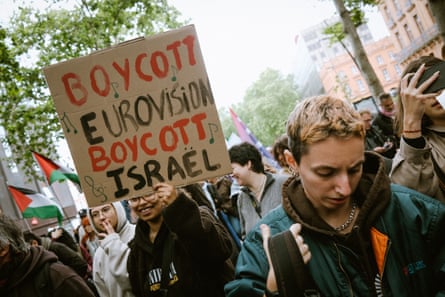
Thousands of the world’s leading musicians , writers and film workers , including hundreds of Hollywood celebrities, have conditioned the supply of their work on ethical grounds. Dozens of states have introduced policies of military , energy or trade embargos against Israel, though more pressure is needed to enforce them. At least 2,000 arts organisations have joined the cultural boycott of Israel, including major film festivals, theatres and museums. Five European broadcasters boycotted Eurovision, the world’s biggest live music event, rather than share a stage with apartheid Israel. Millions of people are boycotting the products of complicit Israeli and international companies. This is a dynamic, growing movement, rooted in universal, ethically consistent, intersectional and antiracist principles. Ultimately, we will measure the success of the movement not by the numbers in our ranks but by the freedom of our people. But to get there we need to keep building grassroots and civil society power that can sever the links of complicity sustaining Israel’s entire regime of oppression.

In the current era of might-makes-right, relentlessly pursuing accountability for the perpetrators of genocide and all those complicit in it is an essential priority for humanity, in my view. If Israel gets away with genocide, no one will be safe in future. I think we’re already seeing that now with the expansion of unmasked US-Israeli aggression across the region. So don’t just speak out, urgently act to end complicity. We in the west cannot afford to lapse into hopelessness or despair, despite how utterly bleak things may appear. Even Trump admitted that Israel can’t fight the world, because the world will win. That world is us.

To go back to your experience – your commitment to boycott complicit Israeli publishers made headlines around the world in 2021, and Israel’s two main bookstore chains responded by pulling your books from their shelves. These chains actually have branches in illegal settlements . A number of writers came out in support of your decision. What was your reaction at that time?

SR: At first, I was a little rattled by the degree of public condemnation. Had I accidentally done something to undermine rather than support the Palestinian cause? But I quickly started getting messages of encouragement from people within the movement, and after that, I felt confident that I had done the right thing.

Of course, it’s important not to get complacent about that feeling of righteousness. I always have to check in with myself – and with others – to make sure I really am being consistent about my principles, or as consistent as I can be in practice. But when I do feel that I’m right, I’m not much bothered by criticism. Who has ever stood up against injustice without being criticised? If that’s all I have to endure, then it’s very little.

I do remember people saying at the time that by joining the boycott, I had in effect ended my career. And it wasn’t just critics and adversaries making that point: even people who sympathised with the cause were murmuring that I had no idea what I was up against. Of course I did face some backlash, as I knew I would. But I think we have to be careful not to exaggerate in a way that drives people away from the movement and induces self-censorship and fear. In reality, I have gone on writing and publishing happily since 2021. I have not had to sacrifice my role in public life. I think I can say I have not even lost the respect of anyone whose respect I cared to keep. Joining the boycott would have been worthwhile no matter the consequences, but for me the consequences have really been very positive and life-affirming.

SE: Do you think it’s possible to truly subvert power through the written word, or can almost anything you write be coopted? If the latter, what choices are we left with?

SR: I remember thinking very early in my publishing career: if anything I had to say was truly radical, I wouldn’t be allowed to say it. The very fact that my novels were widely reviewed – and that institutions like the BBC and the New York Times wanted to work with me – showed me that my political commitments were perceived as manageable and non-threatening. And, as I’ve said, perhaps to my discredit, I wasn’t part of any broader movement or coalition from which I could draw support. I was on my own, trying to make the right decisions according to my own principles, and I often made mistakes.

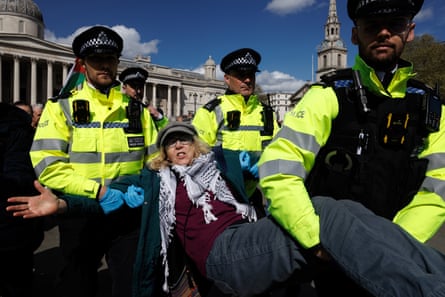
But in this last year, some of my intuitions about radicalism and public life have, I think, been proven right. Since the UK government unlawfully proscribed the protest group Palestine Action as a “terrorist” organisation last summer, it has been against the law for me even to express my political beliefs in Britain. And because I have expressed those beliefs anyway, I have in effect lost the right to travel to the UK, and my contracts with British companies have in practice been suspended. Needless to say, that is nothing compared with the prolonged state persecution of Palestine Action activists themselves.

The proscription of Palestine Action has already been challenged successfully in the high court and I hope and expect it will ultimately be struck down for good. But whatever happens, I know I will never regret standing by my beliefs. And whereas once I worried that the mainstream popularity of my work was in itself politically limiting, now I can feel purely proud and happy that my books continue to be popular among a mass readership. That same popularity heightens the stakes for the UK government in trying to criminalise the publication of my work.

In all, I think my entanglement with the literary and cultural establishment means I have been able, in some respects, to be more politically useful.

Sally Rooney is an Irish novelist. She is the author of Conversations with Friends, Normal People, Beautiful World, Where Are You and Intermezzo

Samir Eskanda is a Palestinian Irish artist, organiser and human rights activist. He has provided strategic guidance and played a key role in many high-profile solidarity campaigns that have contributed to the cultural boycott of Israel
The Republican project isn’t to win in November. It’s to make November cease to matter

US voting rights
The Republican project isn’t to win in November. It’s to make November cease to matter
Jamil Smith
Tue 19 May 2026 16.00 CESTLast modified on Tue 19 May 2026 17.50 CEST
News
https://www.theguardian.com/commentisfree/2026/may/19/republican-party-erase-black-representation-november-election

E arly this month, a single pen stroke effectively ended representative Steve Cohen’s career in Congress. The man who has represented Memphis for 19 years will turn 77 later this month, but he wasn’t planning on retiring. He hadn’t lost any primary. The reason was that his district had been erased around him.

A new electoral map , passed by the Republican-led state legislature and signed by Bill Lee, the governor, divides the ninth district three ways. “Last week Tennessee Republicans silenced the Black vote here in Memphis to make Republican victories likely,” Cohen said in his statement. That’s succinct and accurate.

The new map folds a significant portion of Cohen’s Black constituents into Williamson county, which sits south of Nashville and was, until recently, the subject of a different fight.

To this day, the Williamson county seal depicts a Confederate battle flag draped over a cannon. It was adopted in 1968, at the height of the civil rights movement. A Tennessee court ruled in 2024 that the county could remove it. The state legislature responded the following year by passing a new law specifically designed to keep the flag on the seal. The vote was 70-24 in the House and 27-6 in the Senate, with no Democrats voting in favor. Lee, who is from Williamson county, signed it.

The same statehouse that just folded Memphis Black voters into Williamson county is the one that legislated to preserve the Confederate flag of the county absorbing them. The cartography doesn’t require translation. Tennessee is being precise, and they aren’t alone.

This is the aftermath of the supreme court’s disastrous 6-3 ruling in Louisiana v Callais , decided less than a month ago, which gravely weakened the Voting Rights Act’s protections for Black representation. Ever since, Republicans have resembled eager children on Christmas morning, tearing our electoral maps to shreds. Louisiana is set to eliminate one of its two Black-majority districts. The court let Alabama erase one of its two Black-majority districts before this fall’s primaries.

In Mississippi, the Republican state senator who chairs the Medicaid committee said this week that it was time to “ erase Bennie Thompson’s district ”.

Thompson is 78 years old. He is the only Black member of Mississippi’s congressional delegation in Washington, from a state where 38% of the population is Black . He is also the man who chaired the House investigation into January 6. Yet Tate Reeves, the governor, who proclaims April Confederate Heritage Month every year, recently vowed that Thompson’s “ reign of terror ” will be over soon.

Who, precisely, is terrified here? And of what, or whom?

Yvette Clarke, the chair of the Congressional Black caucus, told NBC News recently that 19 of the caucus’s 62 members were at risk through the 2028 cycle . The US has gone from 13 Black members of Congress in 1971 to 62 today; almost a third of them are in jeopardy. As Hakeem Jeffries is poised to become the first Black speaker of the House, the ground is collapsing beneath Black officeholders across the south.

Representation without architecture is brittle. The presence of a Black speaker matters; but it cannot, by itself, prevent the unbuilding of the conditions that made the speakership reachable. What the Voting Rights Act produced – not just officeholders but the constituency-mapping that allowed Black political coalitions to cohere – is precisely what Republicans are now undoing.

They have a roadmap. In 1913, Woodrow Wilson’s administration resegregated the federal civil service that Reconstruction had pried open. They did it by executive action and administrative memo. Department by department, lunchroom by lunchroom. Wilson never issued a proclamation that named the project. The most consequential racial reordering of the early 20th century happened via paperwork .

Between 1900 and 1903, Black voting in Alabama fell from 180,000 to fewer than 3,000 . The 1901 state constitution gave county registrars administrative discretion. White men could vote without anyone vouching for them. Black men required the recommendation of a white voter. After George Henry White left office in 1901, no Black American was elected to Congress until 1928 .

That collapse was a procedure. The architects did not call it apartheid. They called it “states’ rights”. They called it reform.

Plessy v Ferguson, which upheld segregation, outlasted, by 58 years, the presidents who appointed the justices who decided it. The Jim Crow settlement, built between 1877 and 1896, held for nearly nine decades. These are lifetimes. The architects of that settlement were not building for a midterm. Theirs was a generational project, and they succeeded.

The price of disobedience is rising. Last week, the speaker of the Tennessee house of representatives, Cameron Sexton, sent a letter to the Democratic leader, Karen Camper, stripping members of the house Democratic caucus of their committee assignments . The alleged offenses, in his own listing : interlocking arms in the well of the House. Blocking aisles. Distributing earplugs to a colleague. A speaker of a state legislature stripped legislators of their committee assignments, in part, for the distribution of earplugs. Other red states will surely recognize the template; some will use it themselves.

Yet while Tennessee was carving up Memphis, Democratic party stalwarts – including Pete Buttigieg, Elissa Slotkin and Barack Obama – were in Toronto at the Global Progress Action Summit, gathering to learn affordability messaging from Mark Carney. How do we fight the authoritarian right? The president of the Center for American Progress asked from the stage. The answer offered was to message better on groceries, move slightly to the right on immigration, build housing faster.

There is nothing wrong with affordability politics – but it will not save us, or our electoral maps, from a Republican party that would rather decimate representation than persuade voters. There is more at stake here than our grocery bills. America has its own version of the structure other countries call apartheid. Ours is older. Ours is Jim Crow. Republicans are adapting it for a new age. By the time the next census is conducted, it will be conducted under these rules. By the time a Democratic president takes office, the federal courts adjudicating that president’s executive orders will have been shaped by a decade of Republican appointments.

It is tempting to believe that November can return the country to a sort of racial status quo that existed before Trump’s political ascendancy. Frankly, even that America was never what it claimed to be. But rather than bringing the nation closer to becoming a free republic worthy of the name, Republicans are dragging it backward, again.

Saying so is not despair. It is where the fight begins. You cannot resist what you refuse to name, and you cannot outlast what you have decided is temporary.

Jamil Smith is a Guardian US columnist

Offseason by Avigayl Sharp review – wry comedy of a frazzled teacher

Fiction
Offseason by Avigayl Sharp review – wry comedy of a frazzled teacher
Houman Barekat
Tue 19 May 2026 10.00 CEST
News
https://www.theguardian.com/books/2026/may/19/offseason-by-avigayl-sharp-review-wry-comedy-of-a-frazzled-teacher

T he unnamed 28-year-old narrator of Avigayl Sharp’s debut novel teaches literature at a girls’ boarding school in the US, and is not OK. She has lost touch with her friends, is hooked on prescription stimulants and cries too easily. She is also sexually uptight, which she attributes to childhood trauma, and weirdly obsessed with Joseph Stalin (“his brutality, and his paranoia, reminded me very much of my mother”).

The pupils at the school are brittle and entitled. One of them opines: “This guy Kafka kept acting like everything was out of his control … I thought, why don’t you take a little initiative, buddy?” Another “let her head drop back against the window, exhausted from the effort of speech” after uttering three sentences in a class discussion. They’re not terribly keen on reading – “due to the devastating psychic effects of daily technological overstimulation” – so she assigns them Charles Dickens’s 900-page novel, Bleak House.

Offseason is a wryly funny portrait of an enervated psyche. The narrative voice is deadpan to the point of absurdity. (“I am having a series of lucid and penetrating thoughts, I thought.”) Intense, improbably one-sided conversations play out in banal contexts, like a sendup of Rachel Cusk’s Outline. On learning that the school’s handyman is Bulgarian, the narrator – who is of eastern European Jewish heritage – offloads at length on intergenerational trauma. She thinks it might explain her mother’s “mania for purchasing obscene quantities of designer purses on clearance … then forcing me to observe and praise each one in exaggerated terms, after which she would narrow her eyes and accuse me of wanting her to die so I could have all of the purses”.

This mother-daughter dynamic is highlighted when she goes to stay with her parents during the end-of-term break that gives the novel its title. Some deliciously awkward exchanges attest to her mother’s problematic nature, but the narrator also reveals that she herself had been a compulsive liar as a child, which suggests her memories might not be reliable. Meanwhile her father helpfully intones: “Jewish people like your mother have intolerable histories, due to the Holocaust, fleeing the Soviet Union for the nation of Israel, cruel parents, estranged sisters, and other miscellaneous factors.”

The glib, on-the-nose quality of this pronouncement gently lampoons the rich tradition – in which this novel also resides – of fiction that explores the nexus of personal neuroticism and collective experience. Philip Roth’s Portnoy’s Complaint springs to mind, as well as more recent titles such as Katharina Volckmer’s The Appointment and Will Self’s Quantity Theory of Morality. Sharp’s protagonist is certainly neurotic, and neurotically fixated on delineating the hierarchies of causality that made her so. She brings these preoccupations into the classroom, much to the bewilderment of her young charges. “I wrote ‘Trauma Olympics – what if good?’ on the whiteboard.” Tellingly, however, she never seems fully on board with the intellectual ideas and discursive frameworks she invokes, and is more vigorously incisive when saying it straight: “My parents did not have intimate friendships, due to their limited attention spans and terrible personalities”.

Sometimes people are maladjusted for reasons that are destined to remain obscure, and the myriad strange and delightful ways in which that manifests might actually be more compelling than the originating causes. Offseason skewers, simultaneously and with plenty of droll wit, several commonplace tropes in recent literary fiction: the pat complacency of the trauma plot; the gooey sentimentalism of the immigrant experience novel; the narcissism of autofiction; the heavy foregrounding of theme at the expense of texture.

Sharp’s frazzled narrator is a 21st-century downgrade on Muriel Spark’s Miss Jean Brodie. Unlike her, she’s on a temporary contract, and lacks the courage of her convictions, preferring to wallow in the comforts of comic bathos. Her predicament makes her an avatar for our increasingly beleaguered humanities, embattled by funding cuts, culture wars and smartphone-induced brain rot. In such a climate, teaching American teenagers about Dickens’s London may indeed feel like a sisyphean task. (One of her pupils asks: “Is fog going to be on the exam?”) Offseason’s narrative arc echoes that sense of futility – the novel builds to an elliptical anticlimax – but when the journey is this fun, the destination hardly matters.

Offseason by Avigayl Sharp is published by W&N (£18.99). To support the Guardian, order your copy at guardianbookshop.com . Delivery charges may apply.

Czech football coach who secretly filmed female players handed lifetime ban

Football
Czech football coach who secretly filmed female players handed lifetime ban
Tom Garry
Tue 19 May 2026 19.08 CESTLast modified on Tue 19 May 2026 19.39 CEST
News
https://www.theguardian.com/football/2026/may/19/czech-football-coach-petr-vlachovsky-secretly-filmed-female-players-handed-lifetime-ban

Uefa has handed a lifetime ban from all football-related activity to Petr Vlachovsky, the Czech coach who used a hidden camera to secretly film his female players in their changing rooms.

Vlachovsky was convicted in May 2025, having been found to have filmed 14 players at FC Slovacko over a four-year period. He was convicted without a public hearing and handed a suspended one-year prison sentence and a five-year domestic coaching ban, which prompted calls from the Czech players’ union for his punishment to be broadened.

On Tuesday, European football’s governing body announced that after an investigation its control, ethics and disciplinary body had imposed a lifetime ban and written to Fifa to ask the world governing body to extend that globally.

Vlachovsky, who was also caught in possession of child sexual abuse material, had previously coached the Czech under-19 women’s national side. His youngest victim at Slovacko was 17 years old.

Alex Phillips, the secretary general of the global players’ union Fifpro, told the Guardian in April that this case was “the tip of the iceberg” but that players were frequently unsure how to report concerns.

Fifpro welcomed Uefa’s ban, saying: “This outcome sends a strong and necessary message that abusive and inappropriate behaviour has no place in football and that safeguarding the wellbeing of players must remain a priority at every level.”

Wes Streeting’s Brexit play may be clever gamesmanship – but it has nothing to do with Europe

Labour party leadership
Wes Streeting’s Brexit play may be clever gamesmanship – but it has nothing to do with Europe
Anand Menon
Tue 19 May 2026 09.00 CESTLast modified on Tue 19 May 2026 15.17 CEST
News
https://www.theguardian.com/commentisfree/2026/may/19/wes-streetings-brexit-europe-referendum

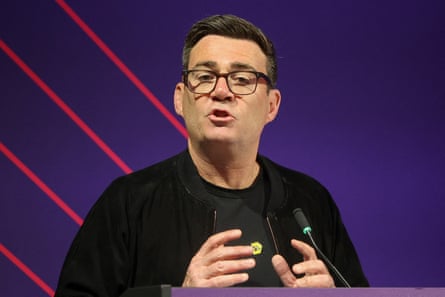
B rexit, it seems, is back. Or at least back within the Labour party. Wes wants to be back in (at some point). Andy once said there’s a case, but seems to have changed his mind . Nigel, meanwhile, warns of betrayal .

On one hand, this is all terribly predictable. Winning any Labour leadership race was never going to be possible without staking out a clear and ambitious position on the EU. Most Labour members are remain backers who regret leaving Europe. Even before the beginning of a formal contest, we were always going to see those vying for the top job try to outbid each other.

Andy Burnham’s decision to run for parliament is an additional wrinkle. Makerfield is a leave-backing constituency, and Reform UK are Labour’s main opponents, so revealing ambitious plans to move closer to the EU would be incredibly high risk. Hence yesterday’s switch to a more sceptical stance.

All of which gives Wes Streeting an additional reason to go big on Europe. The hope, presumably, is that Burnham is either driven to say something that makes the people of Makerfield less likely to vote for him (which Burnham seems to be avoiding), or that he is forced to adopt a position that makes members of the Labour party less likely to vote for him (which seems to be the chosen direction).

While Burnham navigates that bind, Streeting says as little that commits him to actually doing anything as possible. In his speech to a conference held over the weekend by the thinktank Progress, the former health secretary spoke in splendidly vague terms about a new “special relationship” with the EU while mentioning he’d like to see the UK rejoin one day. That’s it. That it was enough to set so many hares running is a tribute to his political nous – but not a signal of intent when it comes to EU policy.

Which is a shame, because a rethink of EU policy is increasingly necessary. The current negotiations – covering areas ranging from agriculture to UK participation in the EU’s electricity market – have stalled over the EU’s insistence that the youth experience deal it sees as key to the whole package allows EU students to pay domestic fees to attend UK universities.

And even if the two sides find a way to unlock the current impasse, there is the question as to what comes next. The UK government has made it clear that it wants even closer relations.


But the EU, for its part, has balked at the idea that London gets to pick further bits of the single market with which it wants to align. The view in Brussels is increasingly that the UK either stays where it is or opts for something much bolder.

The UK’s choices are therefore not only increasingly constrained, but seemingly at odds with the stipulations of the 2024 manifesto that the UK will not rejoin the single market or customs union or accept freedom of movement.

So a real debate is necessary. About how far Labour want to go. About whether the red lines as they are should stand. About whether any of the potential landing zones are actually in our interest.

This last point is particularly important. Many Labour MPs have spent the last couple of years propounding the idea of a customs union or of the UK joining the single market. There is evidence now that they are actually starting to ponder what these alternatives might mean.

A customs union will do precious little to compensate for the economic impact of Brexit , while conceivably tying the UK to EU trade deals over which it has no say. Equally, the single market means allowing the EU to set the rules for the UK economy with London perhaps being consulted but certainly having no vote. What works for Norway will not necessarily do so for us, not least because the Norwegian model rests on depoliticisation of the EU issue.

As for membership, what has become clear in the negotiations to date is that the EU will play hardball in any talks and extract whatever it can from us. Membership will come at a price in terms of budgetary contributions, and doubtless a commitment to join the euro . The talks will be brutal, and they will not be completed at any time soon. Signing up for this is signing up for many years of difficult negotiations carried out under the glare of Brexiter scrutiny.

So there is much to discuss. The problem is that an open and honest debate is not what we are likely to get. Ten years on from the referendum, Brexit as domestic football is still the order of the day. Whether speaking to the good people of Makerfield or to party members, Labour politicians have a strong incentive simply to say what their audience wants to hear.

All of which will serve merely to irritate the EU. Having watched consecutive Conservative administrations argue with themselves over Brexit, they’re now getting to see Labour do the same thing. And, like the Conservatives, Labour are doing so with precious little attention paid to what the EU might or might not be willing to give us.

Little surprise, then, that the reaction from Brussels is simply a shrug. Let the British play their games. We can talk to them when they’ve actually decided what they want. Albeit what they want might not be on offer, and what is on offer might not be what they want.

Anand Menon is director of UK in a Changing Europe and a director at Public First

US warns Russia after Moscow threatens Latvia: ‘Nato membership will not protect you’ – as it happened

World news
US warns Russia after Moscow threatens Latvia: ‘Nato membership will not protect you’ – as it happened
Jakub Krupa
Tue 19 May 2026 19.17 CESTFirst published on Tue 19 May 2026 09.44 CEST
News
https://www.theguardian.com/world/live/2026/may/19/europe-ukraine-russia-belarus-nuclear-drills-un-security-council-eu-us-hungary-peter-magyar-poland-nato-latest-news-updates

‘No place for threats’ against UN security council member, US says in response to Russian comments

US ambassador Tammy Bruce, deputy representative of the US to the UN, is the next speaker as she strongly condemns the Russian threats against Latvia.

“ There is no place for threats against a council member. The United States keeps all of its Nato commitments,” she says.

Closing summary

… and on that note, it’s a wrap for today!

Senior EU and US diplomats condemned Russia’s threats against Latvia and the Baltic countries after Russia’s representative told the UN security council that “Nato membership will not protect” them from retaliation if Ukraine launches drones against Russia from their territory ( 17:58 , 18:24 ).

Russia’s Vasily Nebenzya aggressively floated Moscow’s allegations that Ukraine is looking into using the Baltic countries as a launch pad for attacks on Russia ( 17:55 ) , despite repeated denials from all parties ( 12:38 , 17:57 , 18:10 ).

Latvia’s UN representative dismissed the allegations as “pure fiction and pure lies,” with Ukraine’s representative calling them “fairytales” ( 17:57 ).

The tense exchanges come hours after a Nato fighter jet shot down a stray Ukrainian drone over Estonia ( 12:10 , 12:47 ), which Kyiv said had been jammed and detoured by Russia ( 14:10 ).

At least two air alerts were also separately issued in Latvia .

The incidents come just days before a key meeting of Nato’s foreign ministers in Sweden on Friday.

In other news,

Top Nato commanders confirmed that 5,000 US troops will be withdrawn from Europe but insisted these “adjustments” do not impact their ability to deter attacks , even as they warned the continent could see more “redeployment” of US forces in the future, and urged European leaders to ramp up their defence spending ( 16:18 , 16:25 , 16:30 , 16:41 ).

Troels Lund Poulsen, the leader of the centre-right Danish Liberal Party has announced plans to form a right-leaning minority government ( 10:55 , 11:47 ), despite no clear political backing for his proposal ( 12:26 ).

The former Spanish prime minister José Luis Rodríguez Zapatero has been placed under investigation for alleged influence-peddling and other offences by a judge examining the state bailout of a Venezuela-linked airline during the Covid pandemic ( 10:26 ).

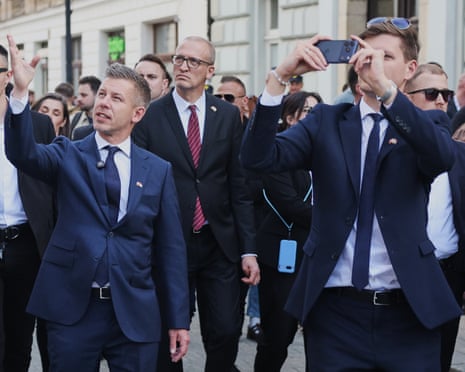
Hungarian prime minister Péter Magyar has landed in Poland as his first foreign trip since taking office earlier this month, where he is due to meet with Poland’s political leaders on Wednesday as he wants to restore bilateral relations after years of tensions with the previous prime minister, Viktor Orbán ( 15:19 , 17:28 ).

If you have any tips, comments or suggestions, email me at jakub.krupa@theguardian.com.

I am also on Bluesky at @jakubkrupa.bsky.social and on X at @jakubkrupa .

The EU permanent representative ends on a stronger note as he says that Russia’s aggression is “unacceptable under international law,” and the aggressor “will face accountability and will never be allowed to change borders by force.”

He says that “the future of Ukraine and its citizens lies within the European Union .

“ The Ukrainian people have a right to choose their own destiny, including a path towards EU membership. No former imperial power, however irredentist or aggressive, should be allowed to change that or can change that.”

That ends the meeting.

Russia’s engages in ‘head-spinning distortion of reality,’ EU’s UN ambassador says

The EU’s UN representative, Stavros Lambrinidis, also offered strong backing for Ukraine as he says “Russia must take full responsibility for the full effect and the consequences of its actions.”

“There should be no doubt in distinguishing between an aggressor and a victim.”

He particularly condemns Russia’s move to “threaten a member of the Security Council and an EU member state” in Latvia ( 17:55 ), saying Moscow lost “all pretence of reason, measure, modesty and dignity.”

He adds:

“Accusations, which we often hear in this chamber from the aggressor, that the European Union is prolonging the conflict are a head spinning distortion of the reality on the ground.”

Ukraine’s UN representative Andriy Melnyk is speaking next, outlining the persistent Russian attacks on Ukrainian cities, saying “the first half of May has been one of the deadliest periods for Ukrainian civilians” since the start of the war.

He says Russia should “stop complaining about the suffering of poor Russians,” as what it is witnessing is just the reaction to it’s continued aggression on Ukraine.

“ Unlike Russia, Ukraine forces never target civilians, ” he stresses.

Listing the numerous Russian attacks in recent weeks, he references that which killed two sisters in Kyiv ( 15:56 ).

But he says that “regrettably, all these barbaric crimes committed by Russia against Ukrainian civilians … have still not met with an adequate response from the international community.”

He urges all UN members to “enhance their sanctions regime” and prevent the delivery of components to Russia’s “war machine.”

He says:

“ Despite Putin’s boasts about alleged successes, … even Russian pro-war military bloggers are criticising disasters on the battlefield, and many of them openly acknowledge that the current momentum favours Ukraine.

Moreover, some Russian military experts warn that Putin is losing this war, with the frontline stalled, an estimated almost 1.4 million Russian troops dead or wounded, and ordinary Russians under increasing economic pressure.

The war that Putin believed would produce his crowning life achievement will prove to be his final downfall.”

Mocking Moscow’s recent scaled-down Victory Day parade , he says “the illusion of Russia’s invincibility was ultimagtely cracked,” marking “the beginning of the end for Moscow’s imperial ambitions, the imminent collapse of Putin’s rule.”

He rejects Russia’s allegations on Ukraine’s use of drones from the Baltics as “fairytales.”

He also warns about the planned nuclear exercises involving Belarus , saying it “represents an unprecedented challenge to the global security architecture.”

‘No place for threats’ against UN security council member, US says in response to Russian comments

US ambassador Tammy Bruce, deputy representative of the US to the UN, is the next speaker as she strongly condemns the Russian threats against Latvia.

“ There is no place for threats against a council member. The United States keeps all of its Nato commitments,” she says.

Latvia rejects Russian ‘lies and aggressive disinformation’ after threats over drones

Latvia’s UN representative Sanita Pavļuta-Deslandes says she has little time for Russia’s “pure fiction and pure lies.”

“I will just repeat that lies and aggressive disinformation and threats are a sign of despair and weakness, and we have seen similar lies addressed against other members of this council in the previous meetings, so I’m very honoured to have the attention drawn to my country today.”

Peace talks with Ukraine ‘at dead end,’ Russian UN diplomat says as he brushes off responsibility for war in Ukraine and threatens Latvia

The latest air alert over Latvia comes just as the UN security council meets to discuss the latest on Ukraine , with countries expressing their concerns about the state of the conflict.

But Russian permanent representative Vasily Nebenzya is having none of it though as he blames absolutely everyone but Russia for what’s going on in Ukraine.

He says the negotiation process to reach a peace settlement is “at a dead end,” and blames Ukraine’s president Volodymyr Zelenskyy for not ordering his troops to cease fire and withdraw from the regions Russia wants to control.

He says “until [Zelenskyy] realises this, achieving the goals of the special military operation will be done by the armed forces of the Russian Federation.”

He says Zelenskyy’s “stubborness” is “actively supported by European countries,” with honorary mentions to London and Brussels, alleging Europe wants to “drag it out for as long as possible to infict as much damage as possible on Russia.”

He then launches into an extended ridicule of the EU’s foreign policy chief Kaja Kallas, saying suggestions she could be the EU’s negotiator with Russia “can only be called a mockery,” as she has “no understanding whatsoever of what diplomacy is.”

Nebenzya then seeks to advance the same (completely false) theories that Ukraine and Latvia pushed against earlier ( 12:38 ) as he alleges that Kyiv will “be launching [drones] from the territory” of the Baltic countries, and particularly from Latvia.

He specifically threatens Latvia by saying “the membership of Nato will not protect your from retaliation.”

Obivously, expect Latvia to strongly deny and protest against all of that.

Latvia issues another possible air threat alert

Back to Latvia, the country has once again reported possible air threat to Latvian airspace in two counties bordering Russia.

“Seek shelter indoors, close windows and doors,” the authorities said in an alert.

However, no drones have been detected in Latvian airspace so far, the army’s spokesperson Māris Tūtins told Latvija Televīzija.

Magyar wants to restore relations with Poland after years of tensions under Orbán

Meanwhile, beginning his first meeting in Poland , Magyar stressed he was looking to restore bilateral relations with Poland so they can “regain the place they deserve” after years of conflict under Viktor Orbán.


He also said he wanted to reinvigorate the Visegrad Four format – with Czech Republic and Slovakia – and even expand it to include Austria and other regional partners.

As expected, he also had to face awkward questions about the fugitive Polish minister ( 15:19 ) , revealing he too had learned about his escape from the media.

He said Ziobro most likely left Europe not from Hungary , but from another EU member state, but this is still being looked into.

Earlier, Magyar laid wreaths at the monuments to Polish pope John Paul II and the former, 16th-century king of Poland, the Hungarian Stephen Báthory.

He is currently getting a guided tour of Kraków, which you can follow live (if you speak Hungarian, with some occassional Polish and English) on his YouTube.

In the process, he shows off some of his Polish in the process, greeting locals with cheery (“dzień dobry”) “hello” in Polish and somewhat accidentally telling someone he likes the colours of their football scarf – of Lechia Gdańsk football club – purely on the basis of their colours coinciding with those of his favourite team, Ferencvárosi TC.

Conveniently, both Poland’s PM Tusk and president Nawrocki support Lechia, so guess that’s one more thing to talk about tomorrow.

Grynkewich’s words are intended to reassure and project urgency at the same time – snap analysis

Grynkewich’s words there are not exactly surprising – we have long known that the US was looking to pivot away from Europe and wanted to see more from its European allies – but his clear language on future redeployments of US troops from Europe will only add further urgency to Europe’s attempts to build up its military capabilities .

Behind his reassuring words that the decision to pull out some US troops does not impact “the executability” of Nato’s plans ( 16:18 ) and that he remains “very comfortable” with where we are ( 16:25 ), there is a clear signal to European allies to get on with the task of expanding its military, quickly.

WHO considers use of experimental vaccines as Ebola cases and deaths rise in DRC

Ebola
WHO considers use of experimental vaccines as Ebola cases and deaths rise in DRC
Kat Lay
Tue 19 May 2026 18.06 CESTFirst published on Tue 19 May 2026 11.03 CEST
News
https://www.theguardian.com/world/2026/may/19/ebola-outbreak-drc-who-tedros-adhanom-ghebreyesus-deeply-concerned

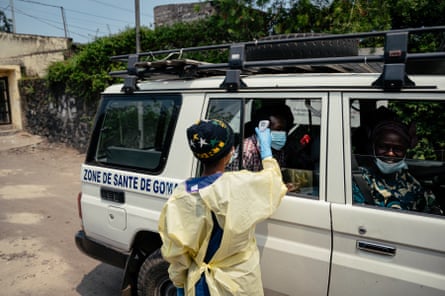
Global health leaders are considering whether vaccines or medicines still in development could be used to fight Ebola in the Democratic Republic of the Congo , as the World Health Organization’s chief said he was deeply concerned by the outbreak’s speed and scale.

Dr Tedros Adhanom Ghebreyesus said there had been at least 500 suspected cases of Ebola and 130 suspected deaths in DRC since the new outbreak began – up from about 200 cases and 65 deaths when it was announced on Friday .

Dr Mesfin Teklu Tessema, senior director of health at the International Rescue Committee, which works in the DRC’s Ituri Province, where most cases have been reported, told the Guardian he expected current known cases were “the tip of the iceberg”.

Spread across the porous border to South Sudan, he said, was probably “a matter of when”. He warned that a weak public health infrastructure there meant “we are actually flying blind”.

The IRC provides humanitarian relief in the region, including support to health clinics. Tessema said there was a severe lack of basic protective equipment, such as gloves, masks and goggles, for healthcare workers seeing patients in the area.

He added: “Ebola is a very deadly disease – this strain has a mortality rate between 30% and 50%. That is with availability of care. When care is not available, when people are arriving late, that risk of mortality could be higher than that.”

There are a number of strains of the virus that can cause Ebola. The Bundibugyo strain, which has been identified as responsible for the current outbreak, has no approved vaccine or treatment.

Scientists from the DRC and Uganda published the genome of the virus online on Monday night. Experts who examined the genetic data said it suggests the outbreak was recently sparked by a “spillover event”, meaning a human became infected through contact with an infected animal, and has since spread from human to human.

“That is useful because it suggests this outbreak can potentially be traced and interrupted as it has been in the past. Repeated independent spillovers from an animal source would complicate the efforts to stop the outbreak,” said David Matthews, Professor of Virology, University of Bristol.


A WHO official in Ituri province, said the outbreak could take a long time to bring under control.

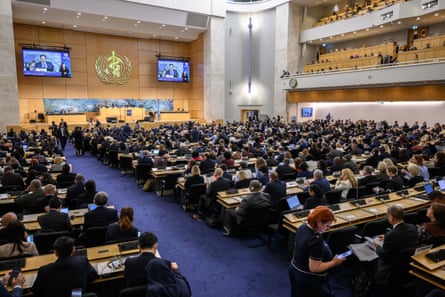
“I don’t think that in two months we will be done with this outbreak,” Anne Ancia, the WHO’s representative for the DRC, told reporters in Geneva at the World Health Assembly, pointing to a recent Ebola outbreak that took two years to end. Nearly 2,300 people died between 2018 and 2020 in the deadliest outbreak in the DRC to date.

“At the international level, [we are] looking at what candidate vaccines or treatment are available and if any could be of use in this outbreak,” Ancia added.

In Uganda, people have been told to avoid hugging and holding hands, and the country’s annual Uganda Martyrs’ Day celebrations on 3 June, which usually involve millions of people gathering, has been cancelled.

While the WHO recommends screening at border crossings with the DRC and Uganda, it urged other states not to place restrictions on travel and trade. Some countries, including the US, have placed bans on travellers from the area. Rwanda has closed its borders with the DRC.

A senior official at Médecins Sans Frontières (MSF) said the response was likely to be complicated by a lack of access to healthcare in the affected area, where there is a lengthy armed conflict.

Tedros said the number of cases and deaths would change “as field operations are scaling up, including strengthening surveillance, contact tracing and laboratory testing”.

Thirty cases in Ituri have been confirmed by laboratory testing, and one death and case in Kampala, Uganda. A US citizen has also tested positive and has been transferred to Germany.

The WHO is convening a technical group for advice on what tests, vaccines and treatments could be useful. Vaccines are only available for the Zaire strain, which was identified in 1976. A 2023 campaign in the DRC vaccinated about 55,000 frontline workers in the Ituri and neighbouring North Kivu provinces against that strain.

Ancia said the expert view was those vaccines “cannot be used in the current response” although “a lot more studies need to be done”.

The outbreak, made public on Friday, was declared a public health emergency of international concern (PHEIC) by Tedros in the early hours of Sunday morning.

On Tuesday, he said: “This is the first time a director general has declared a PHEIC before convening an emergency committee. I did not do this lightly … I’m deeply concerned about the scale and speed of the epidemic.”

Tedros said reports of Ebola cases in urban areas, where the virus typically spreads more easily, were cause for concern. Cases among health workers indicated potential spread in clinics and hospitals, he said, and there was “significant population movement in the area” for work and also due to conflict.

The province of Ituri was “highly insecure”, he added. “Conflict has intensified since late 2025, and the fighting has escalated significantly over the past two months resulting in civilian deaths. Over 100,000 people have been newly displaced. And in Ebola outbreaks, you know what displacement means.”

Dr Maria Guevara, the international medical secretary at MSF, who has worked in the DRC, said: “The fact is the system is broken and the community is not able to access any type of health care.”

She said conflict had made routine immunisation extremely difficult, and that most of the DRC had experienced severe outbreaks of cholera only last year.

Speaking at an event in Geneva organised by the Independent Panel on Pandemic Preparedness and Response, she added: “You put Ebola on top and then you want to be able to do the proper protocol and case management, proper case treatment, but they’re inundated with all the other outbreaks, also dying of maternal mortality, from malaria, from everything else. And you’re expecting the community to be able to understand why you’re coming in with a zoot suit [slang for the personal protective gear worn by health workers].”

Ancia said the WHO was rushing to address the current crisis and had deployed more than 40 experts to the field, alongside national responders.


The UN health agency had also sent 12 tonnes of supplies, she said, including personal protective equipment for frontline health workers, from the DRC’s capital, Kinshasa, and Nairobi in Kenya.

Ebola spreads through direct contact with body fluids from infected people or animals and causes symptoms that can include high fever, vomiting and internal and external bleeding. According to the WHO, the average fatality rate from Ebola is about 50%, varying from 25% to 90% in past outbreaks. This is the 17th Ebola outbreak in the DRC since the discovery of the virus.

Uefa expects more viewers for Champions League final despite no free-to-air coverage

Champions League
Uefa expects more viewers for Champions League final despite no free-to-air coverage
Matt Hughes
Tue 19 May 2026 16.00 CESTLast modified on Tue 19 May 2026 18.56 CEST
News
https://www.theguardian.com/football/2026/may/19/uefa-champions-league-final-more-viewers-despite-no-free-to-air-coverage

Uefa is expecting far higher UK viewing figures for next week’s Champions League final than in recent seasons despite TNT Sport’s controversial decision not to make the game available free-to-air for the first time since the competition’s rebrand 34 years ago.

An average audience of about 1 million watched the Champions League final for free on TNT’s streaming service, discovery+, over each of the past two seasons. HBO Max, which will be showing the Paris Saint-Germain v Arsenal final alongside TNT Sports, is available in more than 10 million UK households.

TNT’s viewing figures for the 2024 and 2025 finals were about 2.5 million, which should be boosted a week on Saturday by the presence of an English club for the first time in three years.

As revealed on Monday TNT has opted to stream the game on HBO, which charges £4.99 a month for the cheapest subscription, after two years of streaming the final for free on discovery+ alongside its main channel coverage.

From 2015-16 until the 2022-23 the Champions League final was made available for free on YouTube by the UK rights holder, BT Sport, and before that it had been screened by ITV since the European Cup was rebranded as the Champions League in 1992.

Although some at Uefa have privately accused TNT of breaking the spirit of a contract that states “best endeavours” must be made to ensure its club finals are available for free, the European governing body’s commercial team is understood to be happy with the decision in the belief it will deliver a bigger audience.

HBO Max has attracted millions of subscribers since its launch in the UK in March and is available at no extra cost for Sky Sports and Amazon Prime customers, taking its overall potential reach to more than 10 million.

Despite the limited take-up of TNT’s free offering in recent years, its decision to introduce a charge for the final has been widely criticised over the past 24 hours.

“All major sporting finals should be free to watch on UK television,” the Labour MP Jon Trickett wrote on X. “I’d like to see the government take action to ensure future events like the Champions League final are accessible to as many people as possible.”

‘Many billionaires are not happy people’: Michelle Obama talks politics and going ‘a little low’ in first Australian event

Michelle Obama
‘Many billionaires are not happy people’: Michelle Obama talks politics and going ‘a little low’ in first Australian event
Sian Cain
Tue 19 May 2026 17.00 CEST
News
https://www.theguardian.com/us-news/2026/may/20/michelle-obama-speaking-tour-australia-politics-trump

I t was a curious question: who was going to pay $895 (US$640, £476) to see Michelle Obama speak at 12.30pm on a Tuesday in Melbourne? While she is an indisputably excellent public speaker, the ticket prices for Obama’s first-ever speaking event in Australia raised a few eyebrows, ranging from the $895 “platinum” package (which promised a priority seat, an “exclusive” brunch, and a “commemorative lanyard and tote bag”) to the cheapest seats at $195 a pop.

A sign that expectations may have been bigger than our wallets in a cost-of-living crisis: two weeks ago, my “cheap” seat at the back was suddenly upgraded to a much better spot due to “a recent change in production requirements” that was left unexplained. Another: the visibly empty patches at the front of the Melbourne Convention and Exhibition Centre.

None of this is a reflection on Obama herself, who still managed to lure a sizeable crowd on a weekday afternoon. Her speaking tour, which only reaches Melbourne and Sydney , has been organised by Growth Faculty, a company that stages events about workplace leadership – so it wasn’t all that surprising when host Annabel Crabb opened by saying she would not ask Obama about current politics, because, Crabb claimed, “that is a convention that former first ladies don’t comment on”.

“And what else is there to say? I’m sorry?” Obama said jokingly.

The former first lady never shied away from delivering veiled but sharp remarks on current politics. When Crabb quoted the former Australian senator Amanda Vanstone as saying, “Think of the dumbest guy you know in politics”, Obama interjected with: “Everyone, close your eyes. Just imagine! Hmmm.” The applause and laughter of the crowd almost drowned out the rest of the quote. (“When a woman that dumb can succeed in politics, that’s equality.”)

Asked how she felt her famed catchphrase, “When they go low, we go high”, resonated now when so many prominent figures seem to benefit from openly terrible behaviour, Obama said, “You know those folks aren’t happy. You don’t show up like that in the world and have that not eating away at your soul.”

Sign up for a weekly email featuring our best reads

She said she hoped to teach children today that accumulating wealth and assets was not a measure of happiness and self-worth. “It is not. I know plenty of billionaires, many of them are not happy people in the world. They’ve got a lot of stuff – but that’s what they focus on, just accumulating stuff.”

“I guess I don’t agree with the fact that they are getting away with all of this and it seems to be fine. It isn’t fine. None of this is fine,” she added. “Nobody’s happy. We don’t feel better. No one is feeling better. I can see that and feel that. So going low doesn’t work … Our economy isn’t better. We’re seeing a lot of injustice and unfairness happening in the world. Our kids are feeling a level of depression. We are worried more about the cost of living. Things are not better. It’s not working.”


Obama said that the racist abuse directed at her during her time in the White House, and the severe criticism of even the most benign initiatives she spearheaded, such as promoting healthy eating among children, meant she had to “build up an armour”.

“That’s what I don’t like about politics,” she said. “It’s not honest. It’s not true … right now, the current administration has just launched an entire initiative around health and obesity. The same administration that criticised me and called me the nanny state and told me to stay away from fast food and get out of people’s menus … it was never real. Understanding that, putting it aside, and just doing the work is what I had to do.”

But, she admitted, even she sometimes needed to go “a little low” by venting in private.

“Going high isn’t just a public act of stoicism all the time. It is a measure of how we should behave as adults in the real world. You go have your tantrum in the closet, like a real adult,” she joked, adding: “Don’t call yourself a leader and not have the personal discipline to just shut up and think.”

After eight years in the White House, then eight more years of recovery, the Obamas now spend much of their time spreading the word that there will be a world, and an America, beyond Trump. This is often done via public speaking events and their media company Higher Ground, which puts out documentaries and podcasts such as the one hosted by Michelle herself.

Obama said her dream podcast guest would be Dolly Parton or Elton John. “But I’ve met Nelson Mandela. I’ve met two popes. I’ve met Maya Angelou … I’ve met Stevie Wonder. Prince performed at the White House months before he died,” she added.

“We’ve lived an extraordinary life and have had an opportunity to … be in places that I would have never imagined, as Michelle Robinson on the south side of Chicago. So it’s hard for me to sit here and want more, because we’ve had so much.”

After a second show on Tuesday night in Melbourne, Obama heads to Sydney for two more shows on Thursday and Friday, which will be hosted by the ABC’s Leigh Sales.

The Dark Side of Married at First Sight review – there is enough awful detail here to fuel 1,000 more exposés

Television & radio
The Dark Side of Married at First Sight review – there is enough awful detail here to fuel 1,000 more exposés
Lucy Mangan
Tue 19 May 2026 13.39 CESTLast modified on Tue 19 May 2026 14.33 CEST
News
https://www.theguardian.com/tv-and-radio/2026/may/19/the-dark-side-of-married-at-first-sight-review-panorama-documentary-allegations

W ell. My goodness. Allegations of rape and sexual assault have arisen from a reality show built around the conceit of strangers “marrying” each other at first sight, then cohabiting in the full expectation that “marital” relations will ensue – and if not, they will be quizzed by a panel of “experts” as to why not. All this, and under the pressures of filming and the medium’s insatiable appetite for emotional drama and conflict, plus manufactured situations such as group dinner parties to encourage any grievances to burst into flames on top of that? The only possible true surprise here, surely, is that this hasn’t happened before.

Panorama’s latest exposé, The Dark Side of Married at First Sight, is presented by Noor Nanji, who has previously worked on investigations into the allegations of various forms of sexual and other misconduct behind the scenes at the BBC hits Strictly Come Dancing and MasterChef. This time, the focus is on allegations by three former “wives” who appeared on Channel 4’s wildly popular show (10 series and – at least until now – counting), known by fans as MAFS, or MAFS UK to distinguish it from the international editions that have developed since the original Danish version in 2013.

Lizzie and Chloe – not their real names, and actors are used to voice the women’s words in the half-hour broadcast – say that they were raped by their on-screen husbands, and Shona Manderson, who speaks in person, says she was subjected to a non-consensual sex act. All the men deny the claims.

Lizzie describes how once they were on their “honeymoon”, her on-screen husband started displaying an explosive temper. After they started sleeping together, she says, the sex turned violent, leaving her with bruises. She says that he told her if she told anyone about it “he would get someone to throw acid at me” and later – “You can’t say no, you’re my wife” – raped her.

She says that although she made the programme-makers, CPL Productions, aware of the acid threat and her bruises, filming continued and the show was broadcast. After it aired, “I took a nosedive … I had to start being honest,” and she told CPL that she was raped. Channel 4 was made aware but say that: “It would be wrong to assess contemporaneous welfare and editorial decision-making by Channel 4 and CPL based on knowledge they didn’t have at the time.”

Chloe tells a similar tale. “I said no. He smirked, moved my leg, climbed on top of me and proceeded to have sex with me anyway … I didn’t want him to be angry with me when the cameras came. I just lay there and stared out of the window.” She says he got angry with her for not shouting and pushing him off if she didn’t want it. “You’re making me feel like a rapist!”

There is enough in this half-hour programme to fuel a hundred, a thousand documentaries. And that’s before you factor in the responses proliferating on social media: that the women’s “failure” to report the attacks to police means that they are liars in pursuit of lucrative compensation claims, that going on a reality show means that you are an attention-seeker who has just found another way to seek it (or that you, somehow, deserve everything you got), that a man’s decision not to pull out is a meaningless act, and so on and on – and what they tell us about sociocultural attitudes and sexual politics today.

The programme itself is largely concerned with timelines – when did CPL and Channel 4 know which allegations, when should filming or broadcasting have been stopped – and what duty of care is owed by commissioners and programme-makers to their contributors. This is surely what will most concern the people carrying out the external review into contributor welfare that was commissioned last month and the lawyers doubtless massing around the companies and individuals concerned.

For those watching, however, the takeaways might be slightly different. Those entirely unfamiliar with the show might be boggling at the very idea of it. Those more jaded might limit themselves to sighing at the notion that any amount of pre-show vetting, welfare and psychological support (and CPL says its protocols are “gold standard” and “industry-leading”) can guard against harm in a situation where strangers of the opposite sex are put together, isolated from friends and family, required to take part in “games” (such as ranking the attractiveness of other contestants in front of partners) that increase volatility, and are subject to intense pressures to perform in all sorts of ways they might otherwise be able to resist. And all in a world where violence against women and girls from men is rampant and so widely tolerated as to be largely invisible and virtually decriminalised.

If this is the end of MAFS, I’ll be delighted. If it’s not, I won’t be at all surprised.

Panorama: The Dark Side of Married at First Sight aired on BBC One and is available on iPlayer

Information and support for anyone affected by rape or sexual abuse issues is available from the following organisations. In the UK, Rape Crisis offers support on 0808 500 2222 in England and Wales, 0808 801 0302 in Scotland , or 0800 0246 991 in Northern Ireland . In the US, Rainn offers support on 800-656-4673. In Australia, support is available at 1800Respect (1800 737 732). Other international helplines can be found at ibiblio.org/rcip/internl.html